What each one costs to make, what sellers really charge for it, and the safety label, trademark or tax form that can matter more than your booth fee.
Hold on for #1: why the painting you’re proudest of may be the wrong thing to set on a craft-fair table, and what goes there instead.
The cash box is an old cookie tin, and by two o’clock you’ve counted it twice. The table fee is covered. Lunch is covered, barely. A dozen people picked up your best piece, turned it over to find the price, and set it down gently, like a library book they’d decided against.
The making was never the problem. With any crafts to make and sell, the hard questions are colder ones: what goes in, what comes back, and which rule nobody mentions until a buyer asks.
#13 Soy candles poured in mason jars
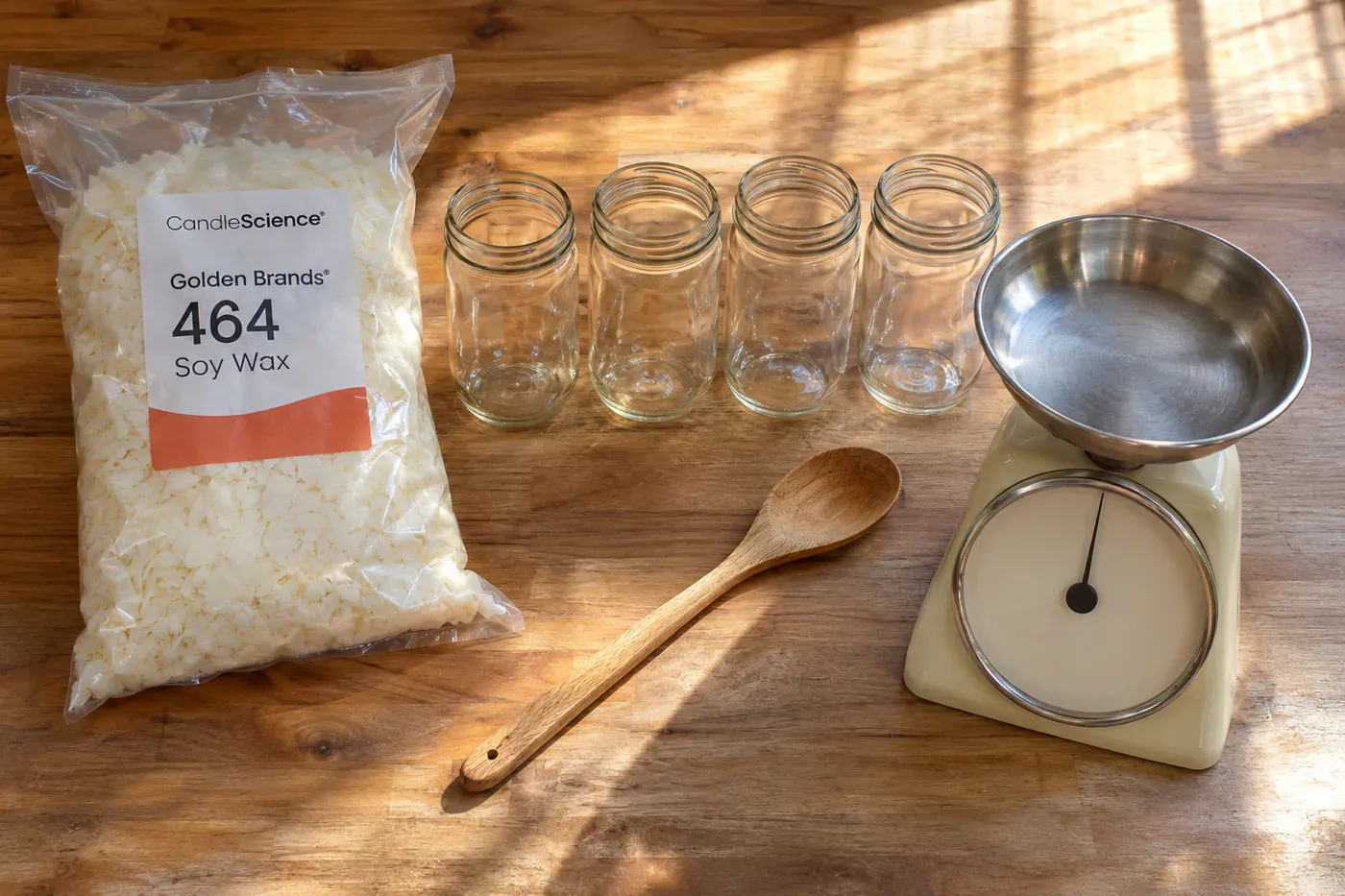
Start with the wax, because it’s the cheapest thing in the jar. CandleScience sells Golden Brands 464 soy wax at $31.97 for a 10-pound bag, which works out to about 20 cents an ounce in 2026. The 1-pound bag is $3.96, so keep the small bag for testing a new scent.
How much wax your jar holds is the one number nobody can hand you. Fill one to the pour line and weigh it, and you’ll know your wax cost to the penny.
The same supplier lists a 10% fragrance load and a 135°F pour. Then it asks for the step people skip: two weeks of curing before anyone lights the candle. A candle poured Thursday isn’t ready for Saturday. The supplier also warns this wax can soften too much in hot-weather shipping, so plan summer mail orders with that in mind.
Now the price. Craftybase, a pricing tool for makers, worked an 8-ounce soy candle all the way through in its May 2026 guide:
| Line | Amount |
|---|---|
| Materials | $3.15 |
| Your time | $4.50 |
| Overhead | $0.60 |
| Base cost | $8.25 |
| Retail, after a 150% markup, Etsy fees and shipping | $26.50 |
Look at the second line. Your time costs more than your materials, and it’s the line most homemade price tags leave out. Sold face to face, with no shipping box and no Etsy cut, you have room to come down from $26.50. Below $8.25, you’re paying to pour.
Then turn the jar over. The National Candle Association says every candle label should tell the buyer three things: burn within sight, keep away from anything that can catch fire, and keep away from children. That’s the candle trade’s own standard rather than a law, and it fits on the same sticker as the scent name.
#12 Baby bibs, burp cloths and baby quilts
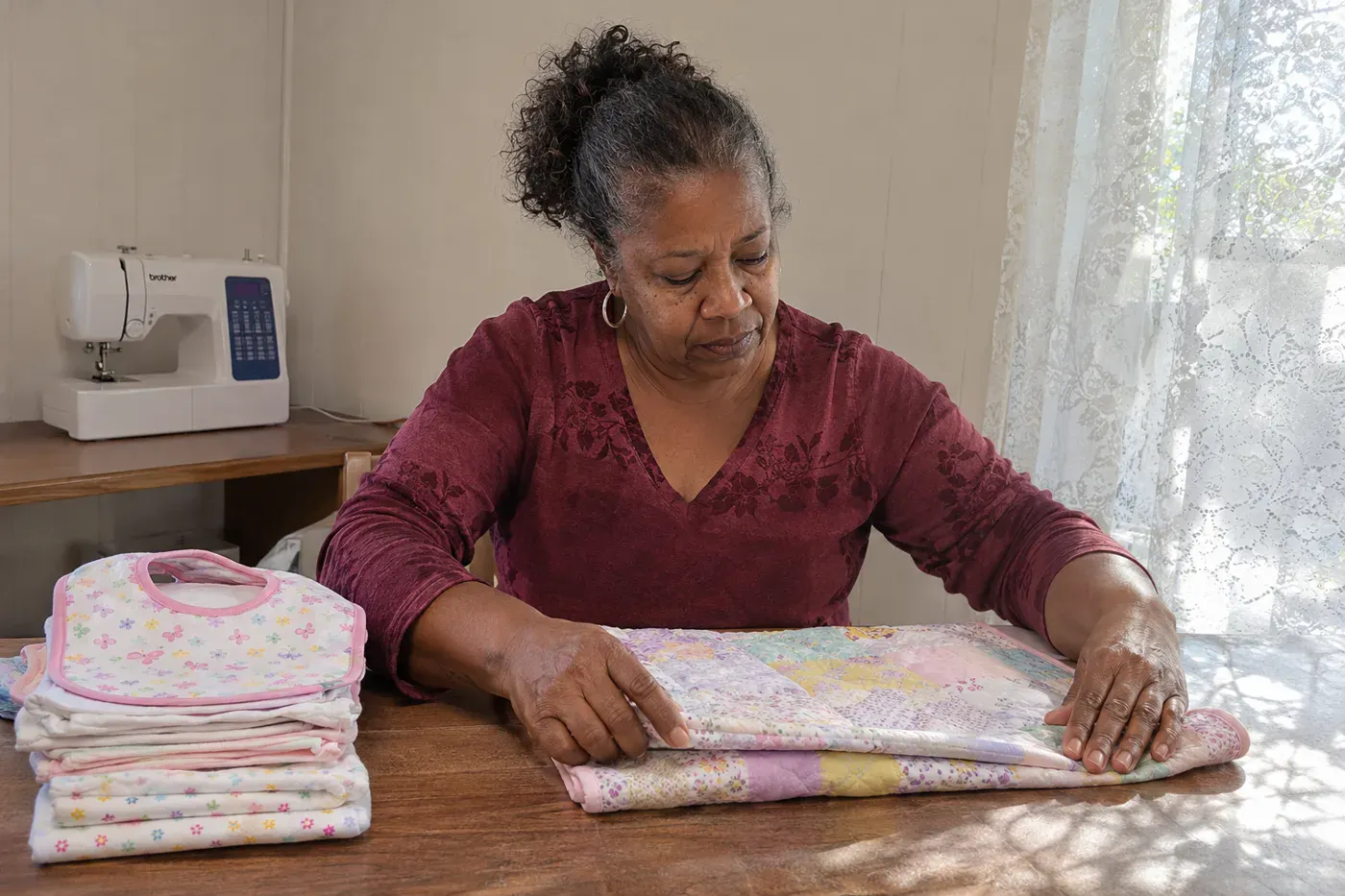
Anything you sew for a child 12 or under falls under federal children’s product rules, whether you make five or five hundred. That covers the quick bibs and burp cloths you turn out in small batches as much as the quilt. The paperwork is in the box below, and the lead rule sits on the Consumer Product Safety Commission’s lead page.
The quilt has one more thing to know. The American Academy of Pediatrics says plainly on its parent site: “Pillows, quilts, comforters, sheepskins, bumper pads and stuffed toys can cause your baby to suffocate.” Most experts agree the risk is small after 12 months.
Here’s where you come in, if you’ve ever made a quilt for a new baby. Federal researchers found that relatives often give quilts and blankets as newborn gifts, and parents feel they have to use them. So write it on the tag: for the wall, or for after the first birthday. A parent who reads that won’t feel guilty folding it away for a year.
The money looks good on paper. A baby quilt takes about $60 in fabric, batting and thread, and quilter Miriam Ronne gives $275 as the average sale for baby-size quilts. Her formula is materials plus time plus overhead plus shipping, and her example pays the maker $20 an hour.
That leaves about $215 after the fabric, and under her formula it also has to cover overhead and shipping. At her $20 rate, that’s under 11 hours of quilting, and fewer once the shipping box comes out of it.
Before you sell to new parents – Lead must stay under 100 parts per million in the finished piece – Plain fabric skips the outside lab test, but never the limit itself – Keep a Children’s Product Certificate, a short document saying the item meets the rules, for every item – Sew in a tracking label and register with the CPSC every calendar year as a small batch maker
#11 Melt-and-pour or cold-process bar soap
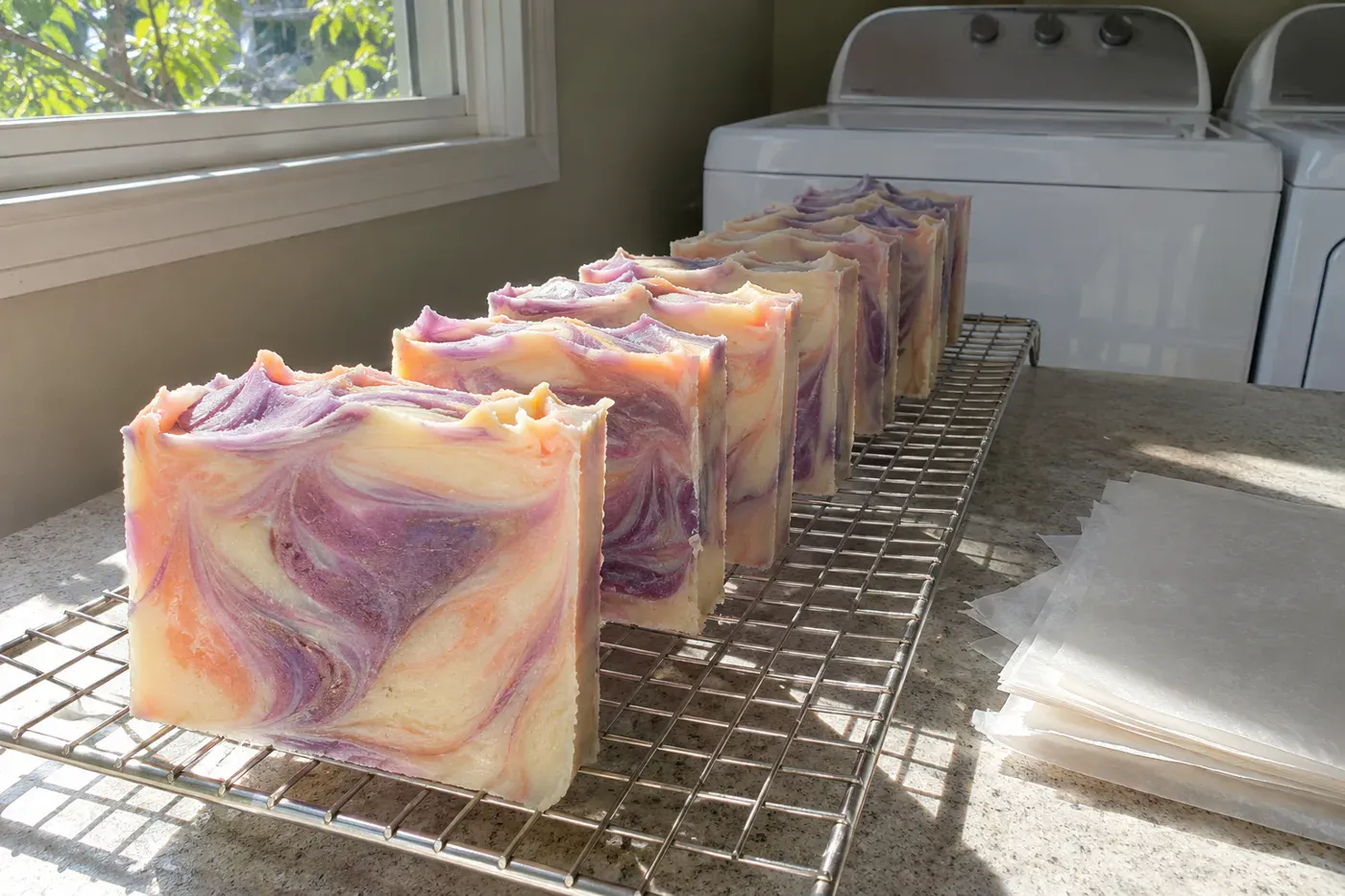
The words on your label decide which federal agency your soap answers to. The FDA counts a bar as soap only if all three of these hold:
- Most of it is made of fats combined with an alkali, the lye.
- It cleans because of that combination.
- It’s “labeled, sold, and represented solely as soap.”
Pass all three and the Consumer Product Safety Commission oversees it, not the FDA. Now add one cheerful word. Market the bar for moisturizing the skin, acting as a deodorant or imparting fragrance, and the FDA calls it a cosmetic. Then the label has to list every ingredient from most to least, the net amount, and your business name and place of business. Small home makers are spared the FDA’s registration paperwork, but not those label rules.
“Goat Milk Soap” and “Goat Milk Moisturizing Bar” can be the same bar from the same mold. The FDA treats them as two different products.
Melt-and-pour is the beginner-friendly route, but whether your bar meets the first two tests depends on what’s in the base you bought. Read the supplier’s ingredient list before you print a single label.
Then there’s the tax side. California’s tax agency uses soap as its example: if you sell handmade soap at two craft fairs a year and nowhere else, “you will be required to obtain a temporary seller’s permit for each fair and register each location.” Other states handle it their own way. Two Saturdays a year still counts.
#10 Macramé plant hangers and wall hangings
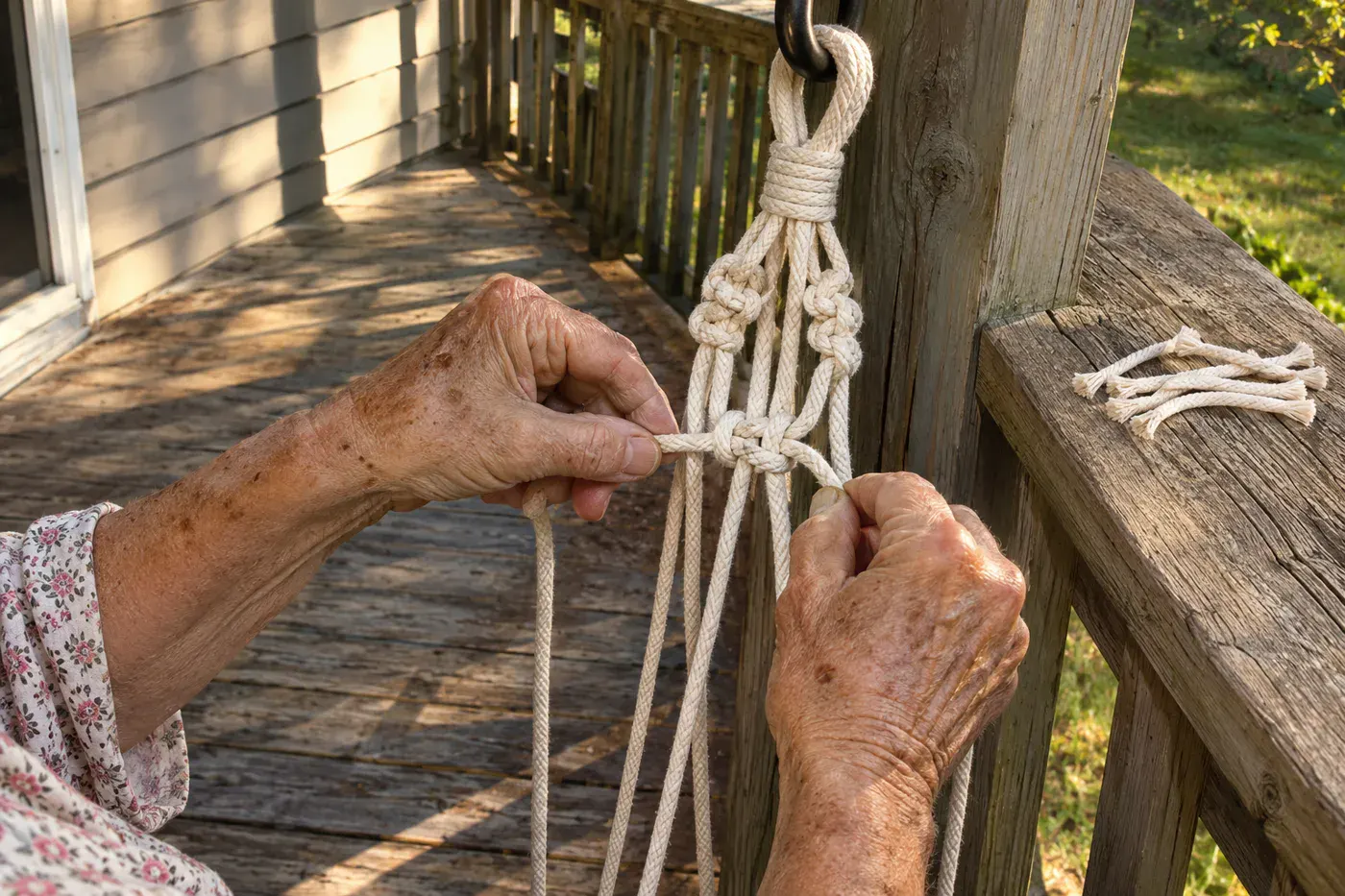
If you knotted your first owl in the 1970s, you were the revival. The San Jose Museum of Quilts & Textiles says macramé “was widespread in the Victorian era,” used for tablecloths, bedspreads and curtains. The 1970s only brought it back.
The cord math is the part nobody prints on the package. Crystal Martin’s simple plant hanger calls for eight pieces of 4mm cotton rope at 150 inches, plus two at 30 inches. That’s about 37 yards a hanger, so a 109-yard roll makes about two of these hangers with cord left over.
She recommends plied rope, because her lengths are set for it. Switch cord and you’ll need to remeasure before you cut eight long pieces.
A 109-yard roll of 4mm cotton cord is $20.99 at Michaels, so each hanger carries about $7 of cord. Now look at what you’re up against: a large hand-dyed hanger is listed on Etsy for $17. Wall hangings run on the same knots, so measure one finished piece the same way and price it for your hours, not just the cord.
#9 Thrift-store makeovers: frames, tins and jars
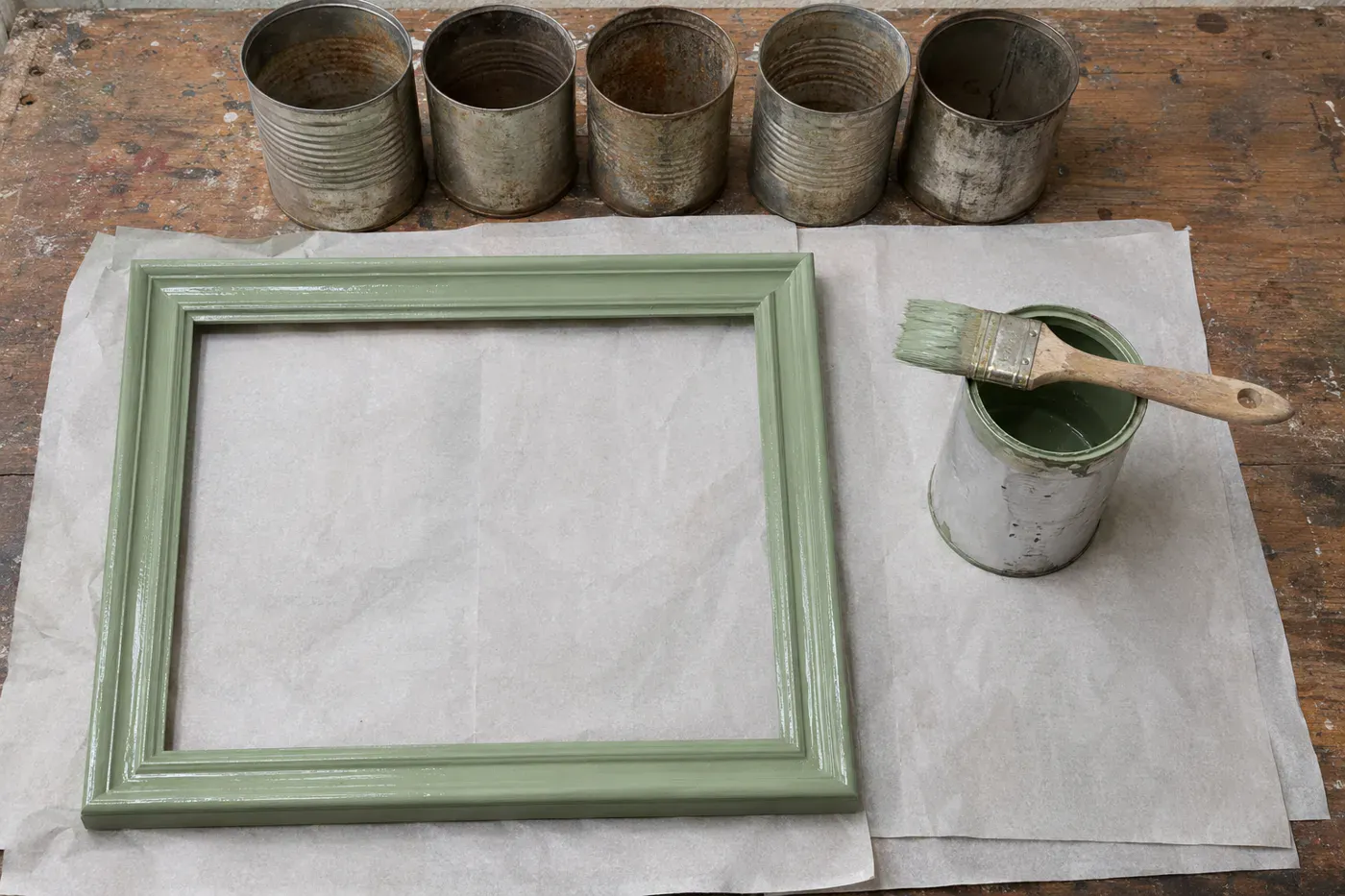
Yes, a repainted thrift-store frame can be sold as handmade. Amazon Handmade’s approved items include anything “hand-altered, hand-designed, handcrafted, repurposed, or upcycled,” refinished pieces included.
You have to apply and pass a review first. Approved sellers pay a referral fee of 15% or 30 cents per item, whichever is more, and the $39.99 monthly plan is waived after the first month. On a $10 painted tin, that’s $1.50 to Amazon.
Deidre, who runs Our Upcycled Life and sells everything she makes locally, is cheerful about how little work some of the best upcycled crafts to sell take:
- “DIYs don’t always have to be hard.”
- “Super simple, super easy and you can look for these cuz you always will find them at the thrift store.”
On price, she’s careful. She points out that what sells in one area won’t sell in another, so set prices by what your own town will pay and what each piece cost you.
Small thrifted frames start at about $1, says interior designer Catherine Shuman, and larger ones run $5 or more. So the first step is the one you’d enjoy anyway: walk the frame aisle, then write down what you paid for each piece the moment you get home.
#8 Wood cutting and charcuterie boards
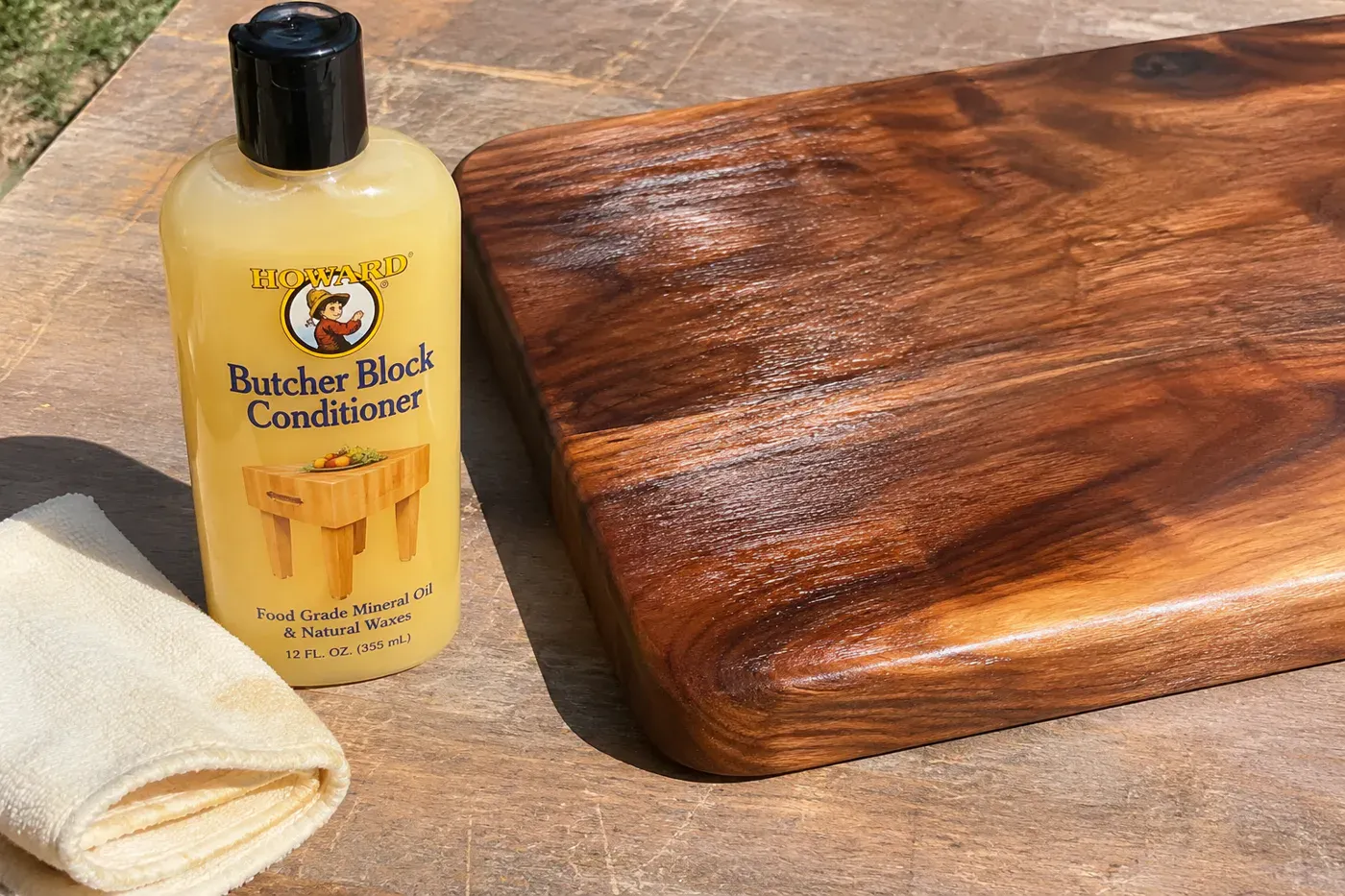
Put the olive oil back in the pantry. The University of Maine’s extension office says to avoid cooking oils like olive or vegetable oil, “as they may become sticky and turn rancid over time.”
Use a food-safe mineral oil or beeswax instead, and tell the buyer to reapply it about once a month. Howard Butcher Block Conditioner is about $15 for 12 ounces, mineral oil with beeswax and carnauba wax, ready to wipe on with no board butter to mix.
One more catch. Woodsmith’s Carol Beronich warns that “a finish being dry to the touch doesn’t necessarily mean it has reached its full cure.” Read the can for the cure time before the board goes in a gift bag.
Pricing is where Jennie and Davis, Texas woodworkers who’ve spent “two years doing a lot of these events,” push hard. Their first rule is “make something at every price point,” because “you never know who’s gonna be at these shows.” The small cheese paddle pays the booth fee. The big board shows what you can do. On Etsy, a 6-inch walnut cheese paddle is listed at $8.74 and an 18-by-12-inch walnut board at $75.
Their second rule surprises people who’ve spent years being modest about their work:
“Sometimes the person with the highest prices at the craft shows gets the most sales because it’s perceived as the highest value or the highest quality.” Jennie and Davis, woodworkers and craft-show sellers
#7 Painted rocks and garden stones
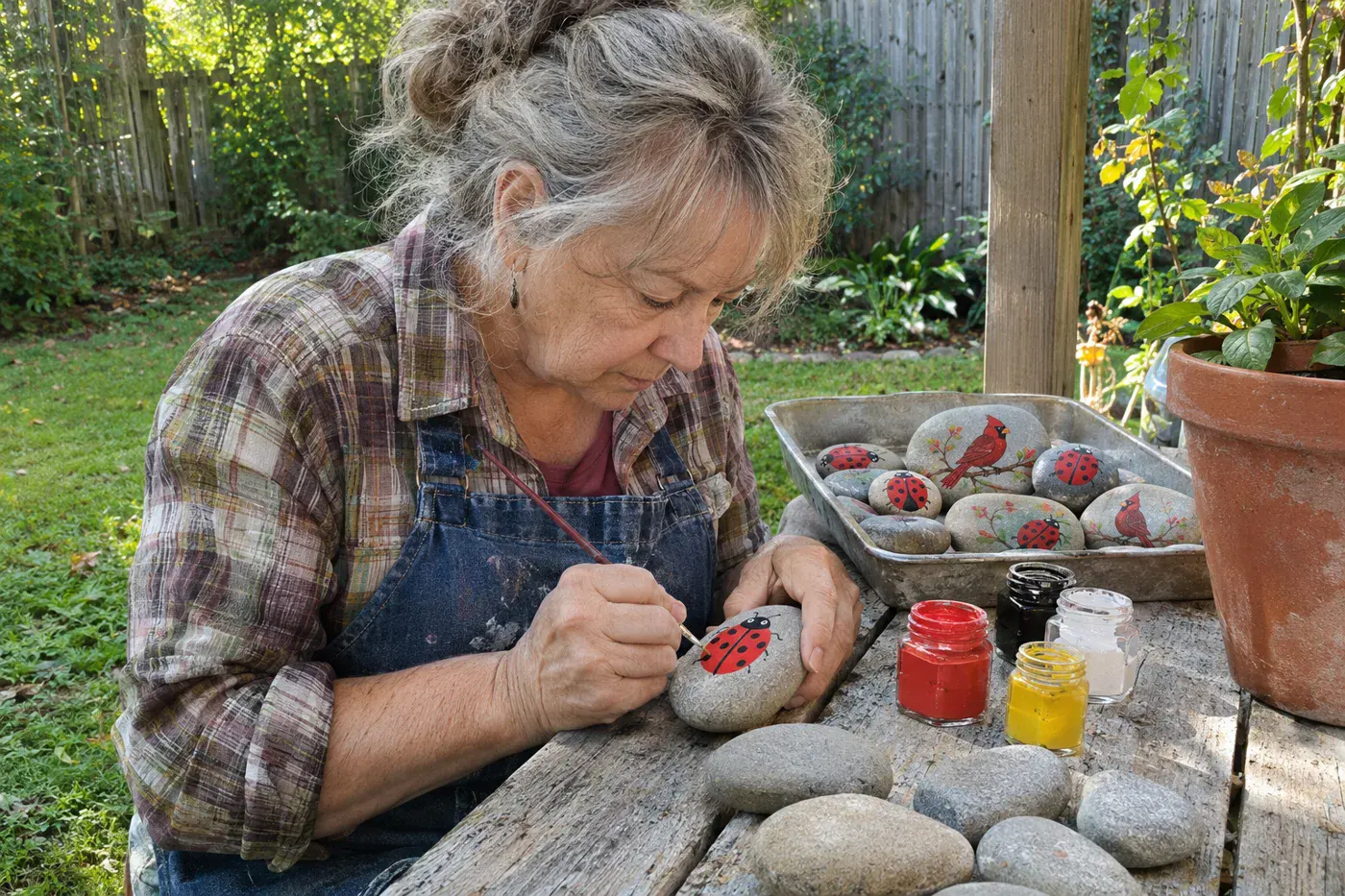
Never bake a painted rock. Anne Whitlock of Rock Painting Workshops explains that river rocks hold trapped water, which can turn to steam and split them. Her warning is blunt: “The temperature they recommend to heat rocks is the temperature that also explodes rocks.”
Let the paint dry on its own, then seal it. That’s slower than the oven tip that circulates online, and it leaves you with a whole rock and an oven you can still use. Krylon’s Make It Last clear sealer, made for indoors and out, is $14.99 for 6 ounces and dry to handle in 2 hours.
Rocks belong on any short list of cheap things to make and sell, because the canvas often costs you nothing. They don’t have to sell for pocket change, either: a hand-painted kindness rock with a quote is listed on Etsy at $27. The real question is which designs go first. A leather crafter who sells at local markets noticed something worth trying on a tray of rocks:
“Every single time I make something red, it sells at my next market.” (r/Leathercraft)
Paint six ladybugs, cardinals or red tulips alongside your usual designs, and count which tray empties first.
#6 Lavender and herb drawer sachets
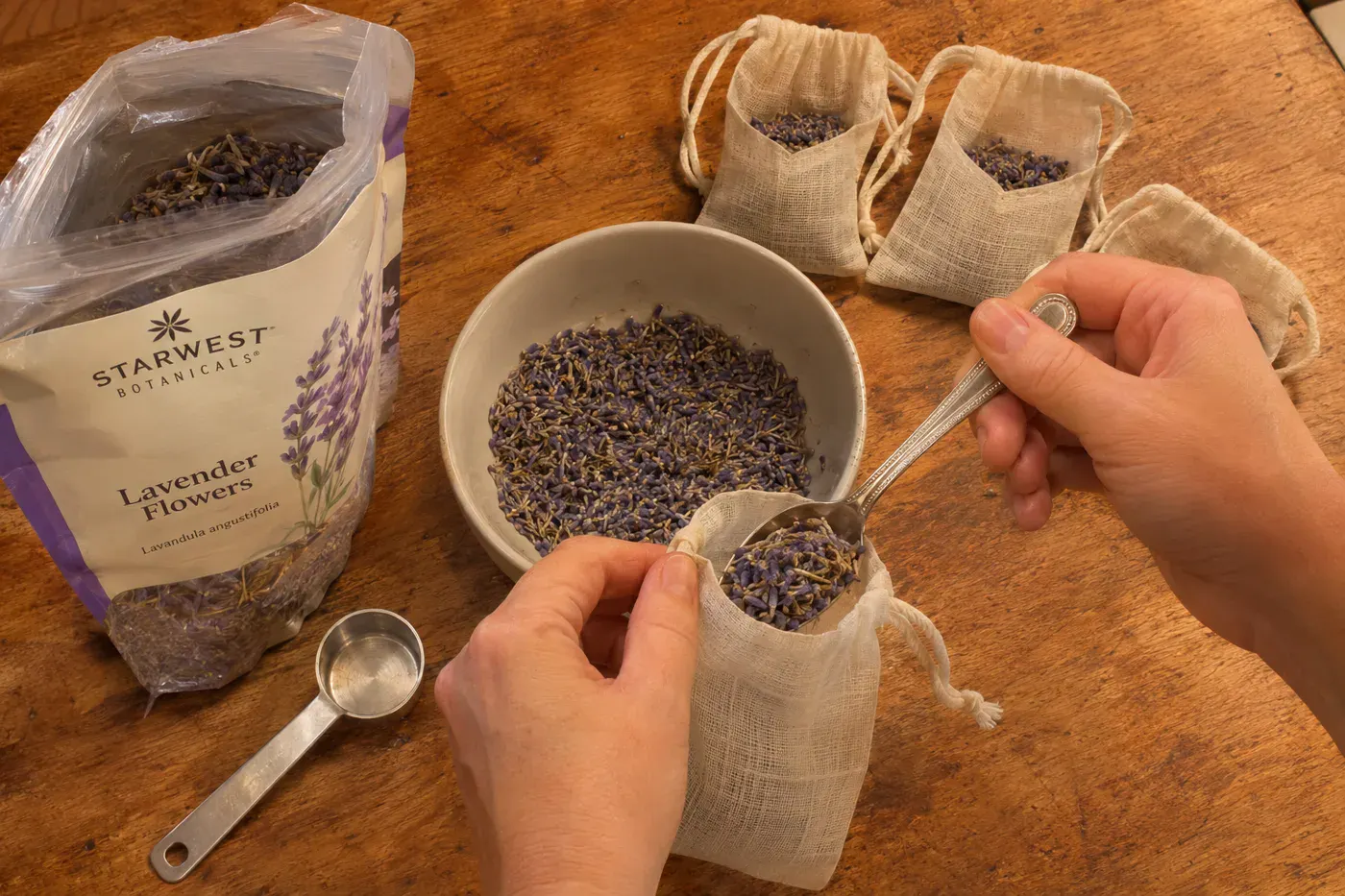
Open a drawer where a lavender sachet sat all year and you can still smell it. An Oregon lavender farm says the scent lasts 12 to 24 months, and it sells 3-by-4-inch sachets holding about half an ounce of buds, starting at $5.
Here’s the material cost. Starwest organic lavender buds run $29.86 a pound, about $1.87 an ounce. That puts about 93 cents of lavender inside a sachet that size.
The bag size matters, too. Another lavender farm says a 3-by-5 muslin bag holds about an ounce, and recommends filling it a bit more than three-quarters full. Go up one size and your lavender cost doubles to nearly $1.90.
The fabric can come from the scrap bin. If you grow rosemary or mint, a mixed herb sachet stretches the pound of lavender further.
The one thing working against you: that $5 farm sachet comes with the farm’s name on it. Yours needs a pretty fabric and a tag that says what’s inside.
#5 Team, state or college logo items
You’ve seen the table: hand towels, koozies and wreaths in the home team’s colors, with the logo stitched front and center and a little card that says “not affiliated.” That card doesn’t do what people think.
FindLaw says plainly that “adding a disclaimer alone does not exempt you from potential trademark infringement claims,” and that a licensing agreement is usually needed to use a college logo commercially.
The surprise is that some schools want to say yes. The University of Arizona offers a Crafter License for individuals who handcraft items with its logos. It caps sales at $2,500 or 500 items a calendar year, and you apply by emailing [email protected]. If there’s a school you’d love to stitch for, ask its licensing office whether it has anything similar.
Or skip the logo entirely. Jennie and Davis suggest making pieces tied to a hobby people love, like fishing or golf, or plain state pride, and their advice on those is “Keep it small and keep it cheap.”
#4 Quilt patterns sold as PDF downloads
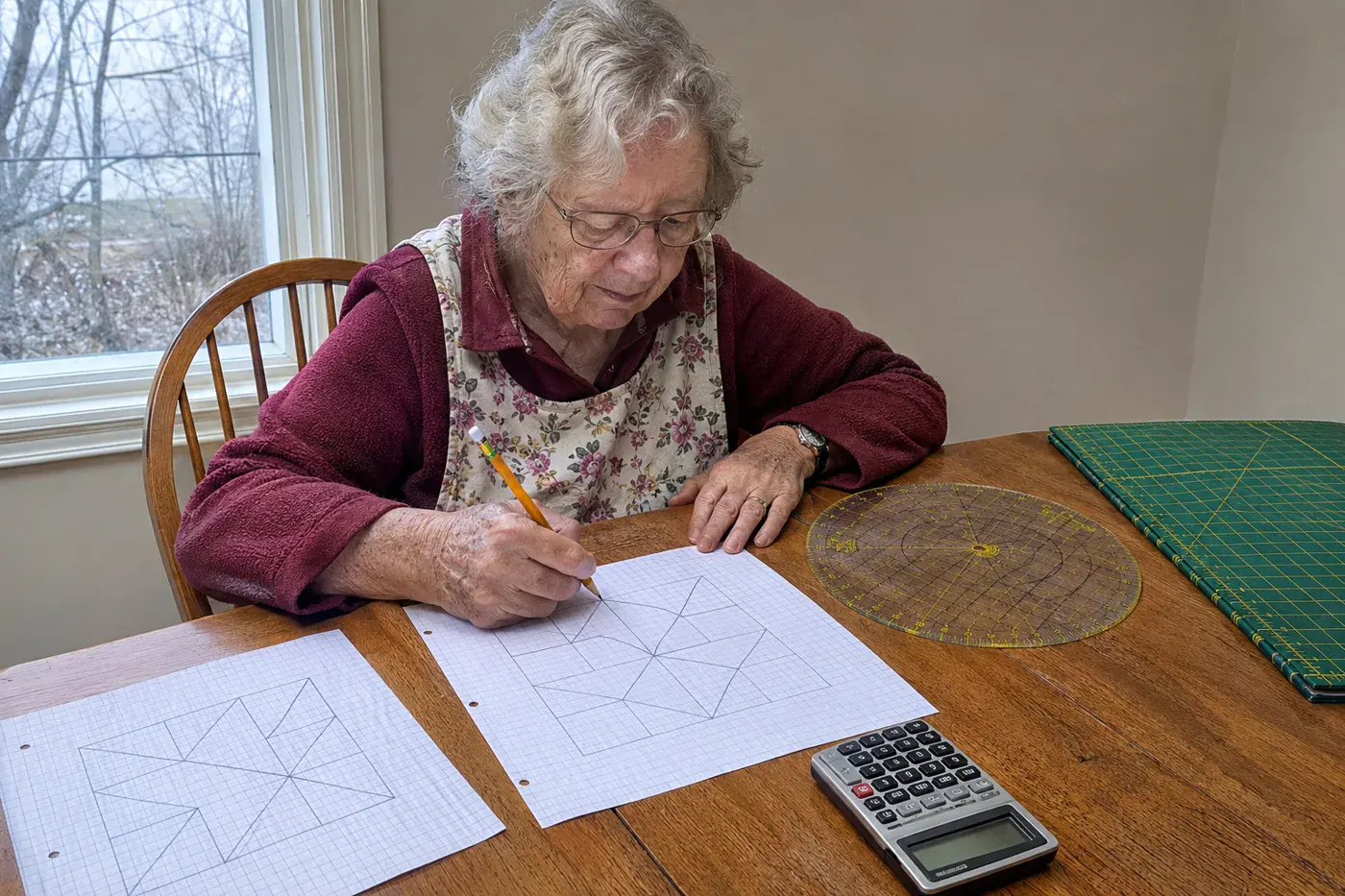
Sell the instructions and you never cut fabric for a customer again. No batting, no shipping box, no line at the post office. You make the pattern once and sell the same file as many times as people buy it.
The catch is that a mistake sells just as many times. Carli Marsico, a quilt pattern ghostwriter and tech editor (someone who checks a pattern’s math and wording before it’s published) who writes about 150 patterns a year, advises working out the math for every size at the start, before you write a single instruction. Adding sizes later is how errors creep in. After your first pattern, she reuses the standard sections instead of rewriting them.
Her studio also suggests that a difficulty rating should name the techniques a pattern needs, rather than a single word like “intermediate.” Quilters don’t all find the same skills hard.
In an Etsy shop, each listing costs 20 cents and each sale 6.5%, plus payment processing of 3% and 25 cents. If you price a pattern at $12, about $1.59 goes to fees and the rest is yours. There’s no fabric line to subtract.
#3 Cotton crocheted or knitted dishcloths
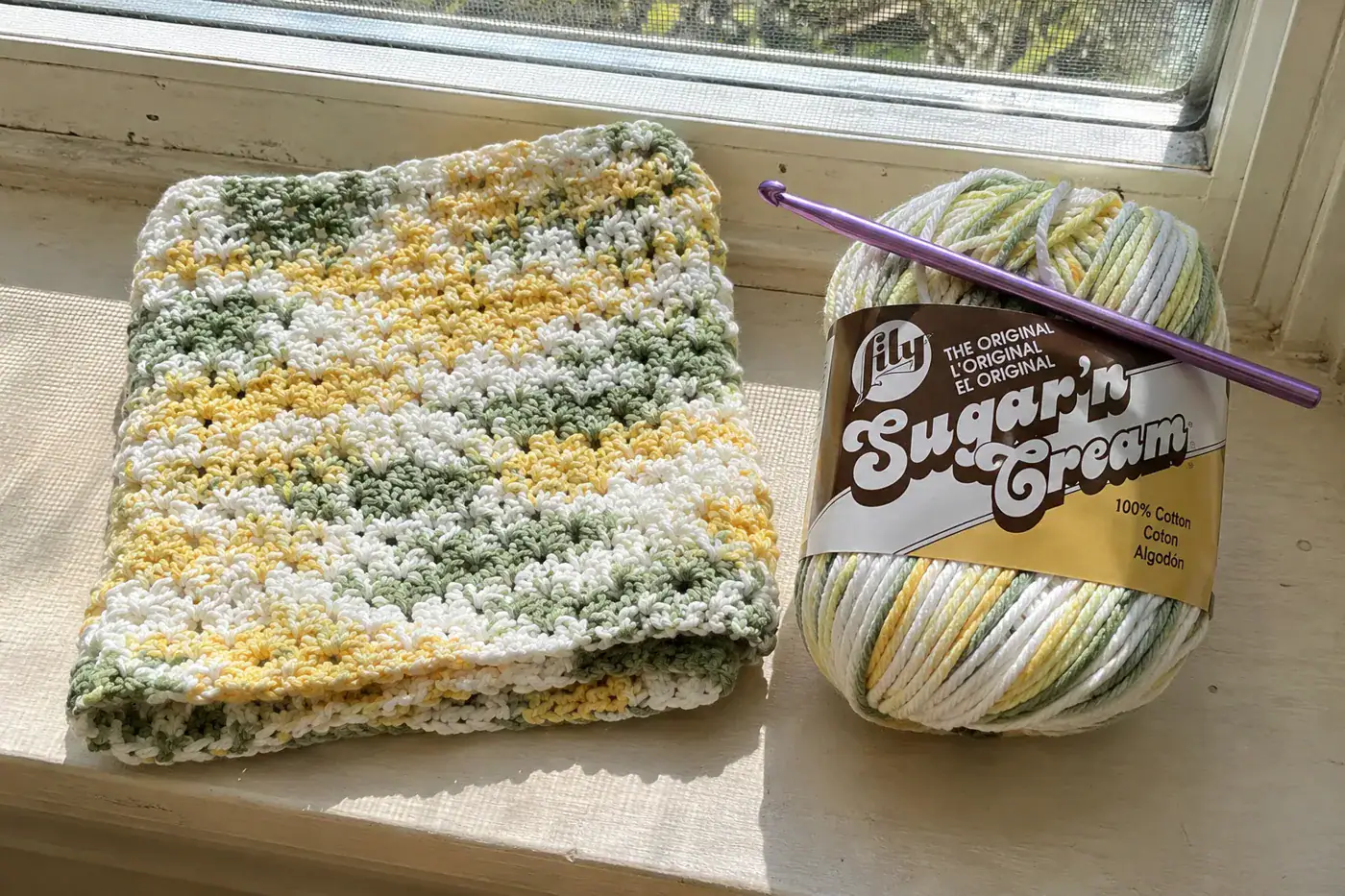
The classic Lily Sugar’n Cream Flowers Dishcloth takes 60 yards of worsted cotton and finishes about 7½ inches square. It’s a free, beginner-friendly single-crochet pattern from 2012, and you could probably work it from memory.
A pricing chart for the US Etsy market puts a dishcloth at half an hour to an hour of work, $1 to $3 in materials and $8 to $15 retail. Run one through at $10, an hour of your time and $2 of cotton:
- $10 sale
- minus $2 for yarn
- minus $1.40 in Etsy listing, sale and payment fees
- leaves $6.60 for the hour
For comparison, the median craft artist earned $22.15 an hour in 2025, and that figure leaves out the self-employed entirely, the government’s own page notes.
Speed changes everything. Finish one in half an hour and that same $6.60 works out to about $13 an hour. Sell it at a table with a card reader instead of online, and the fee drops to about 41 cents.
Your profit margin on a dishcloth will never be the reason you sell at all. A $10 cloth earns its place by making your table easy to buy from. Crocheters on Reddit admit they end up with bags of them and hand the extras to visitors, shelters and retirement homes. Time per unit is the number to watch: if you can’t make them fast, make fewer and give the rest away gladly.
#2 Small toys and amigurumi animals
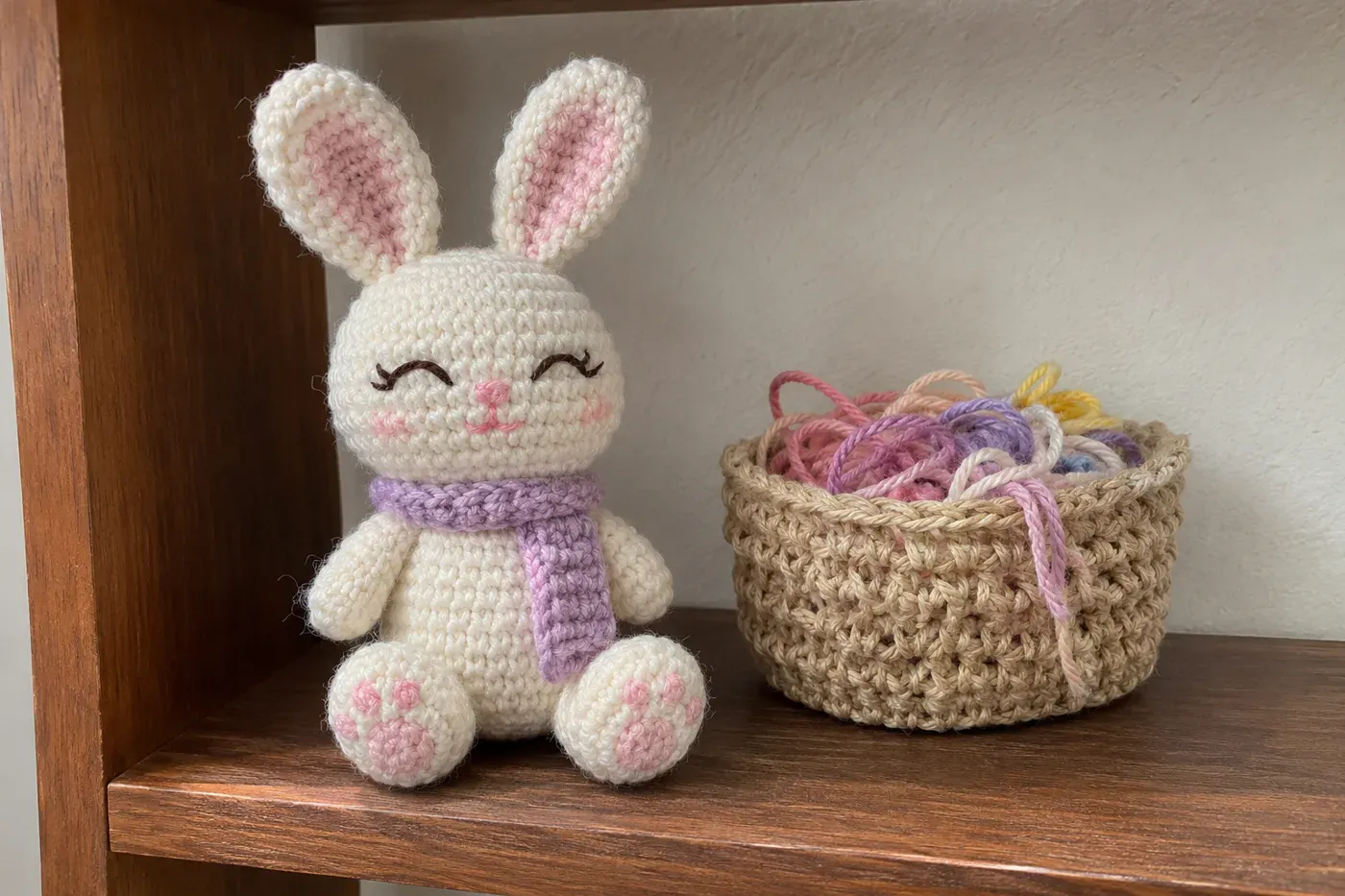
A small amigurumi takes 3 to 6 hours and $3 to $8 in materials, and sells for $15 to $35 on Etsy, according to the same pricing chart. Make a $25 bunny in 4 hours with $5 of yarn and stuffing, and you’ve earned about $5 an hour before fees.
Now add what a toy seller owes the government. Toys for children under 3 that could be choked on because of small parts are banned outright. The test uses a cylinder about the size of a toddler’s fully stretched throat. Toys with small parts made for older children need a choking-hazard warning label.
Small batch makers get some relief on testing, and only some. The CPSC’s own page says certain tests must always go to a lab the agency accepts, however few toys you make. Others can be met with your own checks or your supplier’s paperwork. Either way, you have to certify every children’s product you sell.
Then there are the eyes. Monica Fox, an Australian amigurumi designer, warns that plastic safety eyes can be a “choking hazard to young children under 3 years old,” and recommends embroidered, crocheted or securely sewn felt eyes on baby toys. That’s a maker’s caution, not a US rule. It’s also a good deal cheaper than an argument with a lab.
Selling toys from home: the checklist – Anything meant for under-3s has to pass the small-parts test – A tracking label is mandatory, however few you make – Small batch status caps you at $1,436,864 in prior-year revenue (the figure posted in 2026) and 7,500 units of the toy – Register with the CPSC every calendar year to keep that status
If you love making them, make them in small batches for a market you know, and price as if your hours count. At $5 an hour, they need to.
#1 Prints and postcards of your own paintings
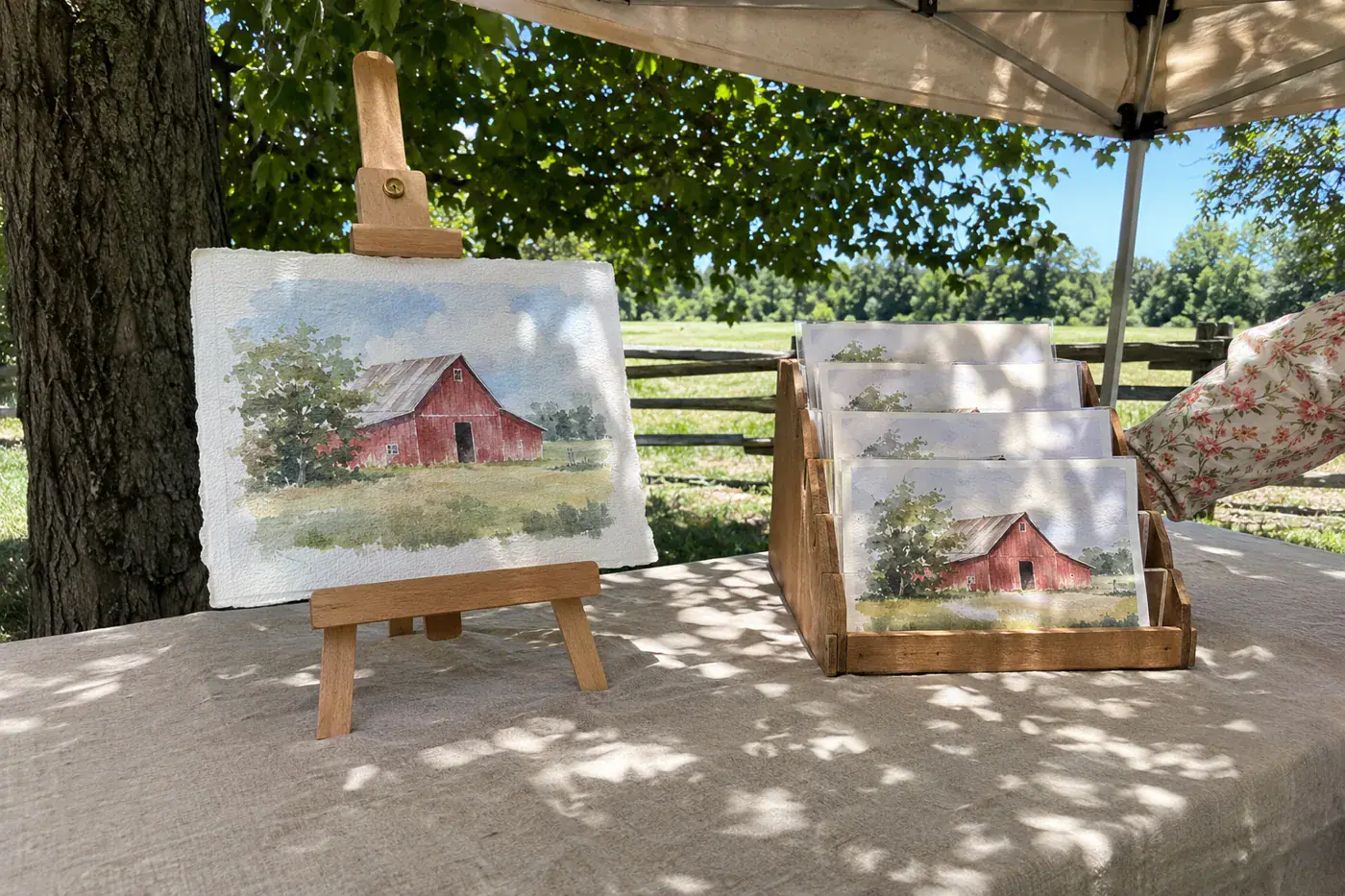
People step into your booth, lean close to the watercolor of the red barn, say it’s lovely, and walk on. Sellers in a Reddit thread about a slow market day describe exactly this: crowds who browse, buyers who expect pocket-change prices, and original paintings passed over all afternoon.
An artist in that thread put her finger on why:
“i think buying is a really big commitment for an original piece, and you also need space for it” (an artist on a slow market day, r/AuDHDWomen)
She says she buys an artist’s postcards or stickers instead. A postcard needs no wall space and no decision about the living room.
The numbers are friendly. A hundred full-color 4-by-6 postcards on heavy gloss card cost $30.56 from 55Printing, about 31 cents a card, in 3 to 5 business days. A printer’s guide says artists typically charge $2 to $4 for a 4-by-6 card and $3 to $5 for a 5-by-7. At $3, the eleventh card sold pays for the whole box.
Now the twist. Bruce Baker, a jeweler, juror and consultant to artists, argues the opposite for art shows: “The success stories are artists who are working bigger and making their work more expensive and more impressive.” And juried fairs may not allow cards at all. The Ann Arbor Street Art Fair accepts only original artwork: “Offset reproductions are not allowed.” A booth for 2027 runs $725.
So the venue decides. At a church hall or farmers market, the postcard is what sells. At a juried art fair, the bigger original is. Commenters in that slow-day thread pointed the painter toward a different kind of event, not a different kind of painting.
For a craft-fair table, order a hundred cards of your best painting and set the original on a small easel right behind them. People will come for the painting and leave with a card.
The bottom line
Before you book a table, time yourself on one piece, start to finish: pulling supplies, the making, the tagging. That one number does more work than any list of what’s trending.
Brenna, who has done more than 100 markets in Minnesota and North Dakota, puts it plainly: “Your prices should cover cost of your time, and they should still leave you with a profit.” She also says your first market “is probably not going to be amazing,” and that not every market is the right fit.
So the question worth asking about your own shelves is which piece you could make again, at the price your hours deserve, without dreading it.
A leather crafter in r/Leathercraft has an answer for the slow afternoons: “Showing up is half the battle, and when you are easy to find (like good markets are), people magically appear at your table.”
Bonus: Five checks before your next sale
- Look up Etsy’s Offsite Ads setting. Shops under $10,000 in yearly sales can opt out of the 15% fee, but once a shop passes that line, it’s enrolled for good.
- Put a price sticker on the back of almost every piece, and consider pricing a little lower in person. Lety of Party Planner Paperie, a paper crafter near Austin, Texas, who sells at fairs and on Etsy, lowers fair prices because a fair sale has no shipping or online fees.
- Give a new item more than one outing before you drop it. Abby and Joey Berry, an Indiana couple who sell at farmers markets and craft shows, put it this way: “They might not sell great at the first show but if you keep taking them and keep putting them out like eventually people are gonna buy them.”
- Keep your own record of every sale. Payment apps only send a 1099-K tax form above $20,000 and 200 transactions, and the IRS says all income is taxable even without one. Some states set lower thresholds.
- Know whose sales tax is whose. Etsy collects and pays US sales tax on orders it ships for you, but the tax on what you sell at a fair table is still yours to handle.
Questions people also ask
How much should I charge for my handmade crafts?
Charge for your time as well as your supplies, because multiplying materials by two or three can leave you almost nothing once every hour is counted. The University of Maine’s extension office says to “Consider the value of your time” and to record how long each task takes. Craftybase’s pricing formula adds labor, overhead, platform fees and shipping on top of marked-up materials. Knowing how to price starts with a stopwatch.
Do I need a license to sell crafts from home?
It depends on your state, county and city, but many craft fairs require a sales tax ID before you can set up a table. The Small Business Administration says requirements depend on your business and location, and that zoning rules can apply to home businesses. Brenna, the market seller, says “most craft fairs that I apply to, they will require you to have a sales tax ID.” Texas, for example, requires a permit for fair sellers who sell taxable items.
What websites can you sell handmade items on?
Etsy and Amazon Handmade are two marketplaces built for handmade sellers. Etsy charges 20 cents a listing and 6.5% a sale, plus 3% and 25 cents for payment processing. Amazon Handmade takes 15% or 30 cents per item, whichever is more, and you must apply and be approved first.
Is it better to sell crafts on Etsy or at craft fairs?
Neither wins everywhere: Etsy takes a bigger cut of each sale, while a fair asks for a booth fee up front. A $25 item with $5 shipping pays about $3.30 in Etsy fees, while the same item sold at a fair by card pays about 80 cents to Square. Tables range from $40 at a church bazaar to $725 at the juried Ann Arbor Street Art Fair, so the booth fee is the number to beat before a fair pays off.
What crafts sell best at craft fairs?
Small, quick, inexpensive pieces sell best at a first fair. One crochet seller’s guide advises bringing about 50 to 100 small products, roughly twice what you expect to sell, priced at $5 to $10 each. The same guide suggests working toward $20 to $25 an hour as you learn your market. Juried art fairs reward bigger, pricier work instead, so match the stock to the venue.
Do I have to pay taxes on craft sales?
Yes, craft income is taxable whether the IRS sees it as a hobby or a business. Hobby income must be reported, and hobby expenses can no longer be deducted. If it’s a business and your net earnings reach $400 in a year, you usually owe self-employment tax of 15.3% on most of that profit.