The hook handles, looms, scissors and splints that let you keep making things, with real prices from a $2.33 foam sleeve to a $19.95 loom kit.
At #1: the craft a hand therapist liked for a knitter whose doctor told her to stop.
You’re four rounds into a granny square after supper when the ache settles in at the base of your thumb. You shake your hand out, pick the hook back up, and get one more round before you shake it again.
You don’t have to give up the hook. When it comes to crafts for arthritic hands, most of the help is a tool swap, and the cheapest one costs about $2.33. The people who treat hands for a living have named the ones worth buying.
#17 A fatter, softer handle on your hook
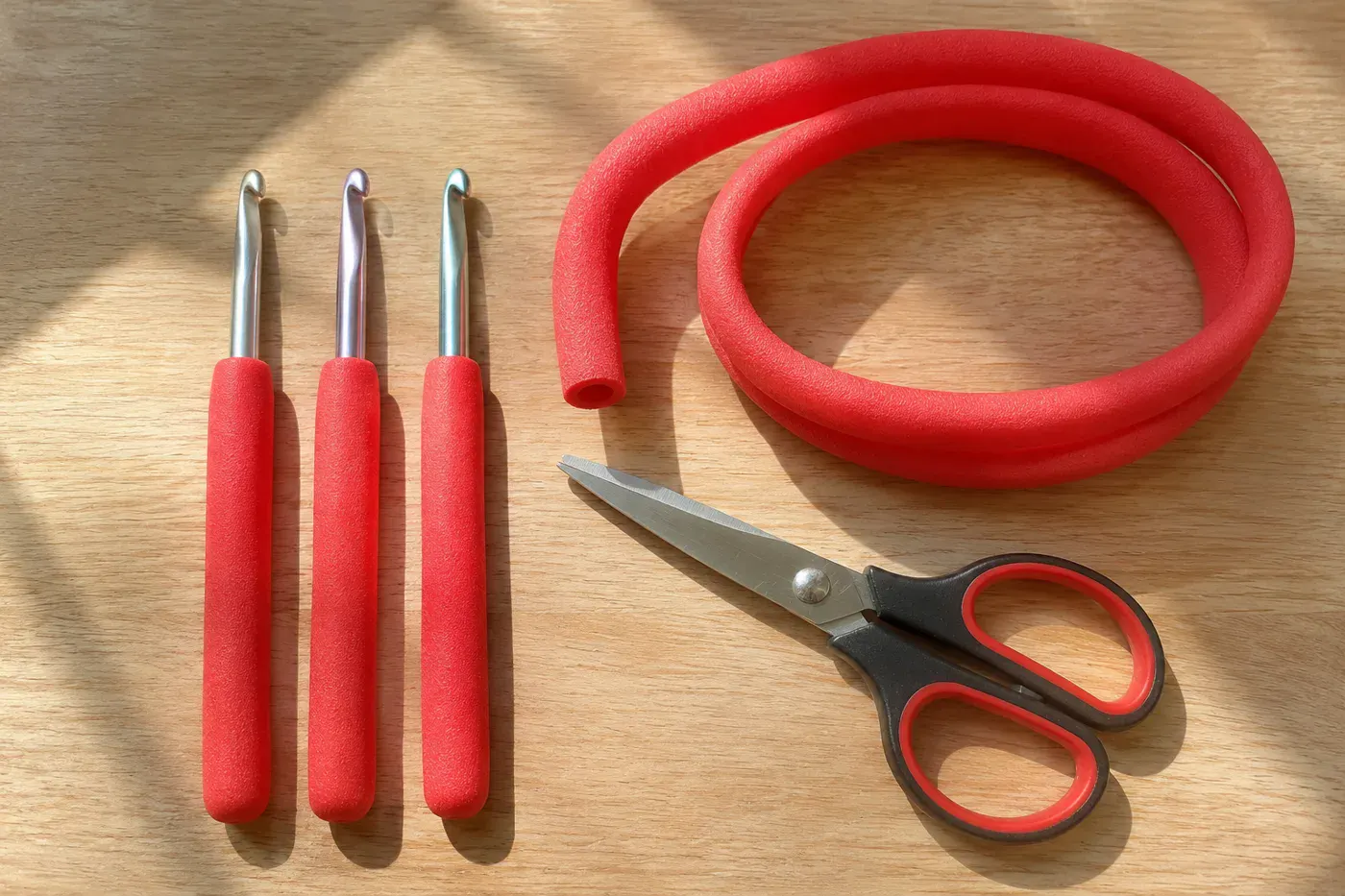
“It’s turning out to be too painful to crochet for more than 5 mins.” That’s a longtime crocheter with arthritis in her dominant hand, posting in r/CrochetHelp. If you’ve had that evening, start with the handle.
A thin hook makes your fingertips do all the holding. An occupational therapist who writes as Amanda at Equip2Adapt explains why that hurts:
“Thin crochet hooks require greater finger flexion and pinch strength. Enlarging the handle reduces the amount of force needed to maintain control.” Amanda, occupational therapist, Equip2Adapt
You have three ways to get a fat handle, and one of them costs pocket change.
| Option | Price in 2026 | Good to know |
|---|---|---|
| Clover Amour, one hook | $10.75 to $15.50 | $10.75 through size J, more for bigger sizes |
| Clover Amour, full set | $93.95 | Worth it only if you use most sizes |
| Foam tubing over your own hooks | about $2.33 a tube | Keeps the hooks you already love |
| PVC pipe sleeve | a scrap of pipe | Needs a drill |
The foam is the one to try first. Scrip Hessco sells closed-cell foam tubing at $13.97 for six 12-inch tubes, and it goes in the dishwasher. Amanda says it “slides directly over the crochet hook handle to create a larger and softer grip surface.” Cut one tube in thirds and you’ve fattened three hooks for under 80 cents apiece. The tubes come with a 1/4-inch, 3/8-inch or 3/4-inch hole, so check which one suits your hooks before you order.
If you have a drill, her other fix is a 4- to 5-inch piece of PVC pipe about an inch across, with a hole drilled for the hook. That lets you “control the hook using the whole hand instead of relying heavily on pinch grasp.”
Makeup sponges work in a pinch, too. A crocheter who stacked sponges on her metal hook reported back in the same group: “My hand pain has become so much better.”
How fat is fat enough? There’s no study that names an ideal handle diameter for crochet hooks. The closest hint comes from a different tool. In a 2026 study of spoon handles, finger joints in people with rheumatoid arthritis bent less as the handles got thicker, and 29 of 35 chose the thickest, 1.5 inches, to use at home.
Spend $14 on foam before $94 on a set. If the foam changes your evenings, buy Amours one at a time in the sizes you reach for most.
#16 Bigger, lighter needles and chunkier yarn
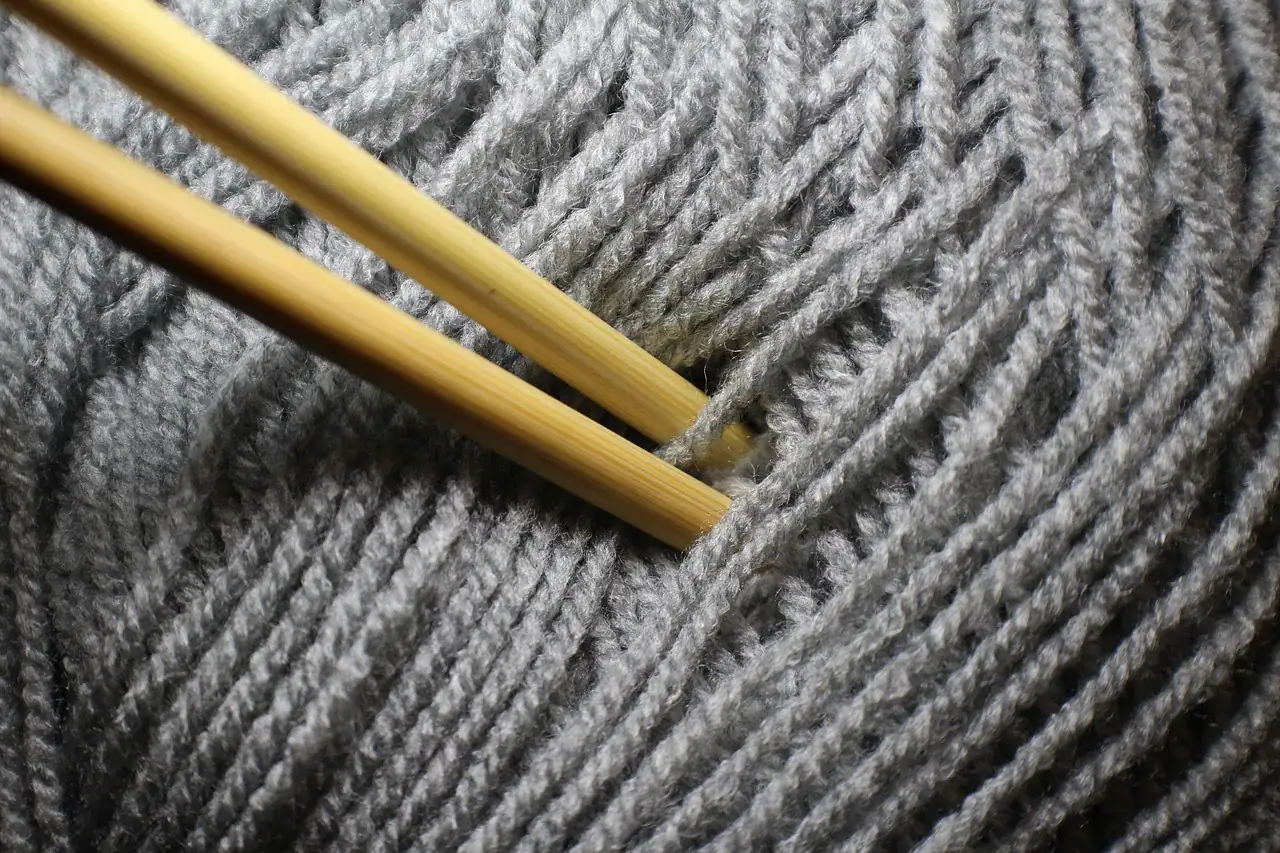
Cold, slick metal needles are the first thing to go. Hand surgeon Dr. J. Alan Lemley of Syracuse Orthopedic Specialists recommends bamboo knitting needles and ergonomic crochet hooks because they cut down on friction and are easier on arthritic hands.
The Arthritis Foundation adds two more reasons. Birch and bamboo are lightweight and warmer to the touch, so your hand isn’t warming up the tool all night. Its other tip is wool over cotton, because wool has some stretch and forgives a stiff hand. Cotton doesn’t give, and your fingers make up the difference. If cotton dishcloths are your summer habit, that’s the project working hardest against you.
Bigger needles and chunky yarn help your eyes as well as your fingers. Amanda the occupational therapist puts it this way: “Bulkier yarn and larger hooks often require less precision and visual demand.”
There’s a catch. Chunky yarn on big needles makes a heavy piece fast, and a blanket in bulky wool can drag on your wrist by the second skein. That’s the problem #15 solves.
#15 Circular needles that carry the weight
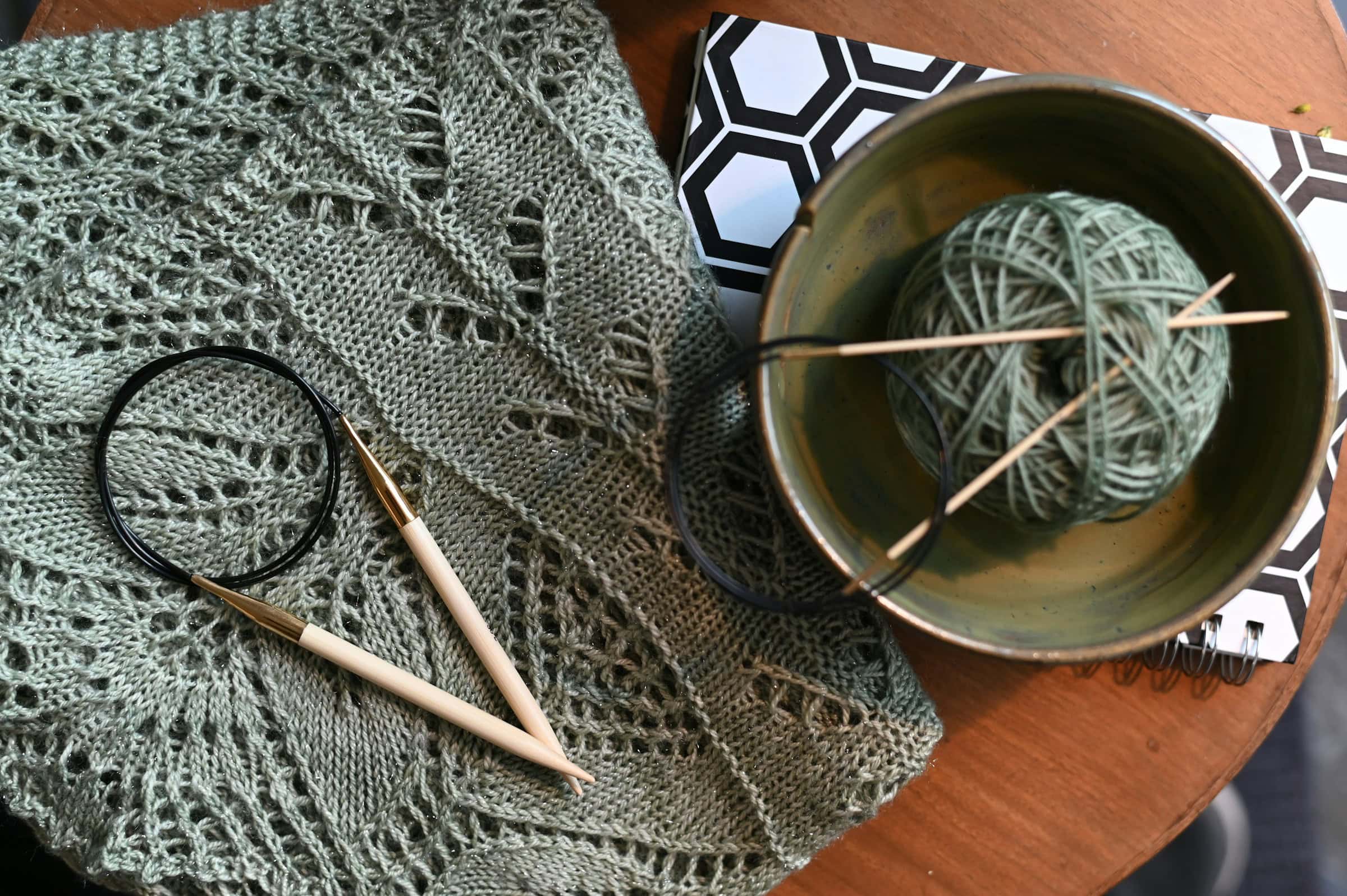
A circular needle is two needle tips joined by a bendy cable, and you don’t have to knit in the round to use one. The Arthritis Foundation’s advice is plain: “Knit flat on a circular needle. Even if you don’t need to make a tube, the circular shape allows the weight of the sweater to fall in your lap, not off your wrist.” (Arthritis Foundation)
On straight needles, the whole growing sweater hangs off the needle in your hand. On a circular, it slides onto the cable and rests on your knees.
Bamboo plus a cable puts #16 and #15 together. A Knitter’s Pride Bamboo fixed circular, 24 inches long in a US 10, was $6.95 at Fabric Yarn World in 2026, down from $8.69. The maker calls them “lightweight, quiet and warm in your hands.”
#14 Spring-loaded scissors that pop back open
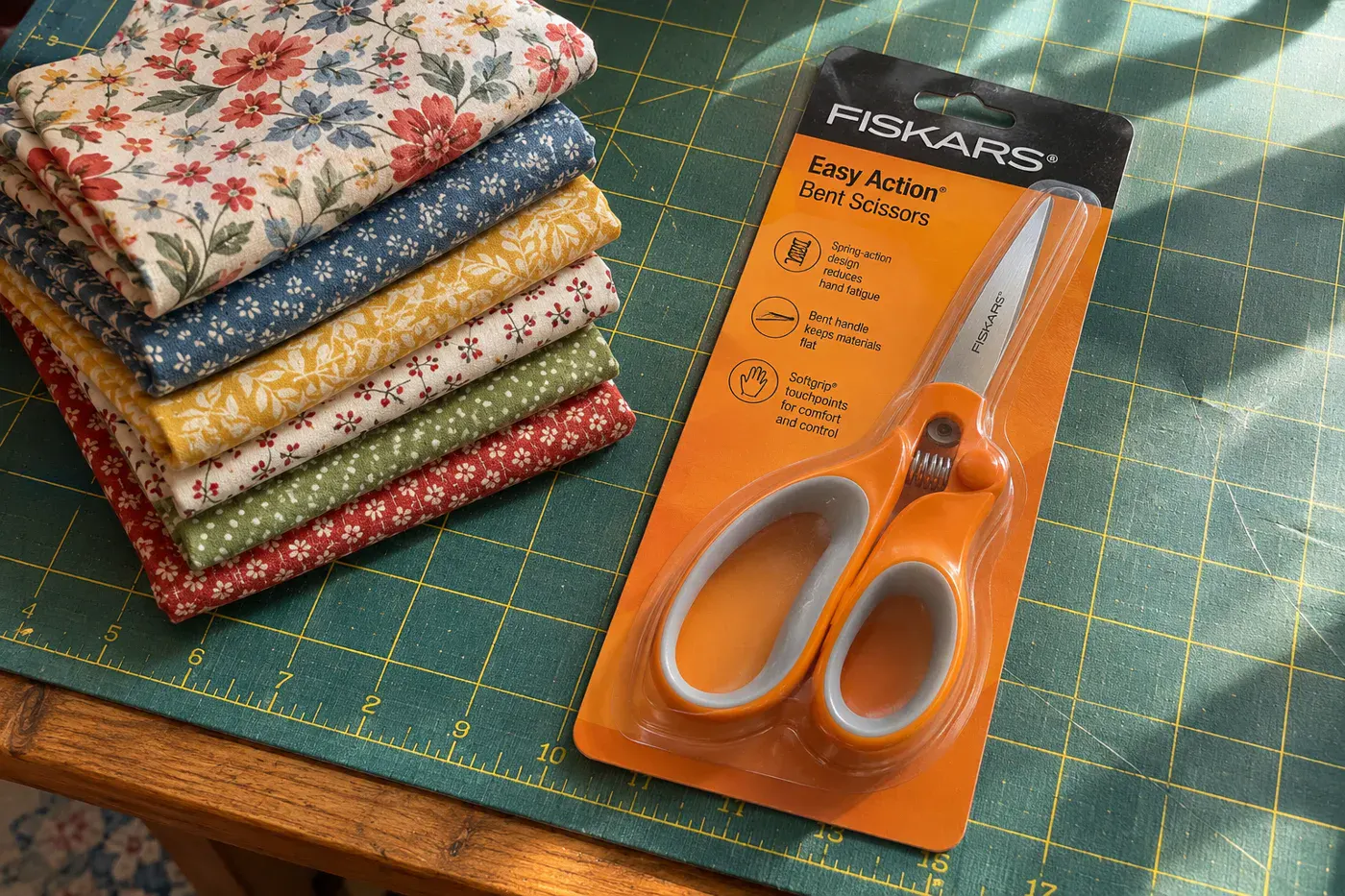
Closing scissors is half the work. Prying them open again is the other half, and a spring can do that part for you.
For quilting, the Arthritis Foundation names spring-loaded scissors outright, and adds a line worth remembering at the store: “Scissors must be sharp and fit your hand.” (Arthritis Foundation)
The pair you’ll see most is the Fiskars 8-inch Easy Action Bent Scissors, $22.95 at Sailrite. A spring opens the blades after every cut, and the retailer says they carry an Arthritis Foundation commendation for easy use.
If you can, hold a pair before you buy. A spring that’s too stiff for your hand just moves the strain to a new spot.
#13 A rotary cutter and a lower table
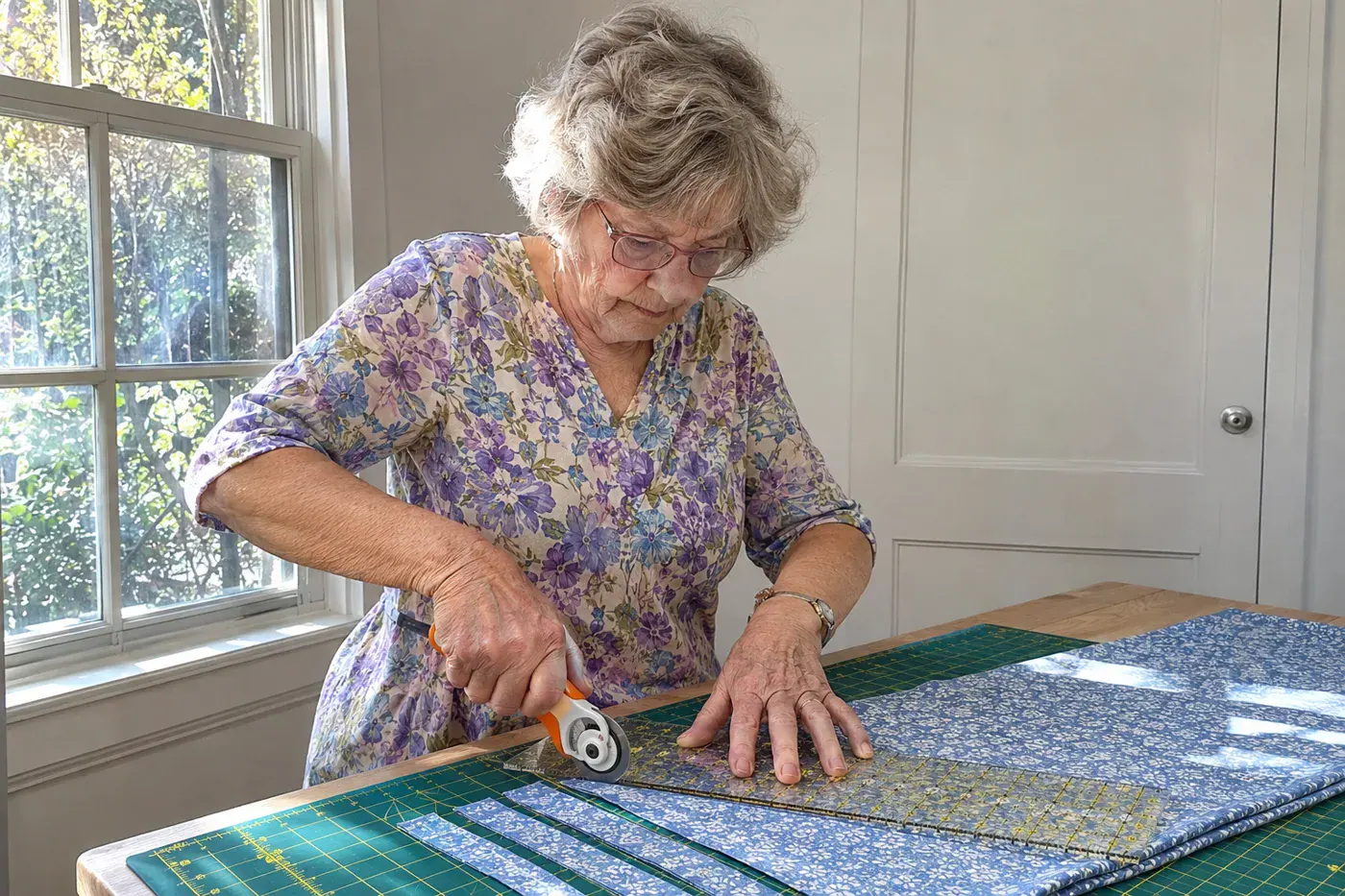
If you lean on your rotary cutter until your shoulder joins in, the table may be too tall. Quilting ergonomics educator Rose Rennick-Parr explains: “Rotary cutters require gravity to help with the downward pressure.” (Healthy Quilting)
For her, that means a table about 4 inches below elbow height. Her elbow sits 39 inches off the floor, so she cuts at 35. Scissors are different. They “glide,” she says, so a waist-high table works fine for them.
So one table can’t serve both jobs. A folding table or the kitchen table might come closer to your rotary number than a tall cutting table. If your cutter is due for replacing, OLFA lists its 45mm RTY-2/DX Ergonomic Rotary Cutter at $38.49 on its own site.
Find your cutting height
- Stand where you cut, in the shoes you cut in, with your elbow bent.
- Measure from the floor to the bottom of your elbow.
- Take off about 4 inches for rotary cutting.
- Keep a waist-high surface for scissor work.
#12 Loom knitting when needles get too hard
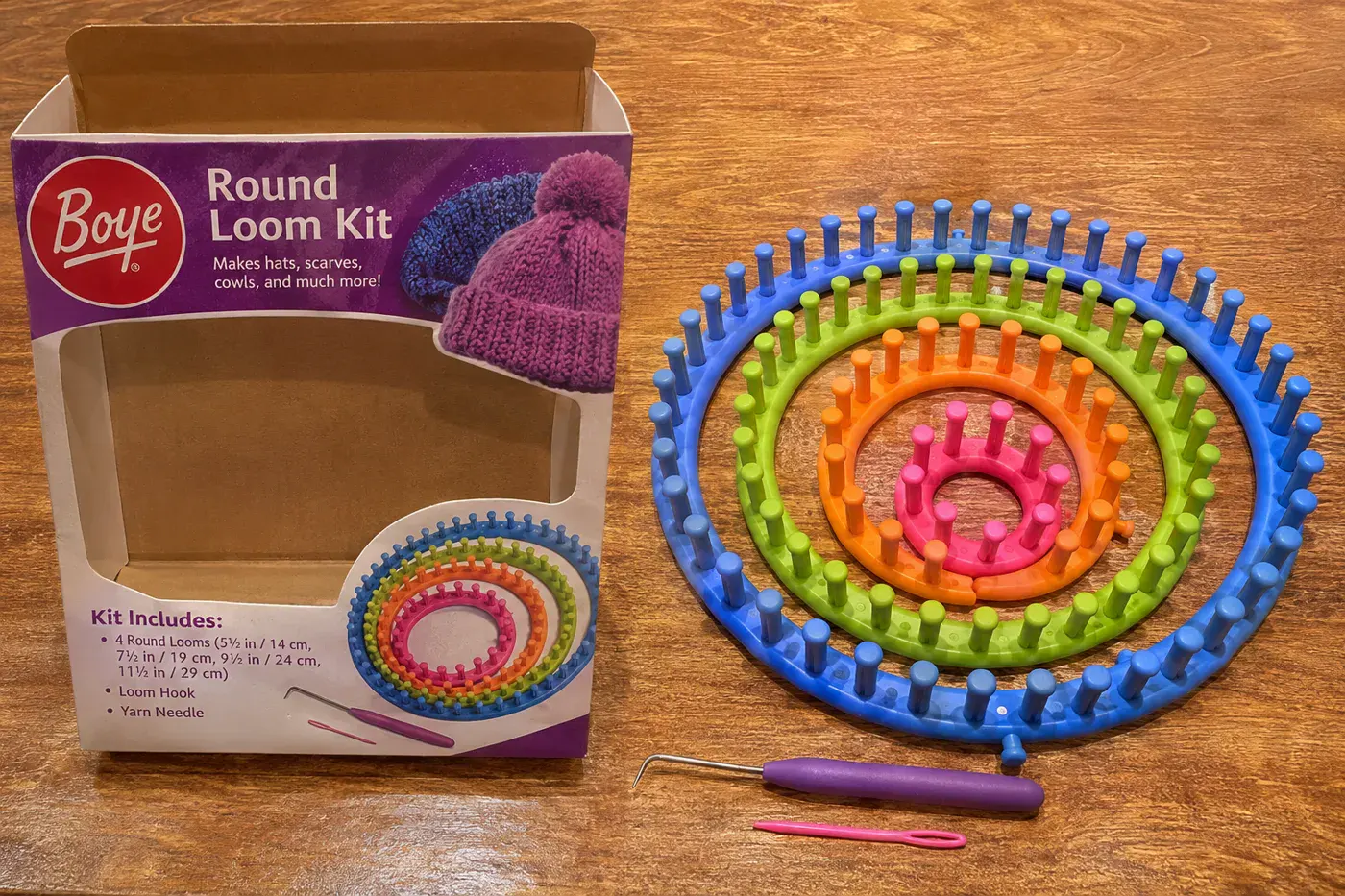
A Boye Round Loom Kit costs $19.95 at Weekend Kits. You get four round looms (5½, 7½, 9½ and 11½ inches), a hook and a needle, sold for “hats, booties, scarves & much more.”
Instead of holding two needles and tensioning yarn, you wrap pegs and lift loops over them. In Reddit craft threads, several knitters say they moved to a loom when needles got too hard, and one says members of her fibre arts group switched as their arthritis worsened. A crafter in r/crafts put it in one line: “I have right side weakness but can use a knitting loom.”
You can fatten the loom’s hook with a scrap of the foam tubing from #17.
#11 Compression gloves while you stitch
Crafters in Reddit threads on crochet, cross stitch and sore joints say their compression gloves help, but don’t fix everything. Two of them say the cheaper crafting gloves weren’t enough and they moved to firmer ones (r/CrochetHelp).
The best test of the idea points the other way. In a 2021 trial at UK hospitals, 206 people with rheumatoid or other inflammatory arthritis wore either snug, fitted compression gloves or loose ones that only looked the part, for 12 weeks. Hand pain eased by about the same amount in both groups, and the researchers wrote that both “had only minimal effects on hand pain and function.” (A-GLOVES trial)
Tighter didn’t beat looser. The researchers even suggested ordinary retail gloves might feel just as helpful for less money.
That trial wasn’t about osteoarthritis, the wear-and-tear kind. A small 2014 study of hand osteoarthritis had 30 people wear three-quarter-finger gloves for 4 weeks. They reported less pain and stiffness, but with no comparison group, the authors said the gloves can’t take the credit.
If a pair makes your hands feel better and you stitch longer, wear them. Just don’t pay extra expecting a treatment. If you have plain stretchy gloves in a drawer, give those a week first.
#10 Portuguese knitting, with the yarn on a pin
This one sounds odd until you see it. In Portuguese knitting, the yarn runs from a pin on your shoulder instead of being wrapped around your fingers, and you purl by flicking the yarn with your thumb.
Nia Smith, writing in Modern Daily Knitting in March 2026, says her pin “takes the tension off of my hands when I knit.” Her readers mention pins on Etsy from about $12 to $225.
Your thumb still works, and it’s a new way to hold everything, so plan on a few slow evenings and a practice swatch before you trust it with a gift. Start at the $12 end.
#9 Punch needle instead of a regular needle
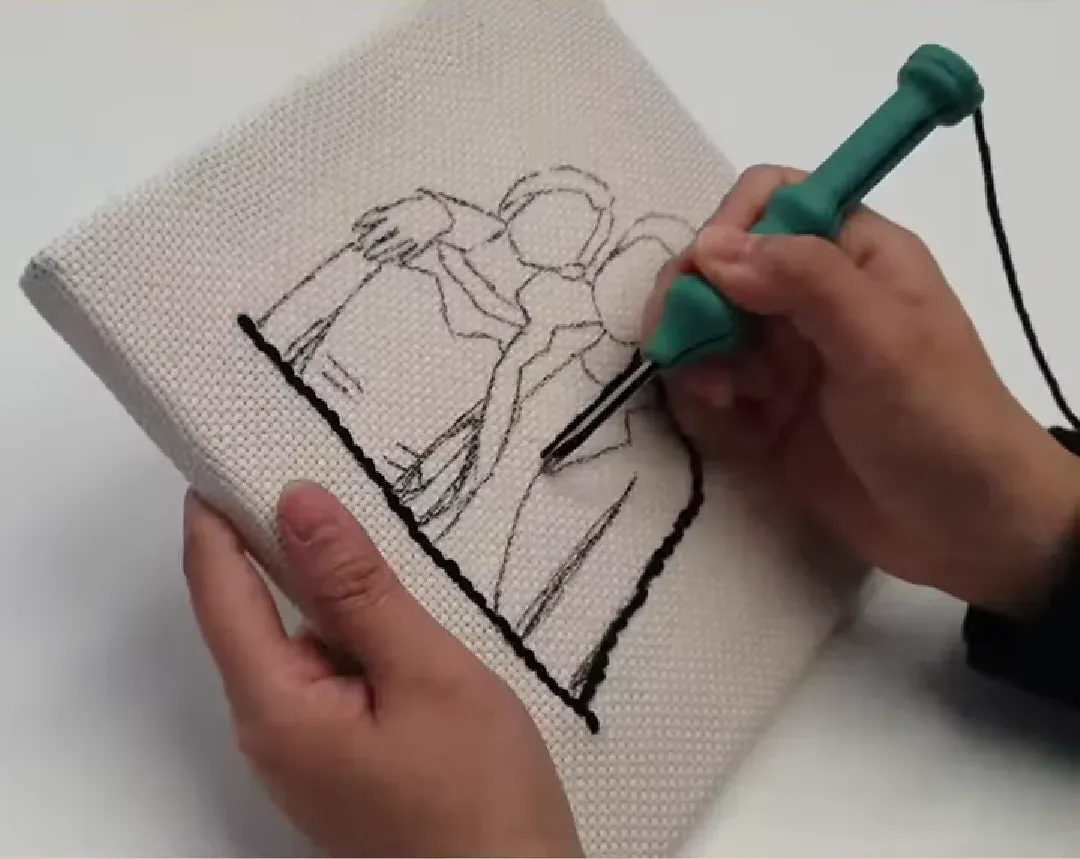
Regular embroidery asks your fingertips to pinch a tiny needle and pull it through, over and over. Punch needle never pulls. You push it down through the fabric and lift it back, and the loops stay on the other side.
The Arthritis Foundation suggests punch-needle embroidery because it “allows for better positioning of the hand and forearm and use of larger joints.” Your wrist and arm do the moving instead of your fingertips.
JAN Crafts sells an Ergonomic Punch Needle for $34, made for people with arthritis and held with “your palm and not your fingers.” That’s the needle alone. It comes in sizes #8 to #10 for 3-ply wool, so it suits designs with a thick, looped wool surface rather than fine floss work.
To try it cheaper, the Arthritis Foundation says you can build up an ordinary punch needle by wrapping it in medical or duct tape.
#8 A floor stand or lap frame for your work
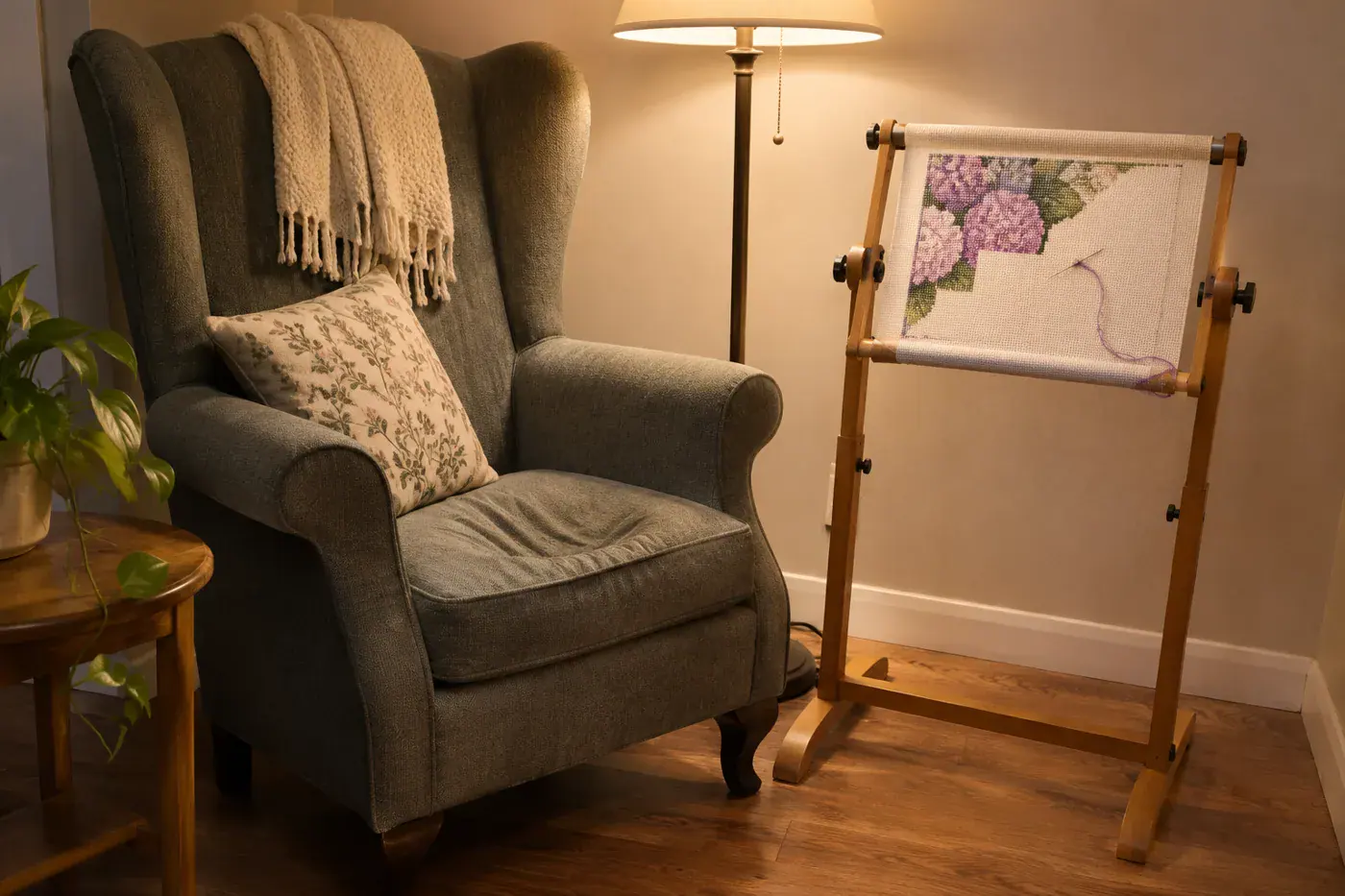
Count what your other hand does during an evening of cross stitch. It holds the hoop the whole time, and it never gets a break.
The Arthritis Foundation suggests a hoop holder “to free your non-dominant hand, which can then assist with needle movements.” That fits one of the core joint-protection rules: avoid a sustained grip. Mayo Clinic’s advice also says to use larger joints where you can.
Crafters on Reddit keep it practical. One stitches with her frame on a floor stand. Another pins macramé to a cork board so neither hand has to hold it steady. People with shaky hands rest the working hand on the table (r/crafts, r/CrochetHelp).
If you have limited dexterity in one hand, any of these lets the stronger hand do the stitching while the other just guides. A floor stand costs real money: Lowery’s own shop lists its Silver Grey Workstand With Side Clamp at £122, priced in British pounds. A cork board from the office supply aisle will do the job for much less.
#7 Eleven-count Aida instead of fourteen
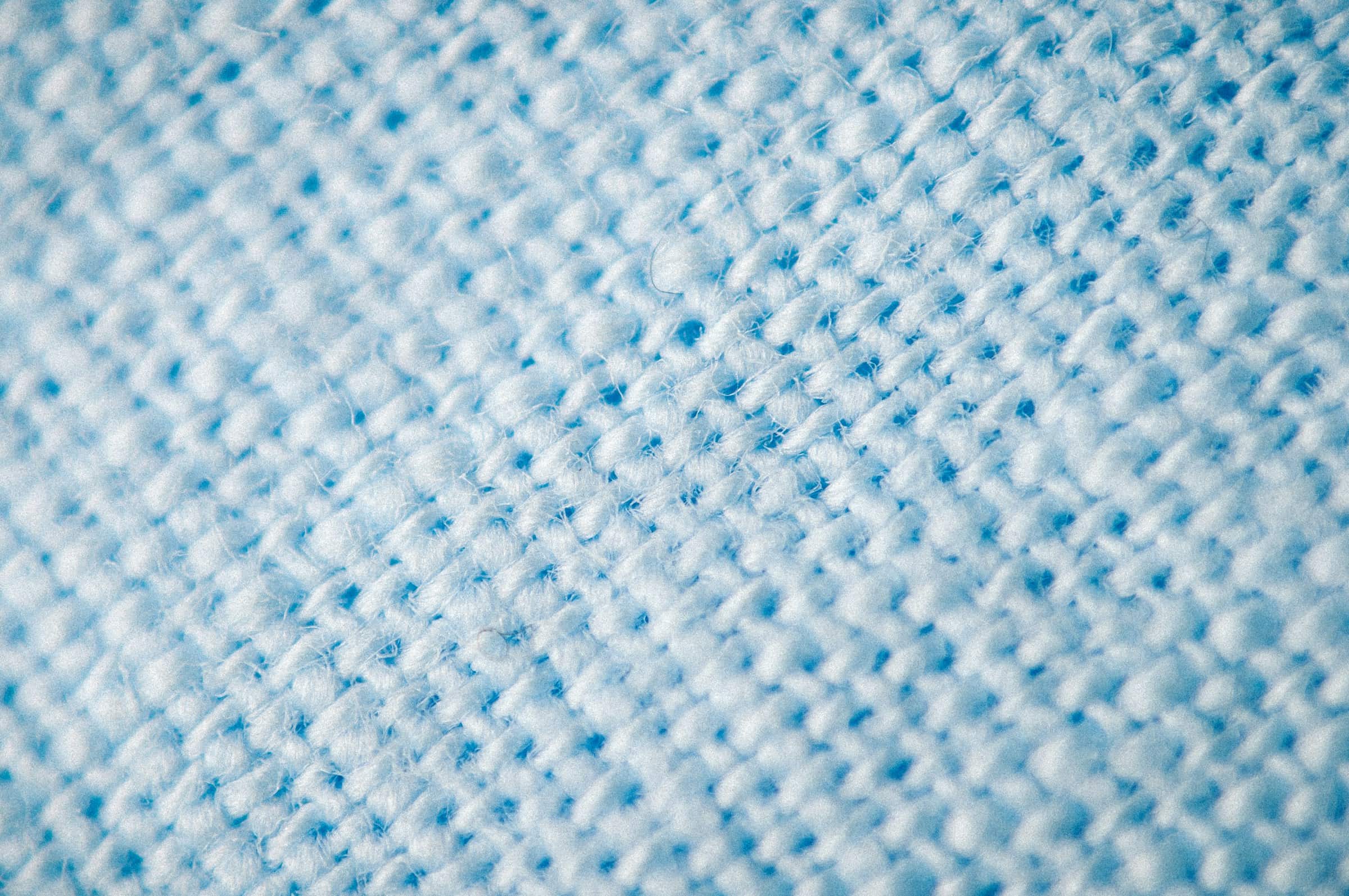
The Arthritis Foundation suggests stitching on lower-count fabric, which has more space between stitches so the needle moves more easily (Arthritis Foundation). Here’s what changes when you drop from 14-count to 11:
| 14-count | 11-count | |
|---|---|---|
| Strands of floss | 2 | 3 |
| Needle size | 24 to 26 | 20 to 22 |
| A design 140 stitches wide | 10 inches | about 12¾ inches |
The thread and needle sizes come from Needlework Tips and Techniques, which describes 11-count’s “large, easy-to-see holes.” A thicker needle is easier to grip, and a bigger hole means less poking around for the right spot.
What could trip you up is the bottom row of that table. Your pattern grows by more than a quarter, so buy a bigger piece of cloth and check that it still fits the frame you meant to use. You’ll also go through floss faster at three strands a stitch.
On Reddit, people with joint problems say cross stitch stays manageable with breaks, and people with shaky hands suggest larger fabric (r/crafts).
#6 Smaller projects and a looser grip
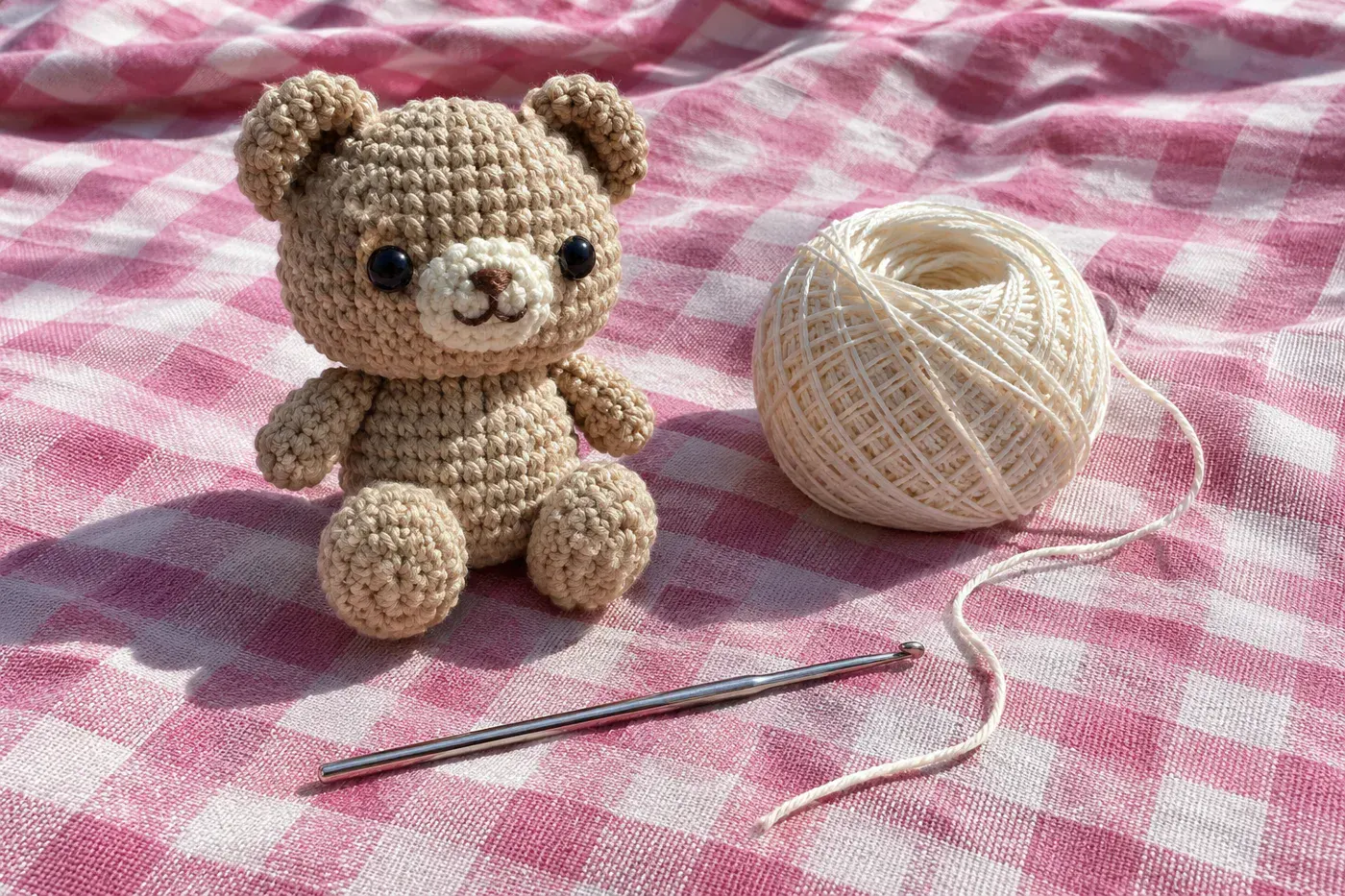
Amigurumi has a reputation for needing a death grip on the yarn. Designer June Gilbank of PlanetJune tested that on herself. Crocheting with tight hand tension made her yarn hand “cramp from pulling the yarn so tightly.” The firm little stitches came from a smaller hook, not tighter hands:
“The tightness of amigurumi stitches refers to the tension of the small stiff stitches of the fabric you produce, not to the tension in your hands.” June Gilbank, amigurumi designer, PlanetJune
So drop a hook size and let your hands relax. The fabric comes out just as firm.
Size matters at the other end, too. “Smaller projects” sits right on the Arthritis Foundation’s list of quilting tips (Arthritis Foundation). A wall hanging or a lap quilt gets finished. A king-size quilt means hours of wrestling heavy layers, and it can sit half-pieced in the closet for years.
#5 Shorter sessions on a kitchen timer
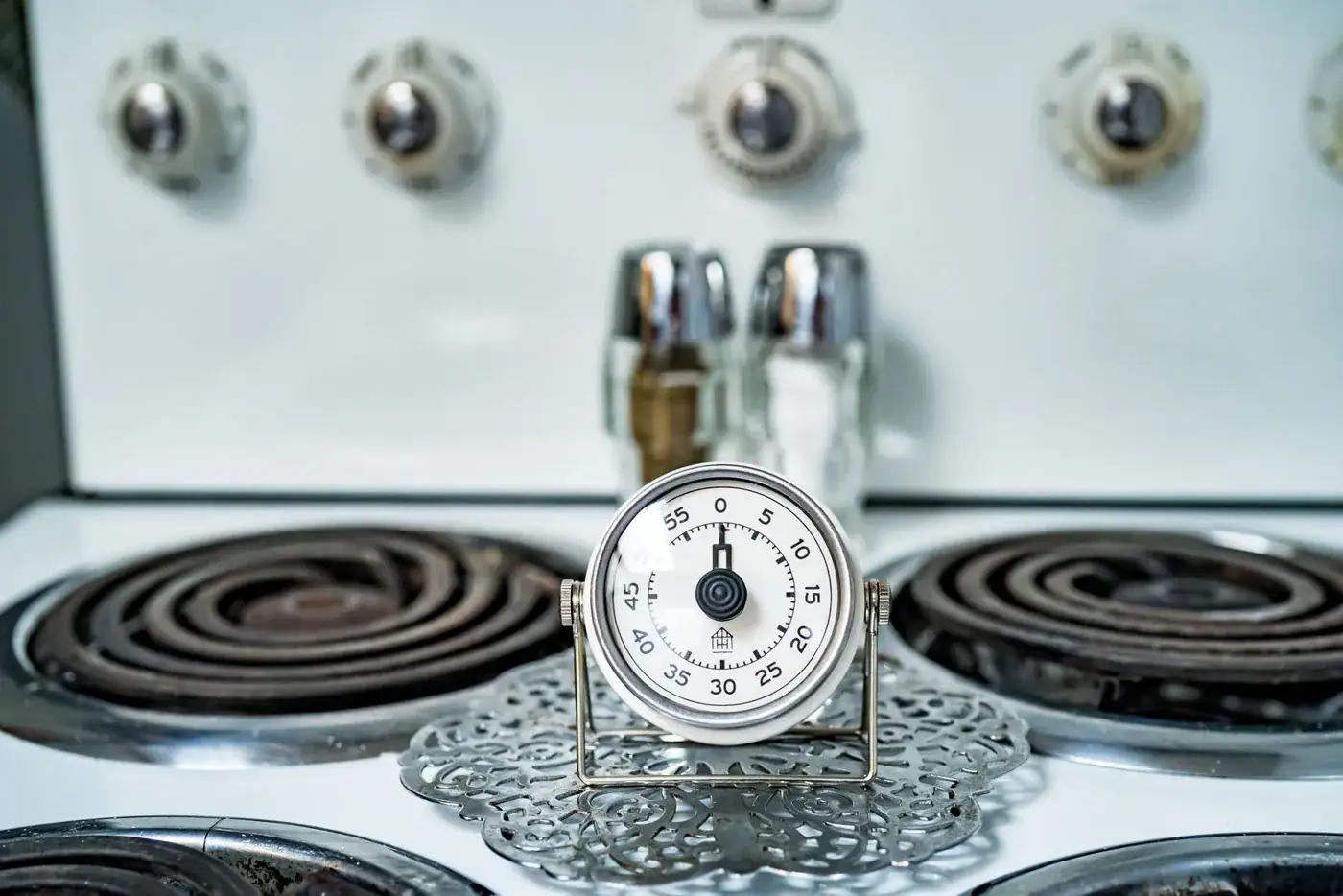
“Take breaks” is advice everyone gives and nobody times. The actual number comes from Teresa Dufeny of the American Occupational Therapy Association, who advises “standing, walking, or stretching all joints while seated, for three to five minutes every 30 to 45 minutes.” (Arthritis Foundation)
That’s what the kitchen timer is for. Crafters on Reddit set timers, and a rock painter dealing with a carpal tunnel flare cut her sessions in half: “I only paint 2 hours instead of 4.” (r/crafts)
Here’s how to set it up:
- Set the timer for 30 to 45 minutes when you sit down, not when it starts to hurt.
- When it rings, stand up, walk to the window, and give it 3 to 5 minutes.
- Check two hours after you stop. The Arthritis Foundation’s rule for exercise is that more joint pain two hours later than before you started means you overdid it. It wasn’t written for crafting, but it’s a reasonable rule of thumb to borrow for an evening of stitching.
- If you overdid it, shorten the next session and try again.
“I actually find my hands feel better if I crochet regularly as long as I don’t overdo it and I do take breaks.” A crocheter with fragile joints, r/ehlersdanlos
#4 Warming hands before you start
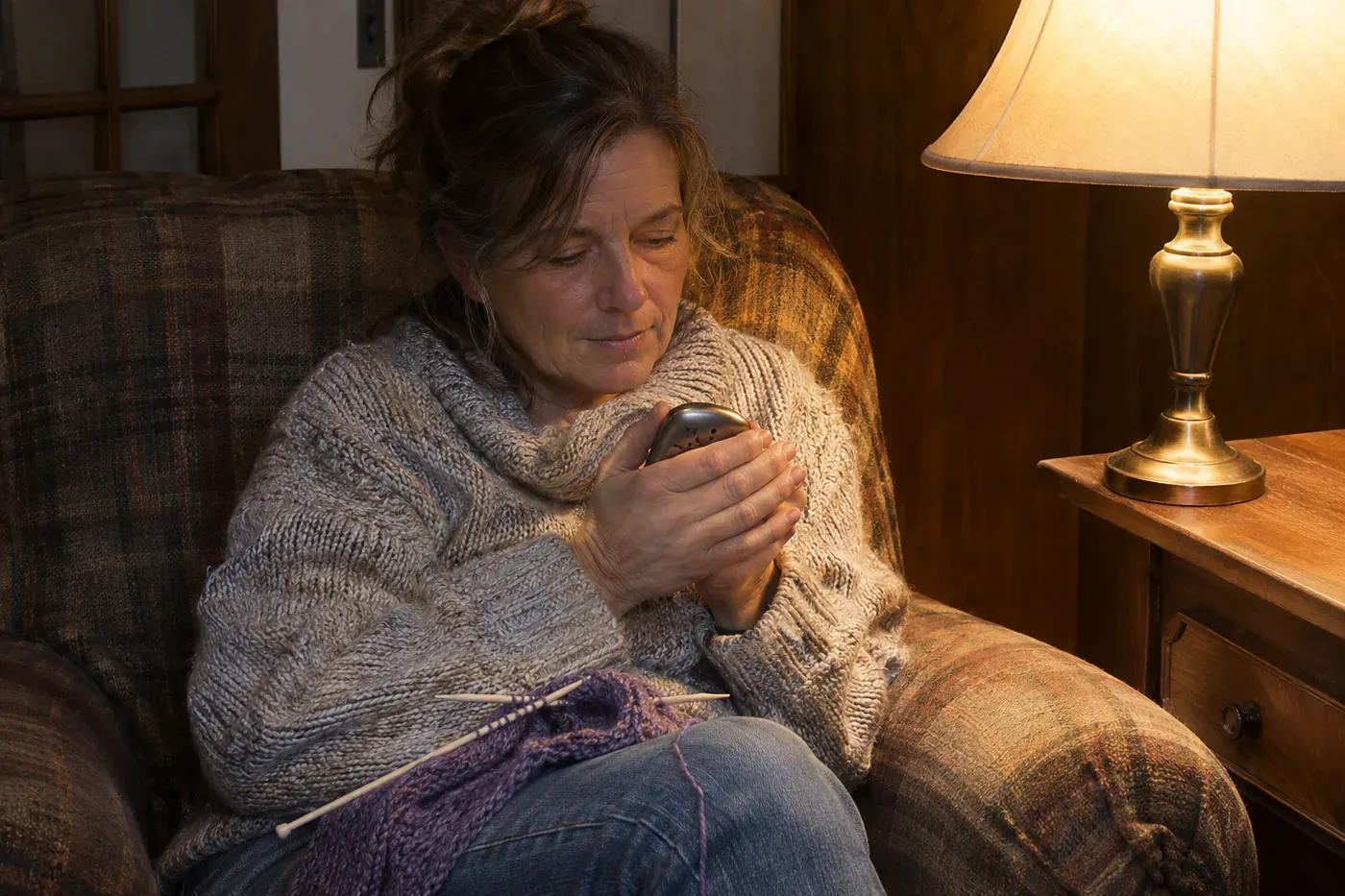
Some evenings your fingers take ten minutes to wake up. The Arthritis Foundation says gentle warming with paraffin dips or hand warmers may help stiff, cool hands before needlework.
The evidence is decent but short-term. A 2026 review of 9 trials in hand osteoarthritis found that heated gloves, paraffin and mud therapy eased pain and improved grip strength in the short run, and heat worked better combined with other treatments than alone. Nobody measured what happens over months. The guideline arthritis doctors use calls heat only conditionally recommended, which means worth trying, not a sure thing.
Skip the heat when a joint is red, swollen or in a flare, the Arthritis Foundation says. Paraffin baths are a poor fit if you have diabetes, poor circulation, reduced feeling in your hands or an open cut, according to a rheumatologist-reviewed guide.
The low-fuss way to warm up your hands is a pocket hand warmer in your lap while you work the first rows.
#3 Finger splints and thumb braces for crafting
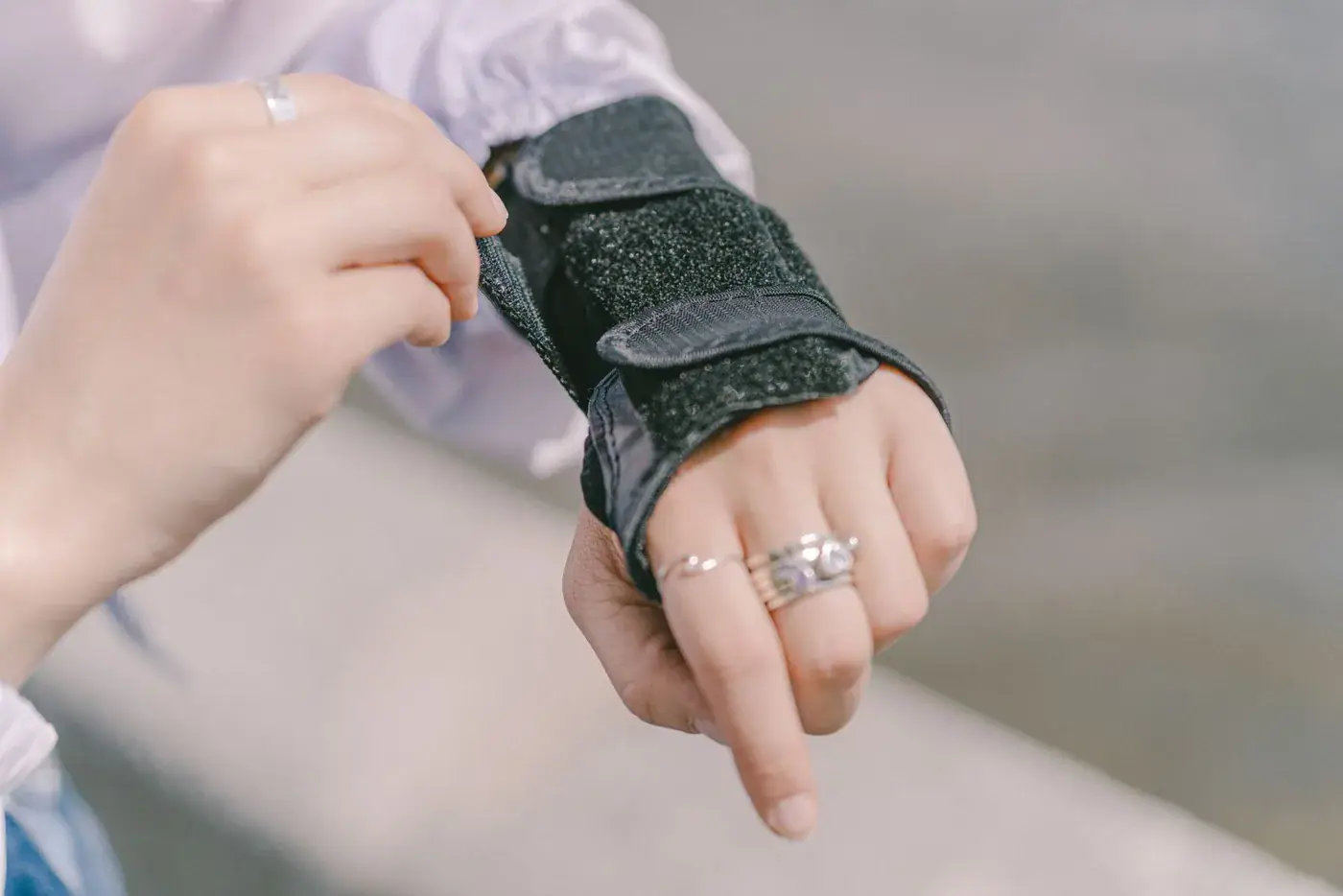
That same guideline strongly recommends a splint for the joint at the base of your thumb, where it meets the wrist. Splints for the other finger joints get only a conditional recommendation (review of the 2019 guideline). If the ache lives at the base of your thumb, a thumb splint has better backing than any finger splint.
The price gap is wide:
- Off the shelf: the Comfort Cool Wrist & Thumb CMC splint runs $39.87 to $39.97. It’s thin perforated neoprene with a terrycloth lining, and it leaves your fingers free to work.
- Custom: at a New York clinic where certified hand therapists make every splint, prices run $200 for finger-based, $225 for hand-based and $250 to $350 for forearm-based splints, and you need a doctor’s prescription.
That’s $160 to $310 more for custom, and prices elsewhere will differ. Start with the $40 one. A custom splint makes sense when the store version doesn’t fit your hand or your work.
Crafters on Reddit wear finger braces, wrist wraps and ring splints while they work. The rock painter from #5 adds: “I wear a wrap around brace.” (r/crafts)
#2 Seeing a certified hand therapist
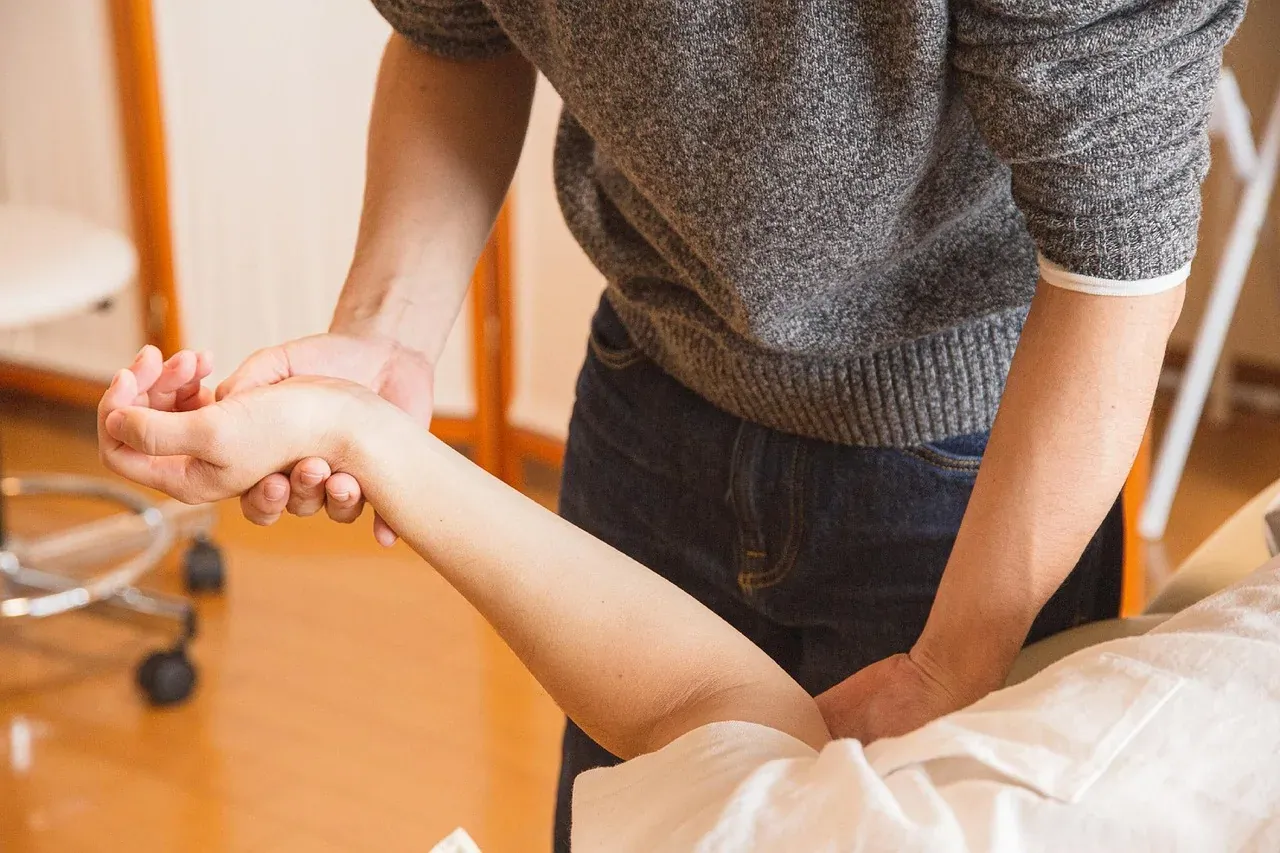
Most people have never heard of this specialty. “A hand therapist is an occupational therapist or physical therapist who, through advanced study and experience, specializes in treating individuals with conditions affecting the hands and upper extremity,” says the American Society of Hand Therapists. This is the person who can watch you hold your hook and tell you what to change.
Dr. Lemley, the hand surgeon from #16, says to see a hand specialist if needlework aggravates your arthritis. Splints and cortisone shots are among the options.
If you have Medicare, Part B helps pay for outpatient occupational therapy when your doctor certifies you need it. You pay 20% of the approved amount after the deductible, and “There’s no limit on how much Medicare pays.” (Medicare.gov) The 2026 deductible is $283. Once a year’s charges pass $2,480, the therapist just adds paperwork showing you still need it.
If your therapy reaches that $2,480 mark and you’ve paid nothing else toward the deductible that year, your share comes to about $722. A Medigap policy or other coverage would change that. Cleveland Clinic says hand therapy usually lasts “several weeks to several months.”
What the letters CHT mean
- At least 3 years of experience and 4,000 hours of hand therapy practice
- A passed certification exam
- Recertification every 5 years
- Listed in the American Society of Hand Therapists directory at asht.org
#1 Weaving on a frame loom
In 2016, Selma Moss-Ward had tenosynovitis and carpal tunnel syndrome. Her doctor didn’t soften it:
“You need to stop, or drastically limit knitting.” Selma Moss-Ward’s doctor, as she wrote for Lion Brand
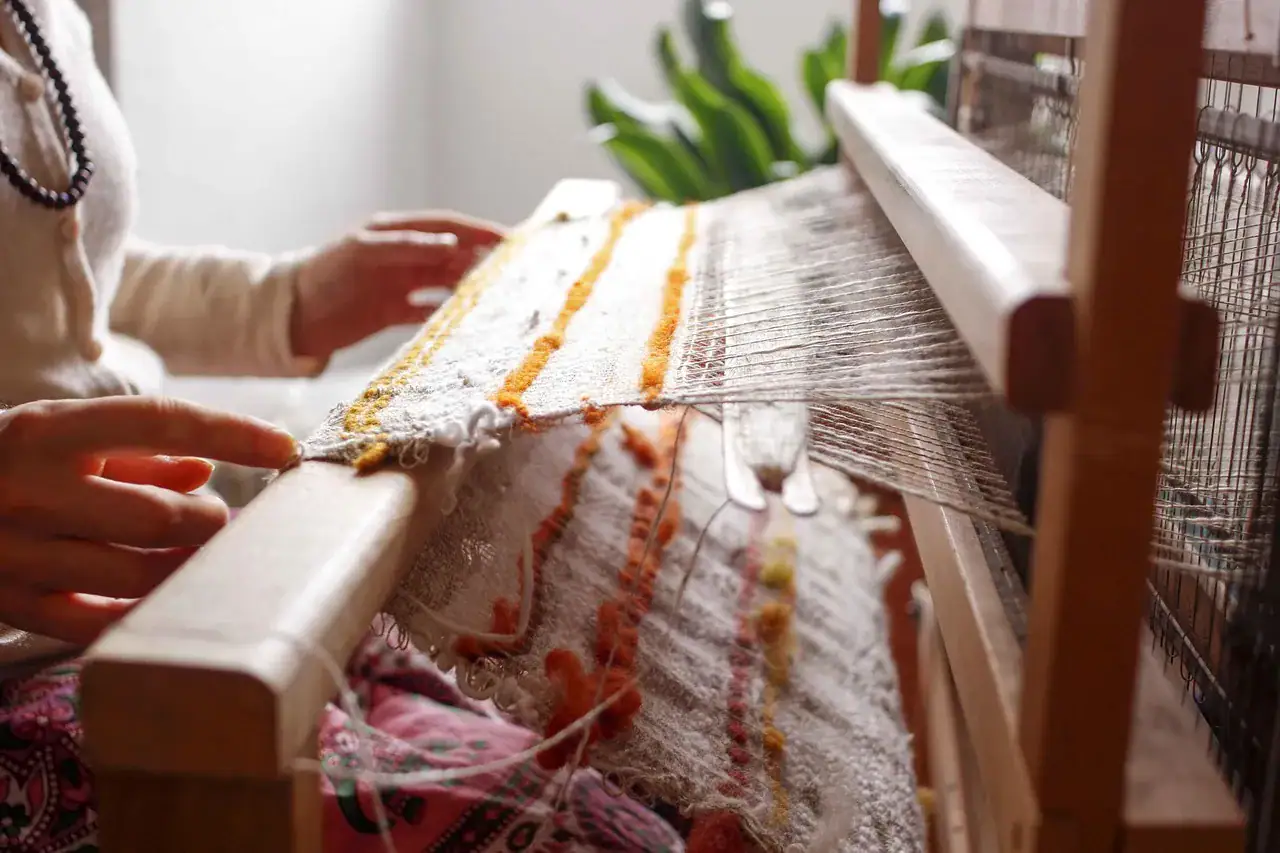
She didn’t stop making things. She switched to a simple frame loom, the Martha Stewart Crafts DIY Easy Weaver, and her Lion Brand piece gives a hand therapist’s view of it.
Victoria Moitoso, Director of Occupational and Hand Therapy at Foundry Orthopedics and Sports Medicine in Providence, Rhode Island, liked two things. The shuttle and comb are big, and bigger objects work best for hands that hurt. And the work is split almost evenly between both hands.
Think how lopsided crochet is, with one hand doing the hooking all evening. On a frame, both hands share the job, and neither one has to pinch anything small.
Weavers on Reddit say much the same: it uses bigger hand and arm movements and asks less of fingers and wrists (r/crafts). Of all the easy crafts for stiff hands, this is the one with a hand therapist’s reasons behind it.
It’s a new craft, and the pieces come off the frame flat, so you won’t weave a cardigan. Brooklyn maker Whirlwind Yarn sells a Frame Loom Weaving Kit for $95, with the loom, two shuttles, a comb, four tapestry needles and some yarn to start. Your yarn stash comes with you, though. It all works for the weft, the yarn you pass across.
The bottom line
Next time you sit down to make something, notice which hand gives out first and what it was holding. That tells you where to start: the hook, the hoop, the scissors or the length of the session.
If it’s the hook hand, a $13.97 bag of foam tubing will sleeve most of a hook roll. Put it on the hook you use most, set the timer for somewhere between 30 and 45 minutes, and see how the evening goes.
If a month of that doesn’t change much, write down what hurt and when, and take the list to a hand therapist. Bring the hook, too.
Bonus: five small fixes for the rest of your workbasket
- Get a threader made for thick yarn. Clover’s Needle Threader for Embroidery Needles has a flat tip for heavy threads and yarns and was $11.96 at 123Stitch. Self-threading needles cost less, but VisionAware warns the thread can un-thread with too much force or fray during threading. The same guide’s general sewing tips separately suggest coating thread with beeswax to strengthen it and prevent splitting.
- Send the quilting out. The Arthritis Foundation lists long-arm quilting services among its quilting options.
- When you shop for a sewing machine, ask for a start/stop button and a speed slider. The Brother NS80e has both, plus an automatic needle threader, for $699.99 at The Sewing Machine Shop.
- Keep two different projects going, one with a hook and one with a needle, and switch between them. Dr. Lemley advises changing crafts so the same motion doesn’t repeat all evening.
- Save a length of that foam tubing for your paintbrushes and pencils. The Arthritis Foundation says built-up handles put less stress on finger joints, whatever you’re holding.
Questions people also ask
Is knitting or crocheting easier on arthritic hands?
Neither one wins on its own, and no study we found compares them. The tools matter more: the Arthritis Foundation suggests rubber-gripped or built-up hooks for crochet and light birch or bamboo needles on a circular cable for knitting. Debbie Amini of the American Occupational Therapy Association told the Arthritis Foundation that needlework “can actually be an excellent method for maintaining movement and strength.”
Do compression gloves really help with crocheting or cross stitch?
The best trial says not much. In a 12-week trial of 206 people with rheumatoid or inflammatory arthritis, snug compression gloves did no better than loose placebo gloves. No study we found tested gloves during crochet. If you want to try a pair, the trial’s authors suggested an ordinary retail glove may do as much for less.
Is crocheting bad for arthritis in your hands?
Not in itself, according to occupational therapy and hand surgery experts. Debbie Amini of the American Occupational Therapy Association calls needlework a good way to maintain movement and strength, as long as the tools and technique fit your hands (Arthritis Foundation). Hand surgeon Dr. J. Alan Lemley says moving the finger joints “keeps the joints well-hydrated, and may minimize arthritis flare-ups.”
Are ergonomic crochet hooks worth it?
If thin hooks hurt, a fatter handle is worth trying, and you can test the idea for about $2.33. A Clover Amour hook costs $10.75 to $15.50 at Clover’s store, and an occupational therapist explains that bigger handles cut the pinch force a thin hook demands. Foam tubing over the hooks you already own gives you the same thick grip for much less.
When should I see a hand therapist about craft pain?
See one when crafting keeps leaving your hands worse, or when pain hangs on. The Arthritis Foundation’s rule, written for exercise but useful as a rough guide for crafting too, says more joint pain two hours after than before means you overdid it, and pain lasting more than a few days calls for your doctor. You can find a certified hand therapist through the American Society of Hand Therapists, and Medicare Part B helps pay when a doctor certifies you need therapy.