From a sealed paint-by-number kit to the wooden cabinet the thread spools sat in, here’s which vintage craft supplies are worth money, what they actually sold for, and what mostly doesn’t sell at all.
Save the cabinet the thread sat in for last. It’s the one antiques columnists valued at more than $1,000.
The box is heavier than it looks. Inside, pattern envelopes lean against each other like files in a drawer. The corners have gone soft, a little tissue pokes out of one, and another has 65 cents printed on it. The back seat is already folded down for the Goodwill run.
Before the box goes in, give it ten minutes at the kitchen table. A few of the pieces worth real money look exactly like the ones that aren’t.
#10 The 1950s Dress Patterns In Their Envelopes
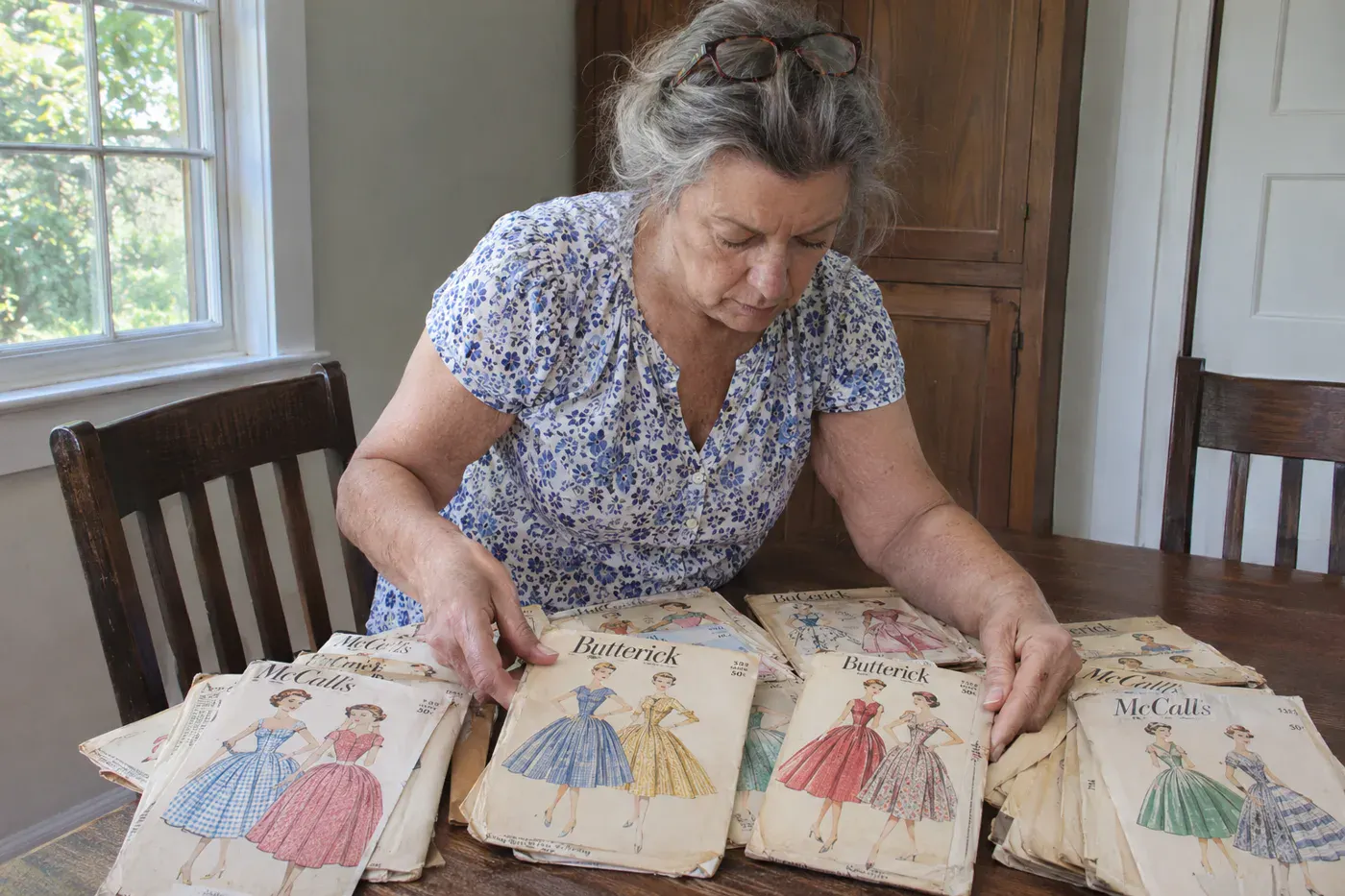
Start with the honest answer on whether old sewing patterns are worth money, because hardly anyone gives it. Most of them sell for a few dollars, if they sell at all. One collecting guide says the most expensive patterns generally only sell for about $350, “while the majority of patterns are only valued at a mere few dollars each.”
People who handle them every week are blunter.
“These patterns rot at estate sales unsold and at thrift stores by the thousands.” A longtime antique dealer, on Reddit’s r/ThriftGrift
A thrift-store pricer in the same thread, reacting to much higher pattern tags elsewhere, wrote: “I’m a thrift pricer, I do .49 on all patterns. This is insane.”
Part of the reason is that new supplies are a bargain. We compared the government’s price index for sewing machines, fabric and supplies with overall prices from December 1997 to October 2026. Overall prices roughly doubled. Sewing supplies barely moved. After inflation, new sewing supplies cost about half what they did in 1997. When the new thing is that cheap, the old thing has to be special.
Age is where special starts, and the envelope may tell you, depending on who printed it:
- McCall’s always dated its patterns.
- Simplicity stopped dating in the 1950s and started again in the 1960s, on the back of the envelope.
- Vogue rarely dated them.
- Butterick never did.
That’s from the same collecting guide. For a stack of undated Buttericks, pattern collector Lizzie Bramlett points you to the picture: “Sometimes the only way to determine the age of a pattern is from the styling of the illustration.”
The tissue helps too. Simplicity sold unprinted patterns until 1946, so plain, unmarked tissue in a Simplicity envelope is an early clue. Look at the printed price as well. A 1950s Butterick men’s shirt pattern cost 35 cents, and a 1959 Advance dress pattern cost 65 cents.
Advance was sold only through J.C. Penney. If one is in the box, somebody bought it there.
#9 The Wooden Embroidery Hoop In The Drawer
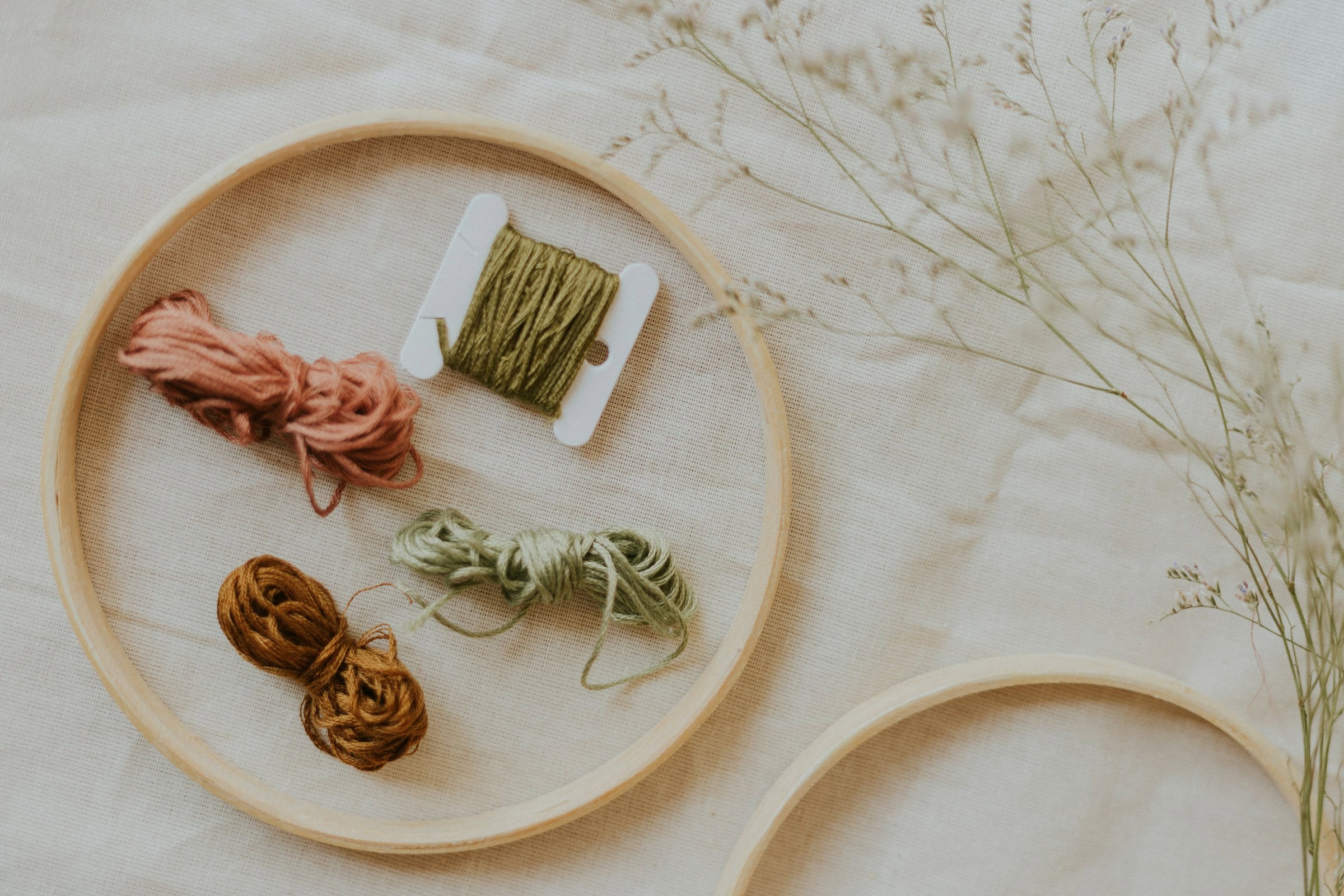
Thrift stores have noticed hoops. On r/ThriftGrift, shoppers complain about small wooden embroidery hoops tagged far above anything they’d pay, and the comments pile up in agreement. One commenter summed up the thinking behind those thrift store prices:
“Hoops are associated with kind grandmothers and home comfort!” A commenter on an overpriced-hoops post, r/ThriftGrift
A shelf tag only tells you what a store hopes for. Nobody has paid it yet. For the ordinary screw-tension hoops in your drawer, the sensible move is to keep the sizes you reach for and let the rest go.
One kind deserves a second look: the Duchess hoop. Lewis Gibbs of Gibbs Manufacturing in Canton, Ohio, patented it in 1897 as an “Embroidery Ring.” There’s no screw and no metal at all, just a felt-lined inner ring that holds the fabric. The company kept going until 2001, so these still turn up in sewing baskets.
You can check one in about five seconds. If there’s no hardware and you see felt on the inside ring, you’ve got one.
Mary Corbet, the embroidery expert behind Needle ‘n Thread, writes that Duchess hoops “have become collectible items, with prices escalating online.” She doesn’t name a figure, so look up what one actually sold for before it goes in the donation bag.
#8 A Box Of Someone’s Leftover Yarn
A stash can be sold all at once, and at least one shop publishes exactly what it pays. Yarn Saver, a secondhand yarn shop in Middlefield, Connecticut, buys yarn after an online assessment. It also says plainly what it won’t take: anything with pests or pest damage (bites, holes, eggs), water damage, mold, a strong smell or heavy matting. It doesn’t take patterns, either, but it won’t turn yarn away for its brand or fiber.
What a secondhand-yarn buyer actually pays – 30% of the shop’s assessed value, as store credit – 25% if paid by PayPal – 20% if paid by check – 5% more if the yarn arrives sorted by brand in clear bags
On a stash they value at $100, that’s $20 by check or $30 in credit. You also pay all the shipping to send it in.
Moths are the thing that sinks a yarn sale, so deal with them before anything leaves the house. Virginia Tech Extension entomologists Theresa Dellinger and Eric Day say clothes moths die in a freezer colder than 18°F for 24 hours. The cedar block tucked in the bag won’t do it: “Cedar oil kills small, but not full-grown larvae, but only until the oil dissipates.”
Freezing protects the rest of the stash, but it won’t close a hole. A skein that’s already been chewed will still be turned down.
Leave the ball bands on, especially on anything discontinued, since sorting the stash by brand is worth that extra 5%.
Not every skein belongs in the same pile, either. Yarn.com suggests listing unique, hand-dyed or luxury skeins one at a time. For a big pile of acrylics and partial skeins, it says one bulk lot “can be much more efficient.”
#7 The 1970s Patterns You Sewed Yourself
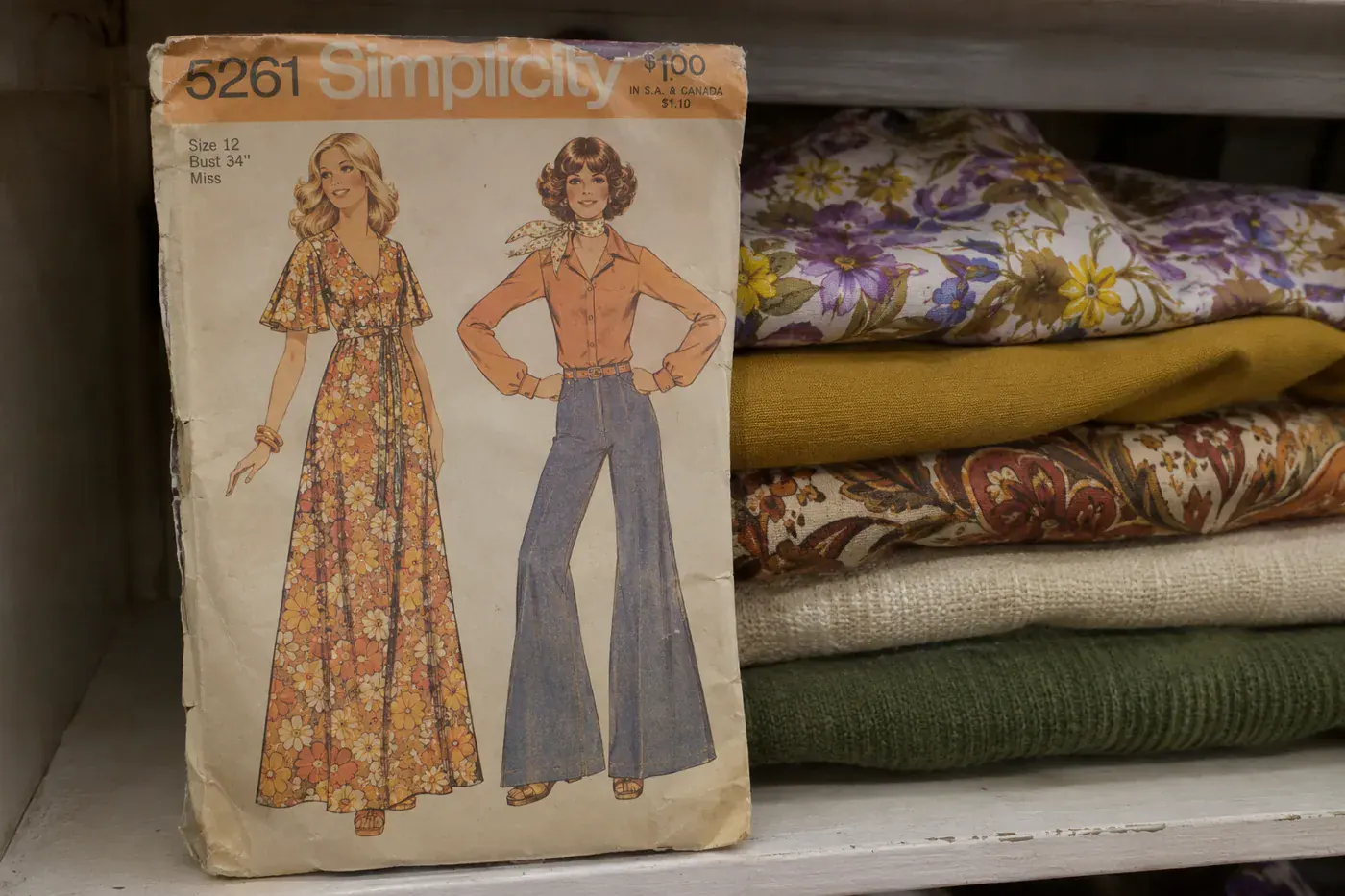
If you sewed in the 1970s, you may remember the envelope better than the dress. You’ll recall the long, lean drawing, the hem brushing the floor, and the bell bottoms that took a whole Saturday.
Those are the patterns sewers are hunting now. The Plano, Texas chapter of the American Sewing Guild tells its members: “If you happen to be out and about at thrift stores or garage sales and see 1960 and 1970’s era patterns for under a $1.00, snag them.” The guild lists the styles worth grabbing as “mini skirts, maxi dresses, bell bottoms, hippy and Twiggy inspired clothing.”
Notice the price in that advice, too. Sewers want these to sew, and most expect to pay pocket change.
Then there’s the trap. The same guild warns that “Simplicity and Vogue have been re releasing vintage patterns,” and that “the reissued patterns have changes to the original instructions and to the sizing.” A reprint looks like the real thing from across a room.
The original instructions are what a reprint can’t give a buyer. If you bought the pattern new back then, you have the original. If it came into the house later, check the year printed on it before you call it vintage.
#6 Unused Hot-Iron Embroidery Transfer Sheets
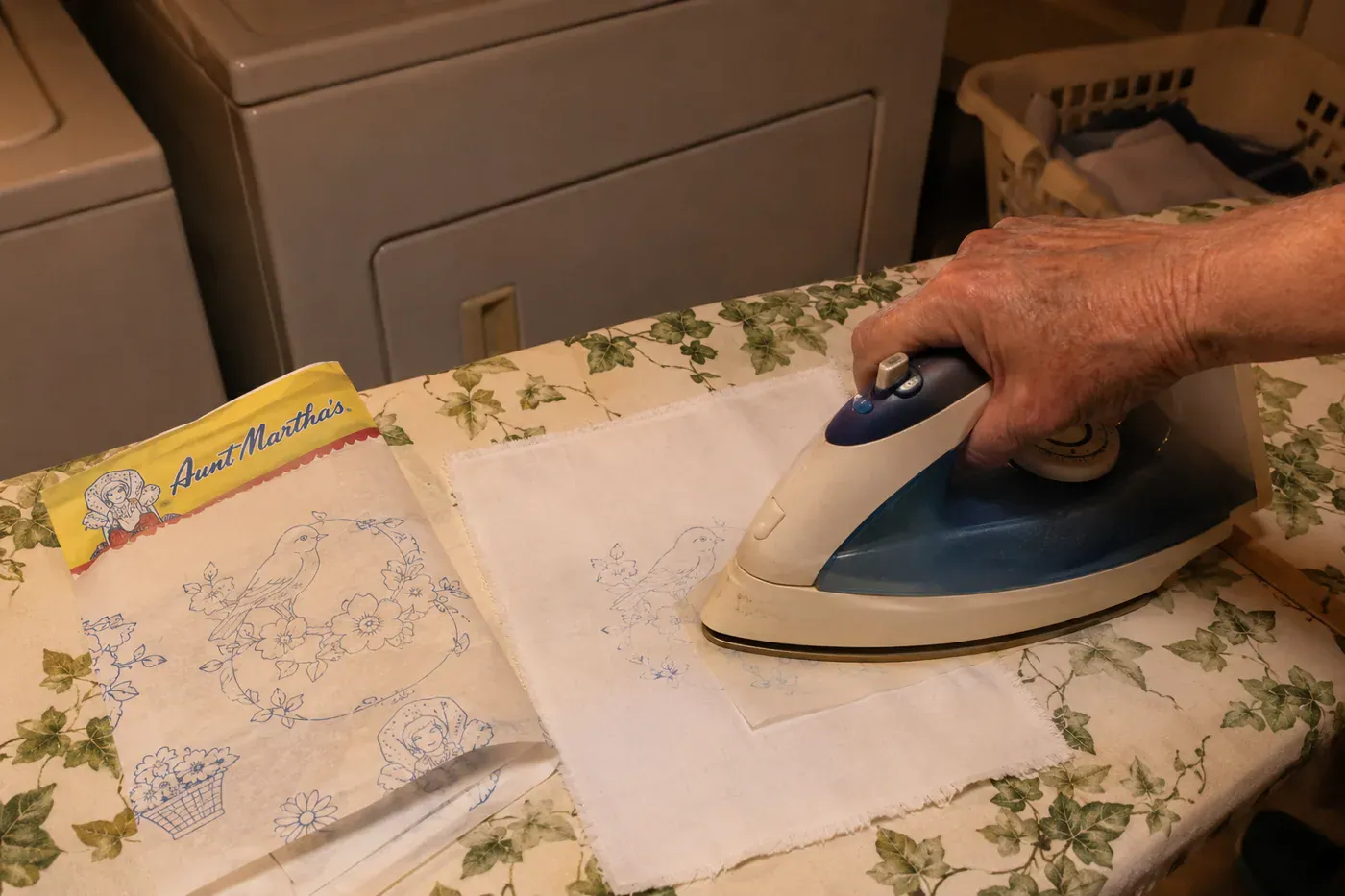
Do they still work after fifty years in a drawer? Often, yes. Test first. Mary Corbet’s advice: “Most iron-on transfer sheets or books will have some little clip somewhere that you can use for a test.”
Iron that clip onto a scrap, not onto the good pillowcase. The lines of a hot iron transfer are meant to stay, and Corbet warns they “usually don’t wash out.” Use one only where your stitches will cover every line.
The most familiar name in the drawer probably reads Aunt Martha’s, and the name itself was invented. Jack and Clara Tillotson started the Colonial Readicut Quilt Block Company in Kansas City in the early Depression years. The company says the name came from a Chicago editor who thought the newspaper features needed a grandmotherly name.
The Tillotsons launched a monthly called The Work Basket in 1935. By the mid-1960s, Workbasket had about 1.5 million subscribers. The company became Colonial Patterns in 1974, and it still works out of Kansas City’s River Market.
Here’s why that history matters for your drawer. The company is still printing. The days-of-the-week “Kitten Chores” set, Wash Day through Play Day, sells new for $2.85, and Aunt Martha’s transfers are stocked at Walmart, Michaels and Hobby Lobby.
A used copy of a design that’s still in print is unlikely to beat a new one at $2.85. Stitch those up yourself, or pass them to someone who will.
#5 A Whole Uncut Feed Sack
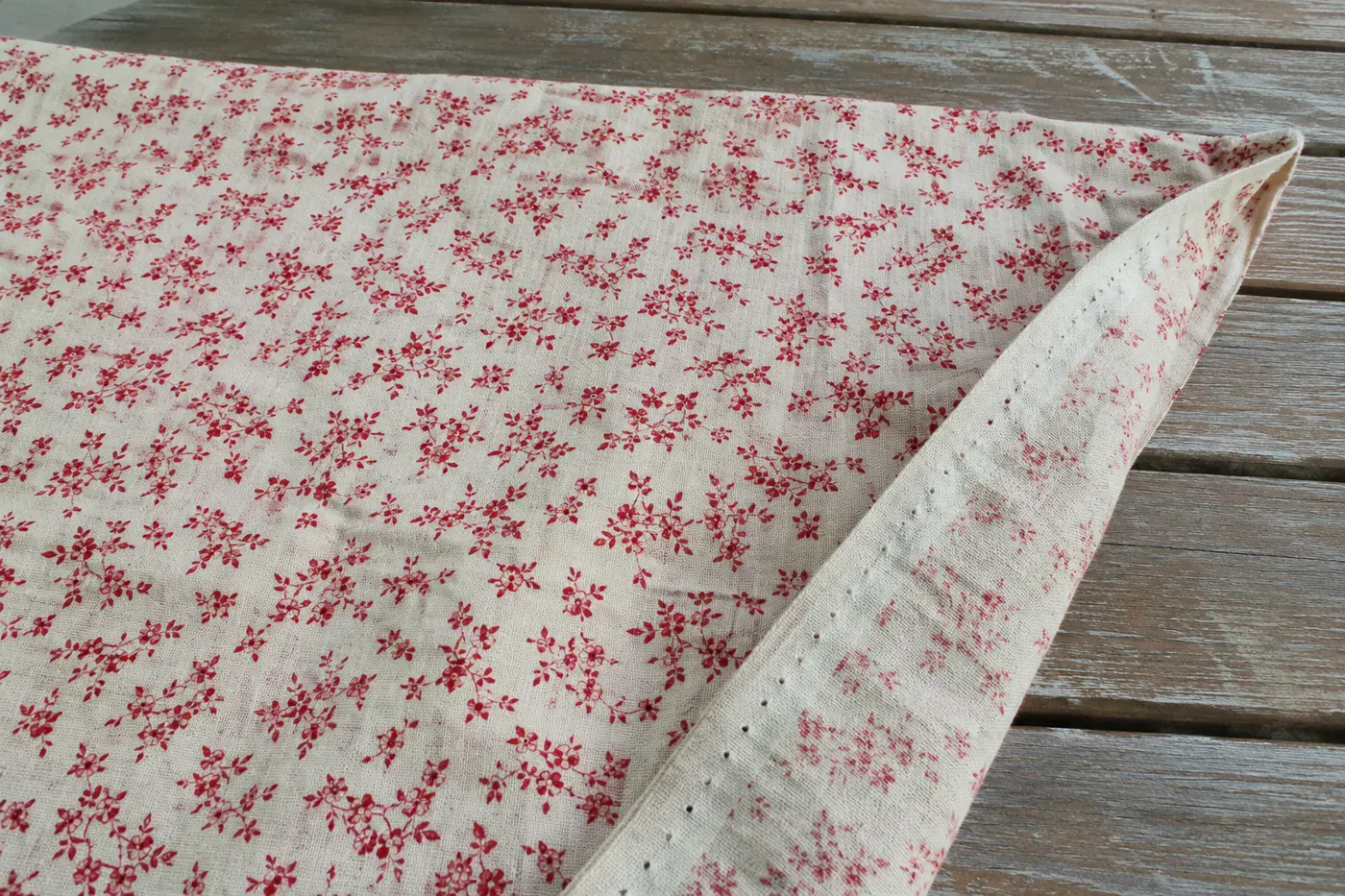
Flour and feed used to come home in cotton printed with flowers, and the sack turned into an apron, a shirt or a little girl’s dress. Mills such as the North Dakota Mill and Elevator used pretty printed cloth on purpose, to encourage women to reuse the sack.
What surprises people is how few survived. Jenny Yearous of the State Historical Society of North Dakota says that because most sacks were worn out, they “were rarely passed down in families.” A whole one, never cut, is the scarce version of something everybody once had.
To tell a real sack from a reproduction print, run your thumb along the edges. A real one shows a line of stitch holes where the sack was sewn shut. Some still carry a printed label as well. Fabric printed to look old won’t have either.
Here’s what a collector’s guide recorded as sold on Etsy:
- One yard, blue with red flowers: $44 (2024)
- One yard, green and yellow: $32 (2026)
- Two and a half yards, blue with pink roses: $25 (2020)
- Six small scraps: $12 (2020)
The same guide puts whole sacks at about $19 to $50. Look again at the roses, though. The bigger piece brought less than the single yard of red flowers, so the print can count for more than the size.
#4 A Pattern Still In Factory Folds
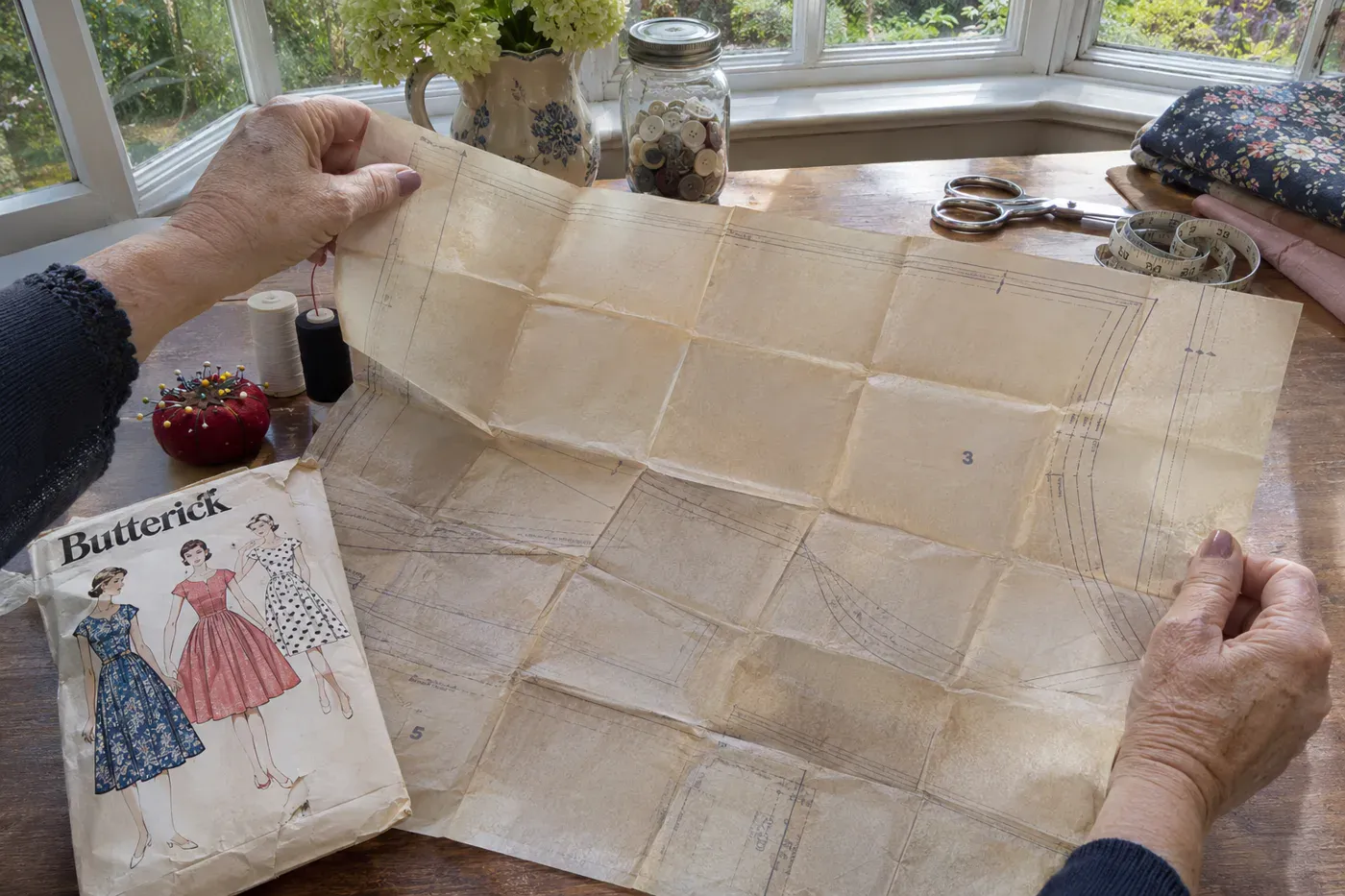
“Uncut” is the word that moves a pattern’s price, and you can check it instead of guessing. Lizzie Bramlett puts it simply: “There is no guess-work about completeness with a factory folded pattern.” She adds that once a pattern costs more than a few dollars, a buyer will ask whether every piece is there.
The gap is real money on even an ordinary pattern. A 2026 reseller guide estimates that a common 1970s Butterick dress pattern might bring $18 to $28 uncut but $10 to $16 if it’s cut and complete. Those are its estimates, not recorded sales. Even so, they say an uncut copy can be worth close to double.
The envelope counts too. LoveToKnow says an uncut pattern with “neat factory folding for the paper and an envelope in good condition” is where top dollar values are.
The two-minute pattern check – On a pattern that’s already open, count pieces by unique printed sheet, not by shape. One sheet can hold several pieces. – Ask whether the folded tissue looks thick enough for the number of pieces listed on the envelope. – Feel for long, pressed folds and one tidy bundle. Random crumples usually mean it’s been opened. – Stop at the edges. Once a factory-folded pattern is opened, that proof is gone.
#3 A Vogue Paris Original Pattern
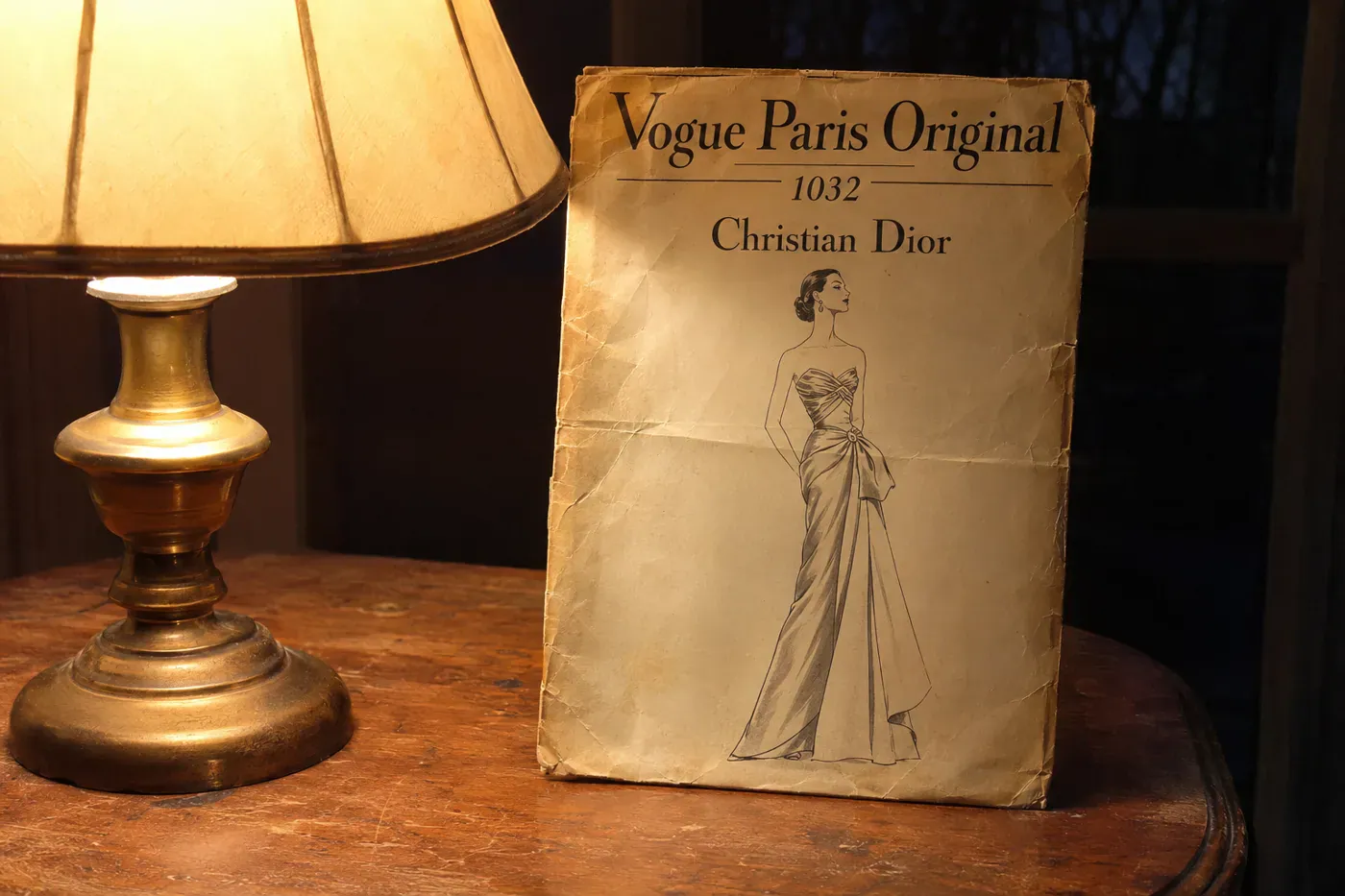
If one envelope in the stash is worth real money, look for a designer’s name on a Vogue envelope. The Vogue Paris Original line carried names like Patou, Nina Ricci and Dior. Here’s what some of those designer patterns sold for on eBay, as recorded by Melly Sews in March 2015:
| Pattern | Sold for |
|---|---|
| Patou #1389 | $580 |
| Diane Von Furstenberg, Vogue 1549, uncut | $222.50 |
| Nina Ricci #1434, 1950s | $192.50 |
| Robert Piguet, 1952 | $189.50 |
| Jacques Heim, 1950s | $145.45 |
| Christian Dior #1041, 1960s | $127.50 |
| Issey Miyake #1736 | $114.32 |
Even a famous name doesn’t guarantee much. LoveToKnow gives a range of $25 to $300 and up for uncut Paris Originals, and $20 to $400 and up for Vogue’s American Designers line. The dress, the designer, the decade and the condition all decide where yours lands. Those eBay sales are also more than ten years old, so look up what your exact number has sold for lately.
The record is in a different drawer altogether. A 1940s mail-order dress-and-jacket pattern sold on eBay for $2,025 in 2013. It’s a rare one-off, so don’t price yours by it. Just don’t toss a plain mail-order envelope without looking inside.
#2 An Unopened Paint-By-Number Kit
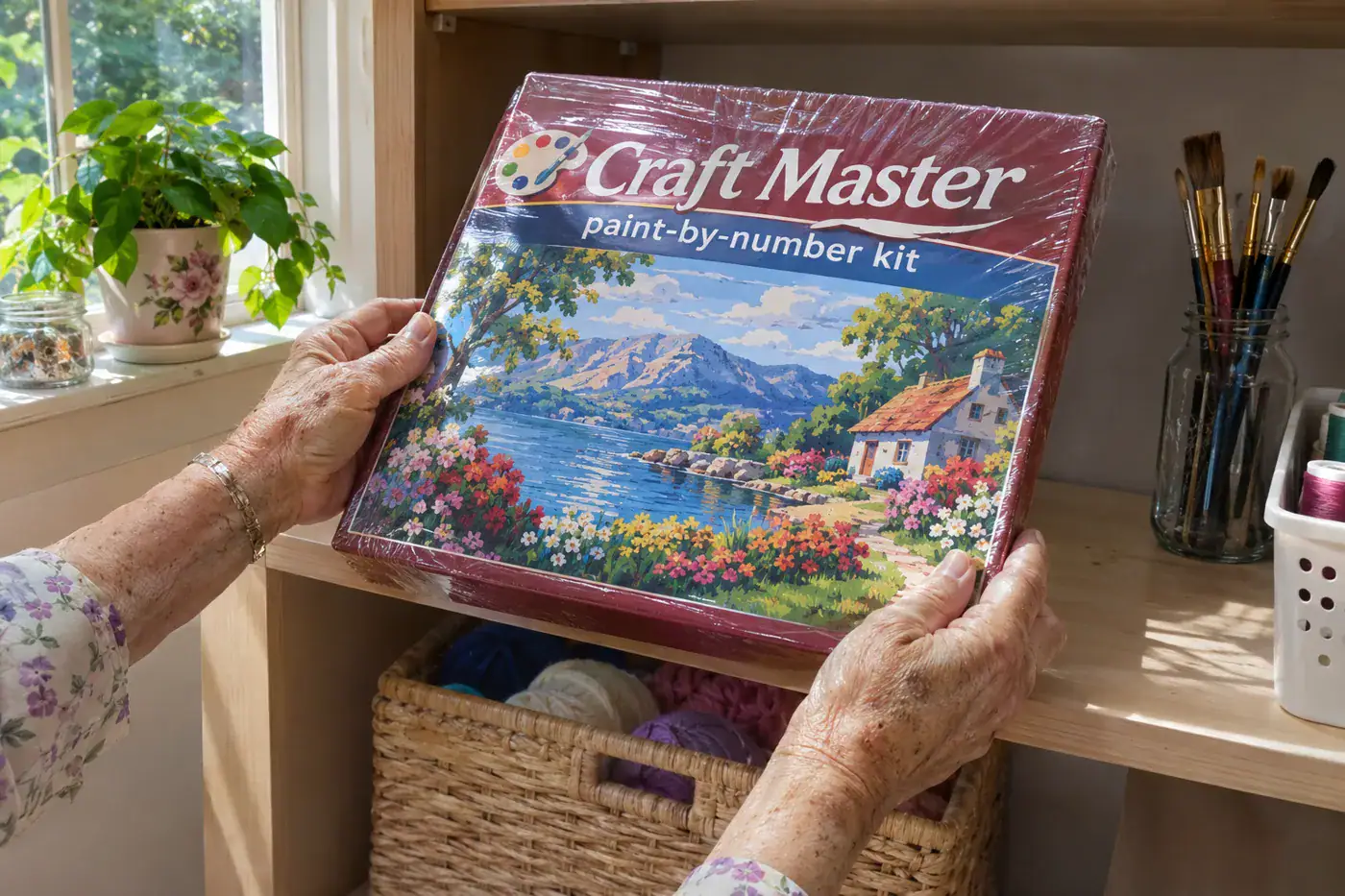
Give the box a gentle shake and you’ll hear the little paint pots knock together. If the factory plastic is still on, put it down carefully.
Collector Larry Rubin, writing in Warman’s Today’s Collector in December 1999, explained why:
“It is the unused kits in factory plastic that routinely sell for more than $100.” Larry Rubin, collector, quoted by the Paint By Number Museum
He added that “a Frankenstein kit recently sold for over $500.” Those are 1999 prices, so check today’s sold listings before you set a number. Whatever you do, don’t slit the plastic to see whether the paint dried out. The seal is the value.
A finished painting is a different story. A 2026 collector guide puts them at about $10 to $40. Owls, big cats, horses, mid-century abstracts and tiki scenes bring more, and religious and mill-stream scenes bring less. To date one, turn it over. Early 1950s kits used pressed fiberboard, and later ones used stretched canvas.
Sealed kits are rare because so many people painted theirs. Palmer Paint in Detroit introduced Craft Master in 1951 and sold over 12 million kits. In 1955 alone, Americans spent more than $20 million on them. Nearly all of those boxes got opened.
#1 The Wooden Spool Cabinet Itself
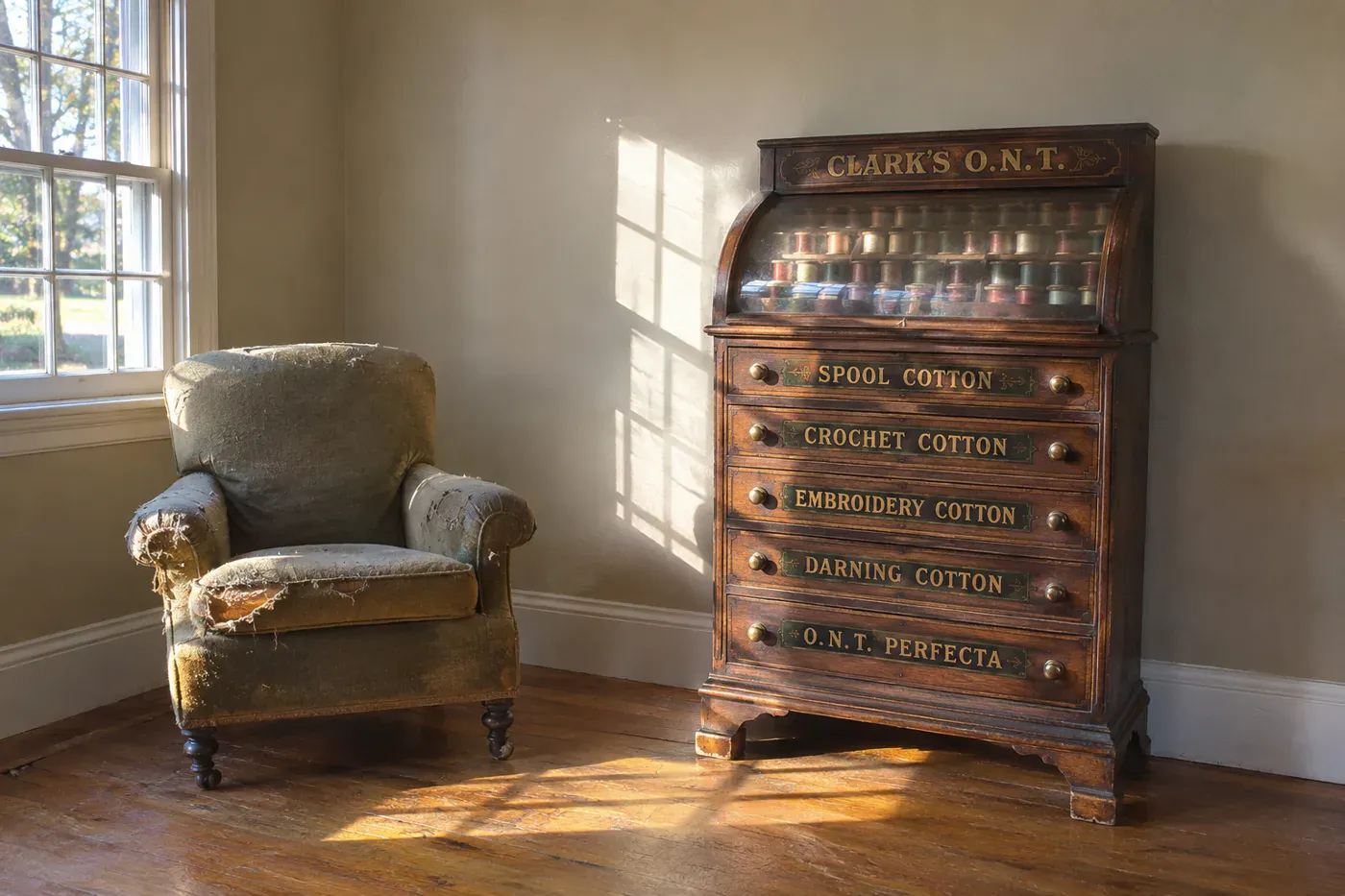
Empty the drawers, then look at the drawers. The cabinet the spools sat in can be worth more than everything else in the stash put together. These were store fixtures, lettered with a thread maker’s name. For years, a couple of big British-owned companies, American Thread and Coats & Clark, sold about two thirds of the thread in the US, and their cabinets stood on dry-goods counters everywhere.
The name is your maker’s mark. Look on the drawer fronts and the glass for Clark’s O.N.T., or for Willimantic with its owl. Then count the drawers, because size moves the price more than anything.
| Cabinet | Price | Where and when |
|---|---|---|
| Small Willimantic, about 1900, veneer loss | $90 sold | Pook & Pook, 2016 |
| Two-drawer Clark’s O.N.T., about 1900 | $160 sold | Pook & Pook, 2020 |
| Four-drawer Clark’s O.N.T., reverse-painted glass | $488 sold | Case Antiques, 2023 |
| Nine-drawer oak Willimantic, owl logo | valued at more than $1,000 | Kovels column, 2014 |
Two of those numbers count differently. The $488 includes the buyer’s premium, the fee an auction house adds on top of the winning bid. The $160 doesn’t. The thousand-dollar figure came from antiques columnists Terry and Kim Kovel, valuing a reader’s late-1800s cabinet. It’s an appraisal, not a sale.
Condition matters less than you’d fear. The $488 cabinet had a stained top and some paint loss on its glass, and it still beat its $300 to $400 estimate. A worn walnut Willimantic with two replacement glass knobs was estimated at $200 to $400 at a 2025 auction.
So leave the old finish alone until you know what your cabinet is worth.
The bottom line
Somewhere in that box is the reason it was kept, whether that’s a pattern or just the memory of where the fabric came from.
Nobody will pay you for that part, and you don’t have to sell it. A sewer on r/sewing offered a rule that works for a whole closet: “Keep them if you will actually sew them at some point in the next decade. It’s very easy to hoard patterns.”
Then pick the three pieces you’re most curious about and look up what they sold for, not what someone’s asking. If none of them surprises you, fold the back seat down.
Bonus: Five checks before the box leaves the house
- Hold anything with a Christmas design until December. Antiques appraiser Dr. Lori, who calls herself “the PHD antiques appraiser,” valued a 1960s Mickey Santa at about $150 at holiday time and about $100 in May. As she puts it, “So when to sell is as important as what you sell.”
- Look under the sewing machine, if there’s one in the house. Stashes of old patterns often turn up stored alongside a machine.
- Keep the mailing envelope with any mail-order pattern. Bramlett says most mail-order patterns weren’t dated, “though you could get lucky and find one in the original mailing envelope with a postmarked date.”
- Measure before you keep a pattern to sew. On November 1, 1967, pattern companies changed their sizes, and a 34-inch bust went from a size 14 to a size 12. Go by the measurements on the envelope, never the size.
- Frame the prettiest envelope instead of selling it. Sewers on r/sewing say they hang their favorite vintage envelopes in their sewing rooms, which is the one way to keep a pattern that takes up no drawer space.
Questions people also ask
Are my vintage sewing patterns worth anything?
Most vintage sewing patterns are worth a few dollars each, and many don’t sell at all. One collecting guide says even the most expensive generally sell for about $350. The exceptions are mostly uncut designer patterns. Vogue designer patterns sold on eBay in 2015 for about $114 to $580, and one rare 1940s mail-order pattern brought $2,025 in 2013.
How do I find what vintage craft supplies actually sold for?
Look up sold results, never the asking price on a listing that hasn’t sold. eBay’s free Product Research tool, in the eBay app and under the Research tab in Seller Hub, shows up to three years of eBay sales. Auction houses such as Case Antiques post the sold price for each lot. As one reseller guide puts it, “unsold listings are just wishes.”
Do old iron-on embroidery transfers still work?
Often they do, but test a small piece first. Embroidery expert Mary Corbet says most transfer sheets have “some little clip somewhere” you can iron onto a scrap. She also warns that iron-on lines usually don’t wash out, so use them only where your stitching will cover every line.
Is it legal to copy or share a vintage sewing pattern?
The pattern’s instructions and any garment made from it generally aren’t protected by copyright in the US, but the envelope art may be. Ohio State University Libraries says the drawing on a vintage envelope may still be protected. Works from before 1964 needed their copyright renewed after 28 years, and works from 1930 entered the public domain on January 1, 2026. Whether you can share a scan of the cover depends on its year and whether the copyright was renewed.
Where is the best place to sell vintage craft supplies?
Unique, hand-dyed or luxury yarn skeins are worth listing one at a time, while common yarns, like acrylics and partial skeins, usually do better in one bulk lot, which can be much more efficient. eBay takes 13.6% of the total sale in most categories, on the first $7,500, plus 30 or 40 cents an order. Selling ten $8 patterns one at a time costs about $13.90 in eBay fees and one $50 lot costs $7.20, though the singles bring in more if every one sells. Etsy charges a 20-cent listing fee, 6.5% and payment processing, which makes about $2.35 on a $20 pattern.
What should I do with old craft supplies that won’t sell?
Give them to a creative reuse center, which takes good supplies even when no buyer will. SCRAP PDX in Portland, for example, accepts uncut sewing patterns and fabric of at least a yard with selvage. It turns down anything with mildew, mold, pests or odors, as well as partial projects. Drop-offs are limited to three grocery bags, and bigger donations need an appointment.

