Christmas bazaar craft ideas with the numbers attached: what a soap bar, a candle and a candy-filled treat box cost to make, and what sellers charge for them.
The number at #1 settles the question you argue about with yourself at 11 at night: whether your price pays you anything for your time.
The folding table is up in the fellowship hall. The cash box has its ones and fives, the coffee urn is gurgling in the corner, and you’re holding a sheet of blank price stickers.
Every gallery of craft fair ideas that sell stops right before this moment. It shows you the finished wreath. It never tells you what to write on the sticker, or whether that wreath was worth four evenings. People who sell at a church bazaar every year know. We opened about 60 pages, from sellers’ own fair recaps to federal toy rules, to find out what they know.
#17 Hand-poured candles in a one-of-a-kind jar
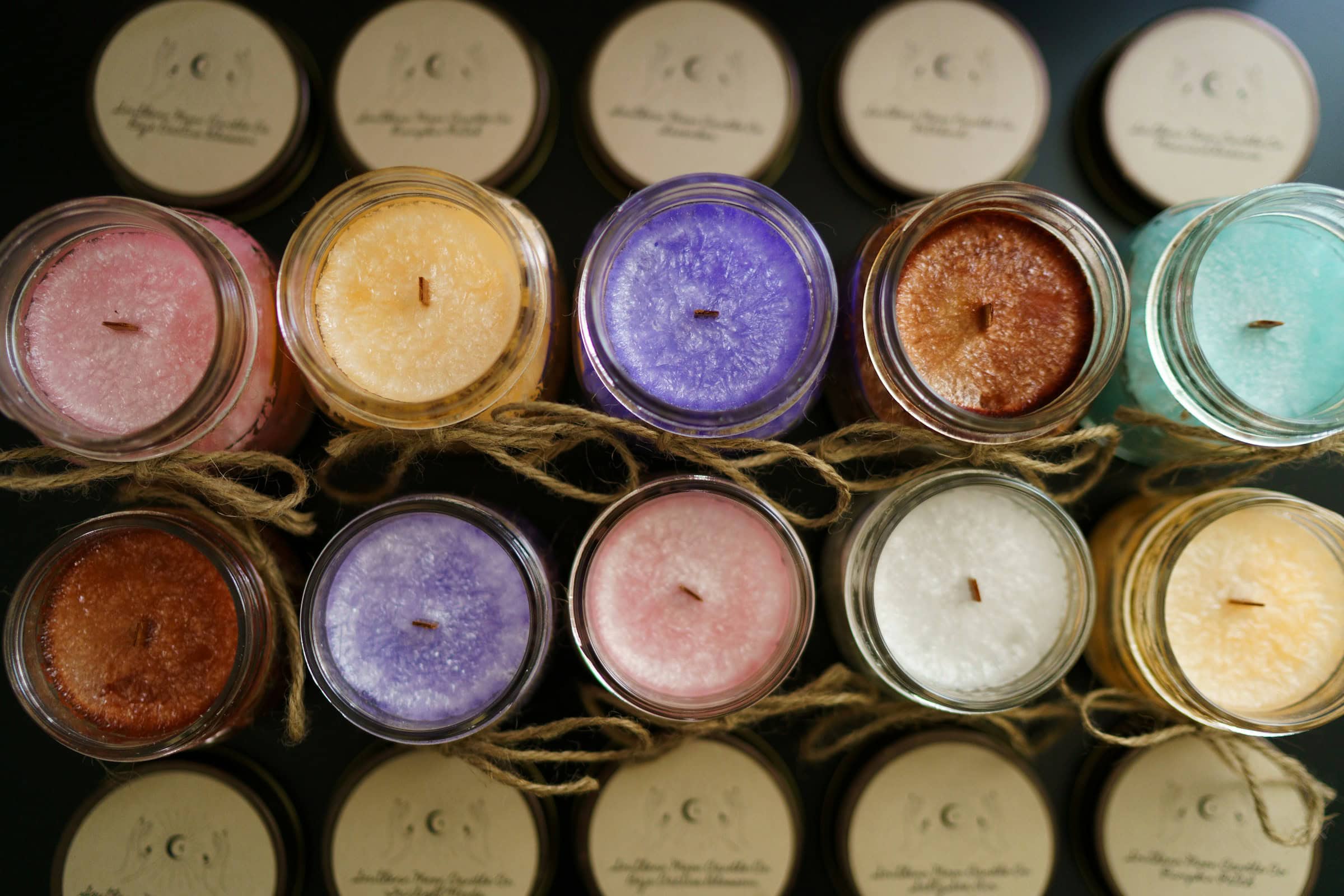
An 8 oz soy candle costs about $3.03 in materials if you buy for 100 or more, according to a 2026 cost breakdown from WickSuite, a candle-business software company. Pour a small batch and it’s closer to $5.22.
Here’s what’s in that $3.03:
- Wax: 95 cents
- Fragrance oil: 70 cents
- Glass jar: $1.00
- Wick, label and lid: 38 cents together
The jar is the biggest single cost, and it’s also the part a shopper picks up and turns in the light. That’s why the odd cut-glass jar or the old mason jar does double duty. You’re spending your money on the line that sells the candle.
Handmade 8 oz candles typically retail for $18 to $28. In a separate pricing example from Craftybase, an 8 oz soy candle is $26.50 on Etsy and $22 at a craft fair, because in person there are no listing fees eating the difference. Even at WickSuite’s small-batch cost of $5.22, materials come to under a quarter of a $22 fair price. Your time and your booth fee aren’t in that figure yet, so don’t spend the difference before Saturday.
Buyers are looking for them, too. Gift-buyers filling grown-up stockings on Reddit name candles and wax melts among the small, useful stocking stuffers they hunt for.
One thing to print before you pour. The candle industry’s warning label asks for three things: burn it within sight, keep it away from anything that can catch fire, and keep it out of reach of children. The National Candle Association explains the standard. That warning is already counted in the label cost above.
#16 Vintage-picture glass ball ornaments
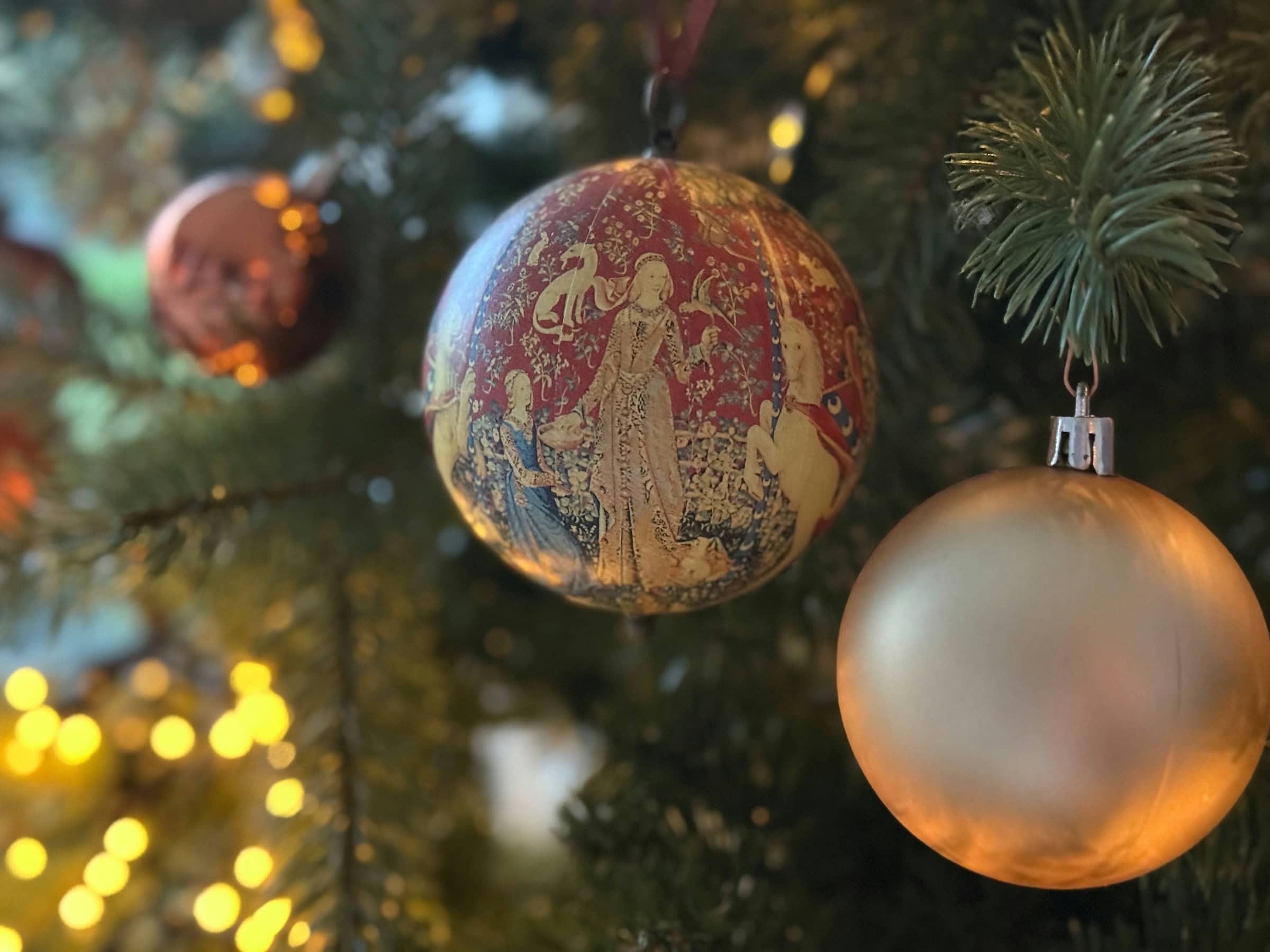
Sherry of Canterbury Cottage, a former English teacher who sells from an antique booth, says in her video that glass ornaments with vintage pictures are probably her all-time best seller. The galleries show you the finished ball. Here’s how the picture actually gets in there, following Plaid’s photo-transfer method (Plaid is the company that makes Mod Podge):
- Wipe the glass with rubbing alcohol and let it dry.
- Coat the front of a photocopied image with Mod Podge Gloss and press it onto the inside of the glass.
- Back it with several coats of metallic paint so the ornament looks solid.
Use a photocopy, so the original snapshot or postcard stays safe in the album.
If you’d rather skip pictures, there’s a version with no photo at all. The blogger at A Diamond in the Stuff covers glass balls in circles from a 2-inch punch, overlapped so no gaps show, then seals the whole ball with Mod Podge. She used sheet music, an old German book and a map. So many people asked about them that she wrote up how she does it, and she sold the finished ones on Etsy.
If you have a bookshelf to raid, this is one of the best vintage and upcycled handmade Christmas ornaments you can make. One library-sale hymnal with a broken spine is a whole box of circles.
#15 Candy tucked inside a paper treat box
Jennifer Roque, an independent Stampin’ Up! demonstrator, prices her Hershey Nugget holders with a formula you could use on almost anything small. Total the materials, multiply by three, round up.
One seller’s treat-holder math – Materials: $1.17 (65 cents of Nuggets, plus paper, cardstock, ribbon, label and bag) – Times 3: $3.51 – Rounded up to the nearest dollar: $4, or 2 for $7
In her words: “I multiply by 3 for craft show pricing = $3.51. Next I round up to nearest dollar for the final price = $4.”
Now the part no gallery will tell you. The Papered Chef, a paper-craft demonstrator who’d already worked four days of fair events that season, brought a fancy keepsake box she loved. It mostly sat there. “I gave away more than I sold, let’s put it that way,” she says in her recap video. Shoppers picked the boxes with candy inside.
Her explanation is worth taping inside your tote bag. Parents were telling children not to touch, so “it was the adults buying things for other adults.” A grown-up buying a little something for a coworker wants the little something already in it.
One customer asked for a string so a box could hang on a tree. She took the idea, and so can you: a loop of ribbon turns a treat into an ornament.
#14 A thrift store frame with a paper tree
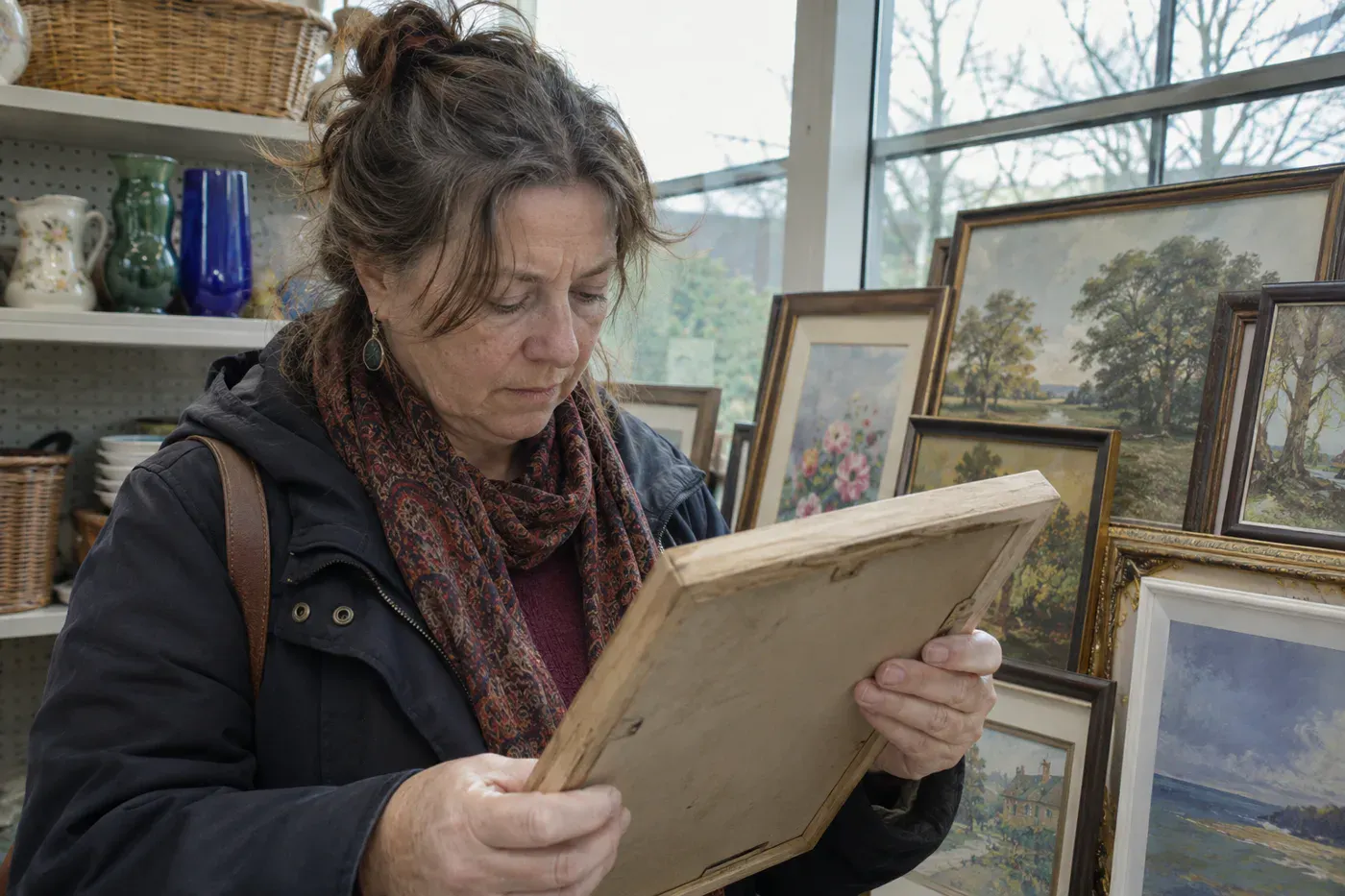
“This simple project using a thrift store picture frame and scrapbook paper always sells out in my booth every year,” Sherry of Canterbury Cottage says in the same video. Hers is a paper Christmas tree laid over sheet music, in a frame someone else gave away.
You know the frame aisle. The faded print of a lighthouse, the gilt frame with one chipped corner, the matted duck. You’re buying the frame. The duck goes.
Here’s the thrift math from Laurie of Passionate Penny Pincher, who made over two Goodwill frames. The prints were tagged $5 and $3 and rang up at $6 together. Add $4 of fabric and the whole makeover cost $10, for two frames. That was in 2015, so check your own thrift store before you count on those prices. The shape of the deal still holds: the frame is the expensive part, and someone else already paid for it.
Buy frames in pairs when you see them. Two matching frames make a set, and sets are where #5 comes in.
#13 A keepsake napkin sealed in a clear ornament
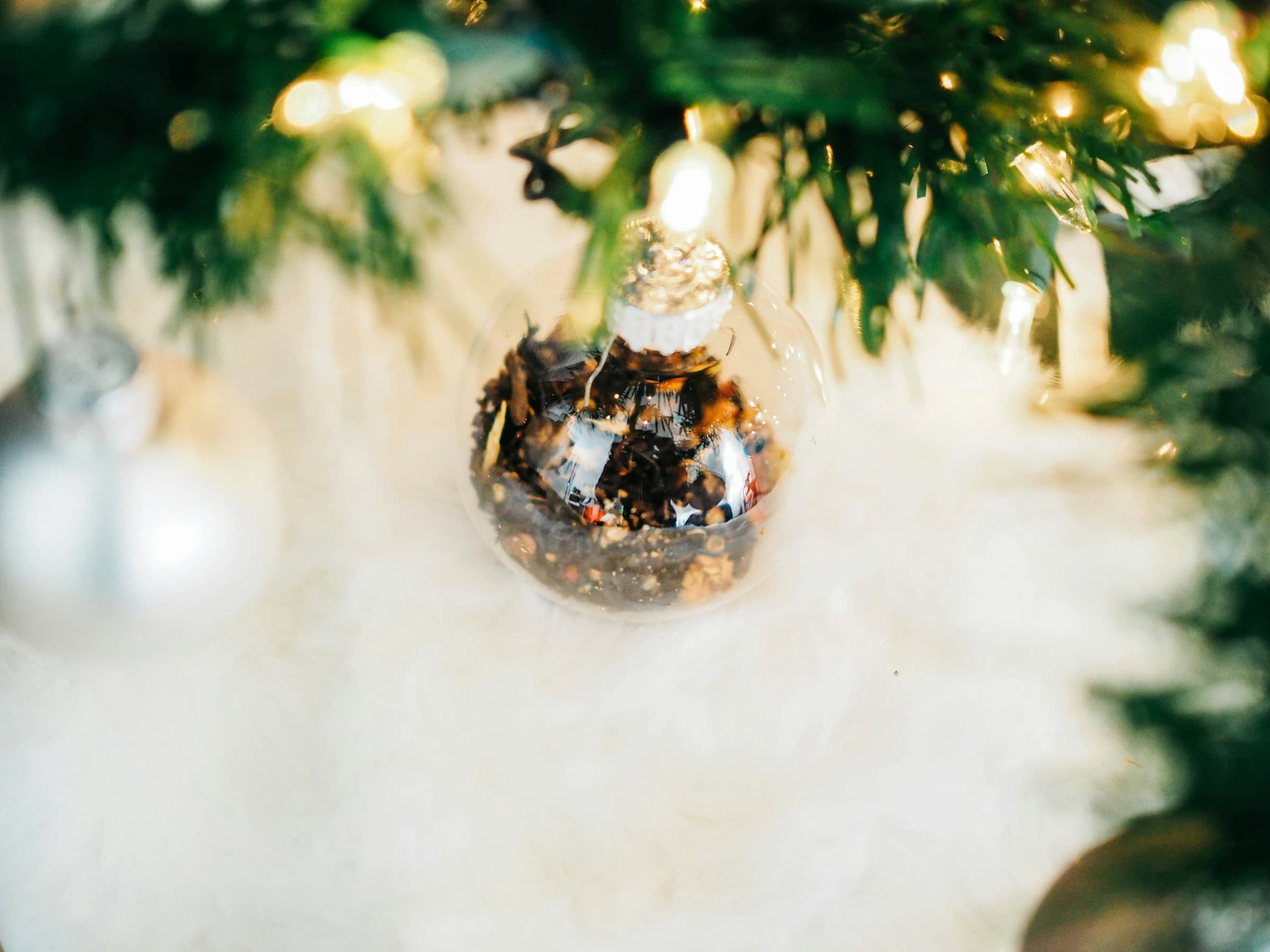
Fill a clear ornament with paper strips and you have something any table could sell. Fill it with the right paper and you have a keepsake ornament someone will treasure.
Dollar Tree’s own craft-idea page suggests cutting a party or wedding invitation into strips and filling a clear ornament with a removable cap. The 3-inch fillable kind is $1.84 each at Michaels. Under a napkin-ornament video on TikTok, viewers took it further. They talked about using a late grandmother’s napkins, napkins from children’s birthday parties, a child’s own drawing, one paper for each year.
None of that is something you can buy at Dollar Tree. It’s something your customer already has in a drawer.
That changes how you sell it. This works as an order you take, not a stack you bring. Put two or three filled samples on the table, with a little card saying you’ll fill one with their own paper. Take a name and a phone number. The catch is the calendar: if your bazaar is the week before Christmas, there may not be time for them to bring the napkins and pick up the ornament. An early-November fair gives you room.
#12 Magnets, postcards and tiny prints
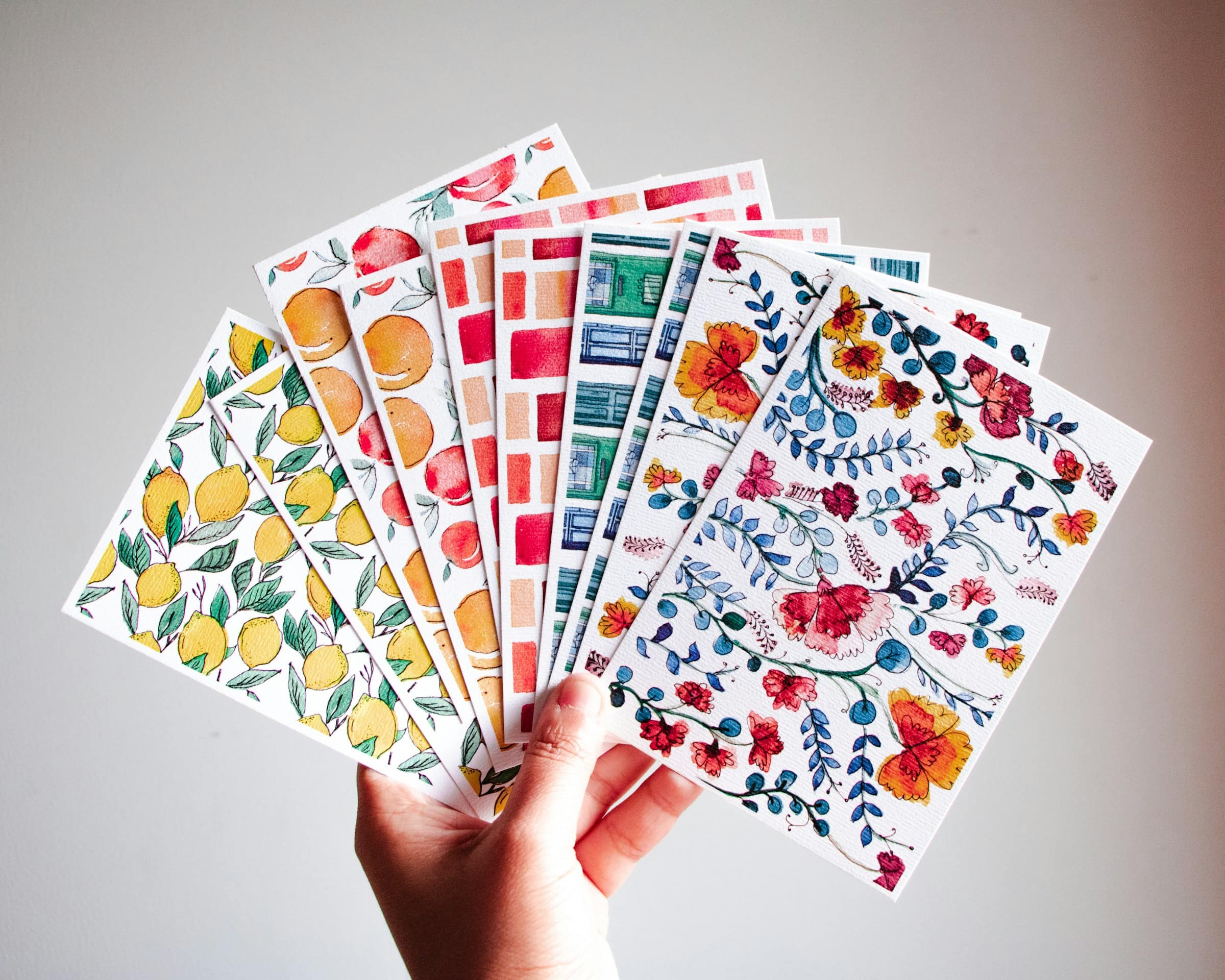
The cheapest, flattest things on your table can pay your rent for the day. Mallory Whitfield, a craft-show veteran and author, sold magnets at $5 and greeting cards at $4, and writes that “the sales of these low-ticket items would often make my booth fee.”
The Chanamon shop’s recap of an October outdoor fair in San Francisco shows how far small can go. The shop grossed $2,881.42 against a $350 booth fee, and “stickers remained my top selling product category with 81 units sold.”
Sellers in two Reddit craft-fair threads (here and here) explain why. A shopper on a budget buys one small thing from a lot of booths instead of one big thing from one. Magnets, postcards, mini prints and stickers are the ones they name.
So look at your scraps. A painter has leftover small watercolors. A quilter has squares too pretty to toss. A fabric-covered magnet or a mini print of your own painting fits in a purse and on a fridge, and it’s what the person who “just came for the pie” will buy.
#11 Soap and lotion bars for a stocking
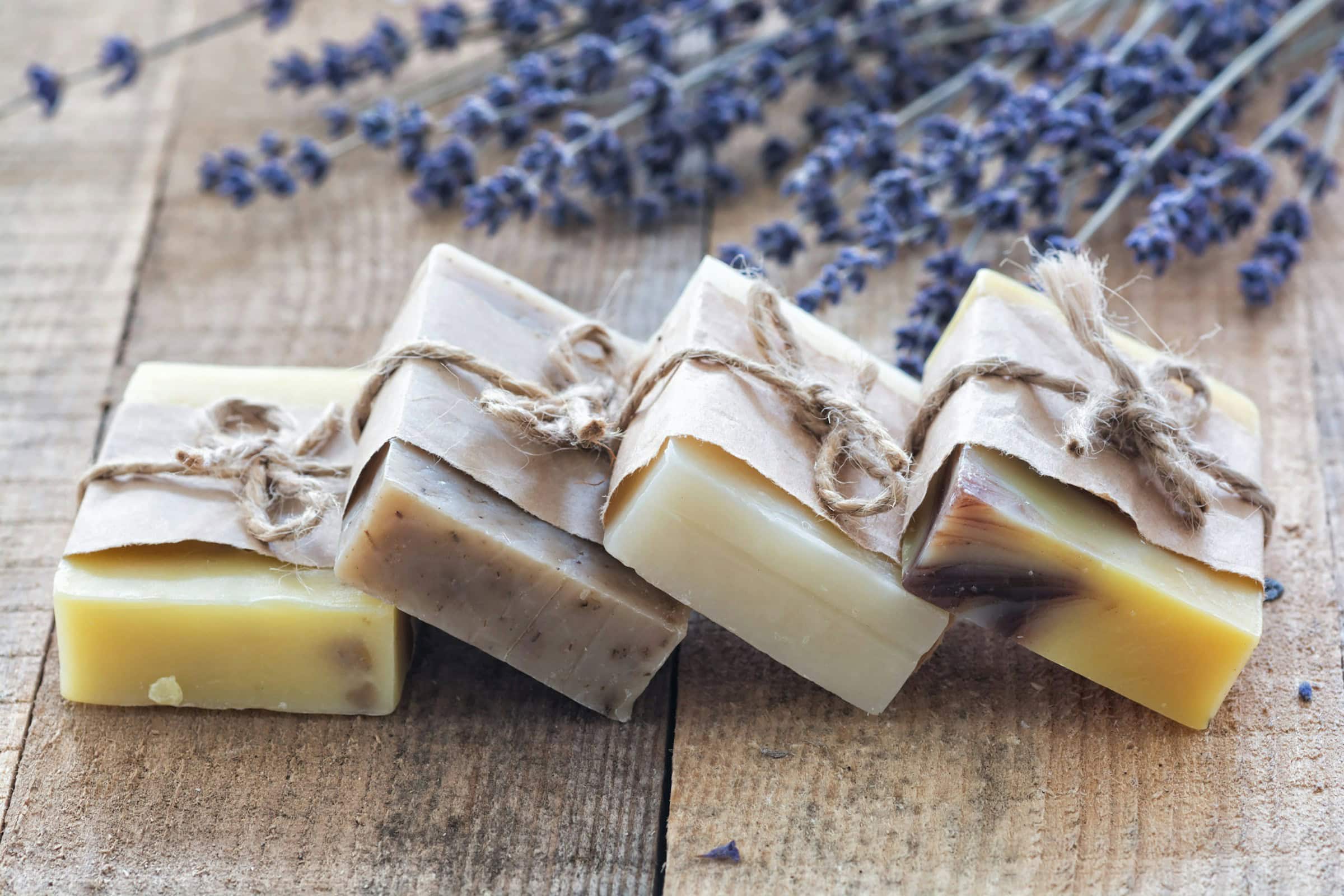
A basic bar of handmade soap costs $0.75 to $2.50 in materials. Count labor, packaging and overhead and it’s about $2.50 to $5, and basic cold-process bars typically sell for $6 to $10 at craft fairs (or $8 to $12 on Etsy), according to Craftybase’s soap cost guide.
That’s a fair markup. The surprise is on the label.
True soap, sold only as soap, is regulated by the Consumer Product Safety Commission, not the FDA. But the moment your card says a bar is for “moisturizing the skin,” the FDA counts it as a cosmetic. A lotion bar is a cosmetic from the start.
For homemade cosmetics, the FDA’s fact sheet says the label needs:
- your name and place of business, with street address, city, state and ZIP
- the ingredients, by their common names
- the net quantity
Yes, a street address. Think about that before you print a hundred labels from your kitchen table. The FDA doesn’t license cosmetics makers, though your state may.
The word choice is the cheap fix. “Lavender soap” and “moisturizing lavender bar” can be the same bar in the same wrapper with a different set of rules attached. Buyers filling grown-up stockings name lotion among the small useful things they want, so the lotion bar is worth the bigger label.
#10 A snow-globe scene inside a picture frame
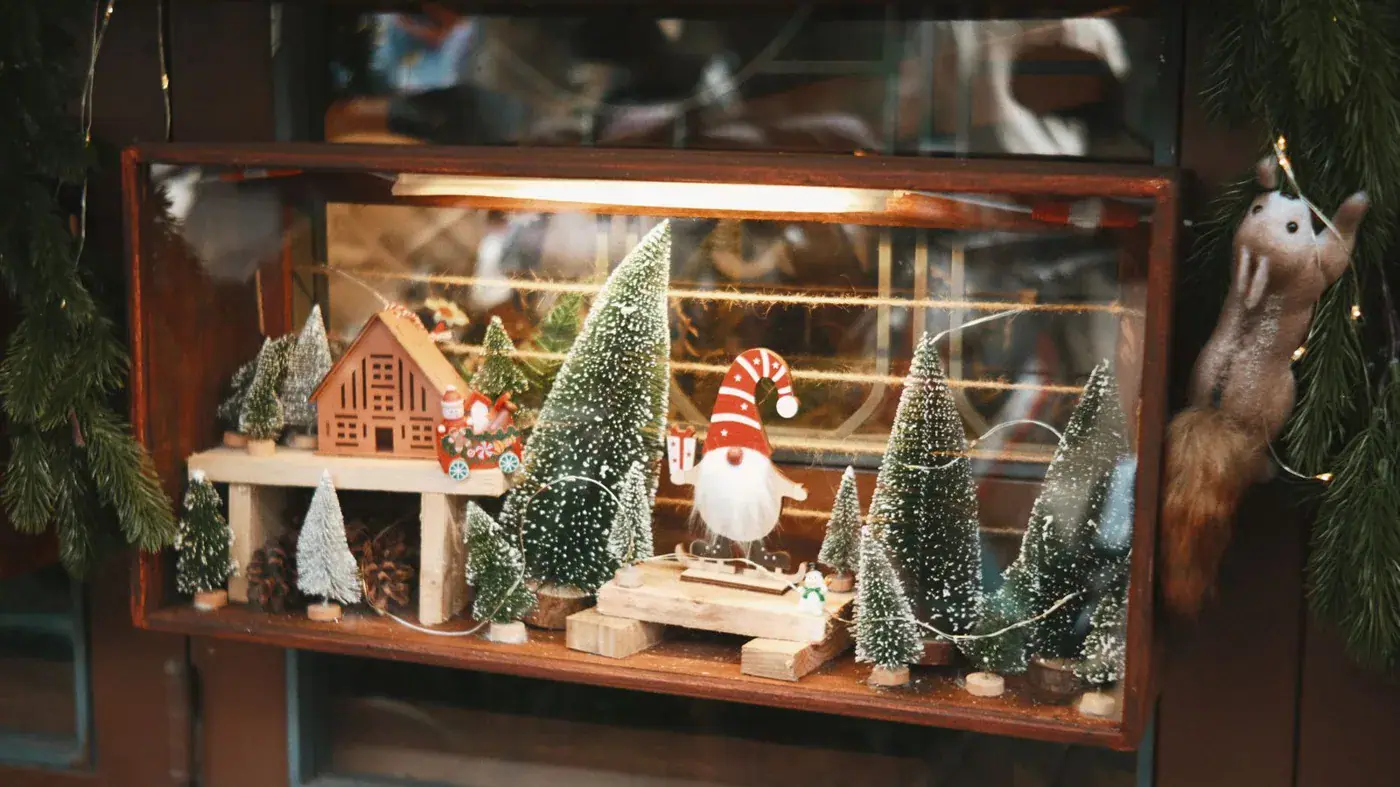
You’ve probably seen this one go around. A frame or shadow box, winter scrapbook paper behind, a few mini bottle-brush trees and a little figurine glued in, and faux snow drifted along the bottom. The Dengarden write-up of a TikTok creator’s version, from September 2026, lists a Dollar Tree shadow box or a thrifted frame, a hot glue gun and scissors, and promises it takes “just minutes.”
People who actually made one disagree. Under one maker’s TikTok, two people who’d tried it say it’s harder than it looks, and several more say the supplies were hard to find or already gone from the shelves.
That’s the part the video leaves out. If you want to try it, buy the trees and the snow the day you decide, not the week of the fair.
Nobody we found has shown these selling at a fair yet. So make one, see how long it really takes you, and put it out as a test before you make twelve.
#9 Crocheted bees, octopi and dinosaurs
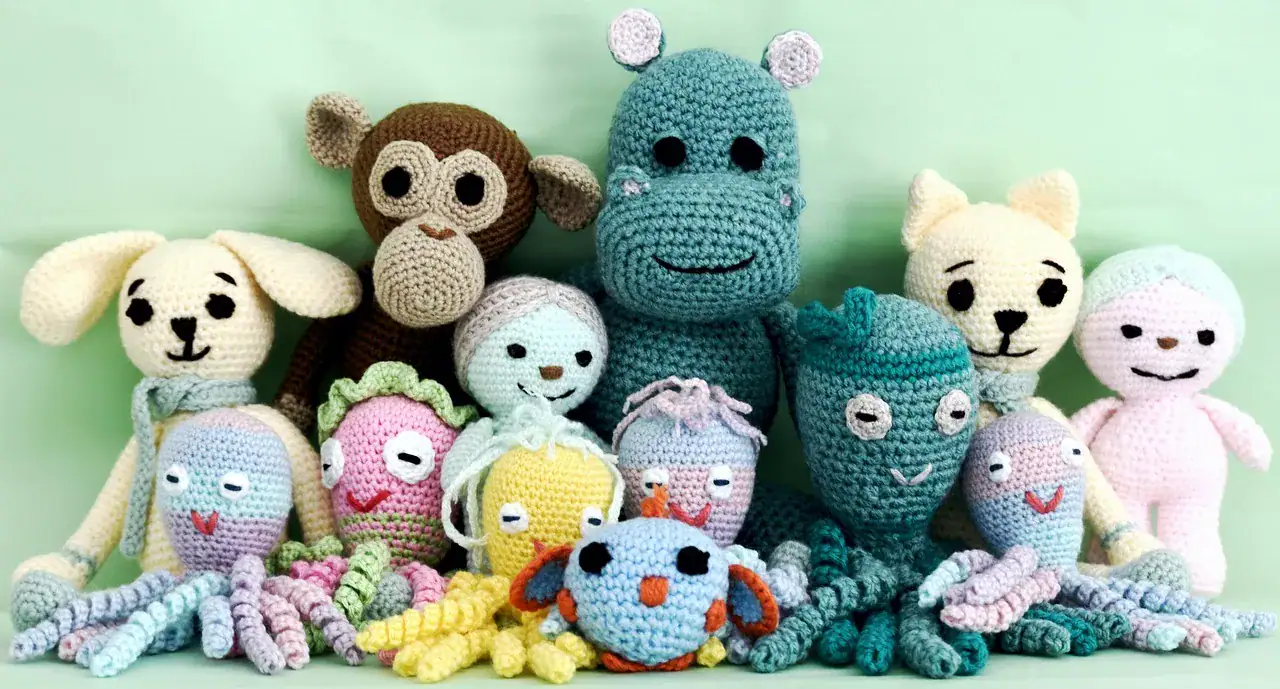
Everyone’s sick of the bees. Except the people buying them.
On the Ribblr crochet community, one seller put the complaint plainly: people tell you to make bees, then other sellers say they didn’t sell a single one. She blames saturation, since at markets “everyone has bees, leggy frogs.” She also noticed that unusual animals, possums and alligators, stood out.
Sellers in an r/CraftFairs thread see it differently: the bees and octopi keep selling, mostly to parents.
Others in that thread point out that the people grumbling about bees are rarely the ones buying the big, original pieces anyway.
Prices in the same Ribblr thread are low: one seller charged $2 for a small crochet jellyfish and $5 for a large one, and $15 to $20 for bucket hats. Another seller on a separate thread advises keeping everything under $50 at a small event, and under $75 to $100 at a bigger one.
So make a few. Make them small, price them low, and put one possum in the basket with them. It’ll be the one that stands out.
#8 A price sticker on the back of every piece
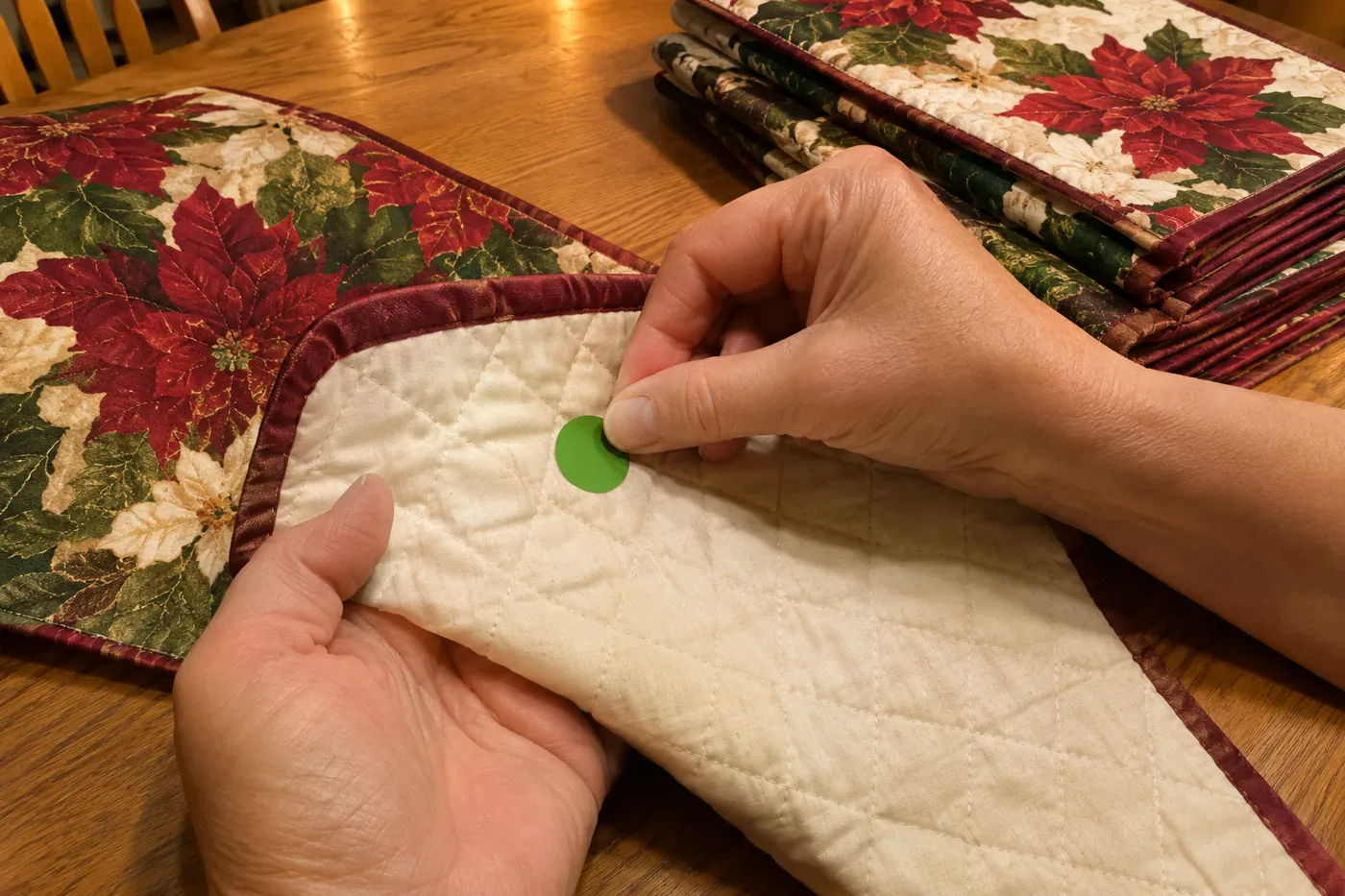
You’ve watched it happen. A woman picks up your table runner, turns it over looking for a number, finds nothing, and sets it gently back down. She didn’t want to ask.
Lety of Party Planner Paperie, who filmed on the day of her own fair in a suburb of Austin, Texas, solved that one before the doors opened. “I put the prices on the backs of almost all of my items, so I felt like that was going to make it a lot easier,” she says in her video. She also color-coded her labels by price band, so a glance across the booth display told shoppers where each band was.
The second fix is harder. What goes on that sticker depends on where you’re sitting. Sellers in one Reddit thread on ornament pricing say a rural show runs well below a show in a wealthy suburb, and that even in well-off towns shoppers won’t pay a lot for one piece.
Lety priced for her own crowd. She brought country designs because the fair drew a Hill Country crowd, and small cheap items because there’d be children. Your church bazaar and the juried show two towns over aren’t the same market, and the same stocking may need two different stickers.
#7 Hand-sewing a seam while you mind the table
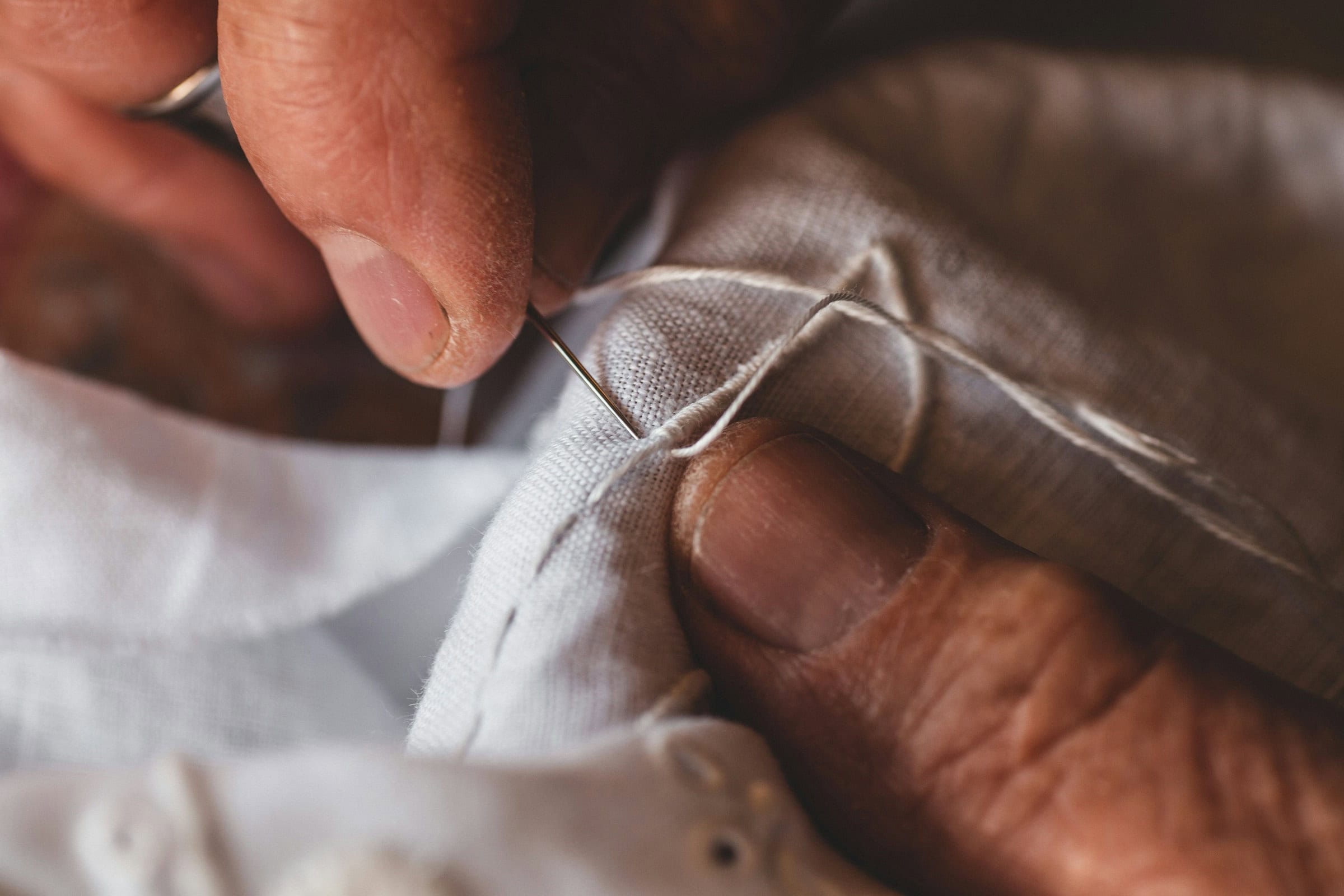
If talking up strangers isn’t your idea of a good Saturday, good news: you don’t have to.
“I find if i am sewing/creating something it pulls people in. I will just be sewing balls on santa hats. They see i really make them.” A seller who sews at her booth, r/CraftFairs
Even big-business advice agrees. Shopify’s booth guide tells sellers to skip describing the product and show it being made instead.
In that same Reddit thread, sellers keep coming back to one approach: a warm hello, then let people browse in peace. Several say a good product sells itself, even for a seller who stays in her chair all day or would rather not chat. The handwork does the talking. A shopper sees the needle going and understands, without a word from you, that this isn’t something bought in bulk.
One more habit from that thread costs nothing. “I also jot down a short note to myself after every person buys a piece so I have data about who my main customers are.” Keep a notepad by the cash box. By next year you’ll know who actually buys from you.
#6 A quilted or knitted Christmas stocking
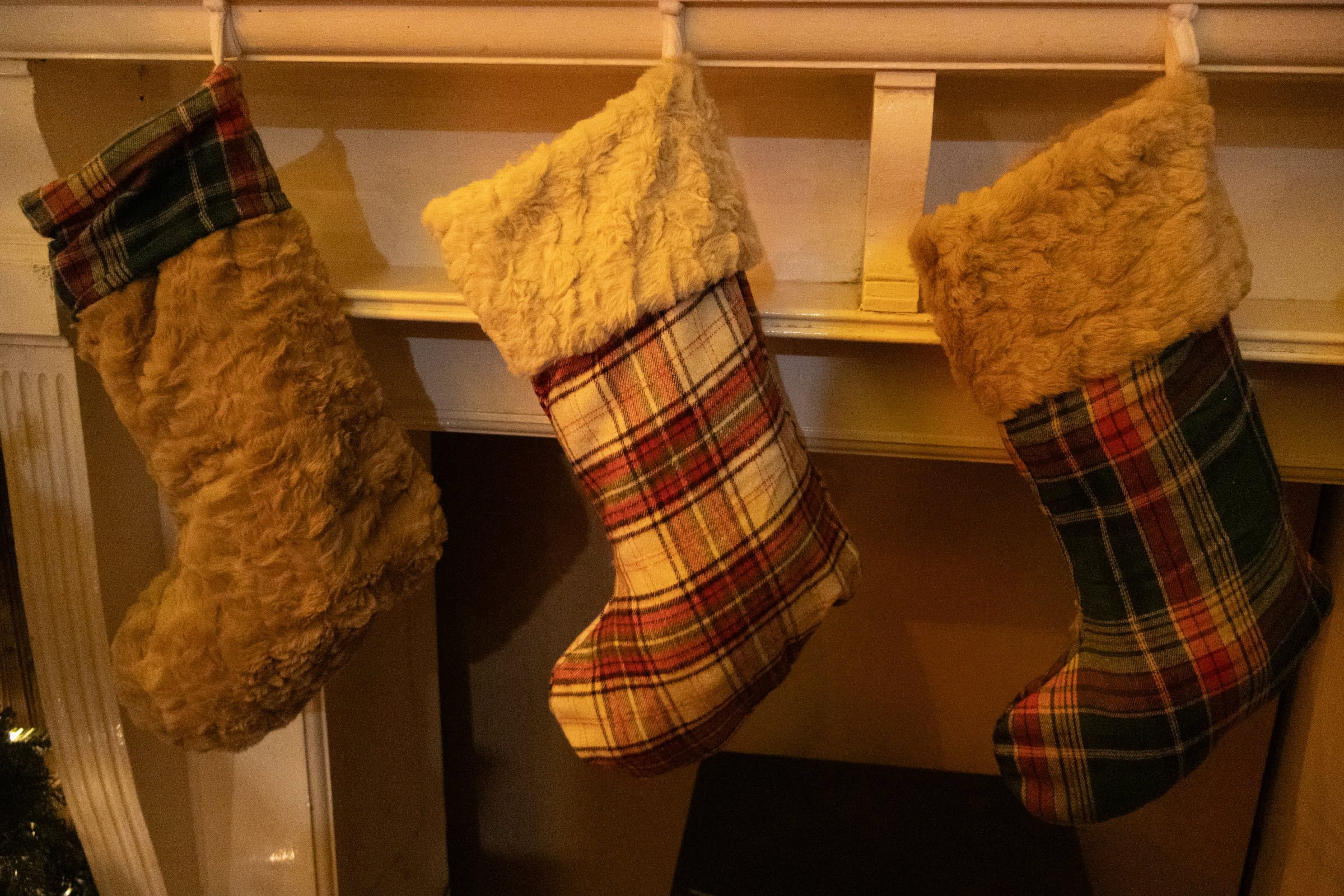
“My number one best seller by far was my adorable stockings!” wrote the seller at Seam Whisperer, who made hers from repurposed vintage quilts.
Notice how they sold: usually as sets, for the members of a family. One shopper buying four stockings is a different afternoon from four shoppers buying one. Hang them in a row, one of each, so a buyer can see how they’d look together on a mantel. Sold one at a time, a stocking is a nice thing. Sold as a set, it’s somebody’s Christmas.
What it takes: Sarah Maker’s free quilted stocking pattern is rated easy, with about 3 hours of active time and about $5 of materials, using less than one charm pack of quilting cotton and a quarter yard of low-loft batting.
Three hours is the number to sit with. Make a set of four and you’ve given up most of a weekend. That’s fine if the price reflects it.
#5 A single ornament priced beside a set deal
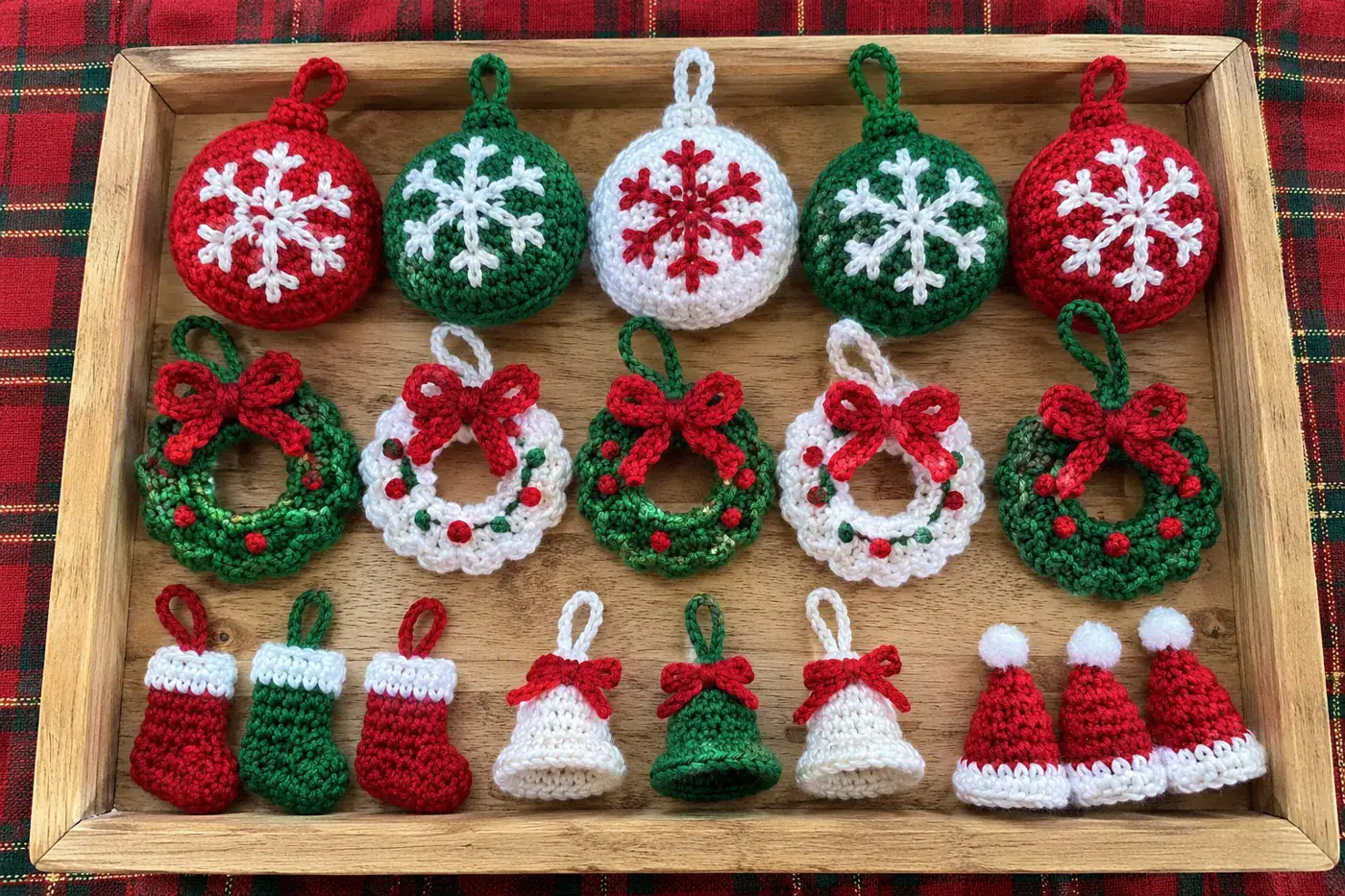
Crochet ornaments typically sell for $5 to $15 at craft fairs, according to Secret Yarnery. Flat, simple ones sit at the low end, stuffed characters in good yarn at the top. Its suggestion is to price singles and then add a bundle on top, like “Pick any 3 for $18.”
That bundle answers the singles-or-sets question better than either one alone. In a Reddit thread on ornament pricing, several sellers warn that shoppers want one or two ornaments, not your whole carefully matched set. A beader put it bluntly to a first-timer: “Be prepared to have people want singles of the first set.”
And people do buy in small handfuls. At Seam Whisperer’s table, buyers of the tiny scrappy fabric trees mostly took two or three at a time.
Then comes the shopper who asks, “What’s your best price?” Kelly Thomas of Crochet Business School has a sentence ready: “I don’t give discounts on single items, but I can give you a 10% discount if you buy 2 or more.” She shows why with a $50 piece:
| What goes in | Amount |
|---|---|
| Yarn | $12 |
| Share of fair costs | $4 |
| 6 hours at $5 an hour | $30 |
| Total cost | $46 |
| Price after a 20% discount | $40 |
That’s a $6 loss, and she was only paying herself $5 an hour. Make the discount something they earn by buying more, never something they get by asking.
#4 A sewn plush toy or Santa hat
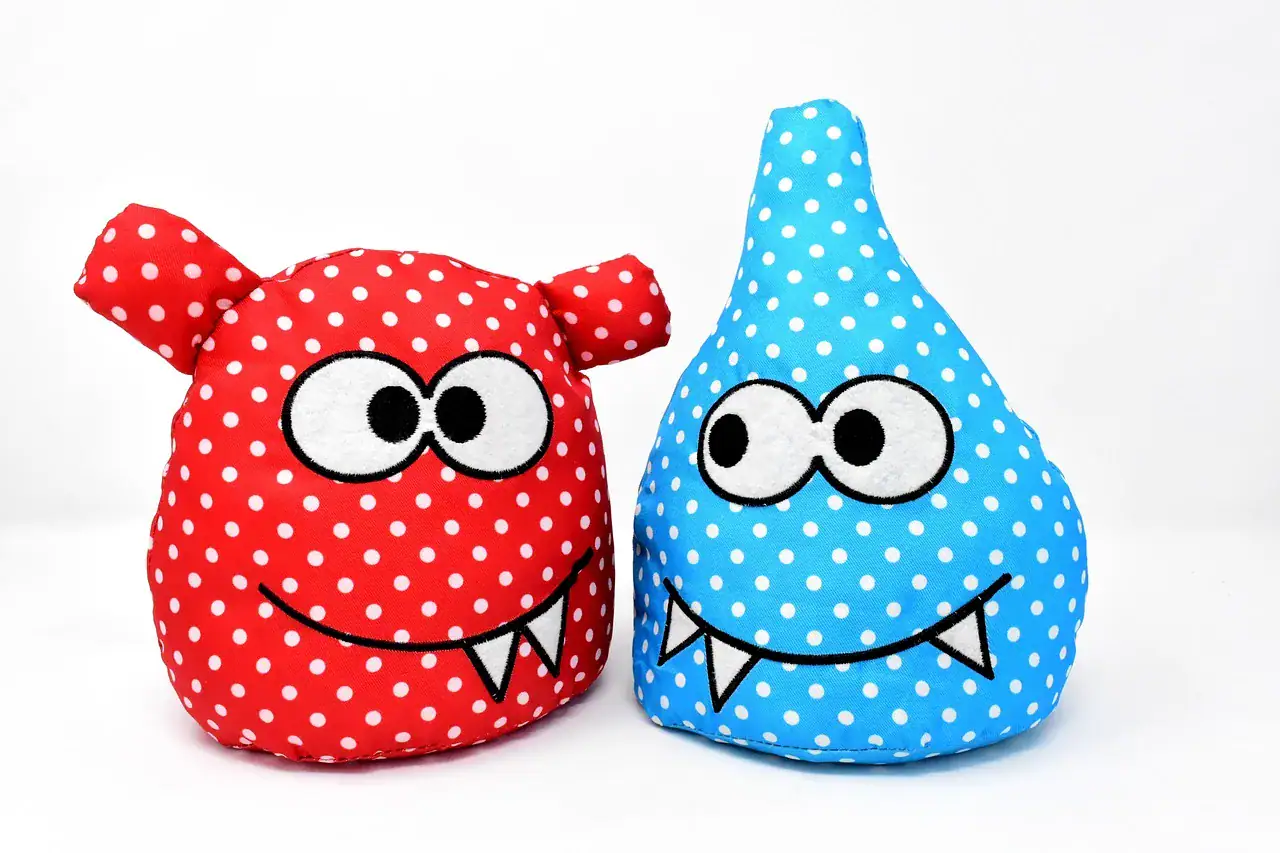
Before you sew a stuffed toy for a child, know this: federal rules ban small parts on anything meant for a child under 3. A small part is anything that fits entirely inside a test cylinder about the size of a toddler’s throat. The worry is choking: a button eye, a bell or a bead that comes loose. That page explains the test.
Making only a few doesn’t let you skip the paperwork.
Before you sell a stuffed toy – The CPSC’s small-batch program covers makers with $1,436,864 or less in prior-year revenue and no more than 7,500 units of a product – Small-batch makers still need third-party testing for small parts and for lead in paint – A Children’s Product Certificate is always required – ACT Insurance’s product-liability policy excludes “products designed for children”
The CPSC’s small-batch page spells out the details. That last line is the one that surprises people. ACT Insurance, which sells craft-vendor coverage, lists “Products designed for children” among its product-liability exclusions, even on its plan that starts at $279 a year.
States add their own layer. Ohio exempts hobbyists who sell 100 or fewer stuffed toys a year from registering, as long as each toy carries a label with the maker’s name and address, a statement that the maker “is not registered by the state of Ohio,” and one that “the contents of the product have not been inspected.” Pennsylvania requires stuffed-toy makers to be licensed through its Department of Labor and Industry.
When a maker of a handmade toy sold at Christmas markets asked for feedback on Reddit, commenters urged a business entity and liability insurance, and pointed out ways the toy could fail.
The hat is the easier sell. Heather Handmade’s free Santa hat pattern takes a third of a yard of polar fleece or French terry, plus a quarter yard for the brim and pompom, in sizes from toddler to adult large. Sew the grown-up sizes and you sidestep the children’s-product question. Grown-ups buy Santa hats for themselves, too.
#3 Decorated dog-biscuit treat bags
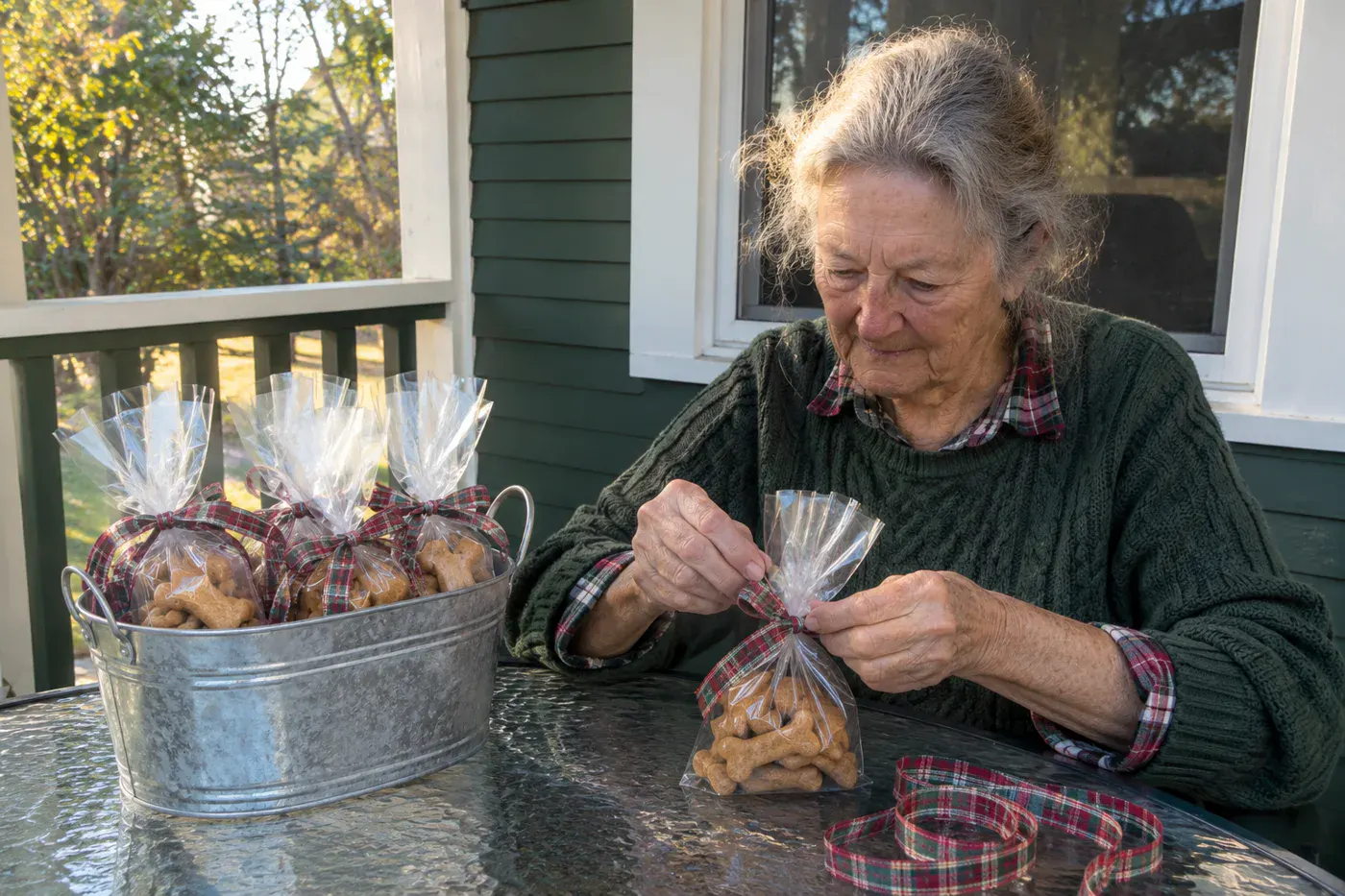
The Papered Chef, a paper-craft demonstrator who sells at fairs, puts decorated dog-biscuit bags among her holiday-bazaar best sellers.
“Now I’ve already done 4 days of events this season, so I can comment that this was definitely my most popular item at a craft fair.” The Papered Chef, paper-craft demonstrator, on YouTube
Makes sense. Everybody at a bazaar knows somebody with a dog, and a dog is the easiest name on anyone’s list.
Here’s what the cute booth idea can turn into, though. If the biscuits are homemade, some states treat you as a pet-food maker. In Illinois, the Department of Agriculture says making pet food at home isn’t illegal, but anyone who distributes it needs a license, product registration and proper labels, and “distribution includes ‘give away.'” The license is $30 and each product in containers of 10 lb or less is $90 more, and both expire every December 31. One biscuit recipe comes to $120 a year in Illinois. The label needs a guaranteed analysis of protein, fat, fiber and moisture, too.
Minnesota went the other way. Its cottage food registration now covers certain baked or dehydrated dog and cat treats, with a yearly sales cap, as long as the ingredients are safe for people and pets.
Those are two states, and they don’t agree. Look up your own state agriculture department before the first batch goes in the oven. Store-bought biscuits in your own wrapper aren’t a way around it either: in Illinois, a repackaged or relabeled treat must be registered as a new product under your name.
She noticed one more thing: her snowman candy treats sold less at the table but brought more orders afterward. “So sometimes things are better at a craft fair and sometimes they’re better as far as like orders later,” she says later in the video. Tuck a card with your phone number in every bag.
#2 Teacher gifts on a school bazaar table
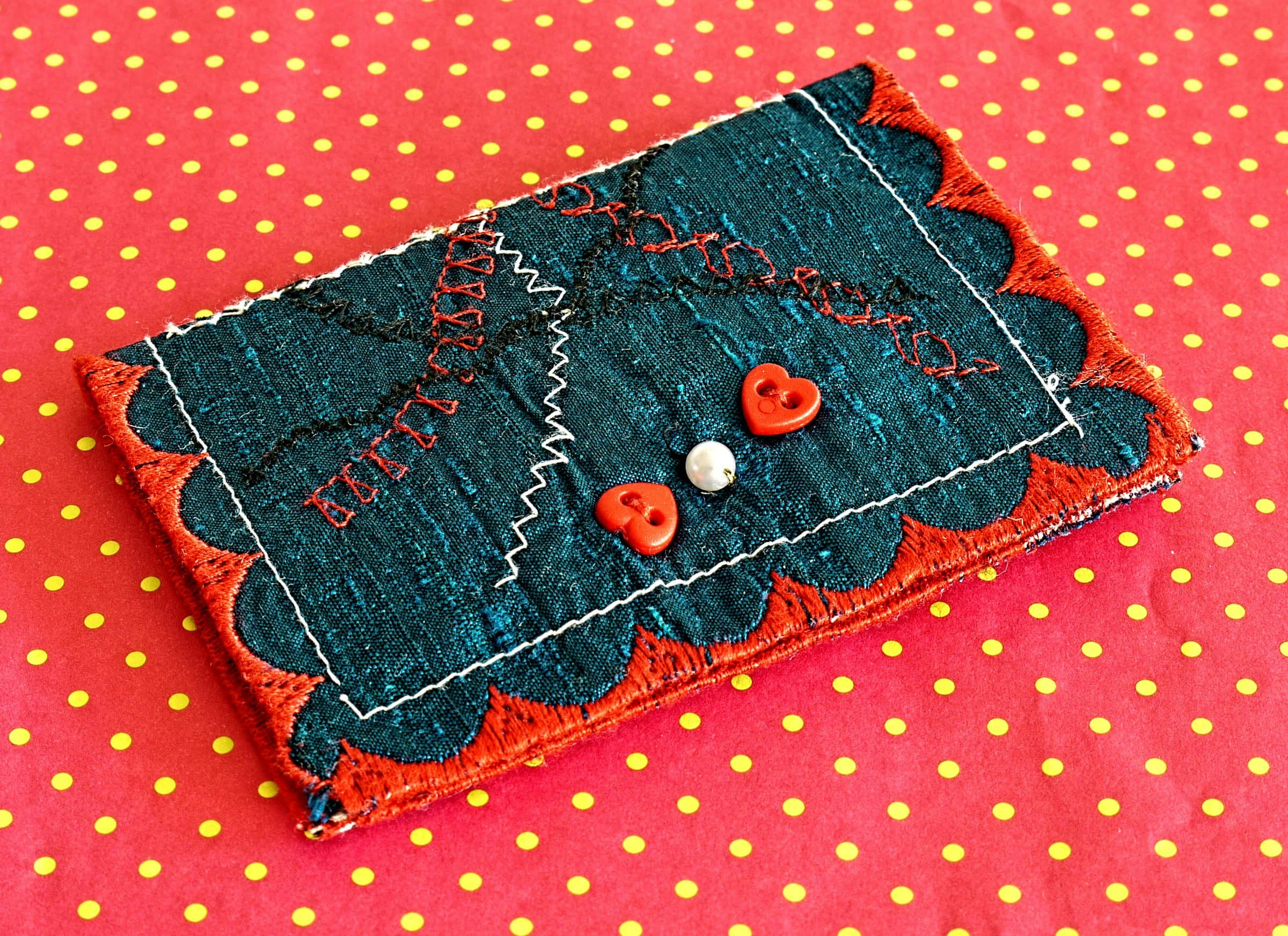
Lety of Party Planner Paperie stocked teacher gifts for one simple reason: her fair was held at a school. If yours is, every parent walking past has a teacher on their list. The question is what to make, and teachers have answered it.
In an Education Week poll of about 700 educators in December 2024, 79% preferred gift cards. Only about 7% wanted a mug.
In a separate survey of 800 teachers that same month:
- 51.5% said a handwritten card was the gift they most loved
- about a third named trinkets and knick-knacks among the gifts they liked least, just behind homemade food
- 43.4% called $10 to $20 a reasonable amount to spend
So skip the mugs and homemade food. Make what goes with a gift card: a sewn or paper card holder, or a blank handmade card with room for a child to write, priced in that $10 to $20 range. The parent tucks in the gift card and the kid writes the note. You’ve sold them the part teachers say they love most.
Ornaments can be the exception. One respondent in that Education Week poll wrote, “I have ornaments from 1980s students that still hang on my Christmas tree every year.”
#1 Timing one piece before you price it
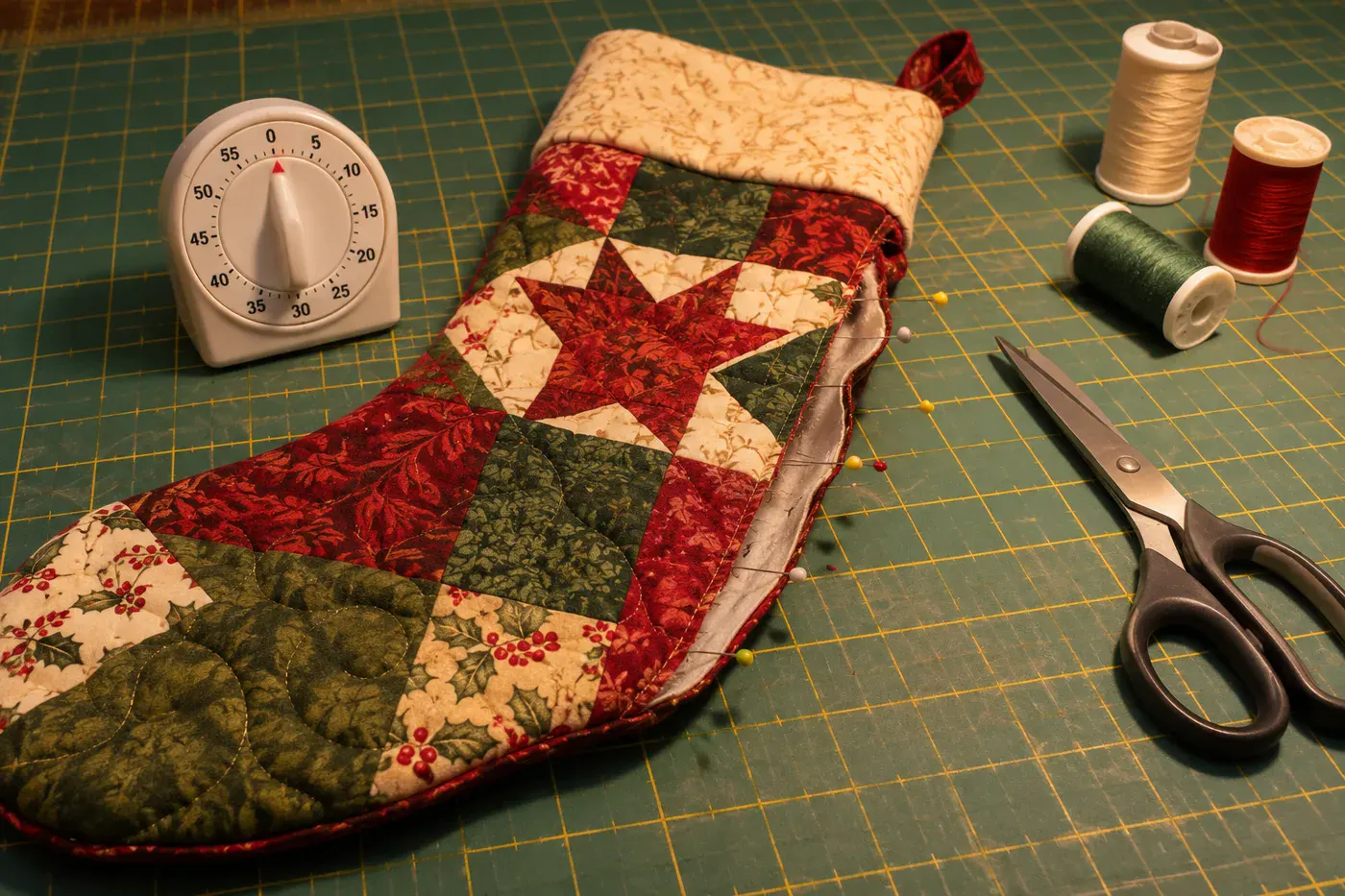
Set a kitchen timer the next time you make your best seller, from the first cut to the last knot. Then use one number: the median pay for craft artists in the U.S. was $46,080 a year in 2025, according to the Bureau of Labor Statistics. Over a full-time working year, that’s about $22.15 an hour, or about 37 cents a minute.
| Hands-on time | Your labor at that rate |
|---|---|
| 10 minutes | about $3.69 |
| 20 minutes | about $7.38 |
| 30 minutes | about $11.08 |
| 45 minutes | about $16.62 |
| 60 minutes | about $22.15 |
Time it, find your row, add materials, then add your share of the booth fee. That’s your price point before anyone sees it.
Run the quilted stocking from #6 through it: 3 hours and $5 of fabric comes to about $72 before the booth fee. That figure will make some of you laugh out loud, and that’s useful too. That wage is what employers pay people to do craft work, a modest yardstick, not a fancy one.
If your town won’t pay $72 for a stocking, the timer has told you something true. You can find a faster design, sell a few at the full price to the people who’ll pay it, or decide you’re giving part of your labor as a gift. Any of those is a fine choice. Choosing without knowing is the only mistake.
Then write the sticker.
The bottom line
The buyers at your table may value your work more than you do. In a Morning Consult survey for Michaels in October 2026, 78% of people who celebrate the holidays said a $25 handmade gift means as much as or more than a $100 store-bought one.
And if you sell for a church table, the stakes are real money. St. Paul’s Episcopal in Kingsport, Tennessee, typically raises “over $25,000” from a bazaar that about 20 volunteers craft for every Tuesday from the first Tuesday after Labor Day. The Disciples Women’s Group at a Lima, Ohio church gave $1,000 each to 17 nonprofits last year.
Underpricing a stocking at a bazaar like St. Paul’s comes straight out of what its local charities get.
So before your group’s next work day, pick the one thing it makes the most of, and time it.
Bonus: five things to check before the doors open
- Hang nothing for sale where it looks like part of the room. At the Holliston Garden Club’s 2021 Holiday Bazaar, fabric wreaths “didn’t sell” because guests thought they were part of the décor. Lay them on the table, or tag them where people can see.
- Read the insurance page before you pay for one-day coverage. ACT Insurance’s per-event plan, $49 for one to three days, leaves out products coverage entirely.
- Bring something at every price. “The first answer is to make something at every price point,” say Jennie and Davis, who sell cutting boards at holiday shows, in their video.
- Keep bringing the slow sellers. Abby and Joey Berry, who sell at Indiana markets and craft shows, say items that don’t sell well at the first show often move over the next few.
- If something sold out last year, raise it. Proof & Parchment moved her range from $3 to $15 up to $4 to $22, and her hand-lettered ornaments still nearly sold out.
Questions people also ask
What sells best at a Christmas bazaar?
Pieces that look clearly handmade sell best, according to sellers’ own fair recaps. Amy Thakrar found hand-painted ornaments outsold everything at her first fair, even though they were her most expensive item, while her printed ones didn’t sell. Seam Whisperer’s top seller was stockings from vintage quilts, and a church craft group member at Craft Picnic says microwave heating pads are “great sellers every time” at her church bazaar, along with wall hangings showing the church or a Bible verse.
How much should I charge for handmade Christmas ornaments?
Single crocheted ornaments typically sell for $5 to $15, depending on size and detail, according to Secret Yarnery. Simple flat ones sit at the low end and stuffed characters at the top. Offer a bundle like “any 3 for $18” on top of the single price, and expect lower prices at rural shows than in wealthy suburbs.
How do I price my crafts to include my time?
Time how long a piece really takes and multiply the minutes by about 37 cents, the 2025 median craft-artist wage from the Bureau of Labor Statistics worked out per minute. Add your materials and a share of the booth fee to get the price. If your local crowd won’t pay that, change the design or the item rather than cutting your time to nothing without meaning to.
How much inventory should I bring to my first craft fair?
A common rule is to bring two to three times the dollar amount you expect to sell, so a $500 goal means $1,000 to $1,500 of stock, according to MeetMeAtTheFair. Bring a little extra of your lowest-priced items. Craft Calculators points out that impulse buys are hard to predict on a first outing.
Do I need insurance to sell handmade toys at a craft fair?
You may need it, but check what it covers. ACT Insurance’s product-liability policy specifically excludes “Products designed for children,” so ask any insurer directly before you buy. Federal rules also require third-party small-parts testing and a Children’s Product Certificate even for small-batch toymakers, according to the CPSC, and some states, like Pennsylvania, license stuffed-toy makers.
Should I price lower at a craft fair than on Etsy?
You can price a little lower in person, but only by about what you’d have paid Etsy in fees. Craftybase’s example is a candle at $26.50 on Etsy and $22 at a fair. Craft Calculators warns that “your costs don’t drop at a market,” and the booth fee is added, so don’t go lower than that.


