Run the same checks a certified appraiser runs, right on your own bed, then see what quilts like yours actually sold for at auction.
Stay with it to #1, where one number explains why most sale prices fall so far short of what went into your quilt.
You shake the quilt out over the bed and it settles with a soft whump, dust turning in the window light. One edge has gone pale where it hung over a chair for years. You’re not selling it. You’d just like to know.
A great-grandchild who inherited a WWII-era quilt put it perfectly on r/whatsthisworth: “I think it’s incredible and I don’t plan on selling. But it’s also hard not to be curious.”
Are old quilts worth money? A few are worth a great deal. You can find out which kind yours is on that same bed, without a drop of water.
#15 Count the quilting stitches in one inch
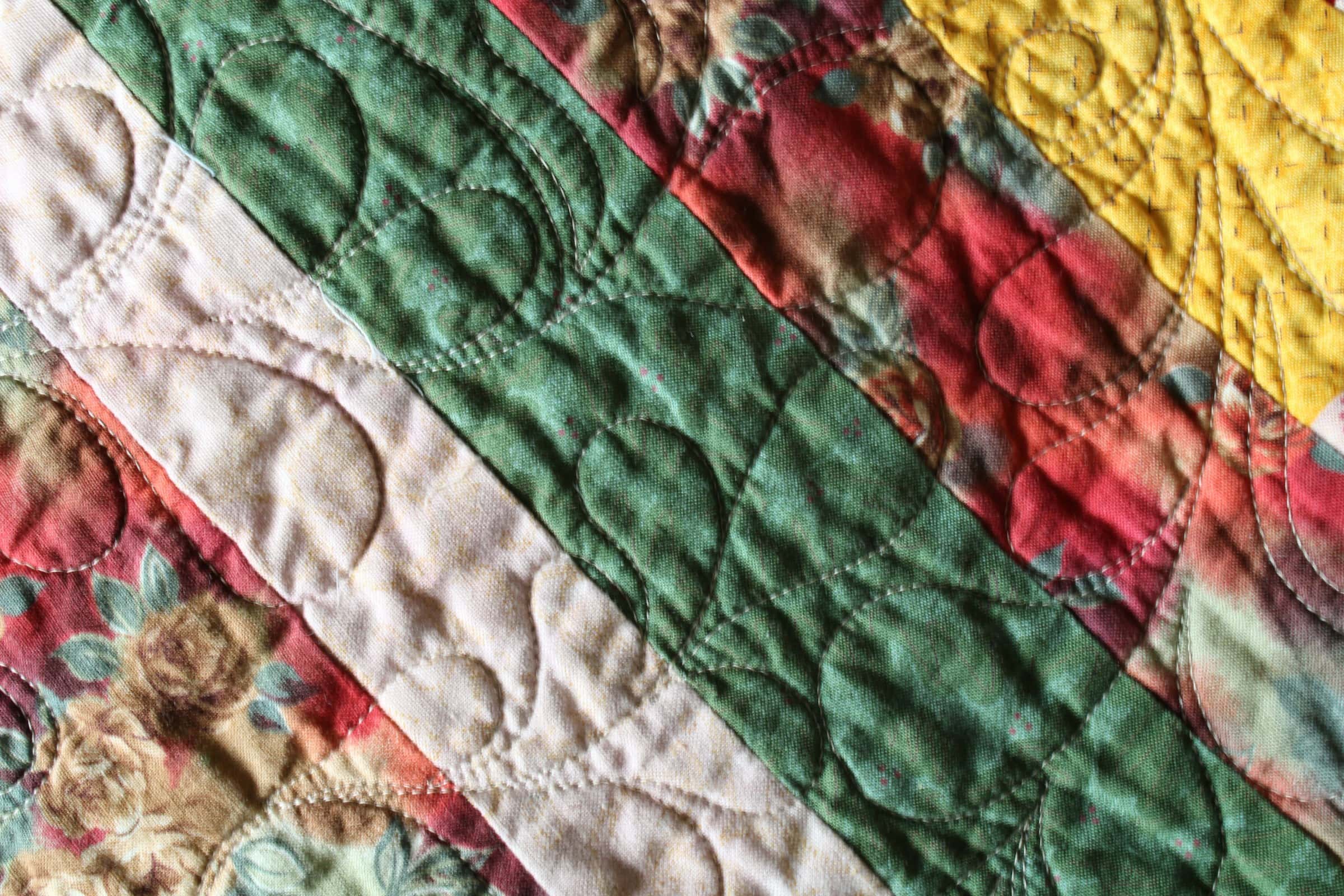
Lay a ruler along one hand quilted line, find an inch, and count the stitches you can see on top. That’s the whole test, and it takes about a minute.
Antiques appraiser Dr. Lori Verderame, who holds a PhD in art history, gives owners a rule of thumb: “You should have nine stitches or more to an inch.” She also wants the stitches to look the same all over the quilt. Treat her nine as one appraiser’s yardstick. Quilt history doesn’t set it as a rule.
The records are kinder. The Kansas Historical Society puts the average at seven to eight stitches per inch, with counts recorded as high as 22. Amish America says early-1900s quilts ran about 14 to the inch, and that good hand quilters today average about 8, with the real experts holding steady around 10.
So if you count 8, your quilt is in good company. If you count 12 or more, somebody had a very good thimble and a great deal of patience.
Then keep the number in proportion. Appraisers judge how much quilting there is and how evenly it covers the quilt, according to PAAQT, a professional group for quilt appraisers. Stitch count is only part of it.
A 2013 auction catalog shows it. Pook & Pook described a c.1850 Baltimore album quilt as “dirty with nine stitches per inch,” and it sold for $2,200, under the $2,500 the auction house had set as its low estimate.
#14 Grade the condition like an appraiser
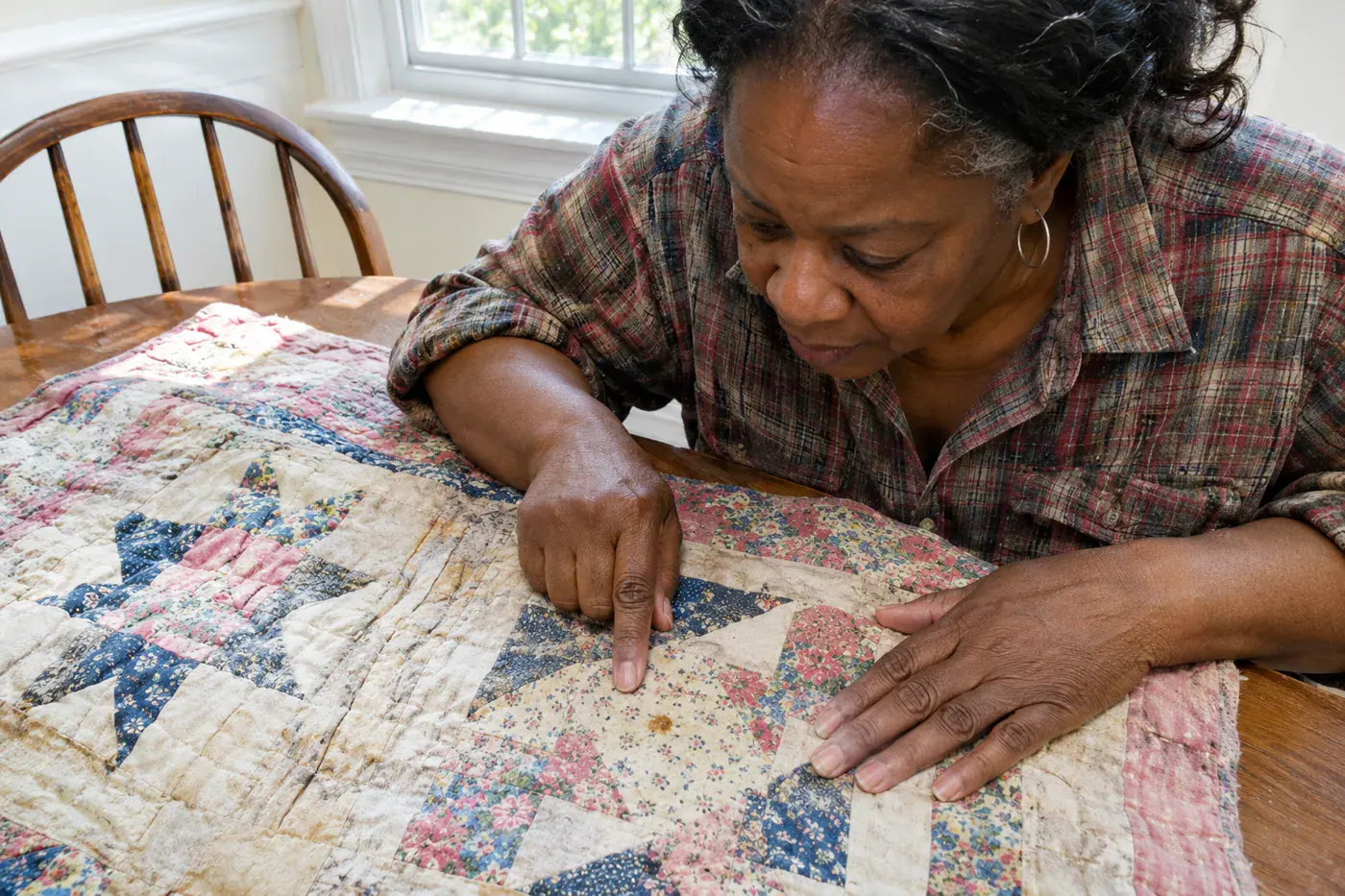
Dr. Lori runs the whole scale in one breath: “It goes pristine, mint, excellent, very good, good, fair, poor and forget it.”
Certified quilt appraisers use a shorter version. Gail Van Horsen, certified by the American Quilter’s Society (AQS) since 2010, grades every quilt one of five ways:
- Excellent
- Very Good
- Good
- Fair
- Poor
Her note on that list is the useful part: “Excellent is uncommon as is Poor.” Most family quilts live in the middle three, so don’t be stung if yours lands on Good.
To grade it yourself, spread it flat in daylight, out of direct sun, and go block by block. PAAQT names four things that pull the price down: “Fading, holes, stains, and shredding of fabric.” Write each one down with where you found it.
How far does condition move the money? Here are prices for the same type of quilt, plus one ordinary lot:
| Quilt | Condition | Sold for |
|---|---|---|
| Baltimore album, sold 2005 | Comparable example | $30,800 |
| Baltimore album, sold 2013 | Comparable example | $29,160 |
| Baltimore album, made 1850 | Poor | $2,673 |
| Three pieced quilts, one lot, 2026 | Fair to good | $274.50 total |
The album prices come from the Journal of Antiques. The bad one brought less than a tenth of the good ones.
The lot of three sold at Jeffrey S. Evans & Associates, whose catalog listed “fading / fugitive color, holes / tears, losses, toning, and/or stains.” The lot still beat its $100 to $150 estimate, at a little over $90 a quilt.
#13 A quilt top versus a finished quilt
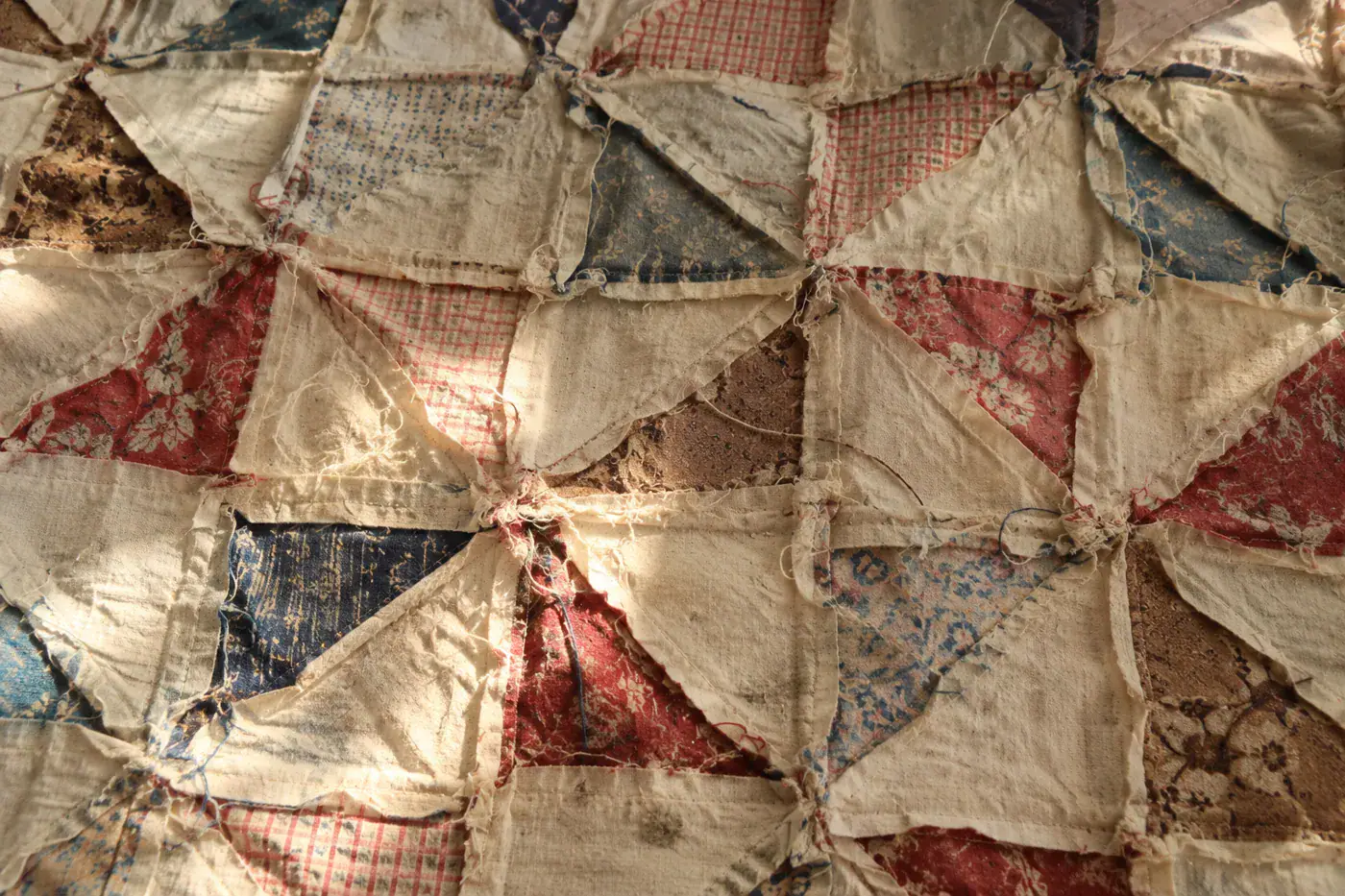
Flip a corner over. If you see the wrong side of the patchwork, with seam allowances and loose thread ends, you’re holding a quilt top. It was pieced and never backed, filled or quilted.
A rare quilt top can occasionally outsell a finished quilt. In November 2025, Copake Auction sold a 19th-century album quilt top found in Demarest, New Jersey, with a sleigh, cats, flags and little figures on it. The estimate was $800 to $1,200. It brought $6,900.
Rare beats finished. That’s why the urge to finish a family top deserves a pause.
A textile conservator consulted on the blog During Quiet Time warns that “stitching through vintage fabrics… weakens them greatly.” And once a finished vintage top goes on a bed, “you are using it up.”
If you finish one anyway, her first choice is hand tying. If it goes under a machine, she says to lengthen the stitch and follow the existing seam lines only.
The same logic runs the other way. A top pieced around 1900 might have been quilted decades later, which is why QuiltHistory warns that “an old top may have new filling.” Young batting inside doesn’t make the patchwork young.
#12 Check for real feed sack fabric
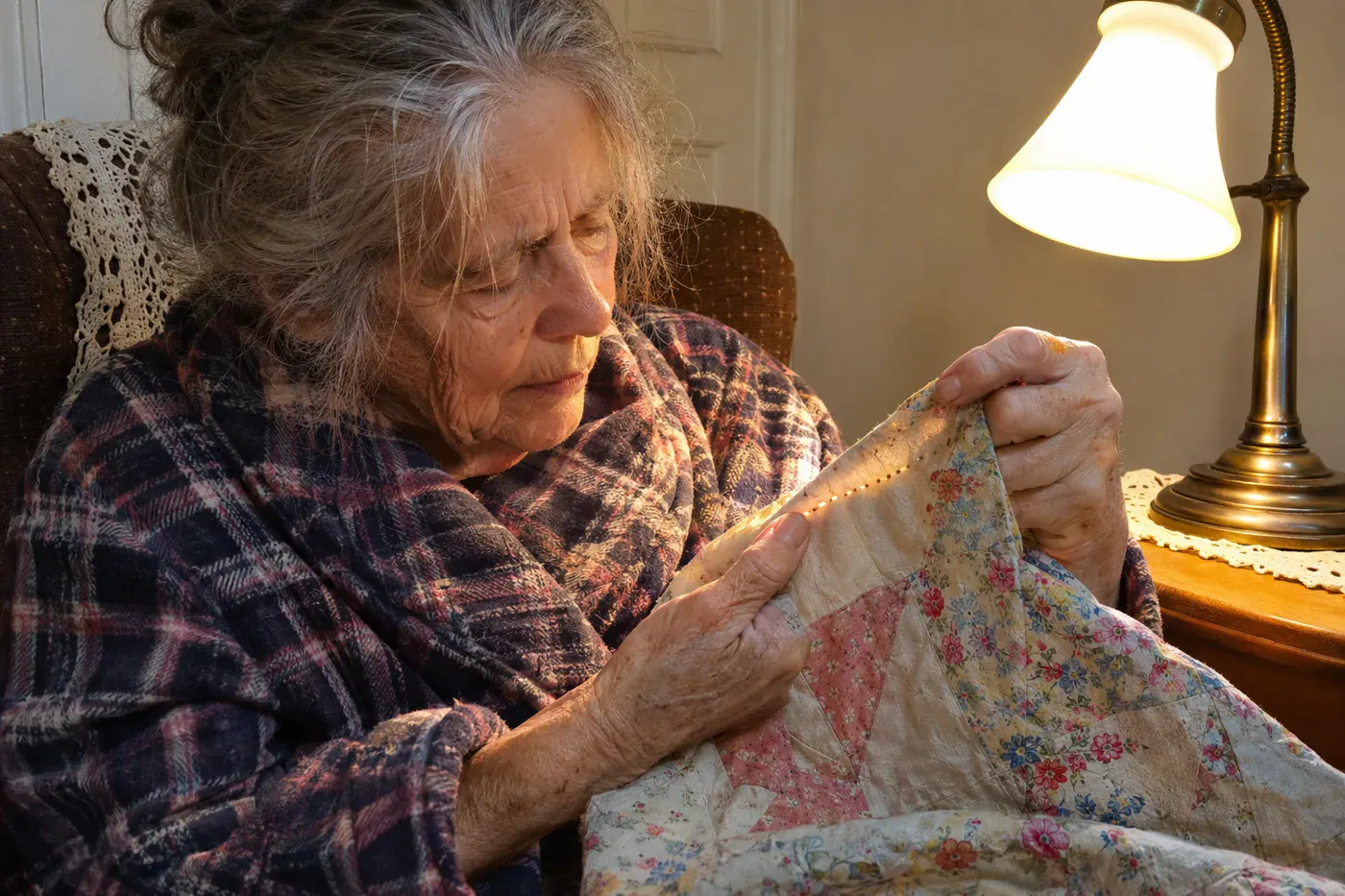
Jenny Yearous, a curator at the State Historical Society of North Dakota, runs two checks: “Are they printed with a label?” and “I look for the stitch holes in the fabric.”
Try the second one first. “Sacks were sewn together with a large needle using string for thread,” she says, and that string left a row of bigger holes. If the maker of your feed sack quilt didn’t trim them off, you can still find them along a block edge. Tilt the fabric toward a lamp and look for a dotted line that has nothing to do with the quilting.
The label check is subtler. Women tried to bleach the mill’s printed logo out, Yearous says, with “mixed results.” Customers complained the ink wouldn’t wash out, and mills finally switched to paper labels that came off. A faint ghost of lettering under a flower print is a good sign. Leave it exactly as faint as it is.
If you grew up where feed came by the sack, you may remember the fuss over which print came home. That fuss had a reason: “Dresses could require five or more bags.”
Real sack prints also narrow the date. QuiltHistory says dress-quality prints showed up in the 1920s and spread widely in the late 1930s. By 1948, paper and plastic bags had overtaken cloth.
#11 Hand quilting versus machine quilting
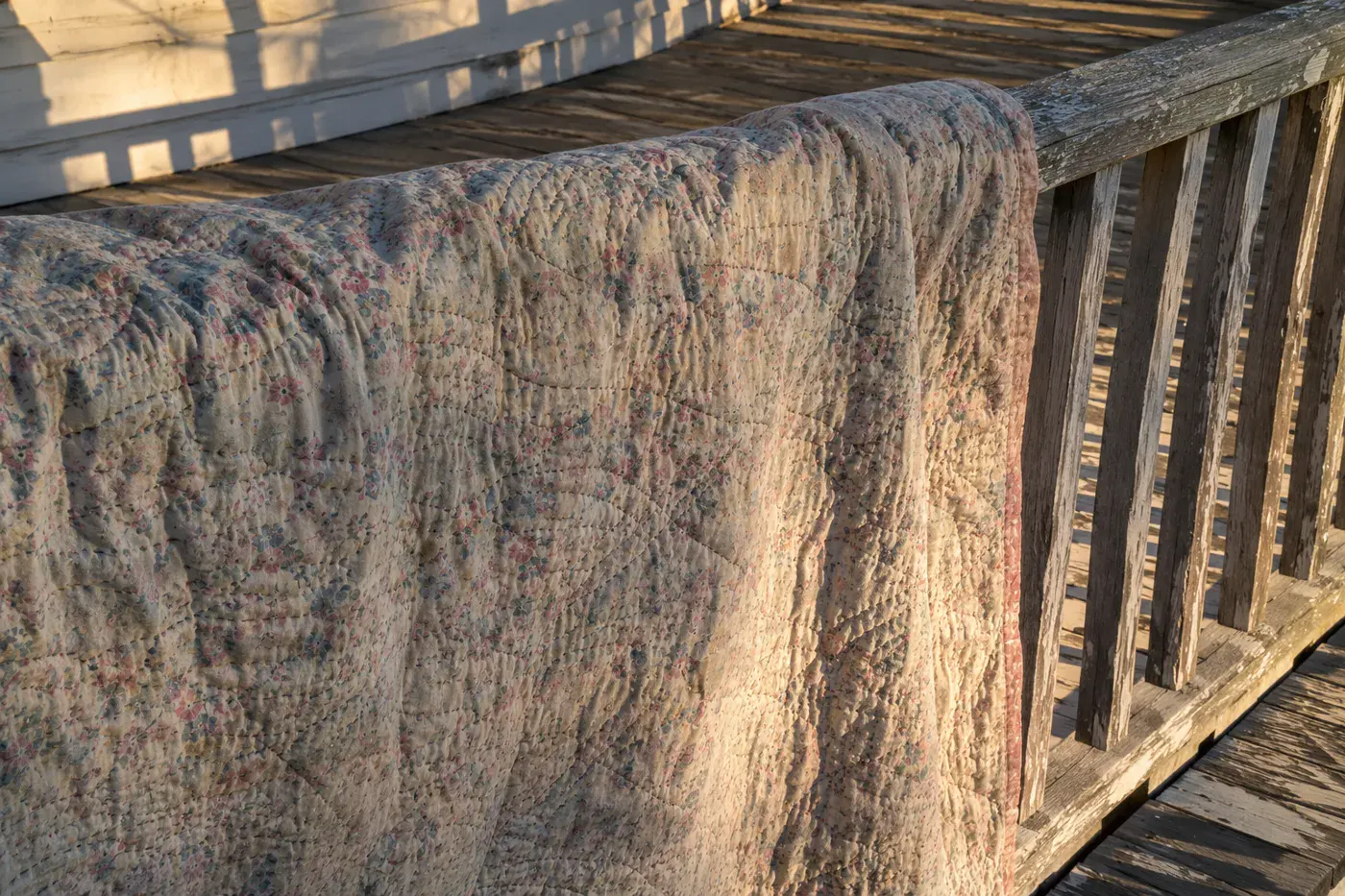
The back of the quilt tells you more than the front. Stitches that wander slightly in length usually mean it was hand quilted. Stitches as regular as typewriter keys usually mean it was machine quilted.
That’s the test JDS Auctions gives, with a fair warning: a very skilled hand quilter can sew stitches nearly as even as a machine.
Now the part that surprises people. PAAQT says it flat out: “Hand or machine quilting does not automatically give an increase or decrease in value.” Machine work doesn’t make a quilt lesser by definition.
Piecing works the same way. When the International Quilt Museum went through more than 600 quilts in one collection, 40% of those made from 1865 to 1900 had some machine stitching, and so did 60% of those from 1901 to 1940. A machine pieced 1890s quilt is perfectly normal for its day. A hand pieced one isn’t automatically older.
The quilting itself is where to look harder. Even after they bought machines, the museum says, most makers kept hand quilting until the late 20th century. If machine lines run across a quilt that looks Victorian, check it against the dating table in #8.
#10 The family papers, photos and stories
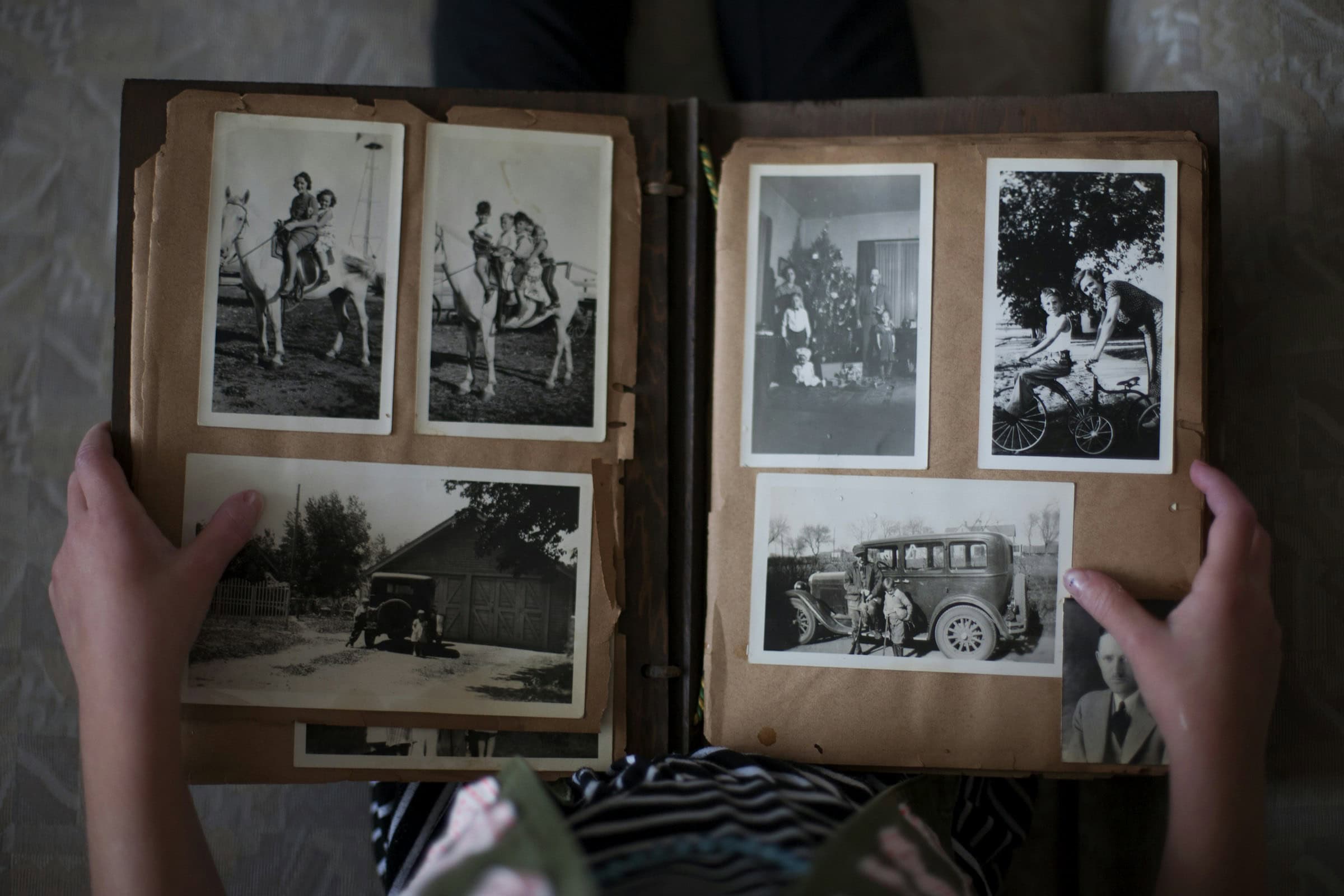
AQS-certified appraiser Lori East puts it this way: “Provenance is a fancy word for the quilt’s story, who made it, where it’s been in its life, and how you came to own it.”
That’s three parts. Most families can answer the third and make a decent guess at the first. The middle one is usually where the trail goes cold.
An appraiser writes the story down when it’s known. Gail Van Horsen’s examples include a quilt “made for my daughters 50th Birthday,” the kind of fact someone can actually confirm.
QuiltHistory is honest about the limits. A quilt’s story “may be physical (receipts and so on) or simply family lore,” and it “doesn’t necessarily affect the dollar value.” Its sharper line: “Sentimental value is never a factor in a professional appraisal.”
So “Grandma made this” goes in the notes. “Grandma made this, here she is with it in 1938” can go in the value. You’ll see what one wedding’s paperwork did for a 1940 Double Wedding Ring in #7.
Gather these before anyone sees it – Any snapshot with the quilt in it: on a bed, a clothesline, behind a birthday cake – Letters, receipts or a pattern clipping that mention it – A short note in your own words covering all three of East’s parts – Names of relatives who might remember more
#9 The store-bought lookalike with a puffy edge
Look for a tag first. A sewn-in label reading “Arch Quilts… Made in China” settles it, and you’re far from the first family to be fooled.
QuiltHistory says Arch Associates of New York imported these from around 1987, mostly through the mid-1990s, and sold them in department stores and catalogs. If the tag is gone, the other tells usually aren’t:
- A puffy, unbound edge pressed shut, called a knife edge, where a binding should be
- Polyester batting
- Machine piecing with hand quilting added afterward
- “Large, uneven hand quilting with low stitch density”
- Faux-antique calicos in dusty rose, mauve and sage
If your living room was mauve and sage around 1990, you may have owned the curtains to match.
A famous name didn’t guarantee an old quilt either. In 1992 the Smithsonian licensed copies of four historic quilts, made in China, “sewn by machine but quilted by hand.” More than 23,000 sold by March 1993, at an average of $150 to $300. After the uproar, the Smithsonian agreed to print its name and the copyright year, 1992, on them. If yours carries both, you have one of those copies.
It still trips people up. In one Reddit thread about a thrift-store queen quilt the buyer thought was old and handmade, commenters recognized a mass-made store quilt, and a self-described antique dealer put it at the 1980s or later from its materials and construction.
#8 A clue-to-decade table for your quilt
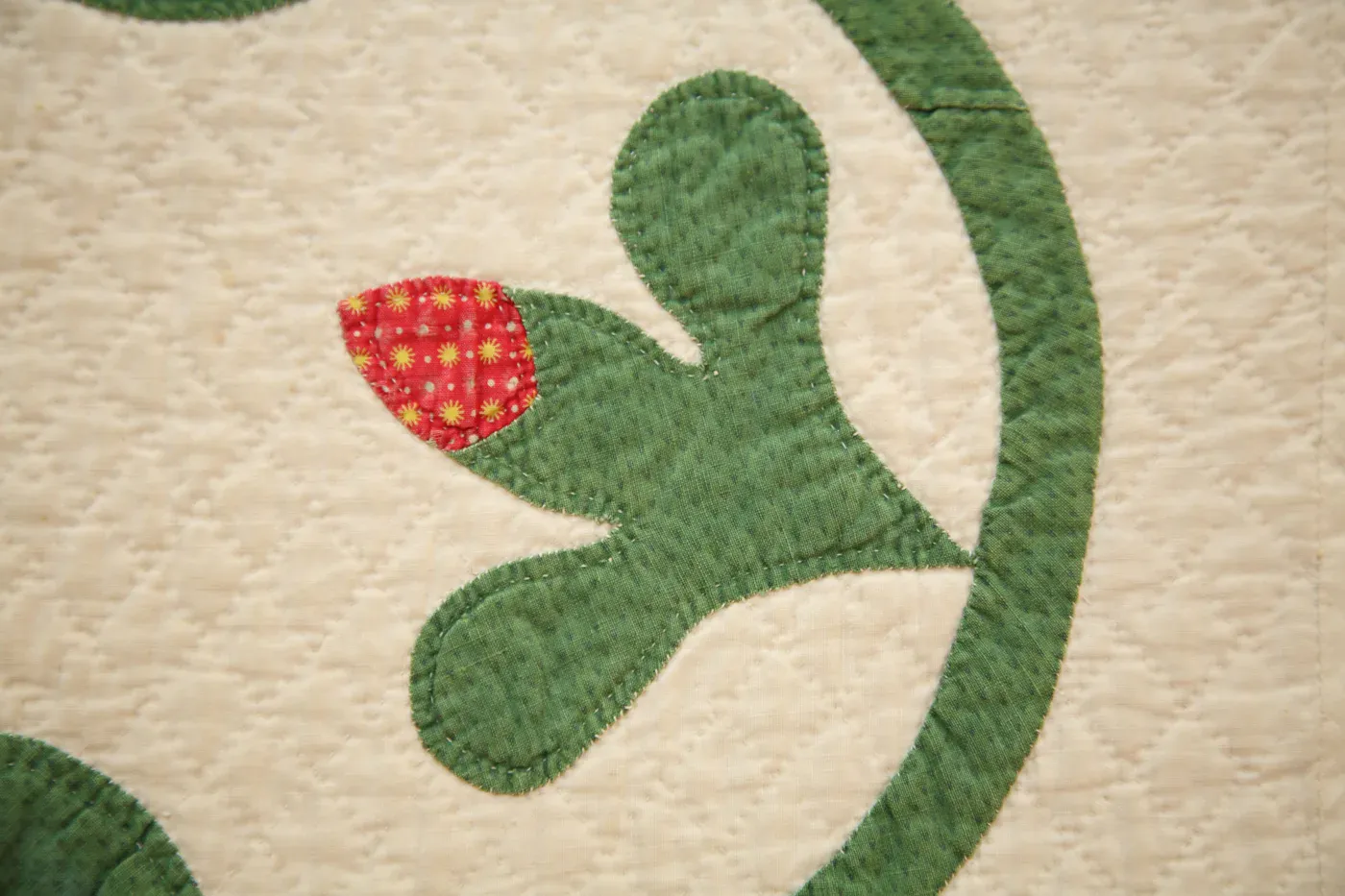
Every quilt carries one clue that gives away the youngest it could be. Find that clue, and the older-looking ones stop mattering. Age alone isn’t how to tell if a quilt is valuable, but you can’t judge value until you know when it was finished.
| Clue you can see | Points to | Watch out |
|---|---|---|
| Bright synthetic colors | After 1856 | Check the print too |
| A plain solid Turkey red | Can’t be dated by color alone | Read the print instead |
| Watermelon pink, mint green, lemon yellow | Early 1900s on | Colors moved away from dark tones |
| Turtle on a Quilt pattern | 1943 or later | First printed in the Kansas City Star |
| Machine zigzag stitching | Mid-1930s or later | Check the batting and prints too |
| Fancy embroidery-style machine stitches | Mid-1950s or later | The fabric can be much older |
| Puffy, high-loft batting, quilting 3 to 4 inches apart | 1960s to 1980s revival | Dacron polyester arrived in 1951 |
That first row has a nice twist. The first commercial synthetic dye, made by 18-year-old William Henry Perkin from coal tar in 1856, was mauve. It’s the same color that helps give away the Arch quilts in #9, about 130 years later.
The red is the trap. Turkey red, the famously reliable red, was made synthetically from 1868, and quilt historian Barbara Brackman warns that “Turkey red plains look the same in 1840 and 1890.” Cheaper reds sold under the same name “faded to tan or tangerine.” So a tan patch where red should be can still be a red.
For the stitching rows, the dates come from the machines. Singer’s 206K of 1936 was an early home zigzag machine. Patterned stitches followed with machines like the 1954 Necchi Supernova. Brackman shows a 1961 Mountain Mist Sunflower quilt done in “machine zig-zag applique.”
For the batting row, QuiltHistory explains why the spacing works: polyester lets quilting lines sit 3 to 4 inches apart, while cotton needs them closer.
If someone in your family clipped patterns out of the newspaper, the turtle row may ring a bell. The McKissick Museum says that pattern first ran in the Kansas City Star in 1943.
And if a paper batting wrapper was ever folded away with the quilt, keep it. Mountain Mist printed patterns on its wrappers from 1929, and a wrapper is a dated clue in its own right.
#7 What the 1930s favorites really sell for
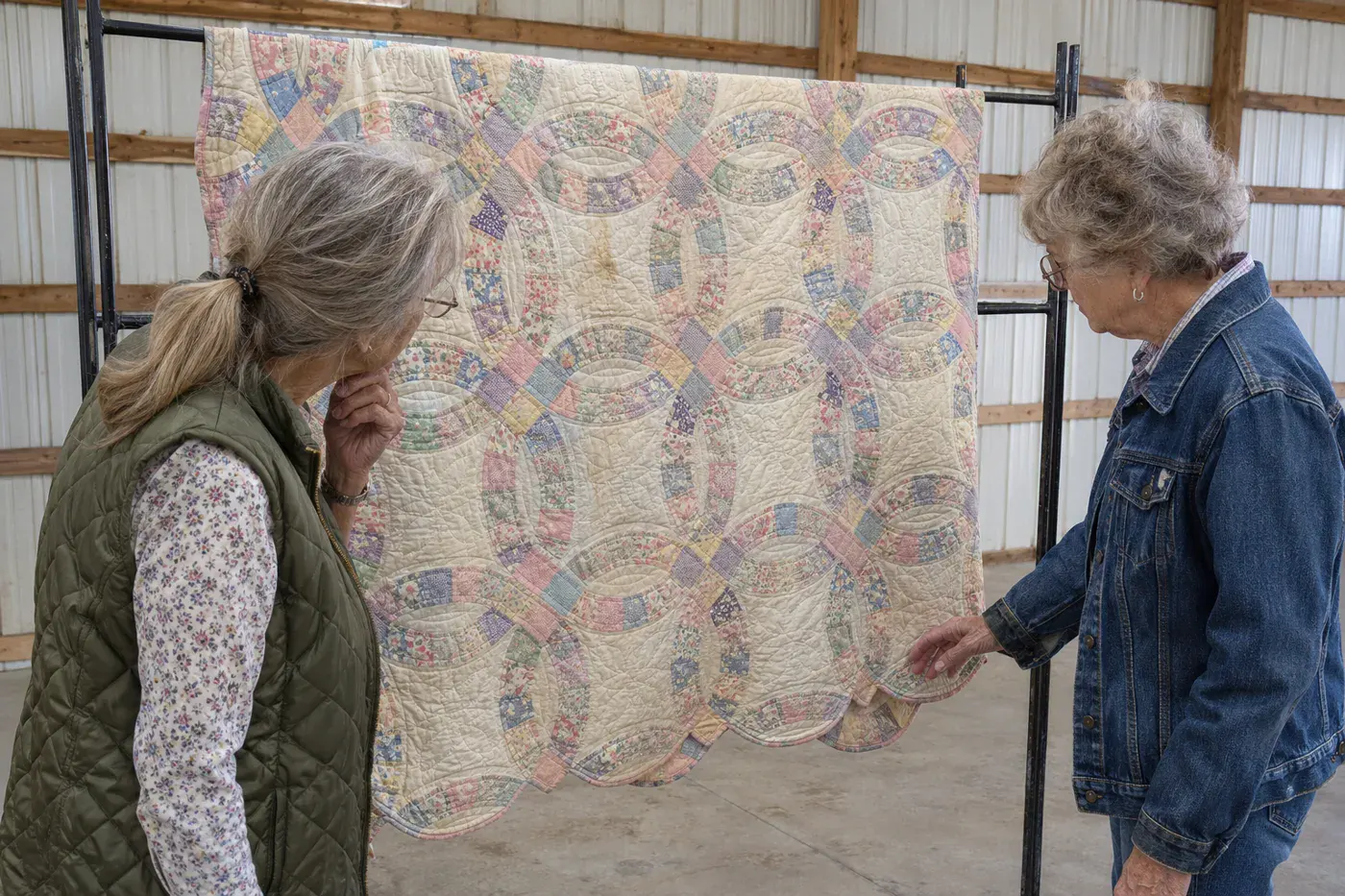
The patterns most families own came out of the same few decades. The National Park Service says Grandmother’s Flower Garden peaked “about 1925,” the Dresden Plate took its look from Dresden porcelain of the 1920s and 1930s, and the Double Wedding Ring suited the pastel fabrics of the day.
Here’s what that kind of vintage quilt actually brought. We took prices only from closed sales, never from asking prices. At a January quilt and textile sale at Dana Auctions, a specialist textile auction house:
- 1940s Double Wedding Ring: $300
- 1940s Ohio Rose: $200
- 1930 Friendship Dahlia: $170
- 1950 Nine-Patch: $130
- 1940 Grandmother’s Flower Garden: $150, and another for $110
At the same house’s May 2021 sale, a 1940s Bow Ties and a 1930s Lemoyne Star went for $60 each.
That’s honest antique quilt value for the type: a nice dinner out, not a down payment.
Two things lifted the exceptions. One was a story. In September 2026, a c.1940 Double Wedding Ring hammered for $650, above its $300 to $600 estimate; with the 18% buyer’s premium, the winning bidder paid about $767. Its catalog could say exactly who made it: Mary Cunningham and friends of Douglasville, Georgia, for Florence Korostynski’s wedding in Bellmawr, New Jersey.
The other was Mickey Mouse. A Mickey and Minnie quilt from about 1935 to 1945, with a “tear and some staining,” sold at Copake in April 2026 for $1,220. Its estimate was $200 to $300.
#6 What truly rare looks like in dollars
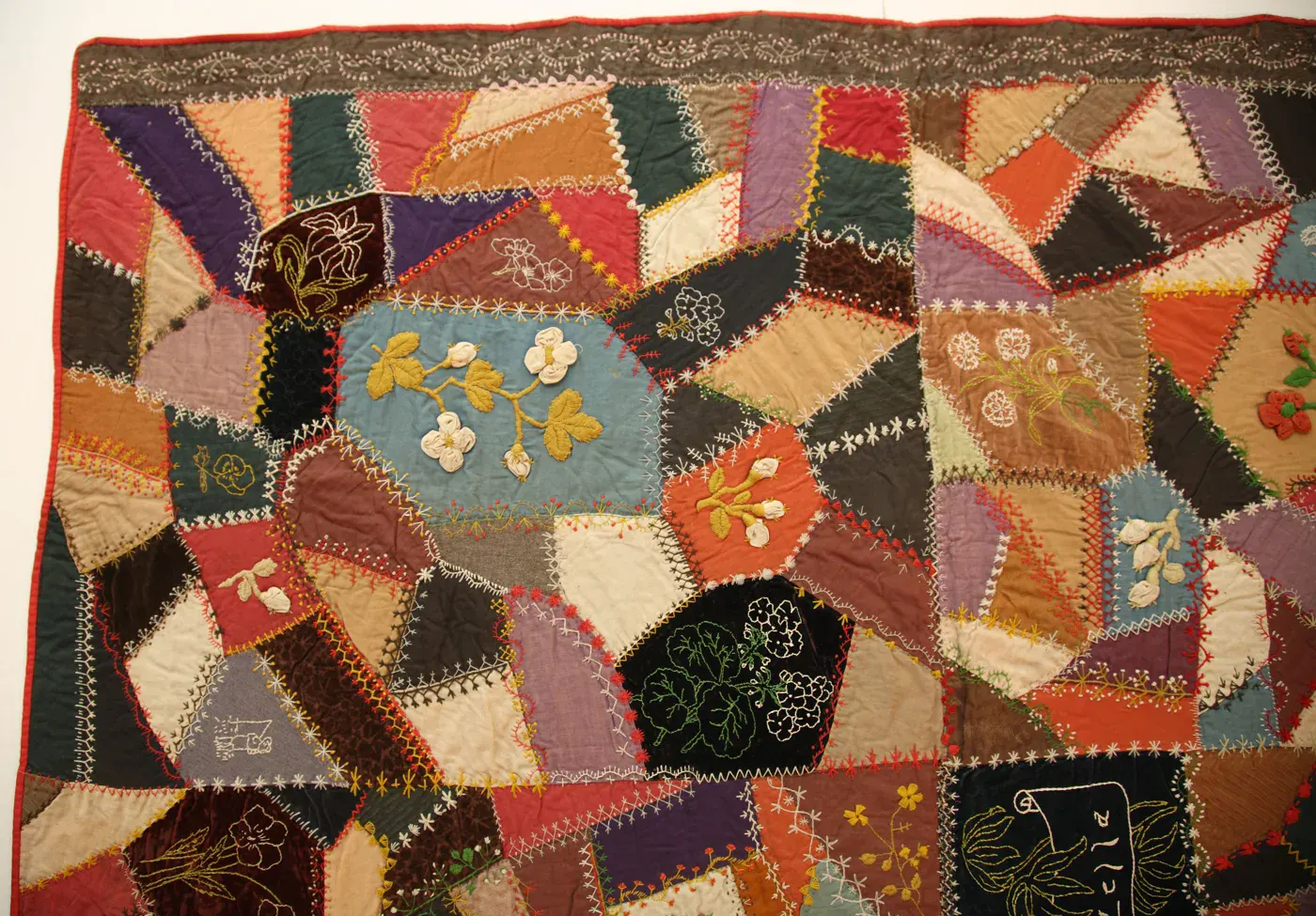
Rare starts roughly where a 1940s quilt’s price leaves off.
Take the crazy quilt, the silk and velvet showpiece of the late 1800s. On Antiques Roadshow in 2012, appraiser Nancy Druckman told the owner of an 1890s Kentucky crazy quilt that typical ones “normally… sell for about $300.” She valued that one at $3,000 to $5,000 at auction and called it “far and away the best example I’ve ever seen.”
So it took the best she’d ever seen to bring ten to nearly seventeen times the usual price.
Silk crazy quilts carry a built-in flaw. The silk was treated with organic and metallic compounds to give it body and rustle, and over time that made it brittle. The International Quilt Museum calls the result “shattering”: patches that have decayed outright, or that have lost their threads in one direction, like a comb with half its teeth gone.
At the very top sit the Baltimore album quilts of the 1840s and 1850s. Barbara Brackman wrote in 2010 that about 20 years earlier, buyers paid “way over $100,000 and into the $200,000’s.” Lucinda Ward Honstain’s Reconciliation Quilt brought $264,000 at Sotheby’s in 1991. By 2010, Brackman put Baltimore albums at “maybe $10,000 to $60,000.”
The album quilts that turn up at regional sales sell for less still. At Copake, a c.1850 Maryland album quilt with 35 appliqué blocks sold for $7,150, below its estimate, and a c.1860 album quilt brought $2,950 on New Year’s Day 2022.
Writing on the front can move a quilt up fast. In March 2022, Copake sold a 19th-century appliqué quilt stitched “THE FLAG OF OUR UNION 1852” for $1,560, against a $300 to $500 estimate.
Most family quilts are 20th-century pieces, and #7’s prices are the ones that describe them.
#5 eBay’s sold listings, not asking prices
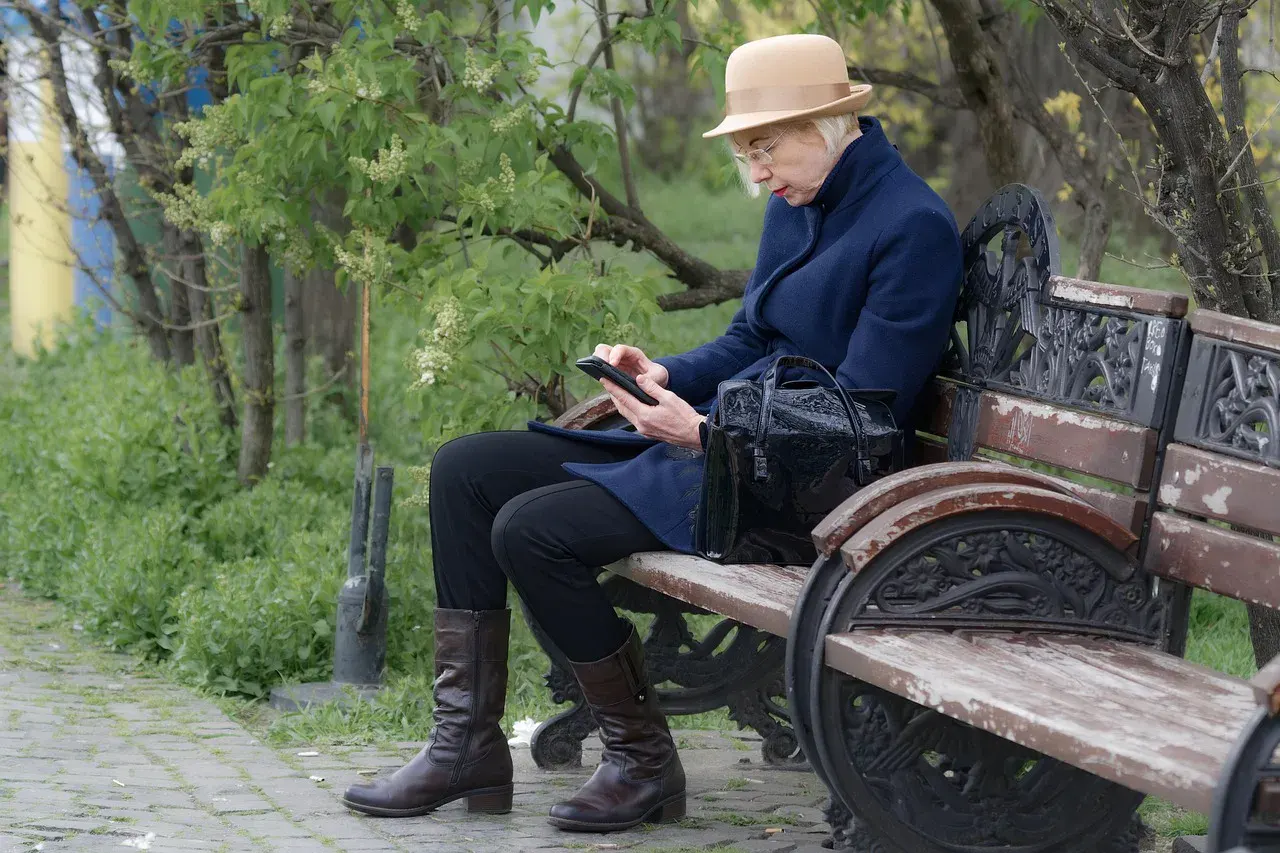
Type your pattern into eBay and the prices run all over the map. Those are hopes, set by sellers.
The fix is one filter. Third-party guides tell you to tick “Sold items” under “Show only” in the search results. eBay’s own help page says those results “include only listings that have recently ended sold in the previous 90 days.” Now you’re looking at what somebody paid.
Ninety days is a short memory. If you have an eBay seller account, the Product Research tool in Seller Hub reaches back three years. Jeffrey S. Evans, president of Jeffrey S. Evans & Associates, advises using prices from the past five years and no older, the Journal of Antiques reports, so three years covers most of that window.
Match like with like: same pattern, same decade, same condition grade from #14. A Flower Garden in Fair condition tells you nothing about one in Very Good.
Collectors’ old receipts show how low the floor has always been. Quilt teacher and collector Anita Shackelford paid $25 for a Princess Feather quilt in 1984. Collector Lisa Erlandson paid $35 for her first antique quilt around 1991, and $10 for a worn Tile Quilt.
People on Reddit still report finding handmade quilts at thrift stores for a few dollars.
#4 The cedar chest, the closet box and creases
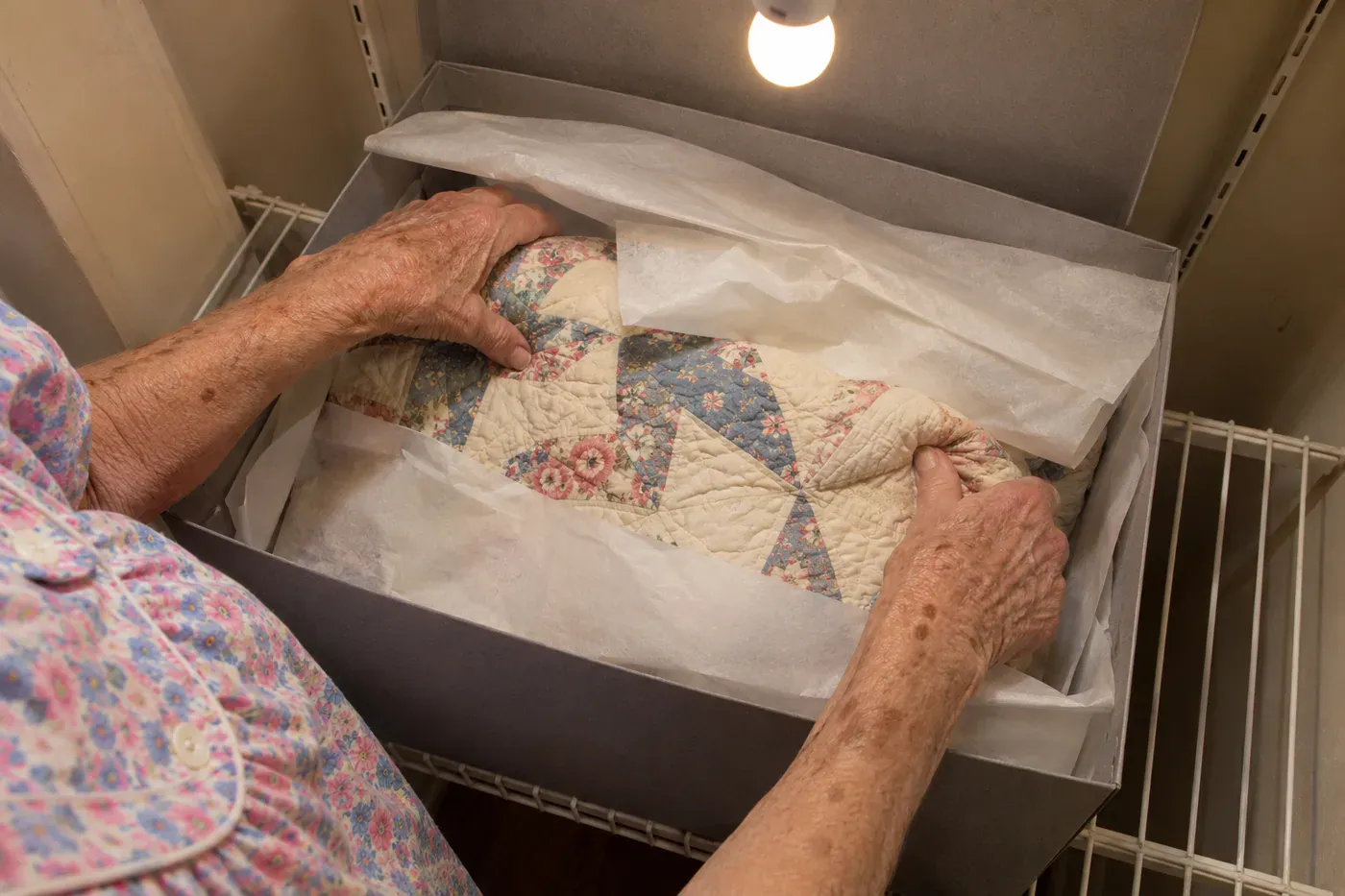
Lift the lid of a cedar chest and that smell rises, the one that always meant the good things were kept in here. It’s a lovely smell. It does very little for a quilt.
The International Quilt Museum says cedar chests may have “almost no value” against moths and carpet beetles. Worse, wood of any type gives off “volatile, acidic oils that yellow and weaken textiles.” Ordinary cardboard does the same.
So that yellow-brown line along a fold probably came from the chest or the box. A commenter on r/quilting, dating a family crazy quilt, was relieved to find “no major staining, acid damage (cardboard boxes do this), or bleaching.”
Creases are the other culprit. The Kansas Historical Society says to fold a quilt as few times as possible, refold it once a year along different lines, and keep it near 70 degrees and 50 percent humidity. That rules out the attic and the basement.
Light does its damage slowly. The museum calls it “cumulative and irreversible,” which is how one side of a quilt draped over a chair goes pale while the other side stays bright.
What to wrap it in instead – Washed cotton, muslin or acid-free tissue between the quilt and any wood – An archival box, or a plastic bin marked #2 or #5 – Acid-free tissue padded inside each fold – A closet shelf in the lived-in part of the house
#3 Why the quilt market cooled off
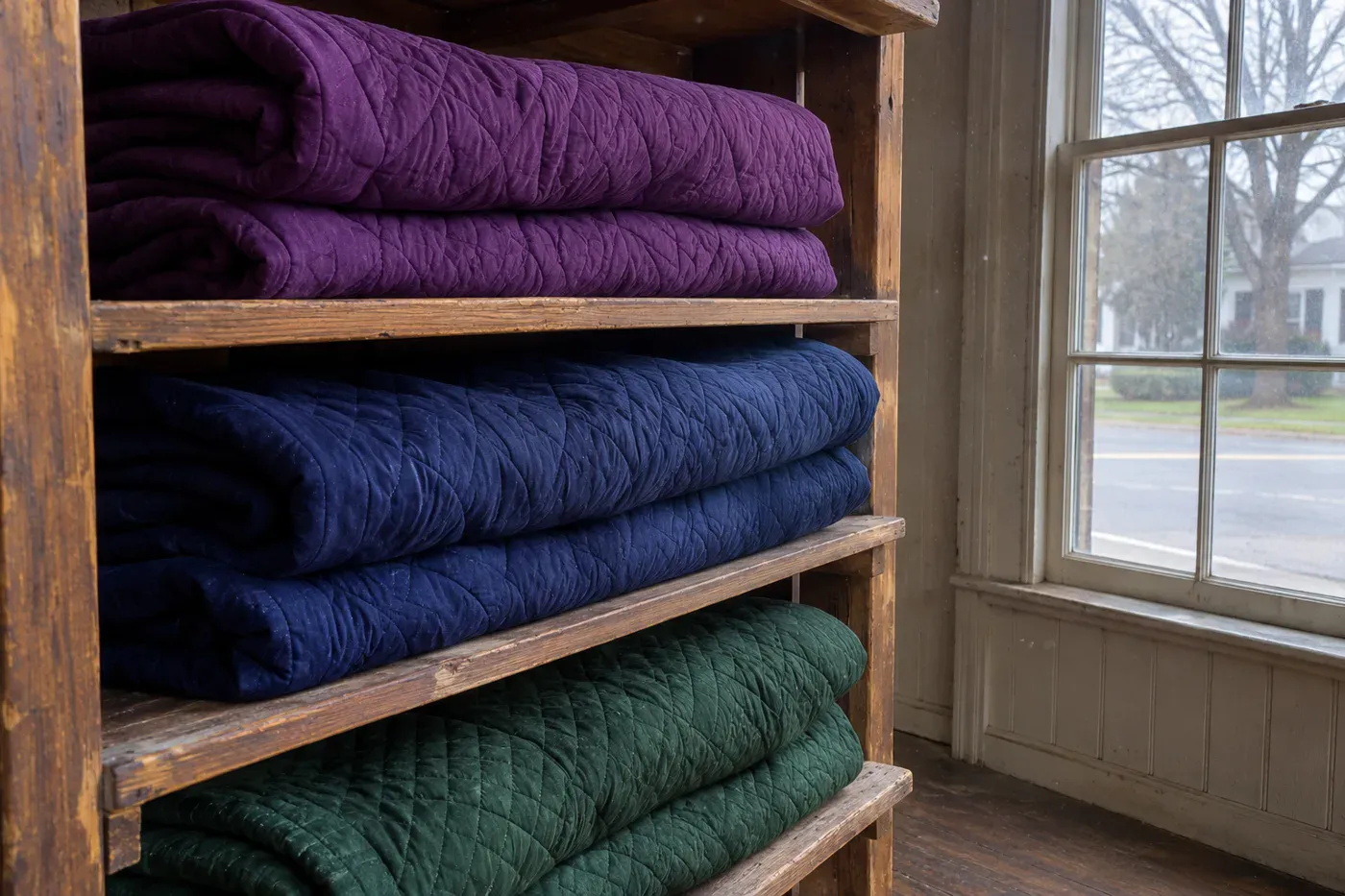
If an offer felt low, it may simply have been current.
Amish quilts, the bold solid-color ones collectors chased for years, show it most clearly. The Journal of Antiques reported in 2017 that Amish quilts selling for $5,000 to $15,000 between 2005 and 2008 rarely topped $2,500 anymore. One in 2016 brought $468. Appraiser Gail Van Horsen said the same in 2025: “The quilt market is currently depressed.”
The reason is plain supply and demand. As one commenter on r/whatsthisworth put it: “Antique quilts used to be worth more but the market has cooled off a lot. There are a lot of them and a relatively small and shrinking collector market.”
Anita Shackelford notes that prices for antique quilts “have risen and fallen over the years,” and she passes on a reminder from her husband:
“It is only an investment if you sell it again.” Anita Shackelford’s husband, as she tells it on her site
#2 The inflation math on a family legend
Every family has a number. Mom paid $150, and now it’s worth fifty times that.
Sometimes the legend holds up. Dr. Lori appraised a Civil War-era quilt that came with papers tracing its history. The owner’s mother had paid $150 for it in 1974. Her verdict: “The documentation that you have makes this quilt worth about seven thousand five hundred dollars.” That’s 50 times the price.
Now run it through inflation. Using the Federal Reserve Bank of Minneapolis’s consumer price figures, $150 in 1974 is about $980 in 2025 dollars. Against that, $7,500 is about 7.7 times what she paid, in today’s money. Still a terrific buy for a Civil War quilt with papers. Just not fifty times terrific.
And $7,500 is an appraisal, which is an opinion. Alice McElwain, an AQS-certified appraiser in Arkansas, says so in her written terms: her value conclusion “does not guarantee resale value.”
To test your own family’s number, you need two facts: what was paid, and what year. The Minneapolis Fed’s inflation calculator does the rest in a few seconds.
#1 What it would cost to make today
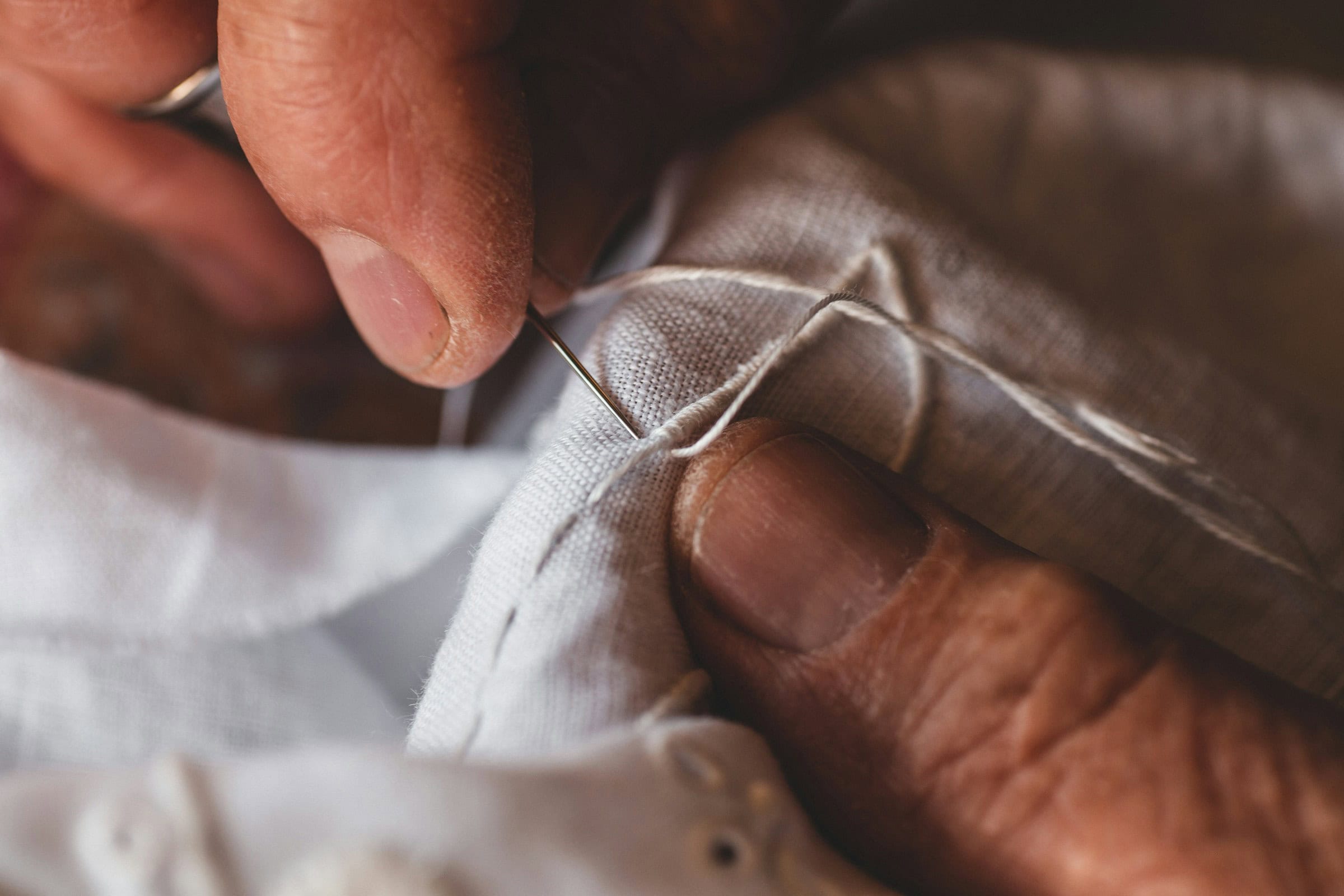
Ask what your quilt would cost to make today, and the sale prices in #7 start to look very strange.
Professional quilters Marianne and Mary Fons worked it out on Fons & Porter’s Love of Quilting. One large quilt of more than 2,000 pieces took them about 100 hours of hand work, roughly five hours for each of its 20 blocks. Fabric and custom machine quilting came to about $500. Even at a low hourly rate, they figure, it would have to sell for about $2,000 to $3,000 or more.
We priced those 100 hours at what hand sewers actually earn, using the Bureau of Labor Statistics’ May 2023 wage figures:
| Hourly wage | 100 hours of labor | With about $500 in materials |
|---|---|---|
| Low, $12.50 | $1,250 | About $1,750 |
| Median, $15.50 | $1,550 | About $2,050 |
| High, $21.10 | $2,110 | About $2,610 |
Those are factory hand sewers’ wages, not quilters’ fees, so use them as a yardstick only.
Now hold them up against #7. The 1940s quilts at Dana Auctions sold for $110 to $300. The labor alone, at a median wage, comes to more than five times the best of those. And nobody counted the skill.
So what’s a fair price for a handmade quilt? For an old one on the open market, it’s whatever a buyer pays, and you’ve seen how little that can be. For a new one, quilters on Reddit describe being offered a fraction of their quote, and some refuse to sell anything bigger than a baby quilt cheaply.
Marianne Fons, for her part, says she has never sold a quilt and doesn’t recommend that quilters sell theirs.
The bottom line
You don’t need a buyer to know what you have. A ruler, good daylight, a notebook and one quiet afternoon will tell you most of it.
When you’re done, your quilt will sit on one of four paths: leave it as it is, store it better, insure it, or book a formal appraisal. Most family quilts only need the first two. If it’s going on a homeowner’s or renter’s policy, you’ll need the fourth, because insurance adjusters usually won’t accept an owner’s own appraisal. A written appraisal also means taking the quilt in person, because photos alone won’t do.
And if anyone in your family might remember who made it, call them before you call an appraiser. Ask where it was kept when they were small.
Bonus: five next steps most owners never hear about
- Take it to a free documentation day. West Virginia Quilters examines, photographs and records quilts at no charge and sends the record to the Quilt Index, though it says plainly, “It is not the purpose of documentation to estimate the value or provide an appraisal.” Bring it as is, with your notes and photos.
- Add it to the Quilt Index yourself through its Submit A Quilt page. It won’t appraise your quilt, but it puts your quilt in the same archive as more than 17,000 recorded from Illinois alone.
- Ask for a short consult instead of a written appraisal if you only want to learn. At the 2026 Ozark Piecemakers show, Alice McElwain offered a $20 education consult with no written value.
- Walk away from any appraiser who wants a percentage of the value. Flat fees are standard, and QuiltHistory calls percentage pricing unethical.
- If you’ve made quilts yourself, label them the museum way: a number in archival ink on twill tape, sewn to the back in the lower left corner.
Questions people also ask
How can you tell how old a quilt is?
You date a quilt by its newest clue, reading several together: dyes, batting, stitching and pattern. Bright synthetic dyes only appear after 1856, the Turtle on a Quilt pattern was first published in 1943, and puffy polyester batting points to the 1960s to 1980s revival. If “how old is my quilt” is still a puzzle after that, a guild documentation day or a certified quilt appraiser can look at it in person.
How much is a 100-year-old quilt worth?
Most sell for a few hundred dollars, and only exceptional ones bring thousands. In 2026, three late-19th and 20th-century quilts in fair to good condition brought $274.50 together, while a c.1870 Lone Star sold for $1,830 at Copake. At a January sale at Dana Auctions, a c.1890 Carpenter’s Star brought $1,500. At that age, condition and quality matter more than the years.
How much does a quilt appraisal cost and where do I find one?
A written appraisal from a certified quilt appraiser usually costs about $40 to $50 a quilt, charged as a flat fee. Lori East quotes $40 to $50, and Alice McElwain charged $50 at a 2026 Arkansas guild show. Look for appraisers certified by the American Quilter’s Society, check PAAQT’s state-by-state directory, or look for one at a large quilt show. Ask for fair market value if you might sell and insurance replacement value if you’re insuring it, since replacement value usually runs higher.
Should I wash an old quilt before having it appraised or sold?
No, washing can make colors bleed and damage fragile fibers, so bring it exactly as it is. The International Quilt Museum says “Washing a quilt has too many risks involved to recommend it” and suggests asking a textile conservator first. Appraiser Lori East asks owners, “Please don’t wash an antique piece until we’ve had a chance to talk,” and documentation days ask for quilts as is.
Where is the best place to sell an old quilt?
A specialist textile auction house suits a documented or rare quilt, and eBay or Etsy suit an ordinary one. eBay’s final value fee for most categories is 13.6% of the sale up to $7,500, plus 30 to 40 cents an order. A 2026 guide puts Etsy at 20 cents a listing, a 6.5% transaction fee and 3% plus 25 cents for payment processing. At textile houses like Dana Auctions, buyers pay an 18% premium and seller rates aren’t published, so ask before you consign.


