From a labeled quilt to a stocking with the name knit right in, these are handmade gifts for grandchildren that get used for years, with the pens, sizes and labels that help each one last.
The gift on this list that matters most takes a pen, a tag and one sentence. It’s at #1.
Picture the box at the back of somebody’s closet. There’s a reindeer sweater, a set of crocheted coasters, and placemats still folded in the tissue they were given in. Now picture the other kind of handmade thing: the quilt with one corner rubbed soft, or the recipe card gone see-through where the butter hit it. Somebody used those until they wore thin, and then kept them anyway.
Handmade gifts for grandchildren end up in one pile or the other. Skill alone doesn’t decide which. Choosing it well, sizing it right and labeling it do.
At a glance, by age – Babies: two matching loveys (#14), toys with embroidered eyes (#4), a baby quilt for the wall (#3) – Little ones to tweens: a hat and mittens (#13), a clue hunt (#12), felt food (#11), a doll quilt (#8) – Grown and moving out: socks or towels (#9), framed linens (#6), a first-apartment afghan (#5) – Any age: everything else, and the last two most of all
#17 Grandma’s quilt with your handwriting stitched in
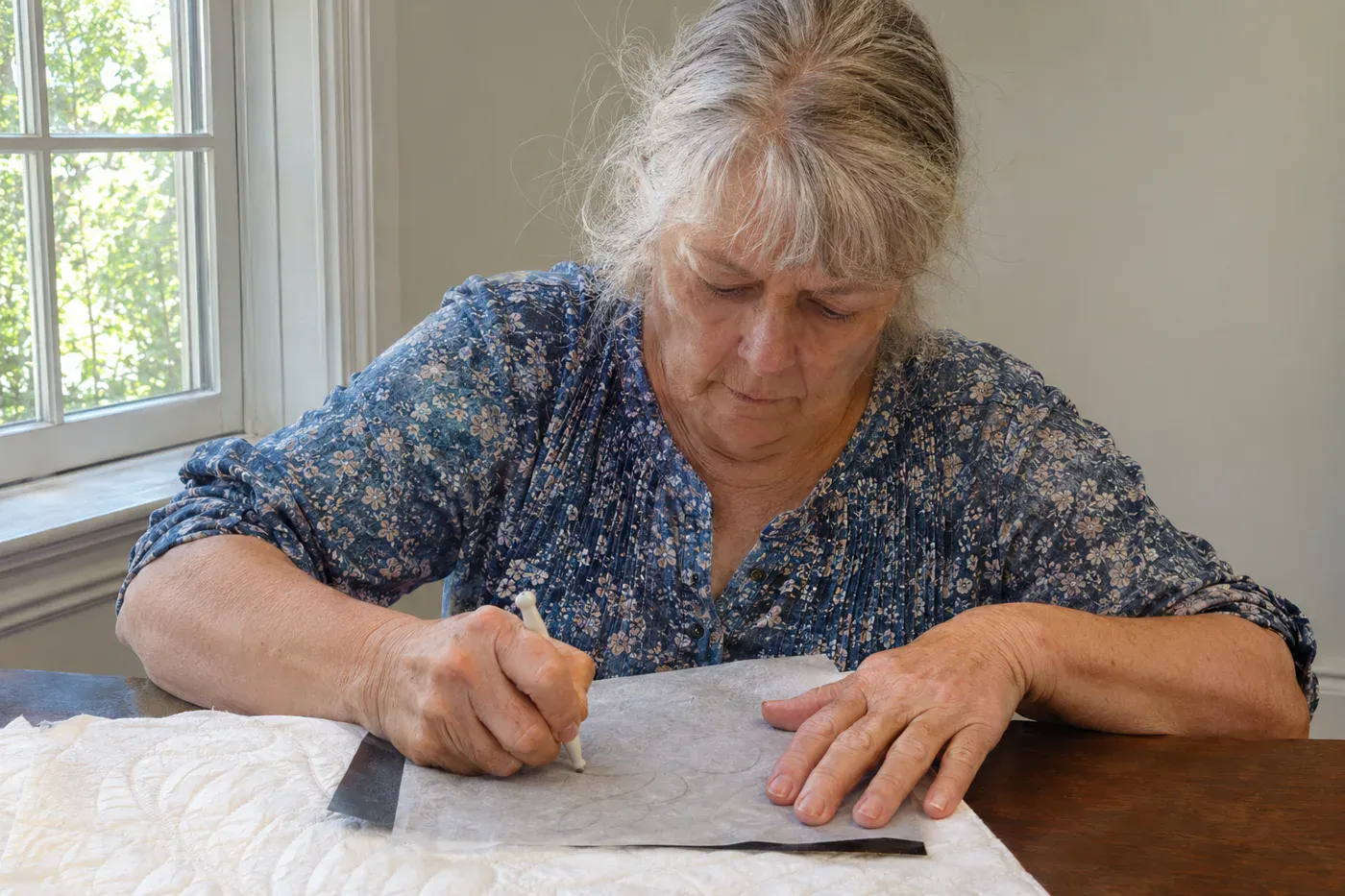
Your handwriting is the one thing on a quilt nobody else can supply. A grandchild can buy a quilt. They can’t buy the way you make a capital G.
Getting it onto cotton takes tracing paper, carbon transfer paper and something with a dull point. Jenny Hart of Sublime Stitching lays out the method. Write your note on heavy-duty tracing paper laid over the fabric, slip the carbon underneath, and press hard with a stylus to trace it through. Then stitch over the lines.
Her best line is for anyone who has frozen over a finished quilt top: “If you mess up, you can do it again.”
Keep the note short enough to finish. A line, the year and their name will do it.
If you’d rather write than stitch, choose the pen carefully. A sewing blogger tested four fabric pens on white cotton in 2021 and put the samples through the wash:
| Pen | After washing |
|---|---|
| Pentel Gel Roller for Fabric | Permanent, her top pick |
| Marvy Uchida | “Did not fade at all” |
| Sharpie Ultra Fine | Permanent, but “difficult to mark with” |
| Tulip Fabric Marker | Washed out without heat setting |
The last row is the one to remember. A pen sold as needing no heat setting can still wash out. Write a word on a scrap of the same fabric and run it through a load of towels before the pen goes anywhere near the quilt.
#16 A family recipe in your own handwriting
Of all the paper in a kitchen drawer, the card with a grease spot and someone’s slanted “1 c. sugar” is the one a family goes looking for later.
On paper, the pen decides how long it lasts. Sakura sells its Pigma Micron as waterproof and fade resistant, with “Archival quality Pigma ink on non-coated paper.” Read that last part twice. The archival promise covers uncoated paper only, so skip the glossy recipe cards from the craft aisle and use plain card stock.
Then think beyond one card. A woman on Reddit’s r/Gifts forum was given a handmade family recipe book by her aunt when she was 13. More than 50 years later, at 65, she says she still uses it frequently.
A handwritten recipe can also go onto a tea towel, and there are three ways to put one there. A blogger who tried all three found they last very differently:
- Printed by Spoonflower: “can be washed over and over without much fading,” and it looked the most professional. She paid $55, shipping included, for enough fabric for eight towels.
- Traced by hand in Sharpie: “very inexpensive,” but “the sharpie will fade some in the wash.”
- Iron-on transfer paper: “most iron-on images crack after a few washes.” Skip it.
For tracing by hand, Aunt Martha’s flour sack towels, 18 by 28 inches, run about $6.99 for two and are sold for hand embroidery.
For a printed towel, Spoonflower’s file has to be 27 inches wide by 18 tall at 150 dpi (dots per inch, a measure of how sharp the image is). Keep the writing inside a 22.5 by 14.5 inch safe zone, or the hems will swallow your last line.
Spoonflower prints the file exactly as you send it: “We won’t make any changes.” So leave the butter stain in.
#15 A stocking with the name knit right in
A personalized stocking comes out of a box every December for decades. Glued felt letters won’t last that long. Letters stitched into the knitting will.
Designer Freese-Works shows how she does it. She stitched “a temporary thread down the center of the stocking” to count from, then duplicate-stitched the name, birth month, day and year before seaming. Duplicate stitch traces over knit stitches that are already there in a second color, so the letters look knit in and can’t peel off.
She used Red Heart Super Saver, which is acrylic. That matters more than it sounds. A stocking spends eleven months a year in an attic or basement box, and clothes moths, University of Kentucky entomologists say, “feed exclusively on animal fibers, especially wool, fur, silk, feathers, felt, and leather.” Cotton and synthetics are rarely attacked unless blended with wool or heavily soiled.
If you knit it in wool anyway and moth holes turn up one December, cold stops the damage. Hold it at 0°F or colder for at least a week.
Put the year in. In 40 years, nobody will remember which Christmas was the first one except the stocking.
#14 Two matching loveys instead of one
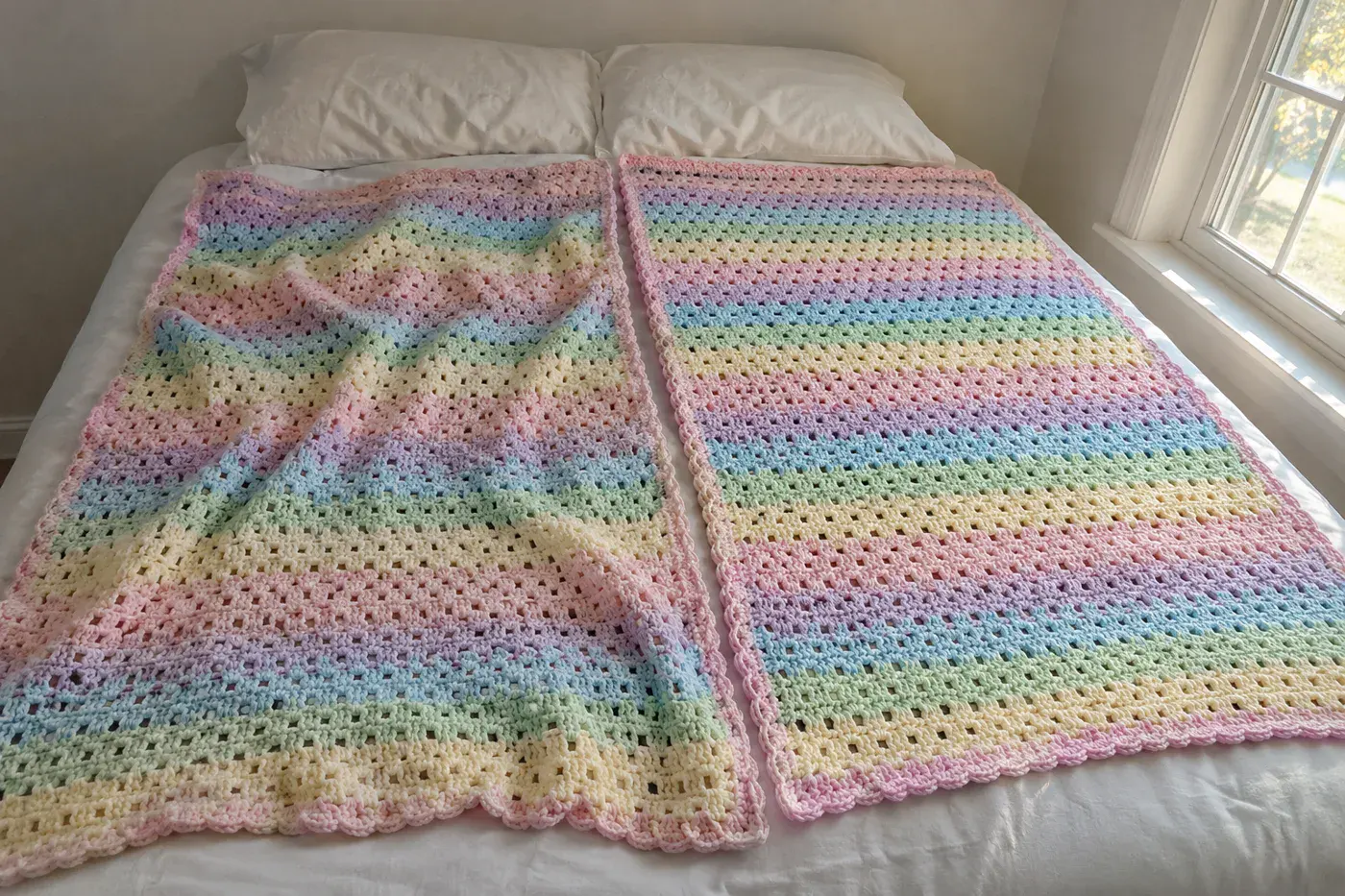
Make two, on the same day, from the same dye lot if you can manage it.
According to the American Academy of Pediatrics, the pediatricians’ professional group, babies usually choose a security object “between months eight and twelve, and keep it for years to come.” Its advice is to keep two identical ones and “wash one while the other is being used.”
The catch is timing. If the two aren’t rotated early, “your child may refuse the second one.” A spare saved in a drawer for the day the first one goes missing at the grocery store may not be accepted. Rotate both from the start to be safe.
Pick the yarn with care. Lion Brand says to avoid mohair, novelty and brushed yarns for babies, because they shed fibers that can be breathed in or choked on, especially under 12 months. Baby-grade acrylic is machine-washable and holds its shape through repeated laundering, and a lovey gets a lot of laundering.
Hand both to the parents at once and ask them to start rotating the two well before the baby settles on a favorite, usually between eight and twelve months. By spring, nobody will be able to tell which is which.
#13 A hat and mittens that actually fit
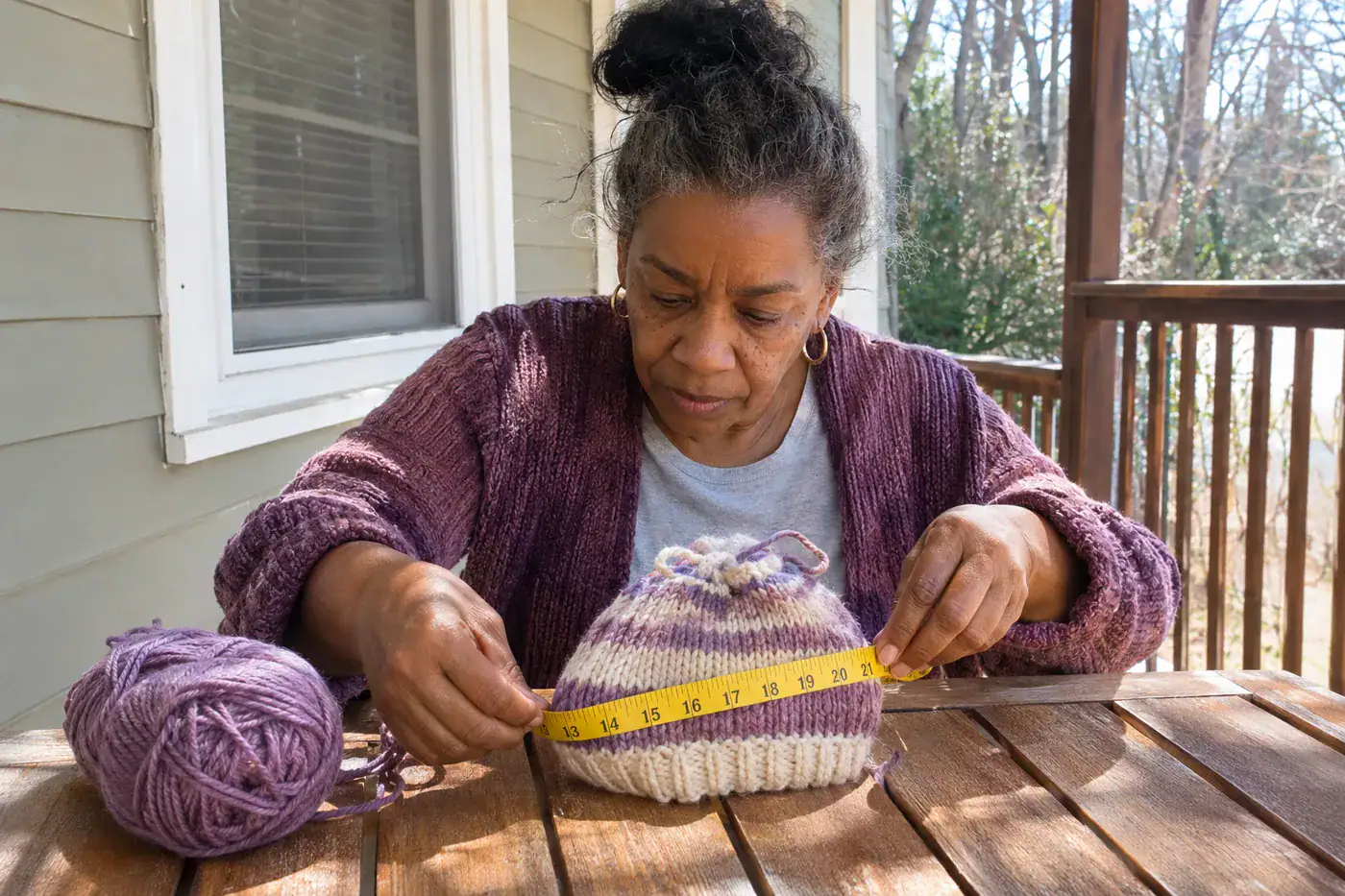
Measure, then knit. A hat knit to a guess gets worn once and lives in the coat closet.
The Craft Yarn Council’s head chart gives these sizes:
| Who | Head around |
|---|---|
| Baby | 14 to 16 inches |
| Toddler | 16 to 18 inches |
| Child | 18 to 20 inches |
| Tween | 20 to 22 inches |
| Woman | 21 to 23 inches |
| Man | 22 to 24 inches |
Don’t knit to those numbers, though. A finished knit hat should be 2 to 4 inches smaller than the wearer’s head (knitters call this negative ease), so for a toddler’s 16- to 18-inch head, knit to a finished size of about 12 to 16 inches around.
Mittens, from the council’s hand charts:
- Ages 2 to 4: 5 inches around by 4 long
- Ages 4 to 6: 6 inches around by 4¾ long
- Ages 6 to 8: 6½ inches around by 5¼ long
Hands grow a full inch around between the first two sizes, so if the child is near the top of an age range, knit the next size up.
The chart is a range, and children don’t read it. If you can, ask a parent to run a tape around the child’s head while they’re watching cartoons.
#12 A clue hunt that ends at the gift
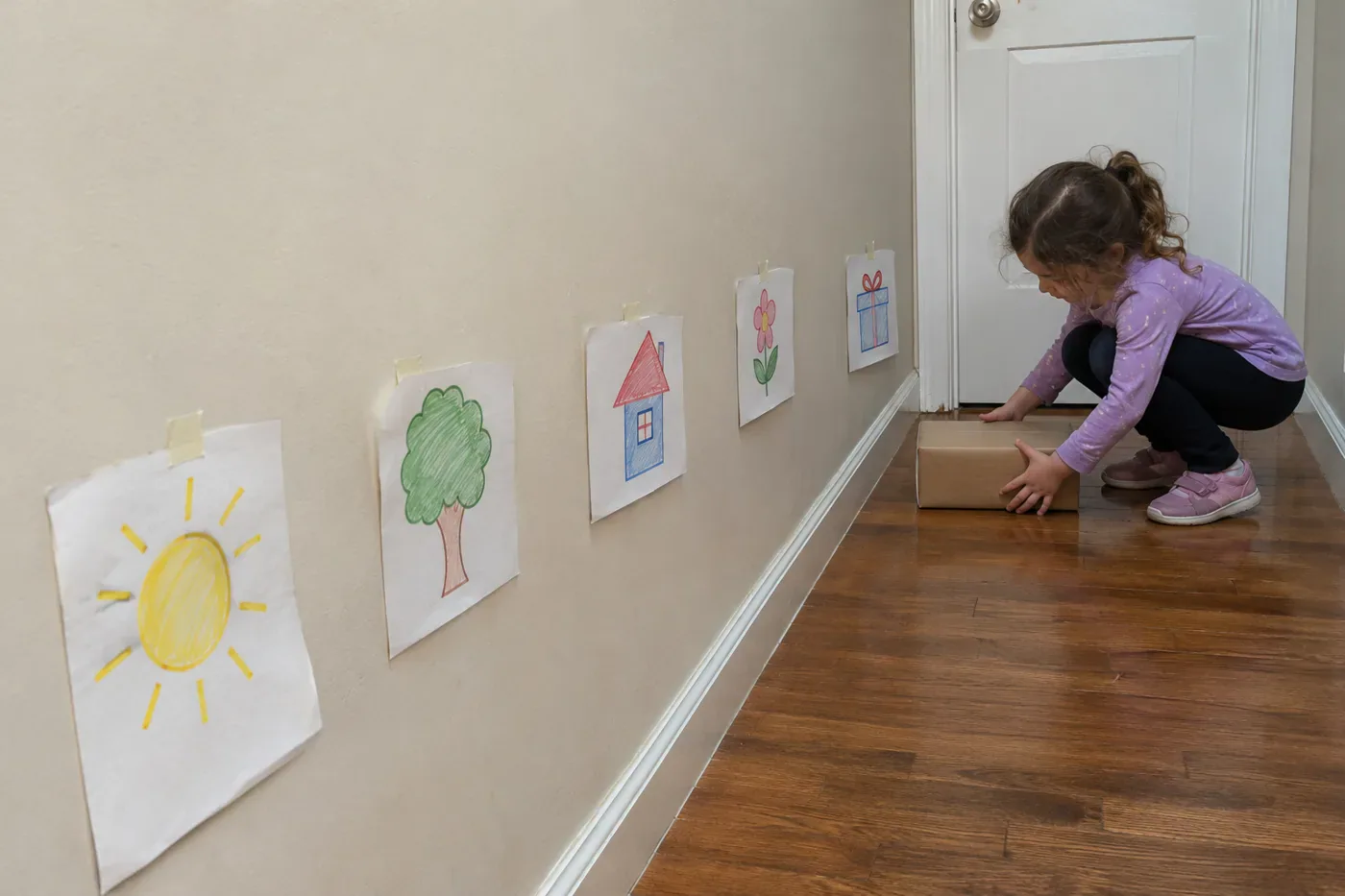
“One more clue, Grandma?” is a good sign at clue four and a bad one at clue eleven.
A family travel magazine from the hotel chain Novotel suggests about six clues, give or take two depending on the children’s ages. For little ones, it says to draw picture clues and put them at eye level, their eye level and not yours. Older children get riddles.
How many clues, by age – Preschoolers: 5 to 8 – Early elementary: 8 to 12 – Upper elementary: 10 to 15 – Tweens: 12 to 18
Those ranges come from the scavenger-hunt site Scavify, and they climb faster than you’d expect. A tween will happily chase eighteen clues around the house. A four-year-old wants the box by clue six.
With mixed ages, give the oldest one the job of reading the riddles out loud to the others.
Draw the picture clues on index cards with the same pen you’d use for a recipe. Tape the last clue to the gift itself.
#11 Felt food shaped like their favorite meal
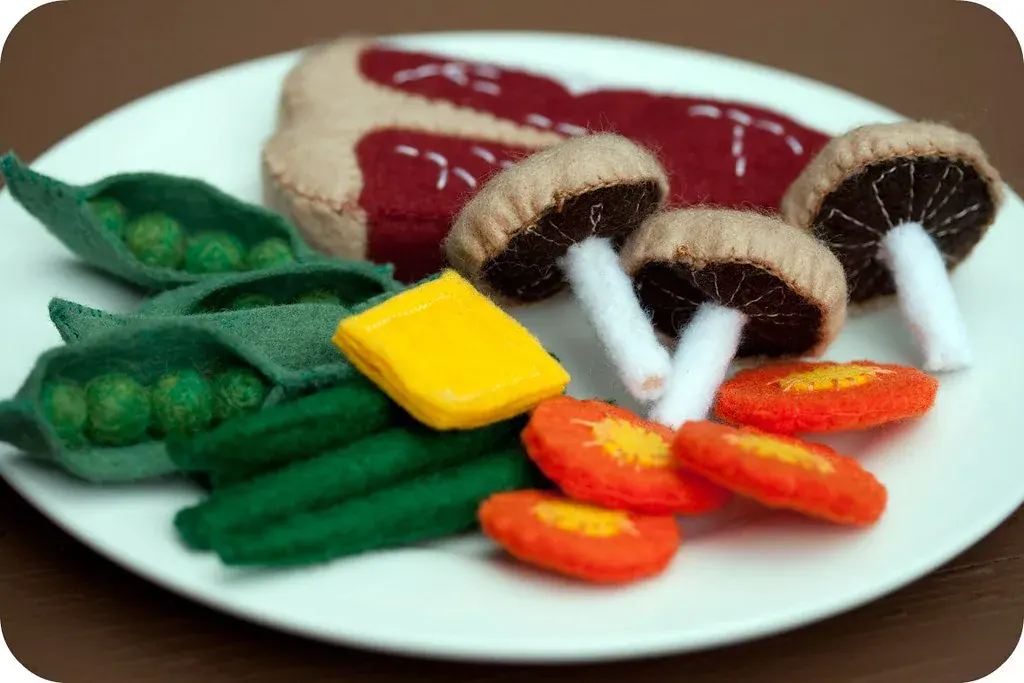
Picture a fried egg with a lumpy yolk, a stack of three pancakes with a square of butter on top, or a taco with every filling a separate piece. Make the food they actually ask for at your table.
Kaytlyn Rosko, a mom of four who hand-makes Christmas gifts for everyone in her life, says parents welcome it: something a child can wear, or a toy that’s quiet and doesn’t need batteries.
The felt makes or breaks it. In a 2012 test its maker admitted was “not being very scientific,” Cutesy Crafts pulled and rubbed different felts. Every one pilled. The wool and rayon blend pilled least and acrylic pilled most, and in the pull tests “the 100% wool performed the best, the acrylic was the worst.”
So by that informal test, the cheap acrylic squares by the register are the ones likely to pill fastest.
Wool felt does come with one catch. Felt is on the clothes moth’s menu, so the set should live in a box with a lid that seals, not a basket.
#10 A sewn-in label with your name and date
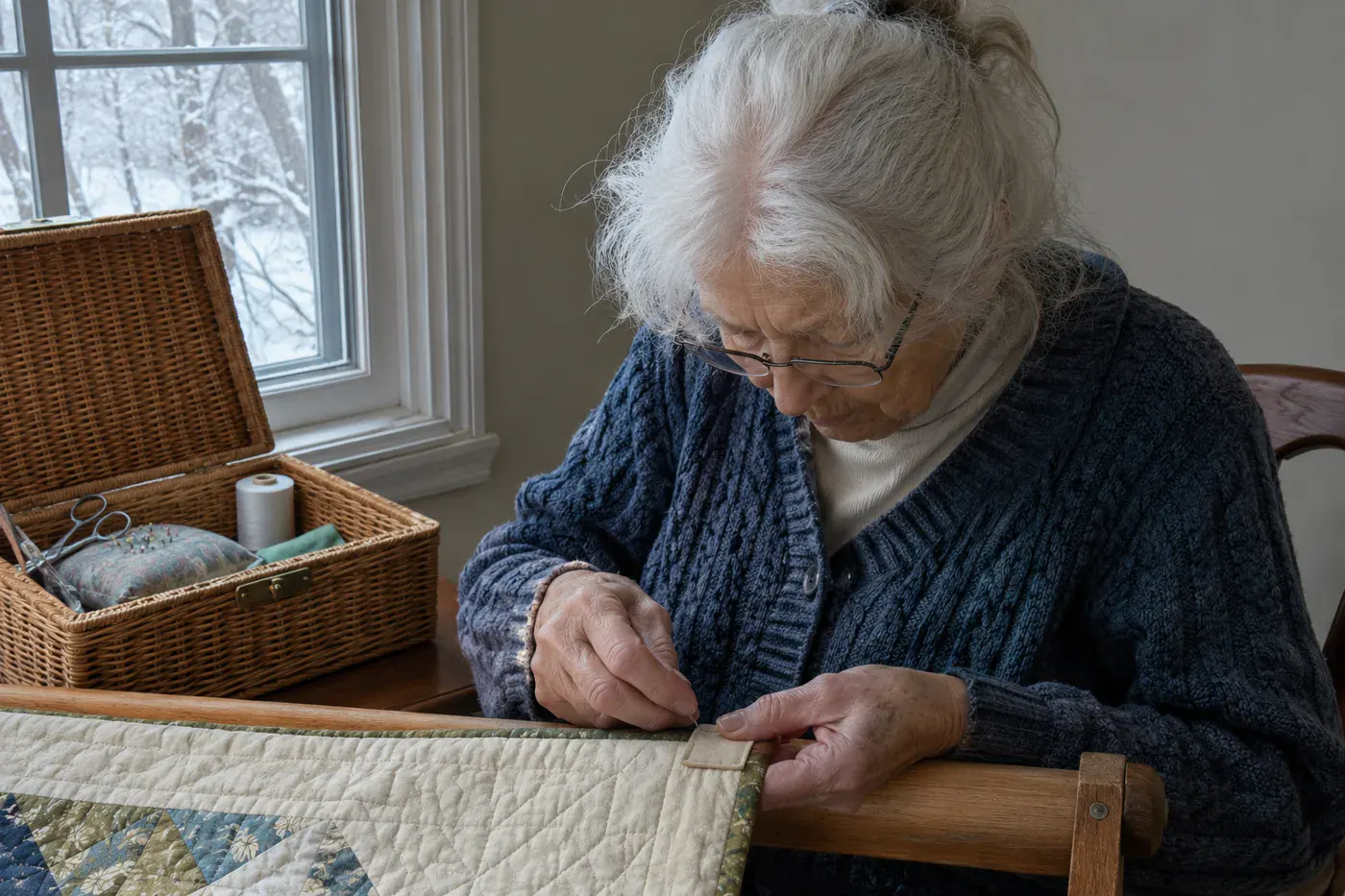
Riva, a new grandmother who demonstrates sewing for Quality Sewing & Vacuum, points out that people tend to forget where things come from. The sewn-in “made by” labels on her gifts were what guests noticed most at her daughter’s baby shower, and that’s the point of them: so people always remember who made the gift.
A quilt label needs more than a name. The Quilt Alliance, a nonprofit that documents quilts, says the minimum is:
- your name
- the date you finished it
- where you made it
- contact information for you or the owner
Its reasoning is hard to argue with: “Cats can’t talk and neither can quilts!”
You can buy one ready made. Sarah Hearts’ woven “Made by Grandma” sew-in labels come eight to a pack for about $9.50, which is about $1.19 each, and they’re washable and can take dryer heat. At about 1¾ by ⅝ inches, though, there’s room for “Grandma” and not much else.
The free version holds more. Trace your handwriting onto a cotton square with the carbon method from #17, stitch it, and add the four details. That label also works for sweaters, totes and stockings.
#9 Socks for some, towels for others
The hardest part of DIY gifts for grandkids is fairness. Does everyone have to get the same thing?
No. Everyone has to feel equally thought about, and that can mean very different gifts.
Hand-knit socks might suit a grandchild who could use a warm pair. Hemmed or embroidered towels might suit one who’s setting up a kitchen. The point is to pick for the person, not to follow a formula.
A grandchild on Reddit’s r/Gifts forum summed up a grandmother’s way of choosing: “They were personally chosen for everyone.”
Kaytlyn Rosko puts the same rule another way: she wants to avoid making things just because they’re cute.
Budget the hours honestly. One knitting site estimates 15 to 20 hours for a pair of socks if you’re experienced. A flour sack towel from the two-pack in #16 costs about $3.50 before the floss. If more than two or three names are getting socks, start them in summer.
#8 A doll quilt sized to the doll
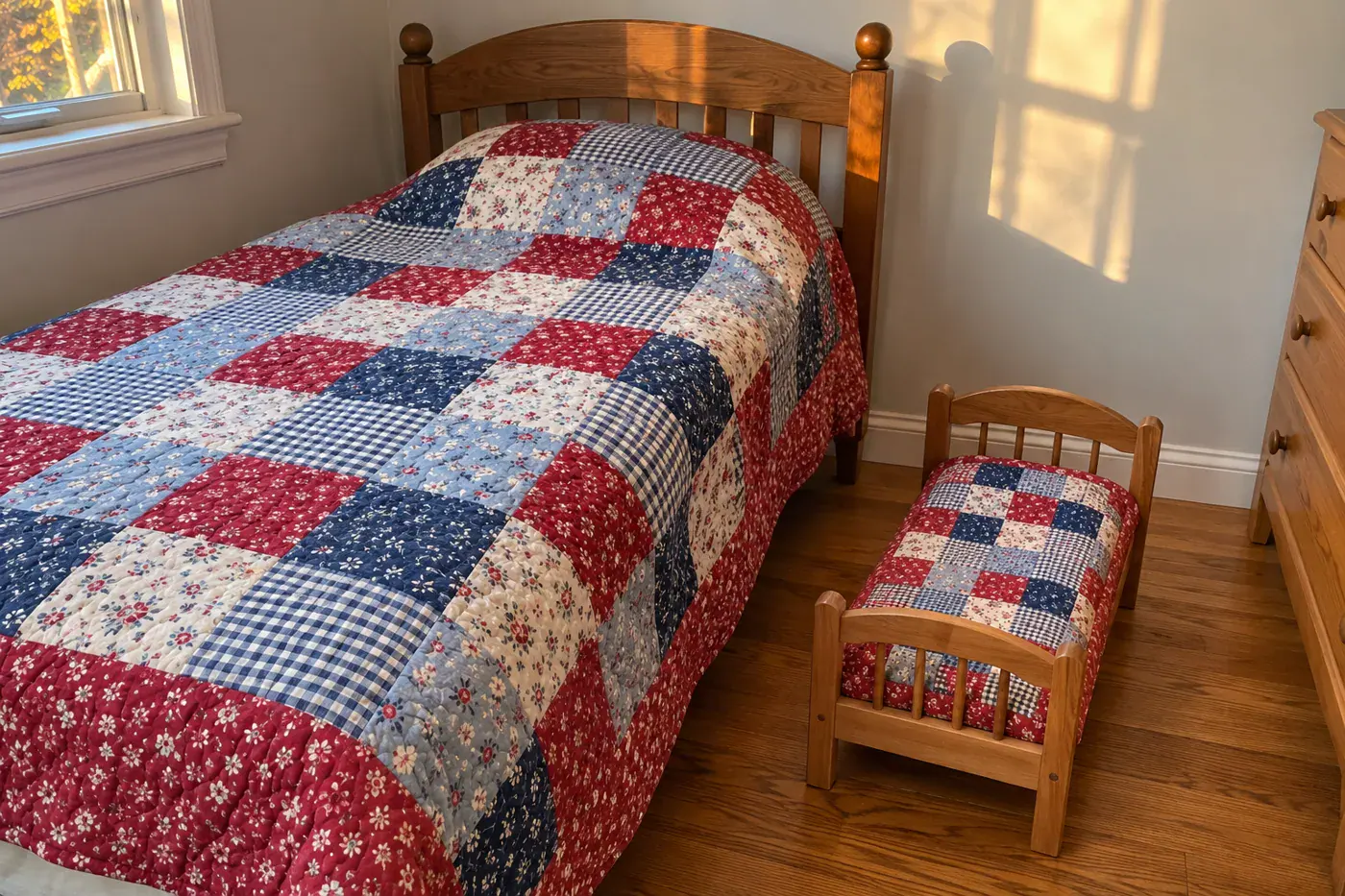
For an 18-inch doll, the size American Girl dolls come in, a ready-made bedding set uses these measurements:
- Quilt: 19 by 15 inches
- Blanket: 20 by 14 inches
- Pillows: 6½ by 5½ inches, and 3½ inches square
That set sells for about $25.97. Yours can be pieced from the leftovers of the child’s own bed quilt, which no store can match.
If you go further and build the bed, take one tip from a grandmother on Reddit’s r/crafts forum who did. She called out her one regret: the spray fabric glue, which looked unsightly even after it dried and turned out not to be needed.
In the same thread, a grown woman who lost her own grandmother four years earlier answered her: the granddaughter will cherish it long after she outgrows it as a toy.
#7 A memory quilt from outgrown baby clothes
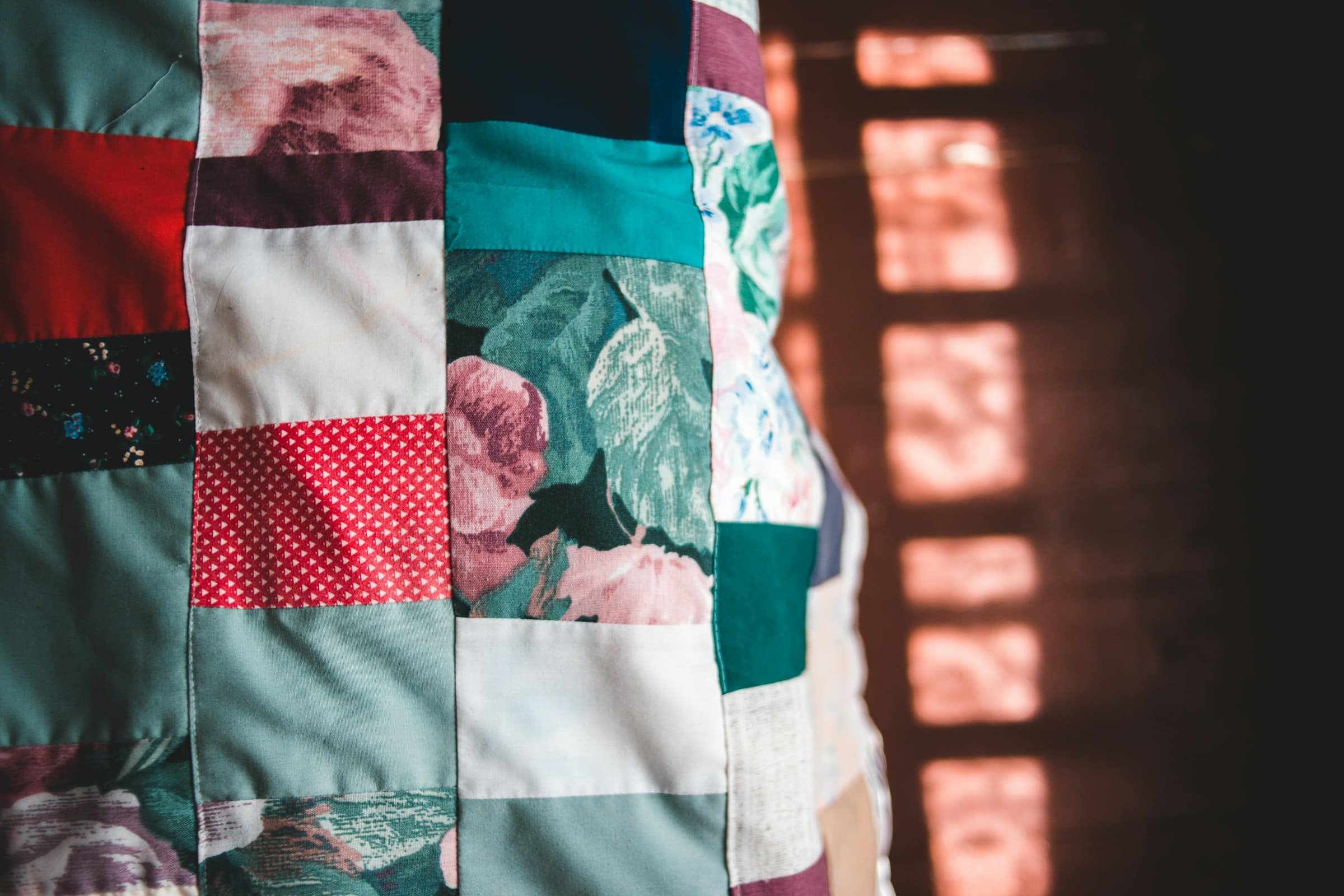
Before you cut a single sleeper, know the count.
Missouri Star Quilt Co. says a lap or throw quilt, about 56 by 68 inches, takes roughly 20 shirts cut into 12-inch blocks with 2-inch sashing. That count is for adult T-shirts, and baby clothes are smaller. Project Repat, which makes these blankets to order, asks for about 18 garments in sizes 12 months to 3T for a 48-inch-square blanket, with the front and back of each cut at least 8½ inches square. Or mix the baby things with shirts the same child wore at five and eight. The quilt then tells the story of the whole childhood.
The step that saves it is boring. Missouri Star calls ironing woven fusible interfacing, not knit or fleece, onto every piece before cutting “the single most important step.”
Shops sell a custom memory blanket for a price. Yours comes with the fact that you knew which onesie was from the hospital.
Ask the parents before you cut. Some of them are saving the coming-home outfit whole.
#6 Old family linens, framed for the wall
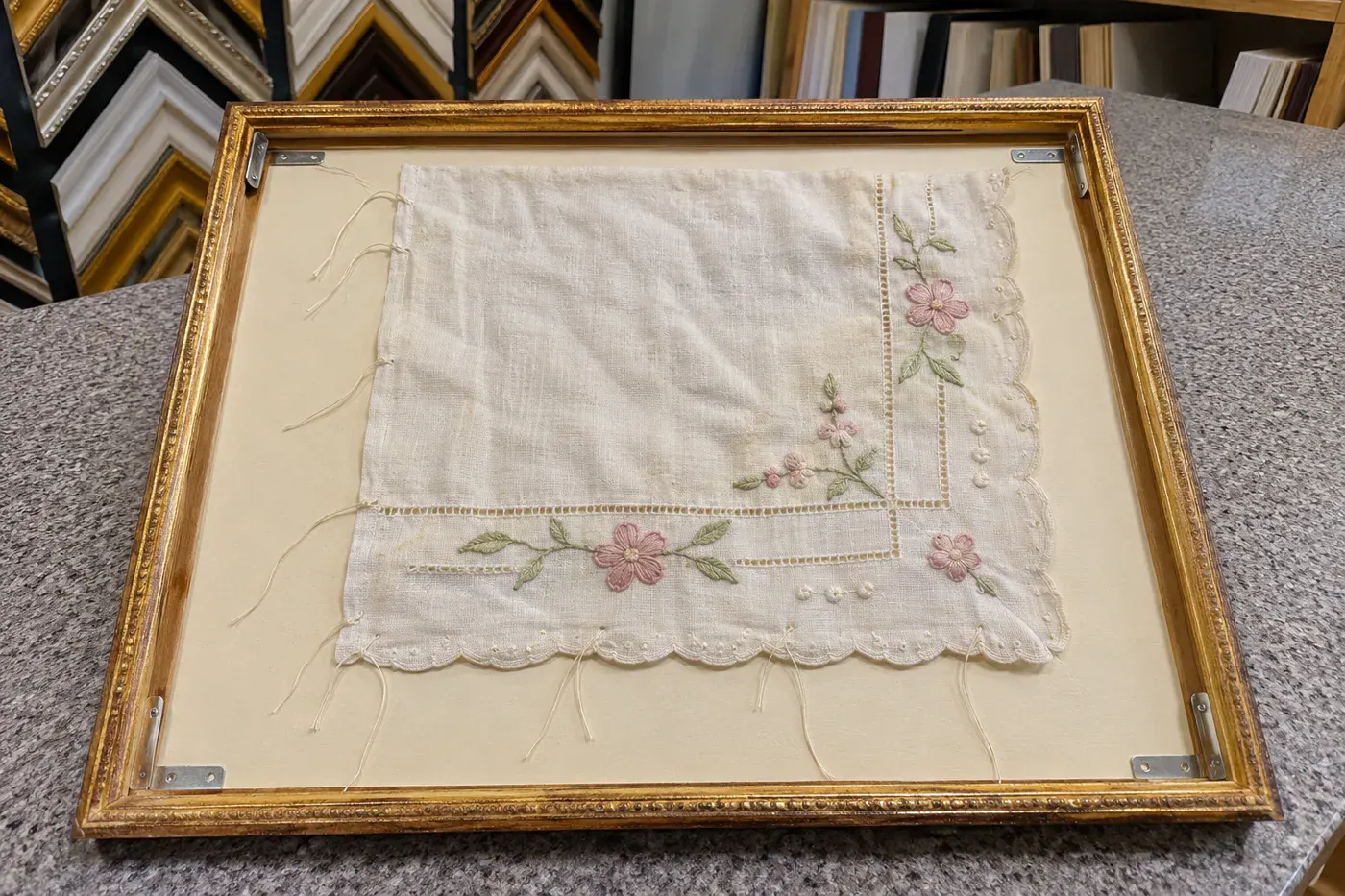
You may know the drawer: pillowcases with embroidered corners, a dresser scarf edged in crochet, handkerchiefs nobody carries. Walter Ashford, who has worked estate sales across the Midwest for 40 years, says that kind of handwork gets thrown out because nobody irons anymore.
His fix fits in one line: change what the material is for, he says, and it survives.
A single embroidered corner behind glass, he says, is something a granddaughter will hang in an apartment. A stained pillowcase can give up its one good corner to make an embroidered keepsake.
Mount it the way museums do, which is simpler than it sounds. The Canadian Conservation Institute recommends:
- Use acid-free 4-ply or 8-ply matboard.
- Stitch the piece to the board instead of gluing it.
- If you use glue anywhere, keep it on the board, away from the edges and the front.
- Let the glue cure and air out completely before you seal the frame.
Then pay for the glass. Regular glass blocks no UV light at all. UV-filtering glass usually runs about $25 to $30 a square foot and blocks most of it, so an 11 by 14 frame costs about $27 to $32 in glass. Museum glass, at $50 to $250 a square foot, is more than a pillowcase corner needs.
#5 An afghan for the first apartment
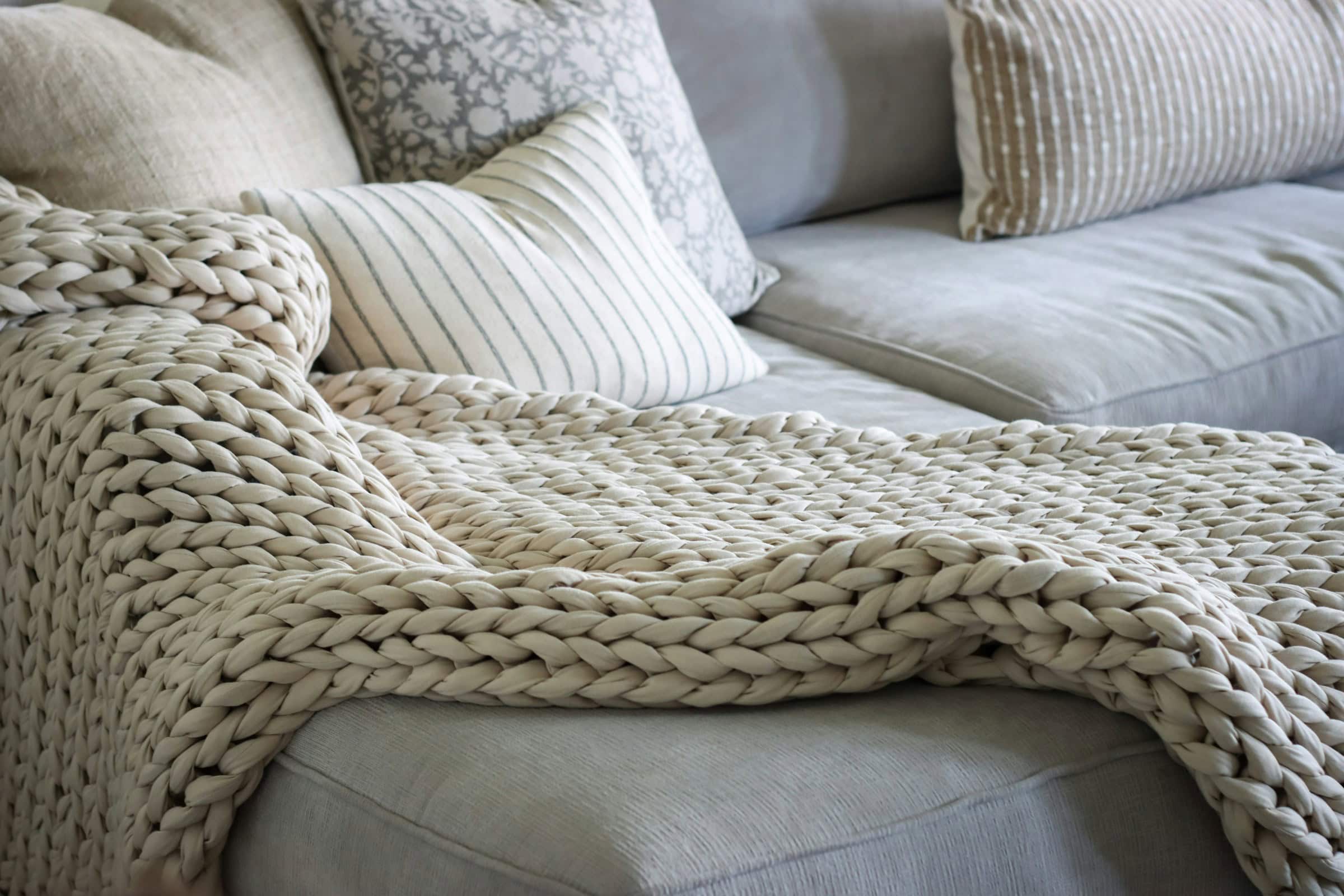
A big, plain, washable throw goes on every couch a grown grandchild will own, and it gets used most nights.
Make it easy to wash. Lion Brand’s Wool-Ease Thick & Quick is super bulky, 80% acrylic and 20% wool, and Lion Brand says to “machine wash and dry your finished projects.” That’s the whole point at 24, when the laundromat is down the block. It runs about $10.99 a skein, in neutrals that go with any thrift-store sofa: Linen, Oatmeal, Wheat, Fisherman, Taupe, Charcoal and Slate.
As for money, AARP surveyed more than 3,000 grandparents at the end of 2025. They found grandparents spend an average of $2,654 a year on all their grandchildren combined, and have about 4.9 grandchildren each. That comes to about $542 per grandchild, for everything, not just gifts. Lion Brand’s own Basketweave Afghan pattern in this yarn takes 8 skeins for a throw about 42 by 47 inches, roughly $88 at full price, which sits well inside that.
Skip the matching pillow covers and the coordinating table runner. One throw in Oatmeal, used until it pills, does more than a set.
#4 Embroidered eyes, not buttons, under age 3
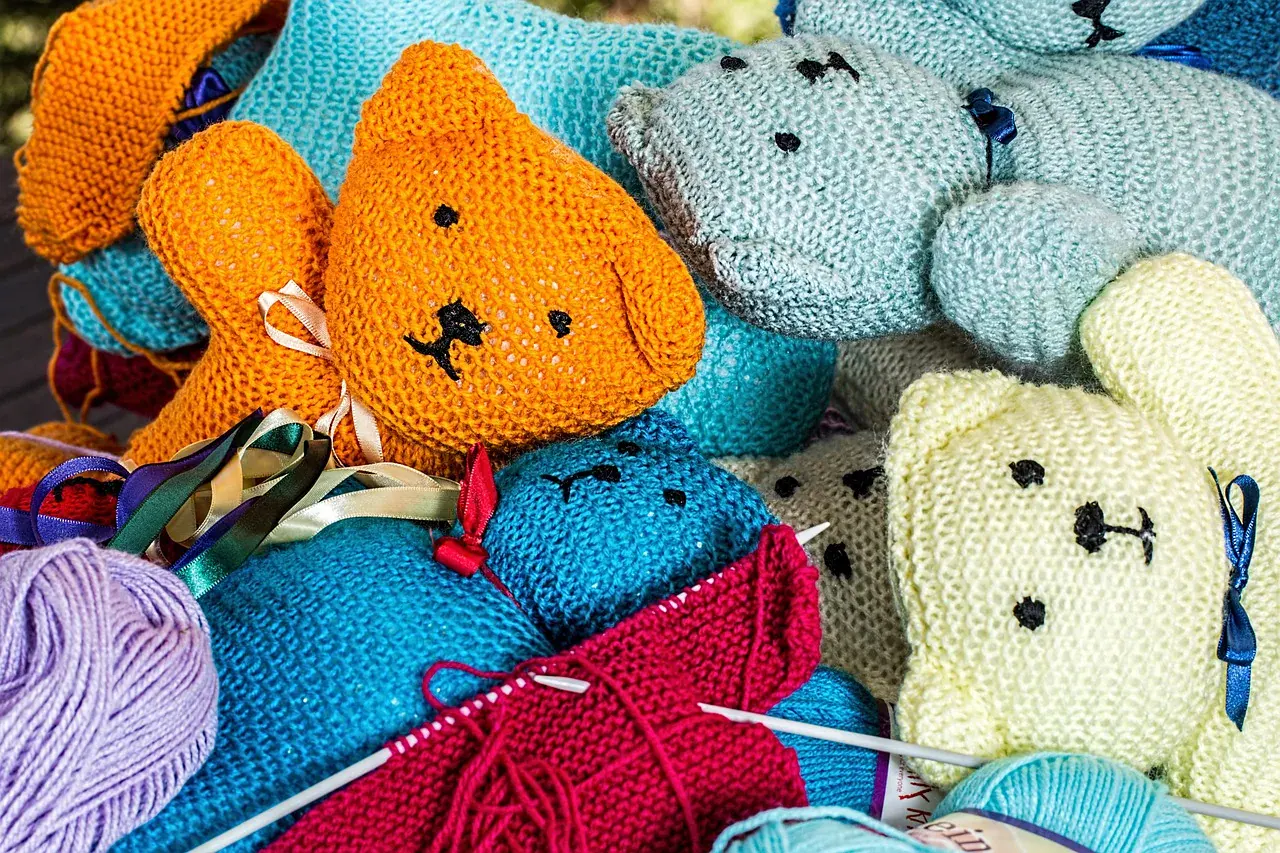
For a toy meant for a child under 3, stitch the eyes. The reason is a federal rule most makers have never read.
The Consumer Product Safety Commission, the federal safety regulator, bans small parts in toys for children under 3. That includes “a piece that breaks off during testing simulating use or abuse.” A button that holds tight on your sewing table still counts if it comes off when the toy is yanked, chewed and dropped.
- The test cylinder is 2.25 inches long by 1.25 wide, “about the size of a 3-year-old’s throat.”
- The old toilet-paper-roll trick isn’t the same test. The commission says a roll is wider and longer than its tester.
- Pieces of fabric, yarn, fuzz or string that pull loose in testing don’t count as small parts.
That last point is why embroidered eyes are the standard swap. Thread holding a button is the weak spot. Shiny Happy World, a craft pattern site, warns that a baby “can use their set of chompers to chew through the thread.”
The same site says craft “safety eyes,” the snap-backed kind sold for stuffed toys, are “not recommended for use in toys for children under the age of three.” Use embroidered, felt or crocheted eyes instead. A satin-stitched eye has more personality anyway.
#3 A baby quilt for the wall, not the crib
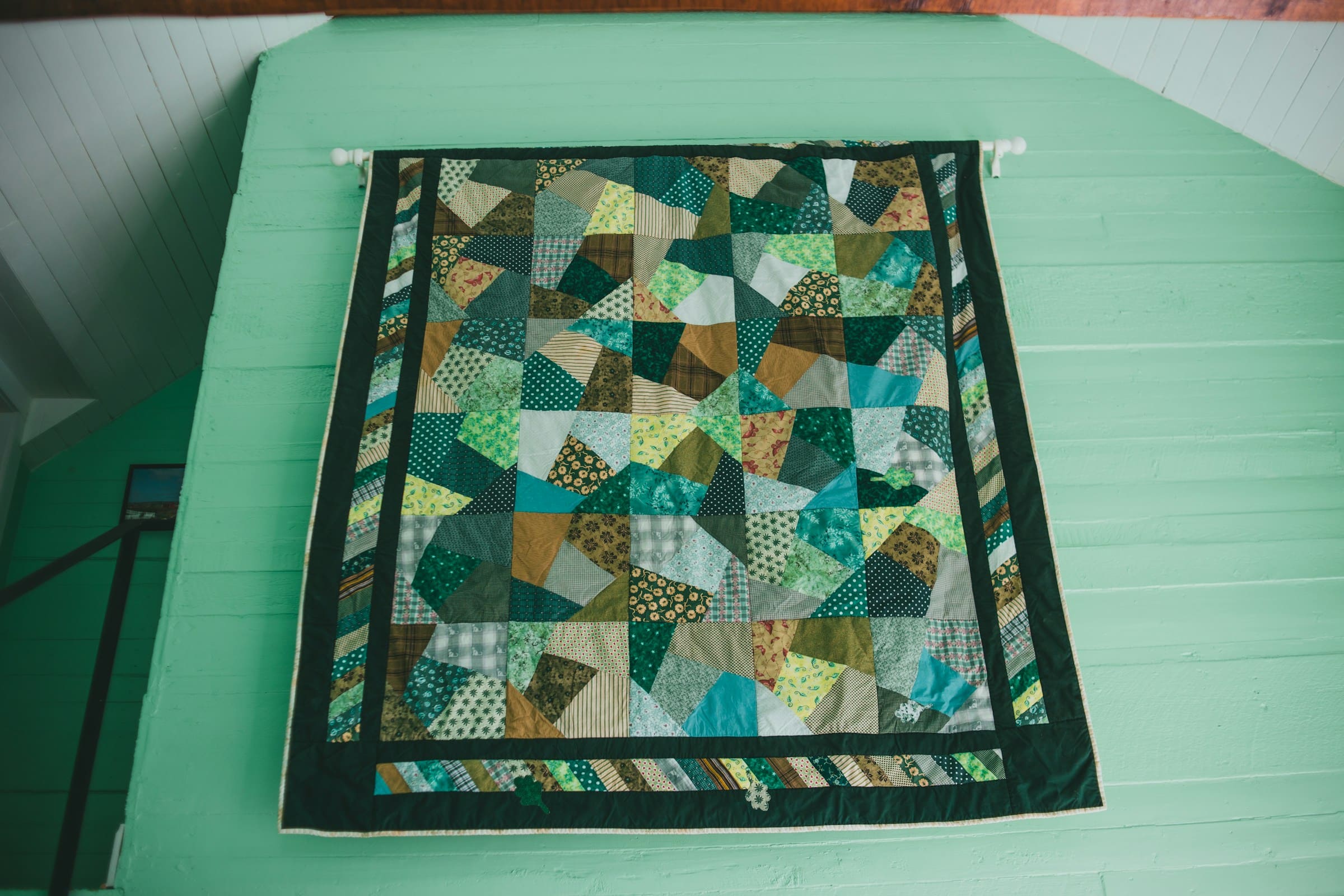
Make the baby quilt. Just don’t send it to the crib.
The American Academy of Pediatrics names quilts directly among the soft things to keep out of a baby’s sleep area in the first year, along with pillows, comforters, mattress toppers, non-fitted sheets and blankets. The CDC says the same: “Keep soft bedding out of your baby’s sleep area.”
The reason is suffocation: more than 1 in 4 sudden infant deaths in the US are recorded as accidental suffocation or strangulation in bed.
None of that makes the quilt less worth making. It changes where it goes. Hung on a nursery wall, a baby quilt is the first thing a baby stares at. Spread on the living room floor while someone’s watching, it’s a play mat for tummy time.
Put a hanging sleeve on the back before you give it, so the parents don’t have to work out how to hang it. Once the first year is past, the parents can decide when it comes off the wall and onto a bed.
#2 The piece each grandchild names out loud
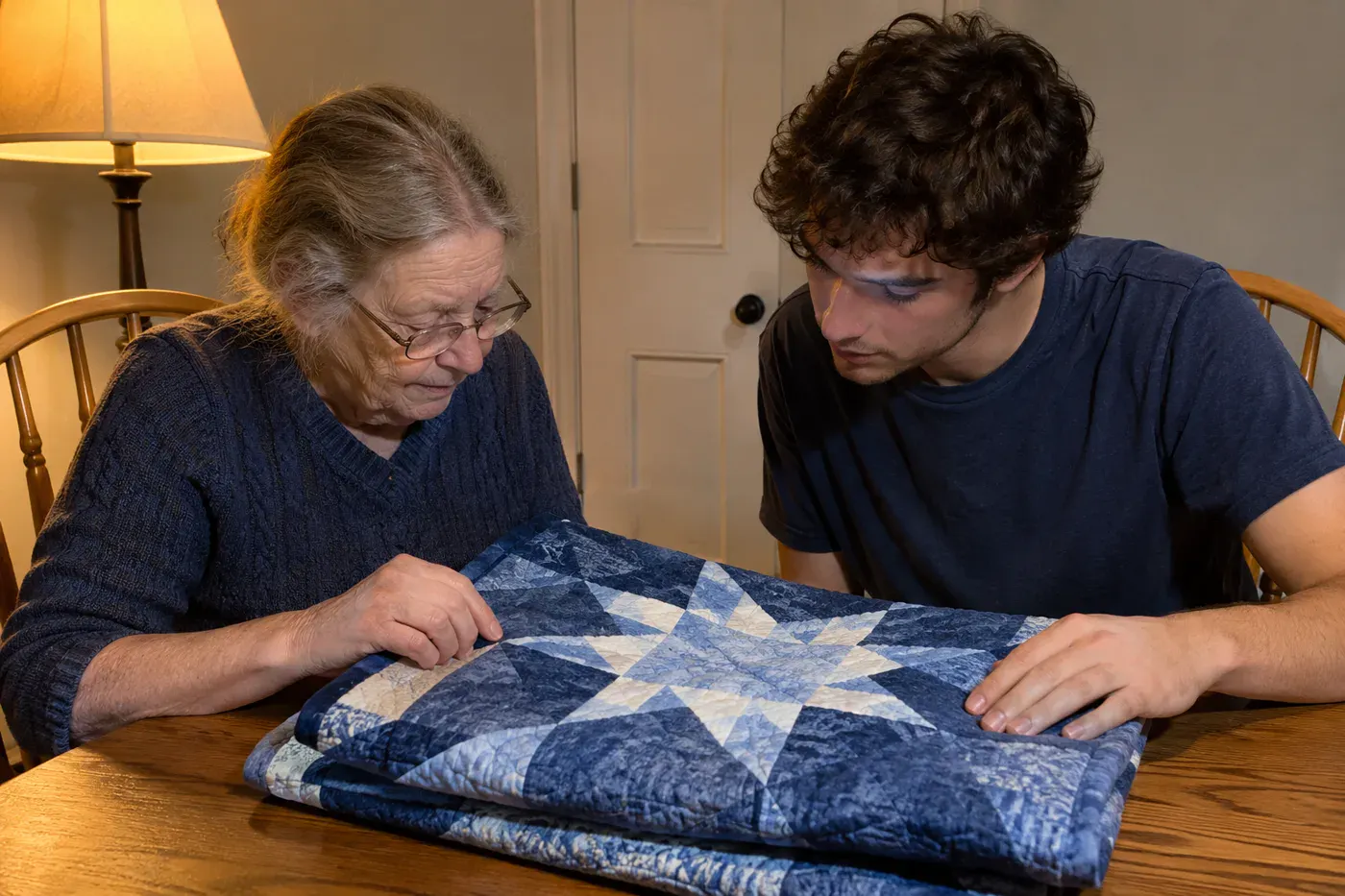
Walter Ashford says he has been in about 400 houses the day after a death, watching families decide what to keep. He has seen the same thing again and again: a category gets declined, he says, but a named object with a person attached to it gets kept.
Offer “the quilts” and nobody answers. Offer “the blue star quilt that was on your bed at the lake” and someone will say yes. His advice is to ask the grandchildren directly, by name, about specific things. He adds that grandchildren in their 20s and 30s often want things the middle generation has already turned down.
Ask each one separately, with the question Ashford suggests: what thing in your house would they be upset to find out had gone? Most fights between brothers and sisters, he says, are over small things two of them quietly claimed as children.
A member of a quilt-history mailing list put it another way back in 1997, advising a woman whose sons disagreed over an old family quilt: “It’s only an heirloom if the legatee thinks it is.” The legatee is whoever it’s left to. You can find out what they think now, over pie, while you’re still around to make the thing they name.
#1 A tag that says they can pass it on
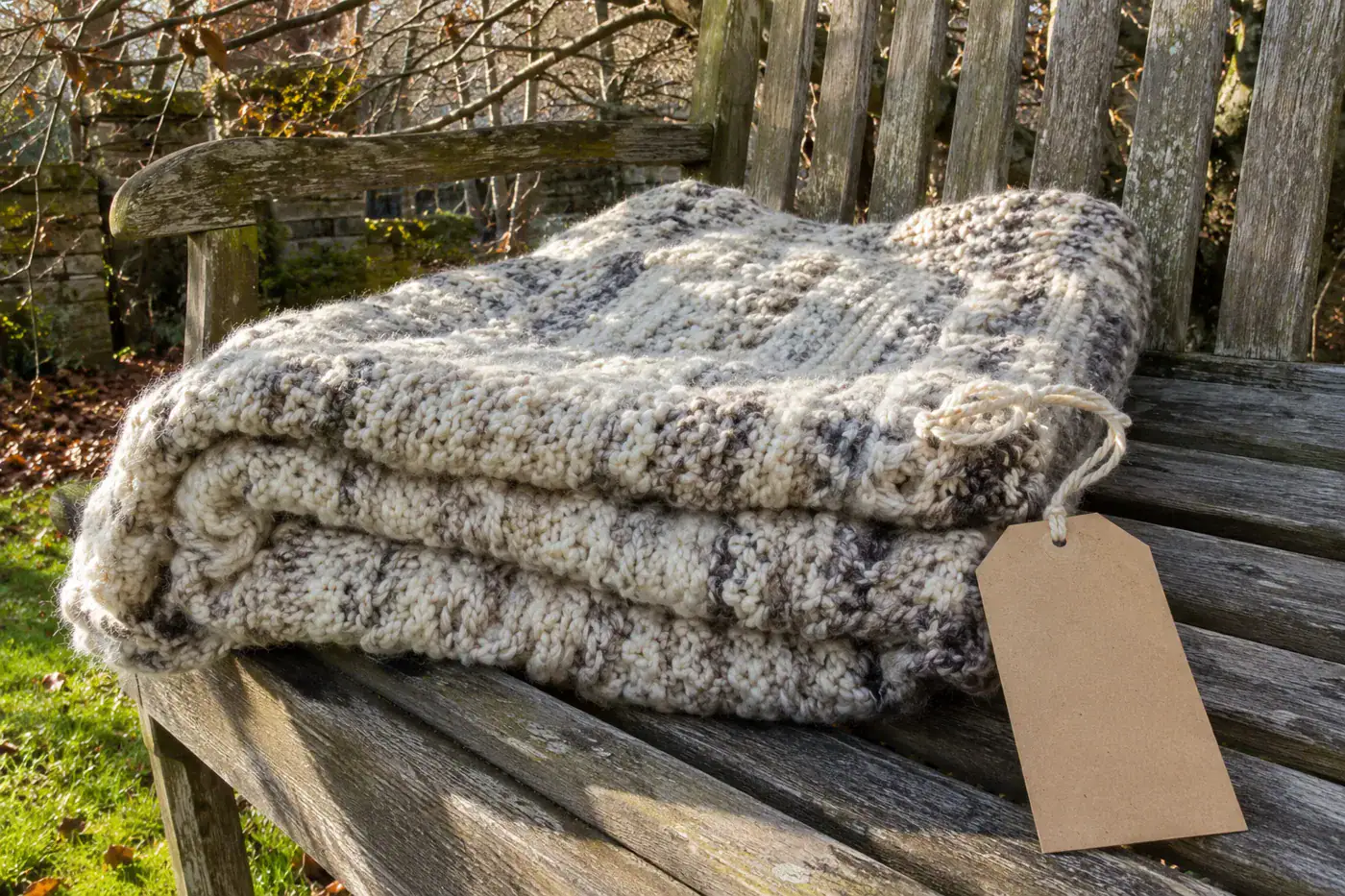
Here’s the sentence that does the most good of all, and it goes on the gift tag.
A crocheter on Reddit’s r/Frugal forum tells the people she makes things for that they’re free to give them away. When she’s the one receiving, she’s plain about why: she doesn’t want to feel obligated to keep something she doesn’t like.
Professional organizers at In Harmony Organizing say the same. If someone doesn’t love a gift, “they should be able to pass that item along without feeling guilt or shame, and without fearing that they’ve hurt or insulted you.”
People in that same Reddit thread say a handmade gift lands when it’s well made and suits the person. This sentence takes care of whatever’s left over. It also lets a grown grandchild in a studio apartment off the hook for the box in the closet.
Write it in your own hand, on the back of the tag:
Use it, wear it out, or give it to someone who’ll love it. Any of those would make me happy.
Tie the tag on with a length of the same yarn.
The bottom line
If you still have something from a grandparent, or from anyone who made things, go find it. Look at it the way a stranger at an estate sale would. Chances are it was used hard, it has a name or a hand in it somewhere, and it was made for one person rather than for everybody.
Then get a sheet of paper and write each grandchild’s name down the side. Next to each name, write the one thing you’ve watched them use until it gave out: a blanket, a pair of mittens, a cereal bowl, a sweatshirt. That column is your list for the year.
Start with the name that was hardest to fill in. That’s the grandchild you know least well right now, and the gift is a good reason to call.
Bonus: Five small jobs that keep your work out of the closet box
- Scan every recipe card in the house at the highest setting your scanner has, 600 dpi or more. If you’re using a phone, take the pictures in good light with the flash off. Do it even for the cards you aren’t making into anything yet.
- If your woolens live in a cedar chest, take them out. University of Kentucky entomologists say cedar closets and chests “are seldom effective.” Clean everything, then pack it in tight-fitting plastic bags or bins.
- Write each quilt’s story on a sheet of paper that goes with it: its size, fibers, care, a bit of your history and why you made it. The Quilt Alliance suggests all of these beyond the basic label.
- If two grandchildren want the same piece, make a copy and label it with the source and the maker. That’s the fix the quilt-history list member suggested, along with passing the original between them every couple of years.
- For the grandchild who wants something small, sew a zip pouch from your scraps. Melly Sews’ version takes one 9-inch zipper and four 9 by 7 inch pieces, and the designer made three in about 35 minutes.
Questions people also ask
What can grandparents make for grandchildren for Christmas?
A knit stocking with the name and birth date stitched in, a hat sized to the child’s head, or a set of sealed salt dough ornaments are all gifts you can start this week. Duplicate-stitching the name and date into the stocking, as Freese-Works does, means the lettering can’t peel off. Of the homemade Christmas gifts for grandchildren, a hat is quickest to get right if you check the Craft Yarn Council’s head sizes and knit it 2 to 4 inches smaller than the child’s head: for a toddler’s 16- to 18-inch head, that’s a finished hat of about 12 to 16 inches around. Salt dough ornaments sealed with several coats of clear acrylic will keep for years if they’re stored carefully.
What do you give older grandchildren who have everything?
Give them something they’ll use every day, like a machine-washable throw for a first apartment. Lion Brand says its Wool-Ease Thick & Quick can be machine washed and dried, at about $10.99 a skein. In AARP’s 2025 survey, grandparents spent an average of $2,654 a year across all their grandchildren, so one well-made throw each fits a typical budget.
Is it safe to put a handmade quilt in a baby’s crib?
No. The American Academy of Pediatrics lists quilts by name among the soft items to keep out of a baby’s sleep area in the first year, and the CDC says to keep all soft bedding out. Use a baby quilt as a wall hanging, or as a play mat on the floor while someone is watching.
Are buttons safe on handmade toys for toddlers?
Not on toys for children under 3. Federal rules ban small parts in their toys, including pieces that break off when the toy is tested for rough use, and a button can. Pieces of fabric and yarn don’t count as small parts, so embroidered, felt or crocheted eyes are the usual safe swap.
How do you label a handmade quilt?
At minimum, include your name, the date you finished it, where you made it and contact information, as the Quilt Alliance recommends. If you write it on, use a fabric pen that has held up in wash tests, such as the Pentel Gel Roller for Fabric or Marvy Uchida, and test a scrap first. You can also stitch it in your own handwriting, or sew on a ready-made woven label.
Should every grandchild get the same handmade gift?
Not necessarily, as long as each one gets a piece they actually want. A quilt-history list member put it well: “It’s only an heirloom if the legatee thinks it is.” Asking each grandchild by name what they’d keep, then making one piece for each, avoids guessing. If two want the same thing, a labeled copy settles it.