From the size number cast into a small iron plane to the brass medallion on a saw handle, here’s where to find the old hand tools worth money in a garage, and what each kind has actually sold for.
The garage tool with the best story, and one of the biggest prices, looks like a stick of kindling. It’s waiting at #1.
The garage door rattles up, and the smell reaches you first: machine oil, sawdust, a little rust. There’s pegboard with outlines drawn around each tool, and coffee cans of bolts. A shelf of iron planes holds some no bigger than a bar of soap. Somebody has already said the words “junk hauler.”
Hold off a day. Most of what’s here is worth very little. The old hand tools worth money hide in plain sight, and the clues are small: a maker’s mark, a number, a box. Bring a tape measure and a flashlight.
#17 A small iron plane with a number cast in
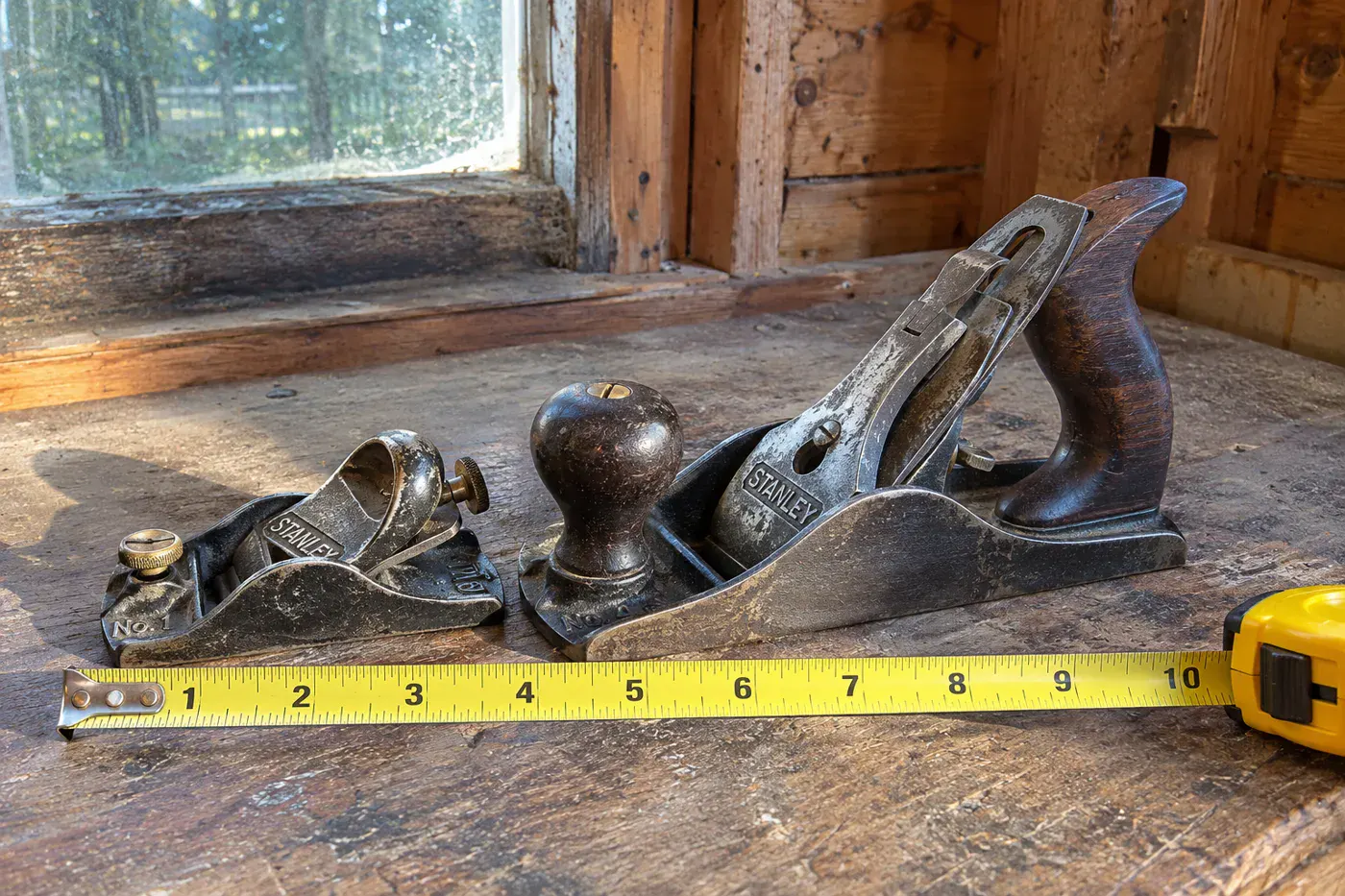
Go to the planes first, and pick up the smallest one. Stanley numbered its bench planes by size. A bench plane is the everyday flat-bottomed plane for smoothing a board, and the tiny sizes are where the money is.
A Stanley No. 1 is only 5½ inches long. Patrick Leach, the antique tool dealer whose guide to Stanley planes collectors still quote, says “every serious collector of old tools wants one.” Stanley made it from 1869 to 1943, and a Stanley catalog that a woodworking blogger dates to the 1930s priced it at $2.95, the cheapest bench plane in the line.
Here’s what that $2.95 plane brings now, next to its bigger brothers.
| Stanley plane | Length | Sold for |
|---|---|---|
| No. 1 | 5½ in. | $1,095 to $1,795 |
| No. 2 | 7 in. | $175 to $650 |
| No. 4 | 9 in. | $65 to $125 |
The No. 1 prices come from 10 recorded sales at Jim Bode Tools. The No. 2 and No. 4 prices come from AntiqBuyer’s sold archive.
So the tape measure does the sorting. A 9-inch plane is almost surely a No. 4. Leach says the No. 4 and No. 5 “are what made Stanley a fortune,” and there are a great many of them. An ordinary No. 4 pays for lunch. A 5½-inch plane calls for a phone call. Even a user grade No. 1 sold for $1,095 to $1,295.
Two cautions go with that. A rare early No. 4 has brought $695, so look before you give the big ones away. Leach also warns that fake No. 1s exist and can fool newcomers. On a real one, the threaded rod that moves the blade runs exactly parallel to the bottom of the plane. On a reproduction it tilts, and the casting looks coarser. Set it on the kitchen table and sight along it.
#16 A handsaw with a brass medallion
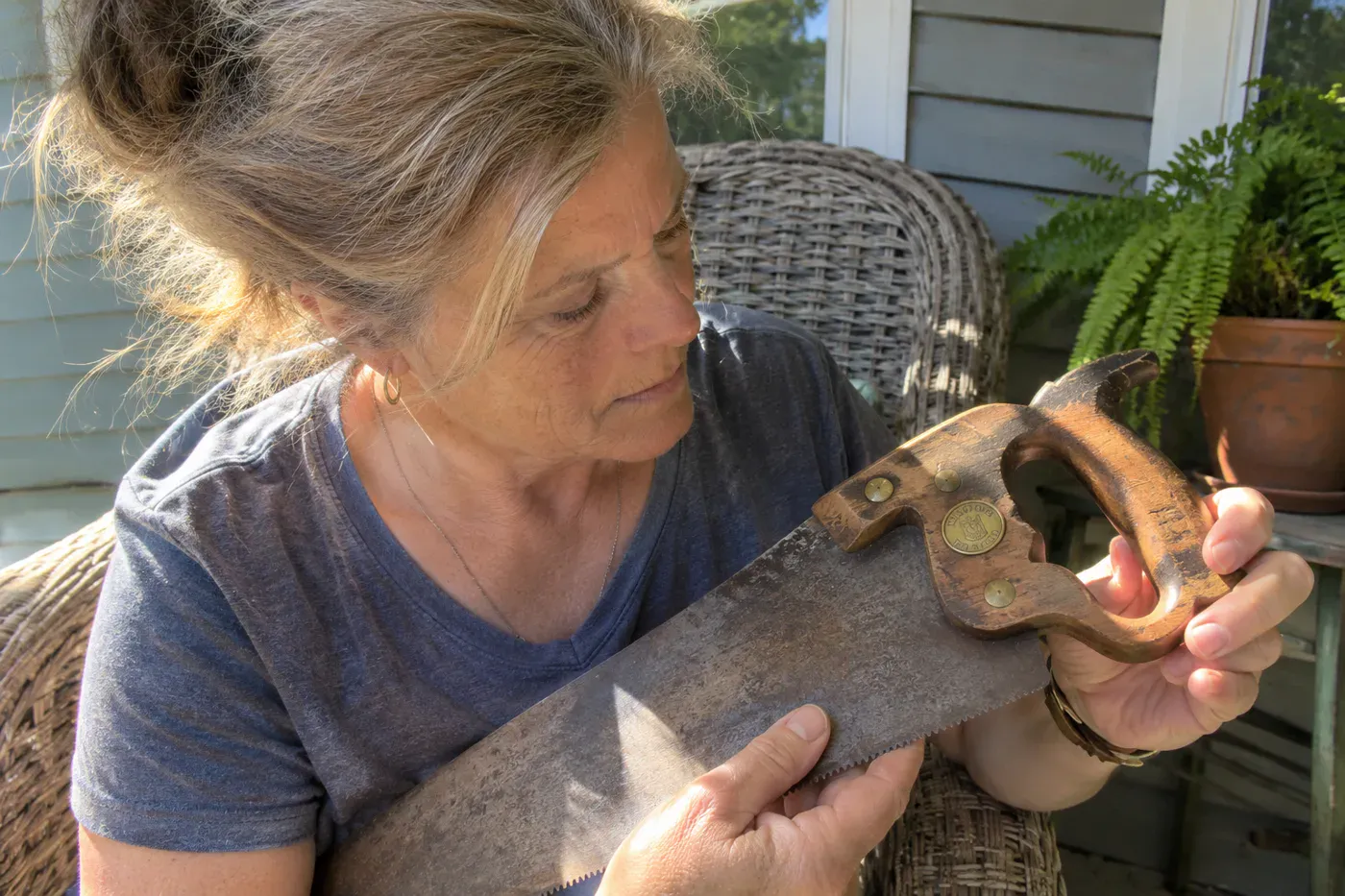
Start with the honest part. Most old handsaws won’t sell. An adult child clearing out their parents’ tools after a move said it plainly on r/Tools: “My Dad had a dozen very nice handsaws…could not give them away for free.”
Still, turn each saw over and look at the round brass medallion on the handle before it goes in the donation pile. On a Disston saw, the medallion dates the saw decade by decade, according to the Disstonian Institute’s medallion guide:
- An eagle: 1840s to 1865
- The “one-son” medallion: 1865 to 1871
- “Disston and Sons”: from 1871
- “Disston Philadelphia”: 1896 to 1917
- Steel instead of brass: some World War II saws, made 1942 to 1953
- Smaller and sloppily stamped: 1953 to 1955
The older the medallion, the better the reason to show the saw to someone who knows saws.
Keep your hopes in proportion. A small Disston No. 1 pattern maker’s saw, with a 7½-inch blade, sold at Jim Bode Tools for $89. If a saw has rust on it, leave that alone. The advice at #7 applies here too.
Then let the rest go to someone who’ll cut with them.
#15 A heavy cast-iron vise bolted to the bench
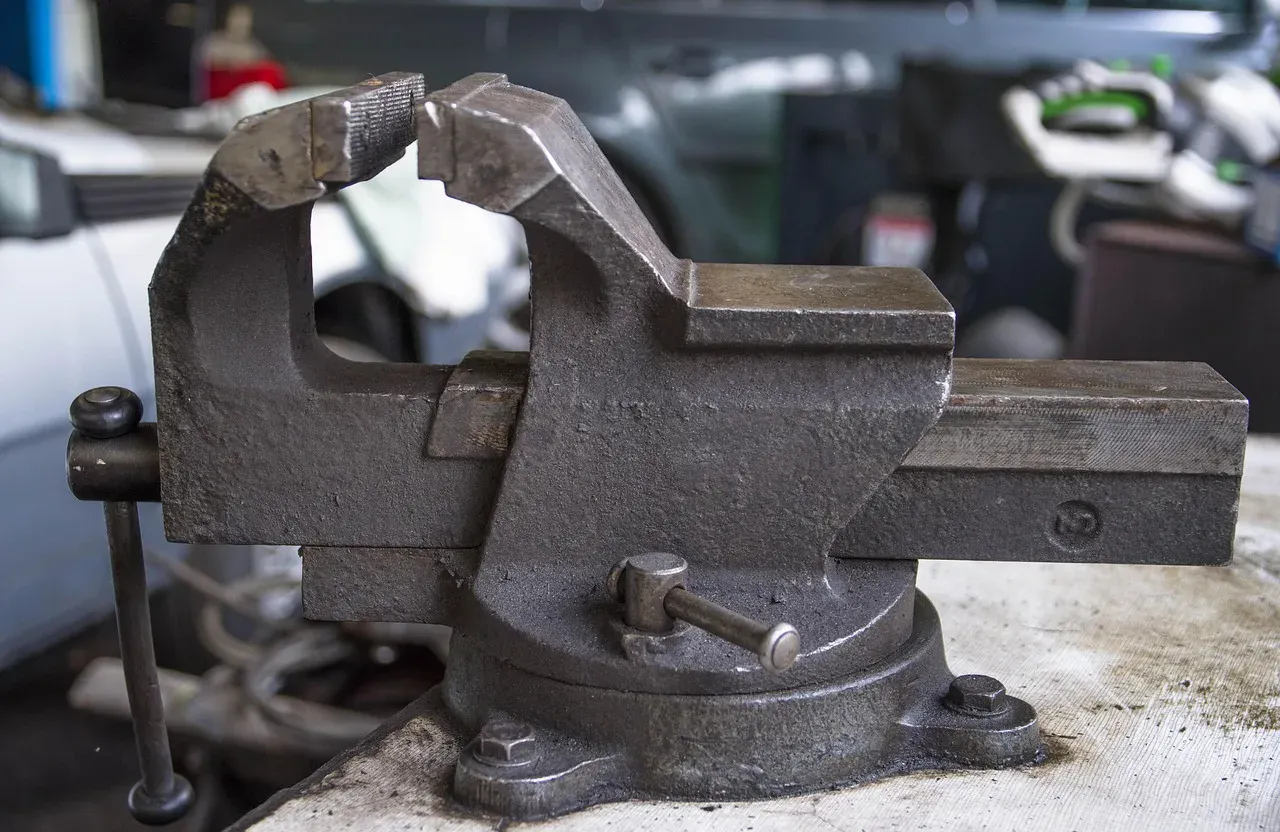
This one surprises people. Heavy old vises are the exception to the rule that nobody wants old tools. Someone who works with new and vintage Wilton vises put it this way on r/Tools: “the vintage ones go hard and they hold their value surprisingly well.”
Completed eBay sales for Wilton vises run from about $450 for a little 2-inch Baby Bullet to $1,301 for a 4½-inch Bullet on a swivel base, by an Antiques Navigator price guide. A 1948 Chicago-made 4½-inch Bullet brought $710.
Selling close to home is a different market. In a 2021 thread on the Garage Journal forum, a Chicago member said local prices run “a little more than half of what they sell for on eBay.” An owner on Maui sold a restored 3½-inch Wilton for $250 “to a buyer who drove over 2 hours.” Think of the eBay figure as the ceiling, not as the check you’ll get in the driveway.
You don’t need to unbolt it to date it. Collectors on the Garage Journal forum worked out where the date hides.
Finding the date on a vise – Crank the sliding jaw all the way out and turn it over. – Look for a date stamped on the flat spot under the round end. – “GUAR EXP” and a date marks the end of a 5-year warranty, so subtract five years. – “Chicago” means it’s from before the company moved to Schiller Park in 1957. Wilton itself started in 1941.
#14 An egg-beater drill with a red gear wheel
You can probably hear this one: the crank, the whir, the little chuck spinning on its shaft. If it’s a Millers Falls No. 2, the red paint on the big drive wheel helps date it, though only roughly.
Millers Falls brought out the No. 2 in 1877 or 1878 and started painting the drive gear red around 1885. The standard No. 2 kept its red gear from 1894 through at least 1938, according to Old Tool Heaven’s history. A red wheel covers half a century, so it tells you “old,” not “rare.”
The Old Tool Heaven price guide puts a standard No. 2 at $45 to $65. That’s in good-plus condition, meaning at least 85 percent of the original finish is left, up to fine. A flawless one can reach $125. Real sales line up with that. At AntiqBuyer, a lightly used No. 2 sold for $50, and a near-mint one in its original box sold for $175.
That’s three and a half times the money. The box earns some of it and the nearly perfect paint earns the rest. Nobody can tell you exactly how to split the difference.
#13 A heart-shaped SW on the plane blade
Hold a flashlight low across the blade of every Stanley plane, so the light skims the steel. You’re looking for a tiny heart with “SW” inside. Collectors call it the Sweetheart logo.
It came in three versions: about 1920, 1921 to 1922, and 1923 to 1935, according to the Hyperkitten plane timeline. The heart marked the merger of Stanley Rule & Level with The Stanley Works, so it’s the newly joined company signing its work. That gives you a window of about fifteen years, tighter than most marks you’ll find in a garage.
Buyers pay attention to it. At AntiqBuyer, Sweetheart-era No. 1s in fine condition sold for $1,150 to $1,895, while No. 1s from the later 1930s and ’40s topped out at $1,495. A Sweetheart-era No. 2C, the C meaning a corrugated bottom with grooves running its length, brought $650. That’s the top of the No. 2 range.
The heart pays most on planes collectors already want. On a common No. 4, it gives you a date to put in the listing.
#12 The box the tool came in
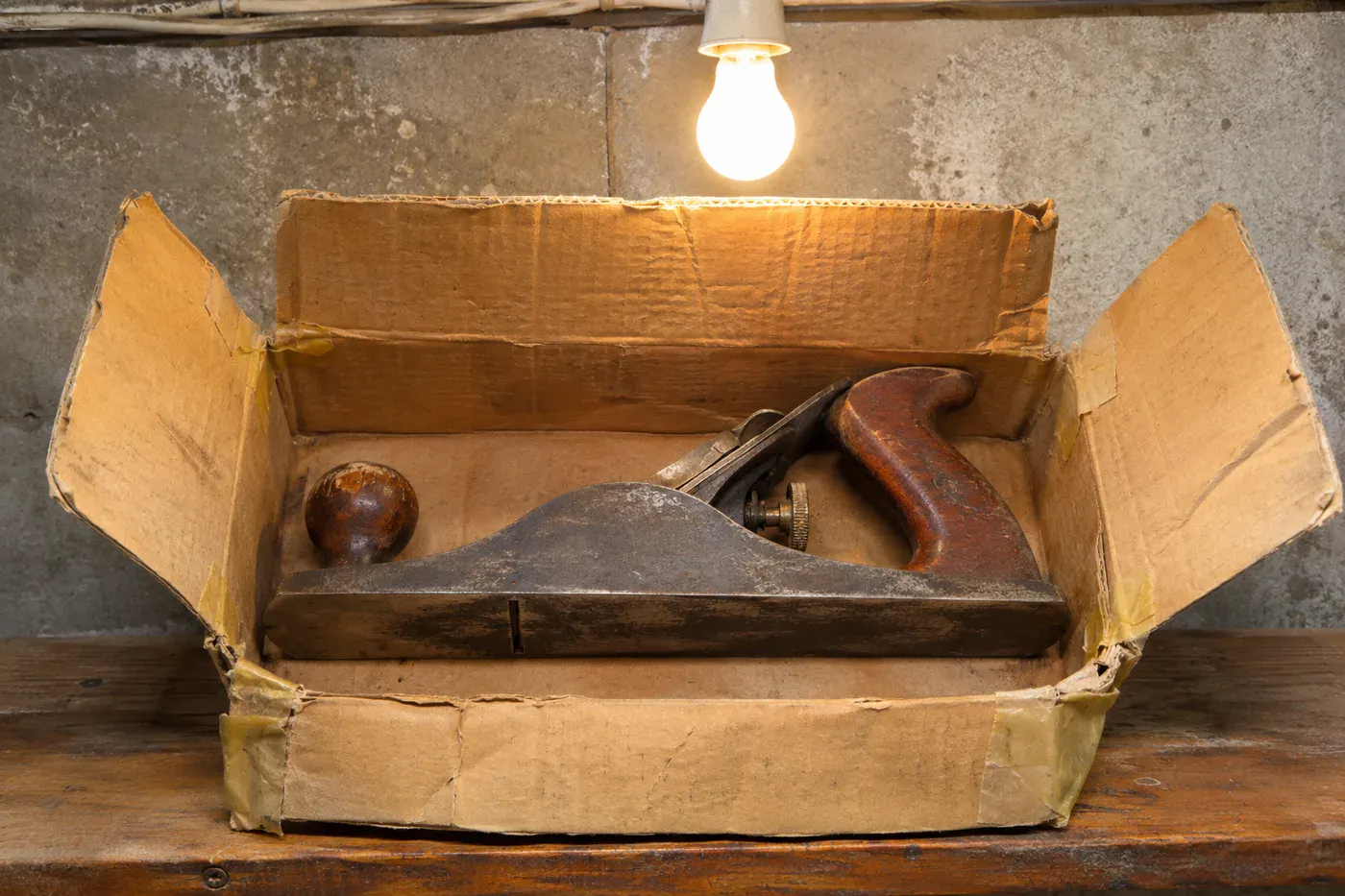
Before anyone flattens a stack of old cardboard for recycling, open each box and see what belongs in it. Boxes add money, and they don’t have to be pretty.
Two collectors on the Garage Journal forum put a number on it. “On big name stuff boxes usually add up to a 20% premium,” one wrote. “I regularly pay 10% or even 20% more,” wrote another. Old Tool Heaven says braces in their original boxes “bring much higher prices,” and you saw at #14 what a box did for a drill.
Torn and taped boxes count too. In an r/handtools thread about whether to keep a hand plane’s box, nearly every buyer said yes, and one said it best:
“Even held together with tape it’s part of the tool’s history.” A hand-plane buyer on r/handtools
If a box turns up empty, go find its tool. The two are worth more together.
#11 A patent number stamped into the metal
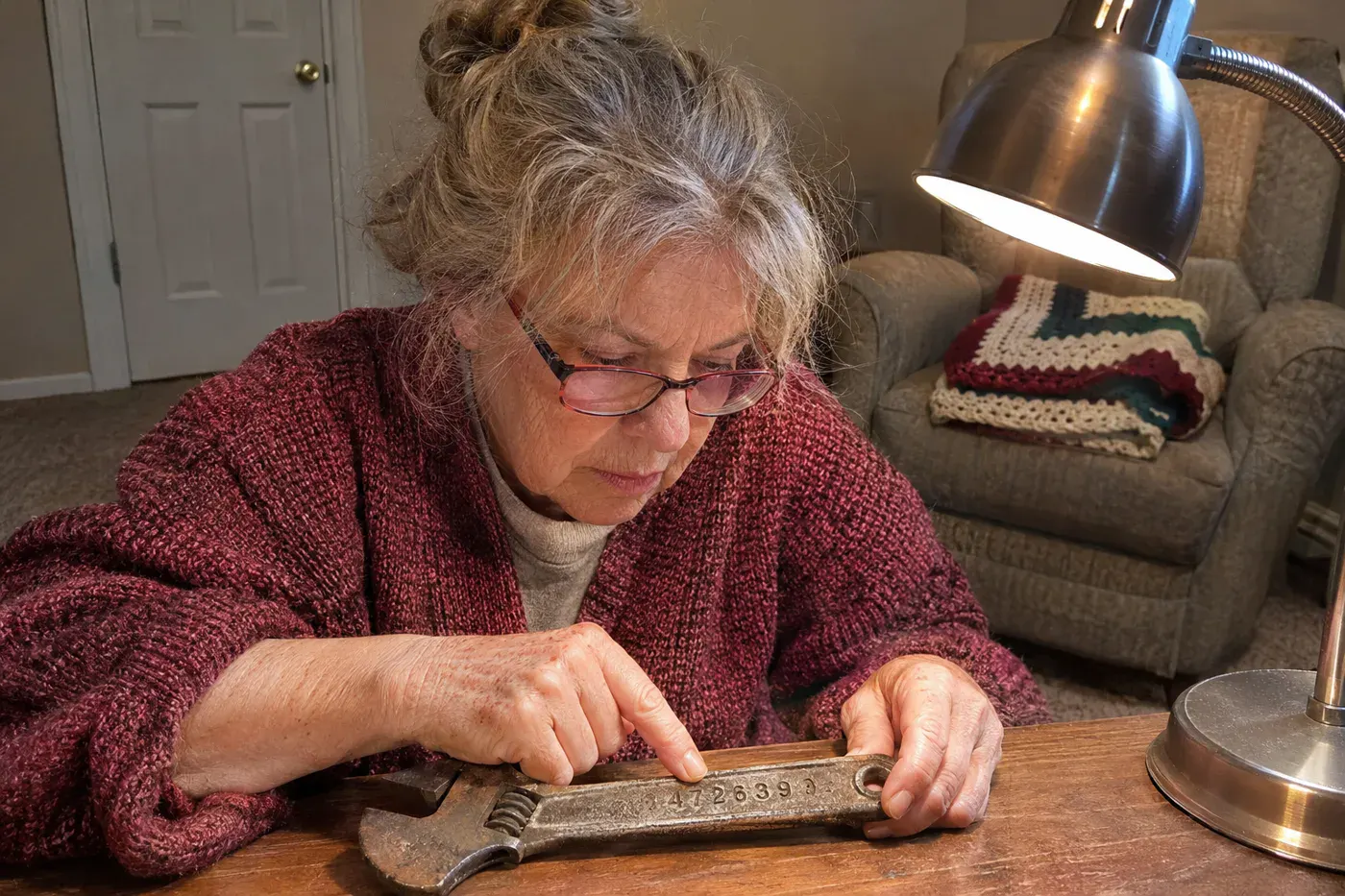
No maker’s name on it? You can still date many old tools yourself from the patent number stamped or cast into them. The US Patent and Trademark Office’s milestones page gives you the two dividing lines you need.
Dating a tool by its patent number – Six digits or fewer (under 1,000,000): the patent was granted between July 13, 1836 and August 8, 1911. – Seven digits, 1,000,000 to 4,999,999: the patent was granted between August 8, 1911 and March 19, 1991. – Either way, it’s the earliest the tool could have been made.
That last line matters. Jessica Kosinski, writing in the Journal of Antiques, put it bluntly: “you cannot assume the patent year was the production year.” A tool could have been made that year or any year after.
Stanley planes give you a sharper trick. Lift out the blade and look at the bed behind the frog, the iron block that holds the blade at its angle. Then count the patent dates cast there. Collectors sort Stanley planes into numbered Types, the stages of the design over the decades. By Hyperkitten’s dating chart:
- Three dates: Types 11 to 12
- Two dates: Types 9 to 10
- One date: Types 13 to 14
- None: Types 1 to 8 or 15 to 20
Write the Type in any listing.
#10 A folding boxwood rule with brass hinges
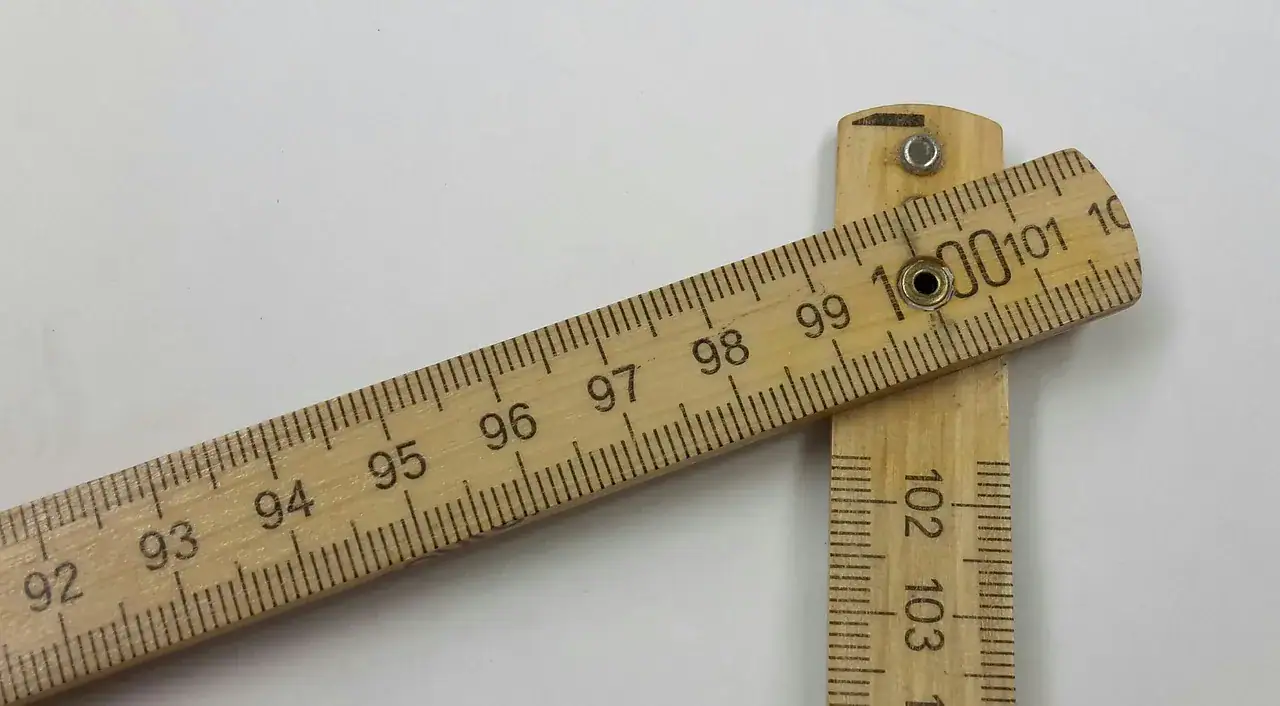
The honey-colored folding rule from the apron pocket or the junk drawer usually brings tens of dollars, not hundreds. A dealer’s value guide at OldWoodworkingTools.com breaks it down:
- Common Stanley or Lufkin rules: $10 to $25
- Brass-bound boxwood: $25 to $60
- Chapin-Stephens brass rules: $40 to $90
- Rules with a caliper or slide built in: $50 to $150
- Rare or early rules: $100 to $300 and up
The same guide singles out the Stanley No. 62 and No. 66½ as the ones collectors look for.
Ivory is the snag no one warns you about. If a rule has ivory in it, federal law limits who you can sell it to. Under US Fish & Wildlife Service rules on elephant ivory, you can sell inherited ivory inside your own state only if you can show it was lawfully imported before set dates. Selling across state lines is banned unless the piece counts as a federal antique. That means it’s at least 100 years old, has had no ivory repair or change since December 27, 1973, and came in through a designated port. Keeping or displaying it is fine federally. Some states go further: California, New Jersey, New York and Washington ban selling elephant ivory even inside the state.
If the rule is white rather than honey-colored, ask before you list it online for a buyer in another state.
#9 Long, heavy tailor’s or upholstery shears
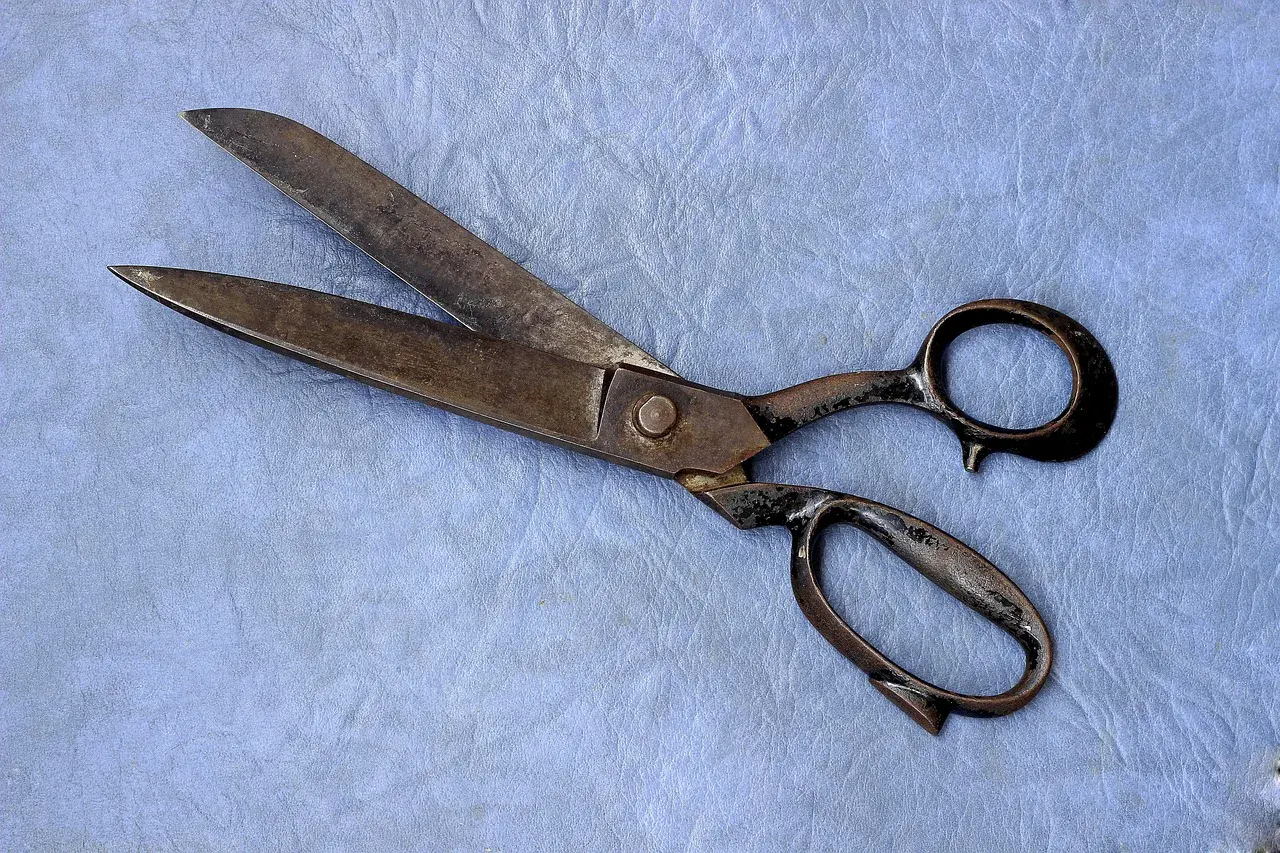
If you sew or quilt, you may spot these before anything else in the garage. They’re the long pair in the drawer with the upholstery tacks, heavy enough that you notice the weight when you lift them.
Look for the name R. Heinisch. Rochus Heinisch of Newark, New Jersey, made shears from 1835 through 1914. One collector’s 12-inch pair weighs 1 pound 4 ounces and, more than a century on, still works “perfectly.”
At the Savile Row tailor Meyer & Mortimer, director Brian Lewis still cuts cloth with Heinisch shears he was given in 1970. “You can’t get this kind of quality now,” he says. His fellow director Paul Munday paid £145 for Wilkinson cloth shears in 1986 and still uses them.
Heavy old American shears have no reliable going price, so don’t plan around selling them. Plan on putting them on your cutting table. Tie a ribbon on the handle so nobody borrows them to cut wire.
#8 A drawknife or spokeshave off the wall
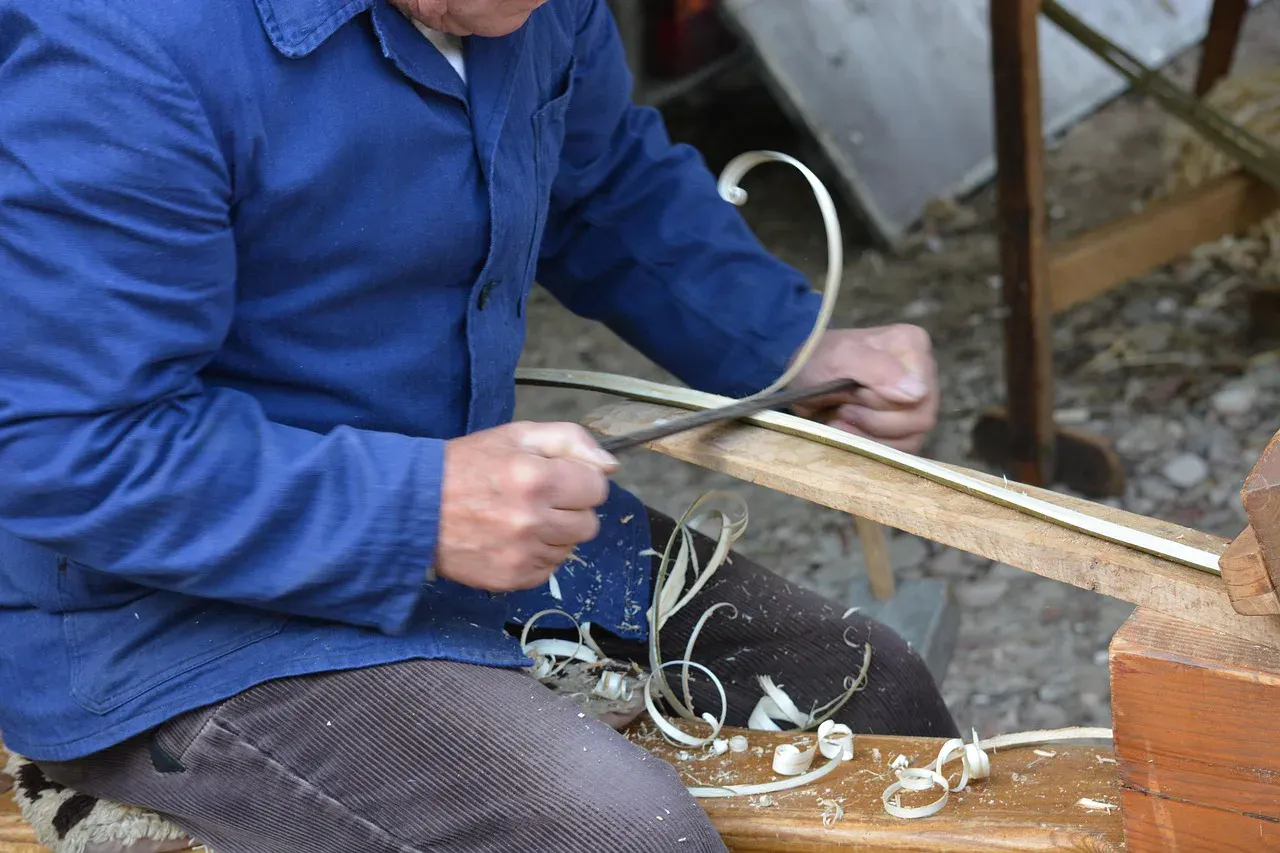
A spokeshave is the small two-handled blade for shaping curves. A drawknife is its bigger cousin, pulled toward you with both hands. Most bring a few dollars. A single letter can change that.
“a standard 151 sells used for between $15-45, but a 151R sells between $250-500.” Jeff Peachey, book conservator, writing in 2008
So check any Stanley 151 spokeshave for an R after the number. Those are 2008 prices, so look at current sold listings before you name yours.
For drawknives, woodworkers Todd Hughes and John Aniano, writing at WoodCentral, point to Witherby, Swan, Fulton, Greenlee and I.J. White as names worth finding. They check for tight handles with dome-shaped iron caps on the ends, and a blade without pitting, the small craters rust leaves behind.
#7 The rusty tool you want to wire-brush
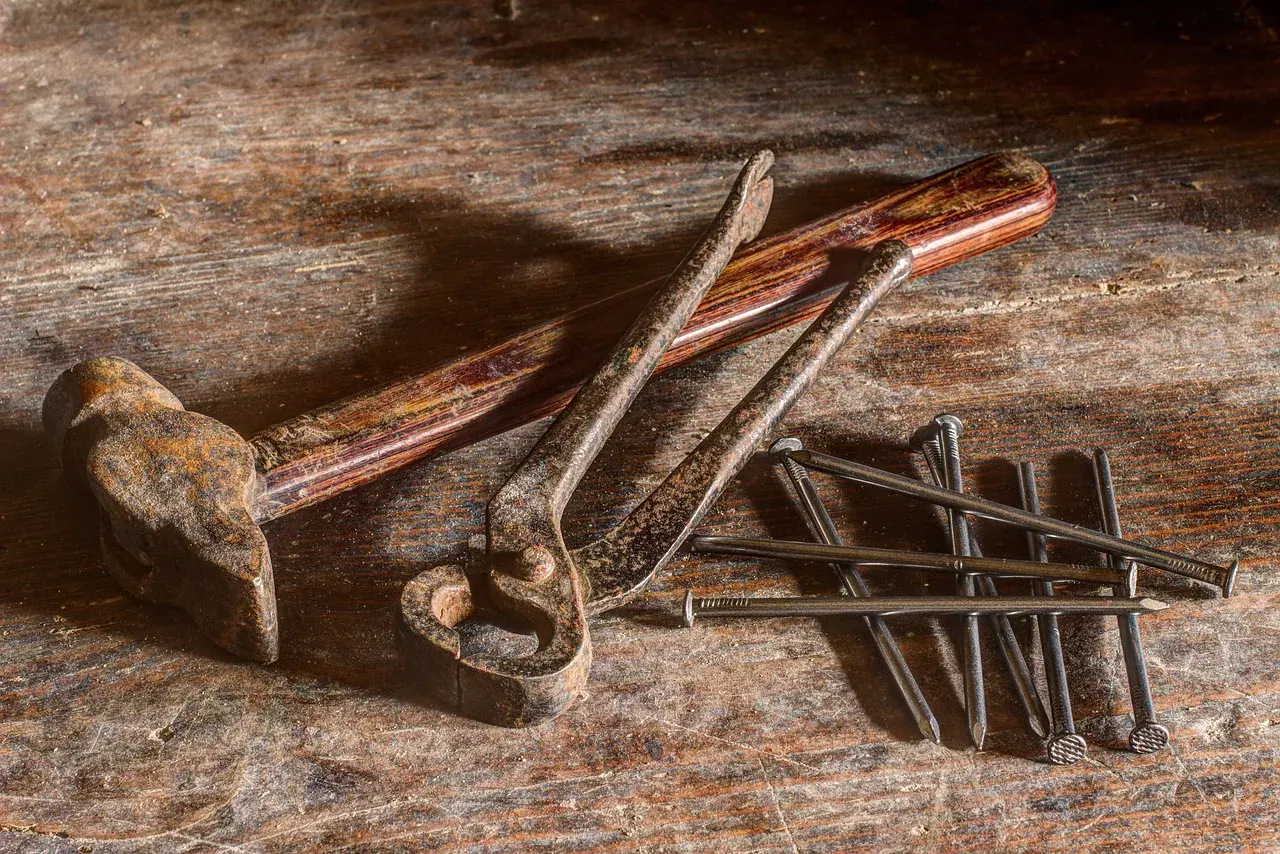
Put the brush down. A crusty old plane looks like it’s begging for a scrub. The scrub is where the money goes.
“A multiple thousand dollar tool has been turned into a $100 tool by overzealous users.” Patrick Leach, antique tool dealer, in the Journal of Antiques
Leach adds that “a knowledgeable collector can never do any harm by leaving things exactly as they find them.” Conservators agree. The Canadian Conservation Institute says an “even, stable layer of red-brown rust” stays unchanged as long as the air stays dry. It also says thin finishes “can be damaged by even a small amount of abrasion.”
What to do instead is simple. Carry anything you might sell out of the damp garage into a dry room and leave it as you found it. Let the buyer decide about cleaning. If you plan to keep a tool and work with it, that’s your call. The advice is for anything that might end up in front of a collector.
#6 The old corded drill, saw or radial arm saw
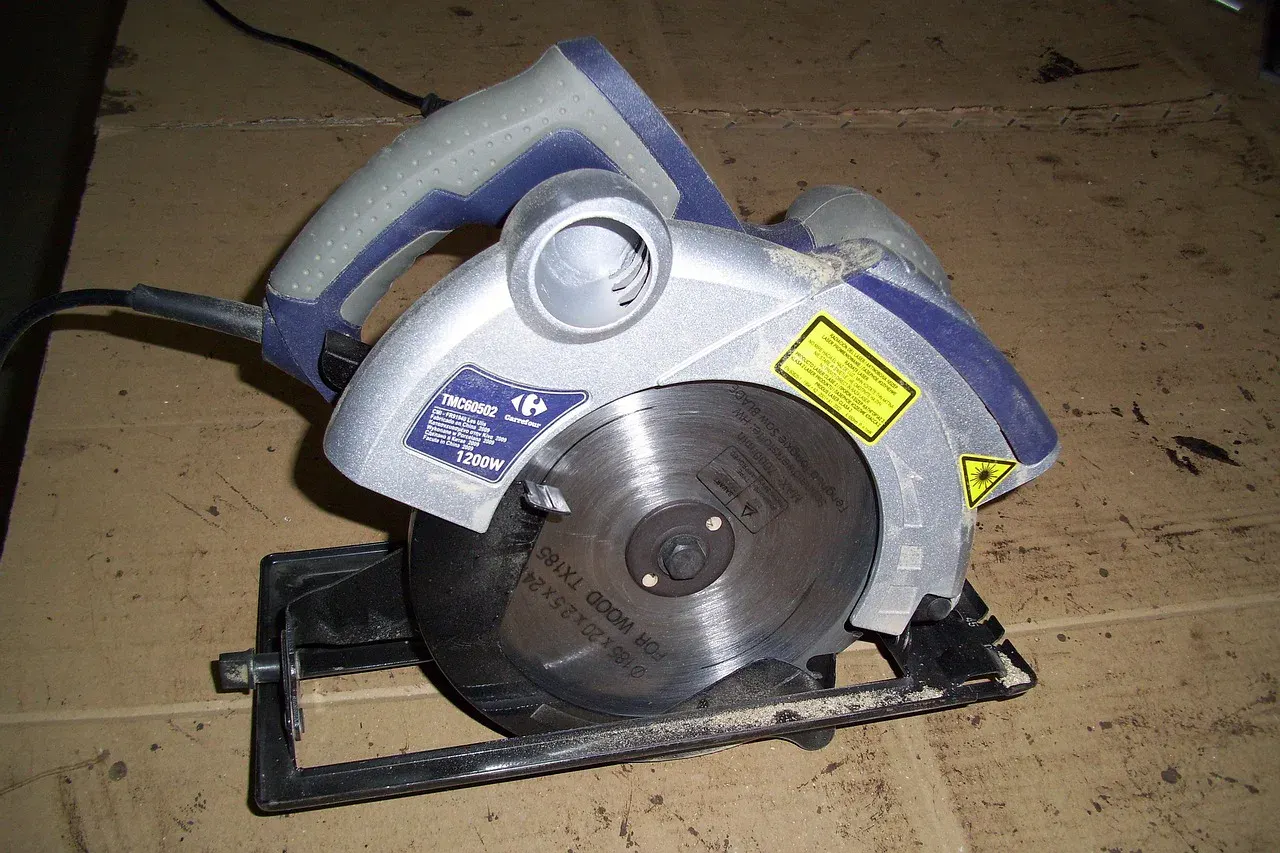
This is the “ones that aren’t” part. In 2025, an estate-sale manager priced a nearly new Milwaukee circular saw at $10 and explained it in five words: “corded tools just don’t sell.” Commenters on r/Tools say why. Battery tools are now lighter and stronger, and the old corded ones get kept mostly for heavy, dirty jobs like mixing mortar.
Routers are the honest exception. Woodworker Johnny Brooke of the Crafted Workshop channel says router design has changed little in decades, so used routers can still be a good buy. So a working router can still find a buyer, if at a low price.
A radial arm saw is the big one with the blade hanging from an arm over the table, and it needs a different kind of attention. In 2000, about 3.7 million Craftsman radial arm saws were recalled because they were sold without a full blade guard, after about 300 reported injuries, including amputations. Don’t plug one in to see if it runs. Instead, check the model plate against the recall notice.
The recall covers 8-, 9- and 10-inch saws with model numbers starting 113, sold 1958 to 1992, plus 8¼-inch saws sold 1990 to 1995. Federal law bars selling a recalled product, and the Twin Cities Habitat ReStore won’t take radial arm saws at all. The recall’s original $100 payment for returning the saw carriage changed as of July 23, 2019. For today’s remedy, contact Emerson Tool Co. at (800) 511-2628 or radialarmsawrecall.com.
#5 A wrench stamped with a tractor maker’s name
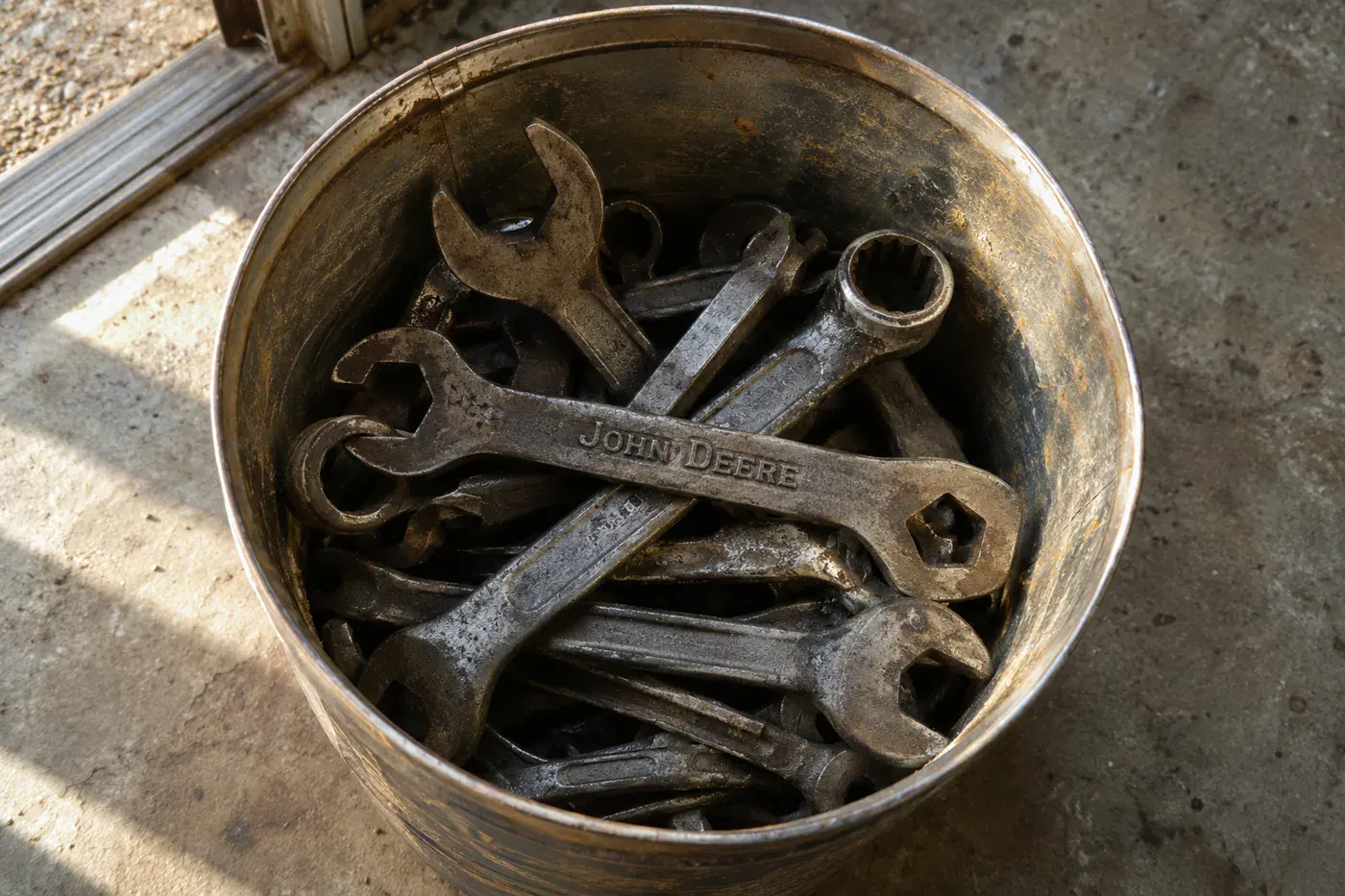
Collectors don’t pay for the steel. They pay for the name and the part number stamped beside it.
In March 2017, a John Deere wrench marked TR590 sold for $16,500 before fees at a Trice Auctions sale, as members of the Garage Journal forum reported. It was a flat cutout wrench that came with the experimental Dain tractor of 1918 and 1919. About 100 of those tractors were ever sold, and the company bought most of them back. Very little of that tractor’s kit was ever out in the world to begin with.
Farm-name wrenches end up in coffee cans in a lot of garages, often with the stamp half-hidden under grease. Yours almost certainly isn’t a TR590. Still, the stamped number tells you exactly which wrench it is, and it takes a minute to copy onto the back of an envelope. Look that number up in sold listings before the can goes to the yard sale.
#4 A plain wooden tool chest with lift-out trays
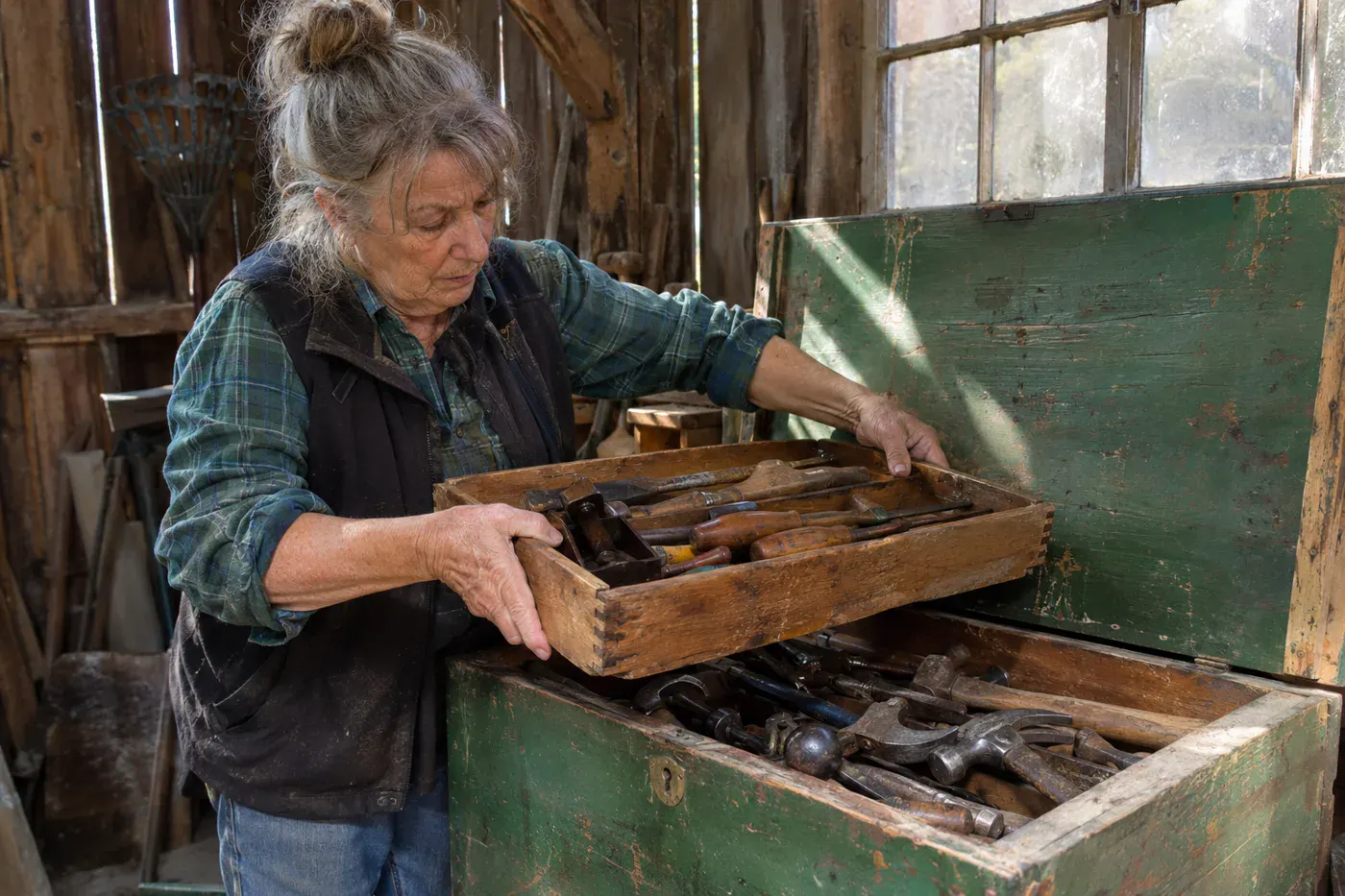
Never judge a tool chest by its lid. The cabinetmaker Duncan Phyfe’s own chest looks from outside like a plain painted pine box, 38 inches long, about the size of a blanket chest. Open it and you find mahogany veneer and a sliding drawer unit. The Phyfe family still owns it, and it’s on loan to the New-York Historical Society.
A chest with a family history behind it can bring serious money. The 19th-century Hovey family tool chest sold for $14,950 at auction.
Most chests won’t come near that, but you can’t tell from the outside. Lift every tray out, look under the bottom one, check the inside of the lid, and slide out any drawers. Leave the paint and grime alone, and keep the tools that came in it inside until someone who knows chests has seen it.
If you find a name painted or chalked inside the lid, photograph it before anything else gets moved.
#3 The whole bench, left as it was
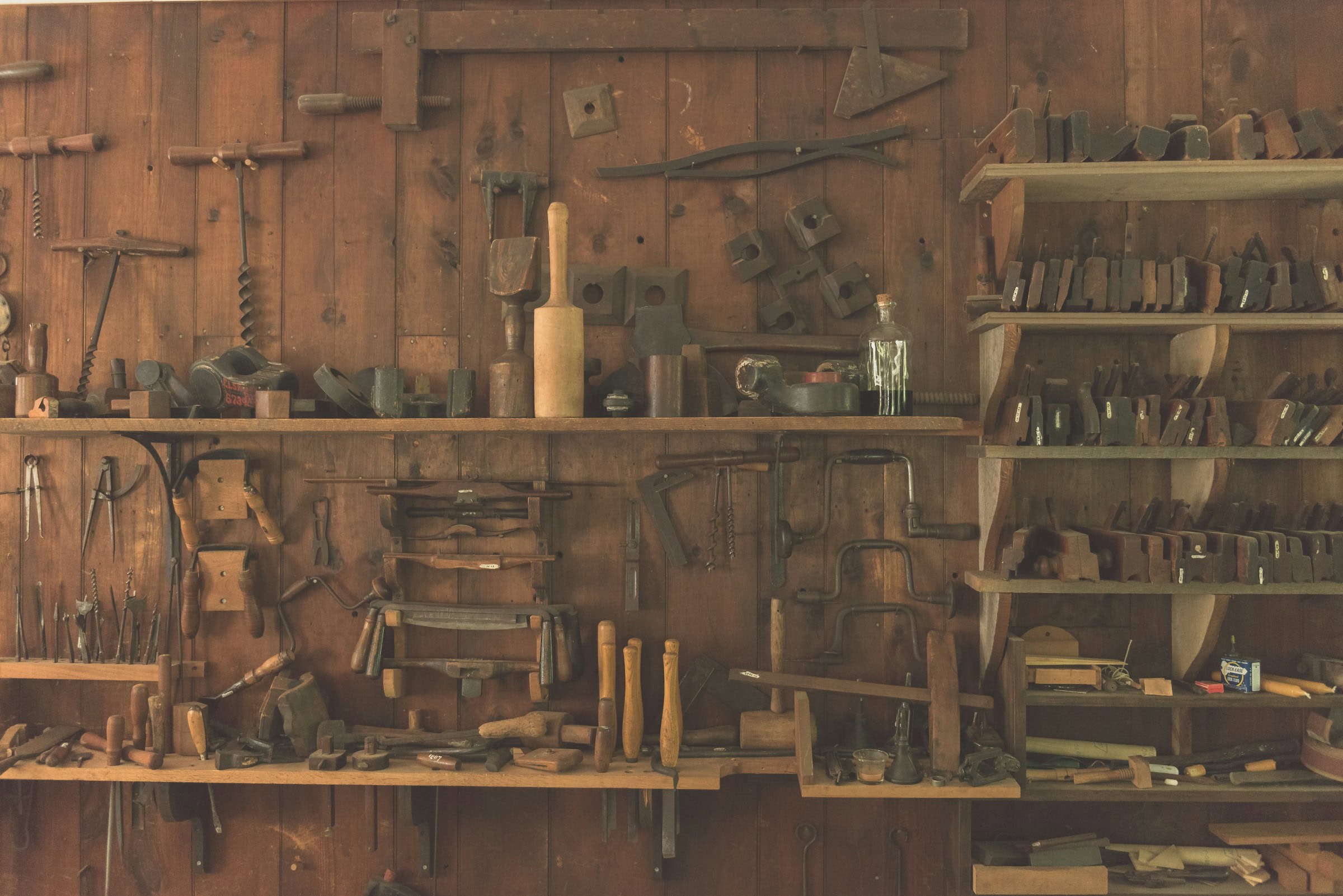
Sometimes the arrangement is worth more than any single tool on it. When Trent Preszler’s father, Leon, a rancher, died in 2014, the only thing he left his son was a toolbox. “It was just a rancher’s toolbox,” Preszler said. With it, he taught himself to build a canoe.
On r/woodworking, when someone asks what to do with a grandfather’s bench and wall, the usual answer is to keep it all and sort it slowly. Some suggest keeping the setup as one piece, because it shows how he worked. One woodworker there put it this way: “Picking up intact old guy tool and workbench setups is a deep treasure trove of knowledge.”
You have choices, and none of them needs guilt attached:
- Keep it whole and use it, or let someone learn on it.
- Give it whole to a person you know who wants to learn woodworking.
- Sell it whole. The Mid-West Tool Collectors Association lists a “bulk buyer willing to come to your place, give you one check for all the items.” It notes that this is faster and easier but usually pays less.
- Pull out the handful of tools from this page and let the rest go together.
If you pick the last, it takes an afternoon, and the money that matters stays with you.
#2 A plow plane with its spare cutters
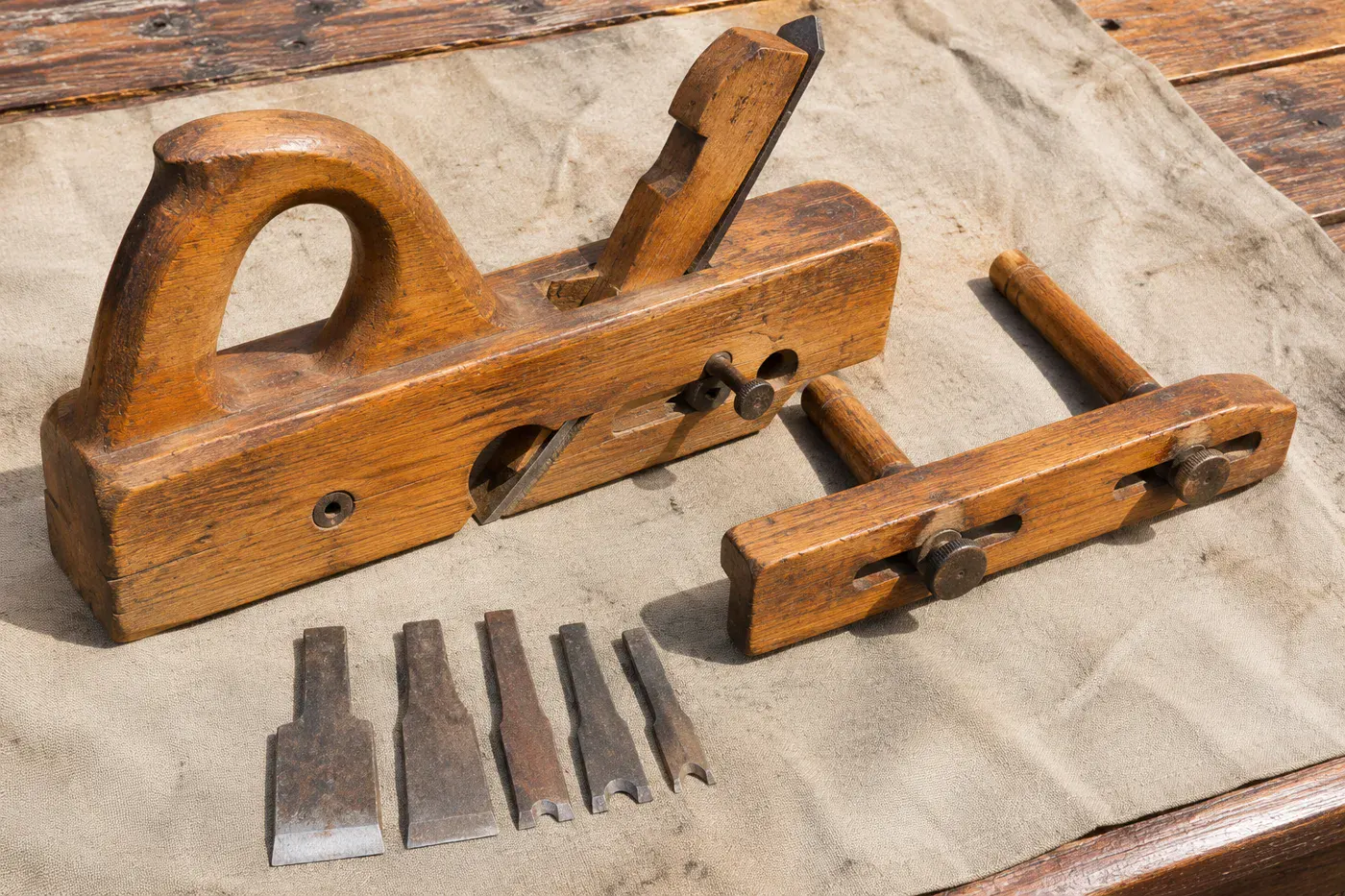
A plow plane cuts grooves. It comes with a fence, rods or arms, and a set of interchangeable cutters, often kept in a little box of their own. Those parts wander off, so gather them before you do anything else.
The single biggest price in the hand-tool world belongs to a plow plane. A Sandusky three-arm plow plane holds the world auction record for any single tool, $114,400, in a sale handled by Brown Tool Auctions and reported by Antiques and the Arts Weekly.
Miller’s Patent plow planes have brought big money too, per Family Handyman: $18,650 for a gunmetal No. 50 and $19,800 for an early Type 1 No. 42.
Then comes the reality check. A Record No. 043, “100% complete with all 3 irons, stop, rods, and fence” in its original box, sold for $125 at Jim Bode Tools. It was complete, boxed, and still $125. A complete plane protects its price. The name cast or stamped on it decides how high that price can go, so read the casting for Sandusky or Miller’s Patent.
Put every loose cutter, rod and screw that might fit into one bag, and tie the bag to the plane.
#1 A wooden molding plane stamped with a name
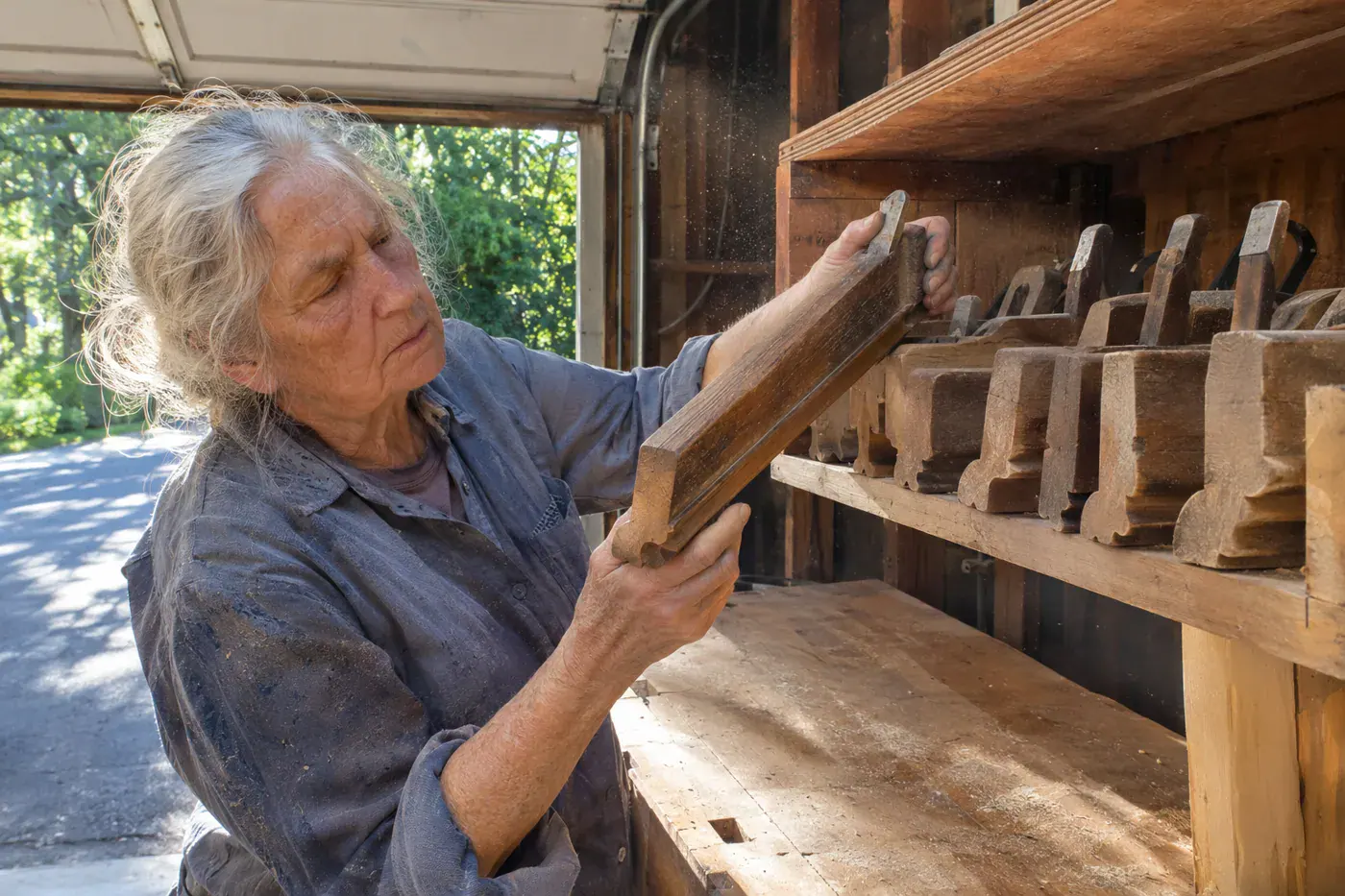
Many garages have a row of these: long, narrow wooden planes with shaped bottoms, made for cutting the curves in trim. Most are common. A few carry the most remarkable story in old tools.
Francis Nicholson of Wrentham, Massachusetts, who lived from 1683 to 1753, is what Patrick Leach calls “America’s first documented planemaker.” Nicholson stamped his planes F*NICHOLSON / LIVING*IN / WRENTHAM.
Cesar Chelor was enslaved by Nicholson. In 1753, the year Nicholson died, Chelor was freed. He went on stamping his own planes “Cesar Chelor, living in Wrentham,” the same words his enslaver used, with his own name in front.
On Antiques Roadshow in Washington, DC, in 2010, appraiser Lee Richmond valued a Chelor plane at $6,000 to $8,000 at auction, a figure updated to $6,000 to $10,000 in 2014.
“the single most desirable molding plane you could ever possibly come by” Lee Richmond, appraiser, PBS Antiques Roadshow
At auction, a C.E. Chelor cornice molding plane has brought $27,950 and a Nicholson molding plane $5,140, per Family Handyman. Leach’s notes give you a way to spot an early plane before you ever find a name:
- Read both ends and the top of every plane under a low flashlight for a stamped name.
- Measure it. Eighteenth-century planes run about 10 inches long, while the standard in the 1800s was 9½.
- Run a finger along the top edges. They were cut flat at an angle until about 1800, and rounded by about 1825.
- Look at the wood. Eighteenth-century New England makers often used yellow birch rather than beech.
- If two or more of these point early, don’t clean it. Call a specialist tool auction house.
Half an inch on the tape measure is the first thing that sets one of these planes apart from the rest of the row.
The bottom line
You don’t need a month. You need one slow afternoon with a tape measure, a flashlight and your phone, plus a house rule that nothing leaves the garage until it’s been looked at once.
Most of it really will be worth little, and that can come as a relief. The cans of bolts, the corded drills and the dozen handsaws can go to people who’ll use them, and you can stop wondering about them.
Before you price anything, pick up whatever you remember seeing in use. Set it on your own shelf first.
Bonus: Five more things in the garage to check before the truck comes
- An anvil in the corner. English anvils are stamped in hundredweight: the first number times 112 pounds, the middle times 28, plus the last in pounds. A Peter Wright stamped 1·1·4 weighs 144 pounds, and forum members report $3 to $5 a pound, so roughly $430 to $720.
- A roll of chisels. Look for Witherby, Swan or Buck Brothers ($35 to $90 each) and Stanley Sweetheart 750s ($60 to $125 each), and keep a matched set together, since sets run $150 to $500 and up, by one dealer’s guide.
- A wooden level with brass edges. A Stanley No. 98 18-inch rosewood level sold for $295 to $395 at AntiqBuyer, and a Davis patent level brought $2,310 at auction.
- A Winchester or Keen Kutter stamp. Winchester planes, several of them made by Sargent, sold for $25 to $295, and Leach lists Keen Kutter among the brands collectors seek.
- A brace for boring holes. Millers Falls Barber braces bring $10 to $35, but a Stanley No. 2101A sold for $85 to $125, and a Marples Ultimatum ebony brace for $495.
Questions people also ask
Does anyone actually buy old hand tools?
Yes. Specialist auction houses, dealers and collector clubs all buy them. Martin J. Donnelly Auctions in Avoca, New York, has auctioned antique tools since 1983 and takes whole collections or single pieces. Brown Tool Auctions in Michigan will inspect tools “with no cost or obligation,” and a dealer is quicker but usually pays less, as the Mid-West Tool Collectors Association notes.
How can I find out what an old tool actually sold for?
Look at sold listings and dealer sold archives, not asking prices. Archives like AntiqBuyer’s show what tools really brought. Appraiser George Higby of The Antique Nomad, pricing donations for a garden club flea market, told someone quoting an online listing, “Well, they don’t actually sell for that.” Local sales can come in lower still, at a little more than half of eBay prices in one Chicago collector’s experience.
Should I clean the rust off old tools before I try to sell them?
No. Leave stable old rust alone and keep the tool somewhere dry. Over-cleaning can strip the original finish and marks that set the price. Gary Sullivan, an appraiser on Antiques Roadshow, advises never to polish, clean or refinish antiques.
Is it better to sell a whole tool collection at once or piece by piece?
Selling everything to one buyer for a single check is faster and easier, but selling piece by piece or through a specialist auction may bring more. The Mid-West Tool Collectors Association lays out both options, and notes that table sellers at collector meets “keep every penny.” Appraiser George Higby agrees on single pieces: “I think you have a better chance of selling them separately than together.”
How can I tell how old my Stanley plane is?
Check the blade first: a heart-shaped Sweetheart logo means about 1920 to 1935. Then count the patent dates cast into the bed behind the frog, the block that holds the blade. Three dates point to Types 11 to 12, two to Types 9 to 10, and one to Types 13 to 14. Confirm against Hyperkitten’s dating flowchart.
Where can I donate old tools nobody wants to buy?
Habitat for Humanity ReStore locations take hand tools and working brand-name power tools, though each store sets its own rules. The Twin Cities ReStore, for example, requires original factory safety features and refuses recalled items, homemade tools, older nickel-cadmium cordless tools and radial arm saws. Call your local store before you load the car.