A plain-English sort of the button tin, the thimbles and the pattern drawer into what actually sells, what’s just a good story, and what’s worth keeping.
Save a few minutes for #1. It’s the thing in the box you can’t buy back, and there’s a group of volunteers who will help you finish it.
The lid of the cookie tin sticks, the way it always did. When it finally gives, you hear it: a few hundred buttons sliding over each other at once. Behind it on the table sit the quilted basket with the broken latch, the pattern drawer and the machine nobody has oiled in years. The donation bags are already by the door. Before anything goes in them, know this much. The vintage sewing items worth money rarely look it, and the shiny things that look valuable often aren’t.
#15 The cookie tin of mixed buttons
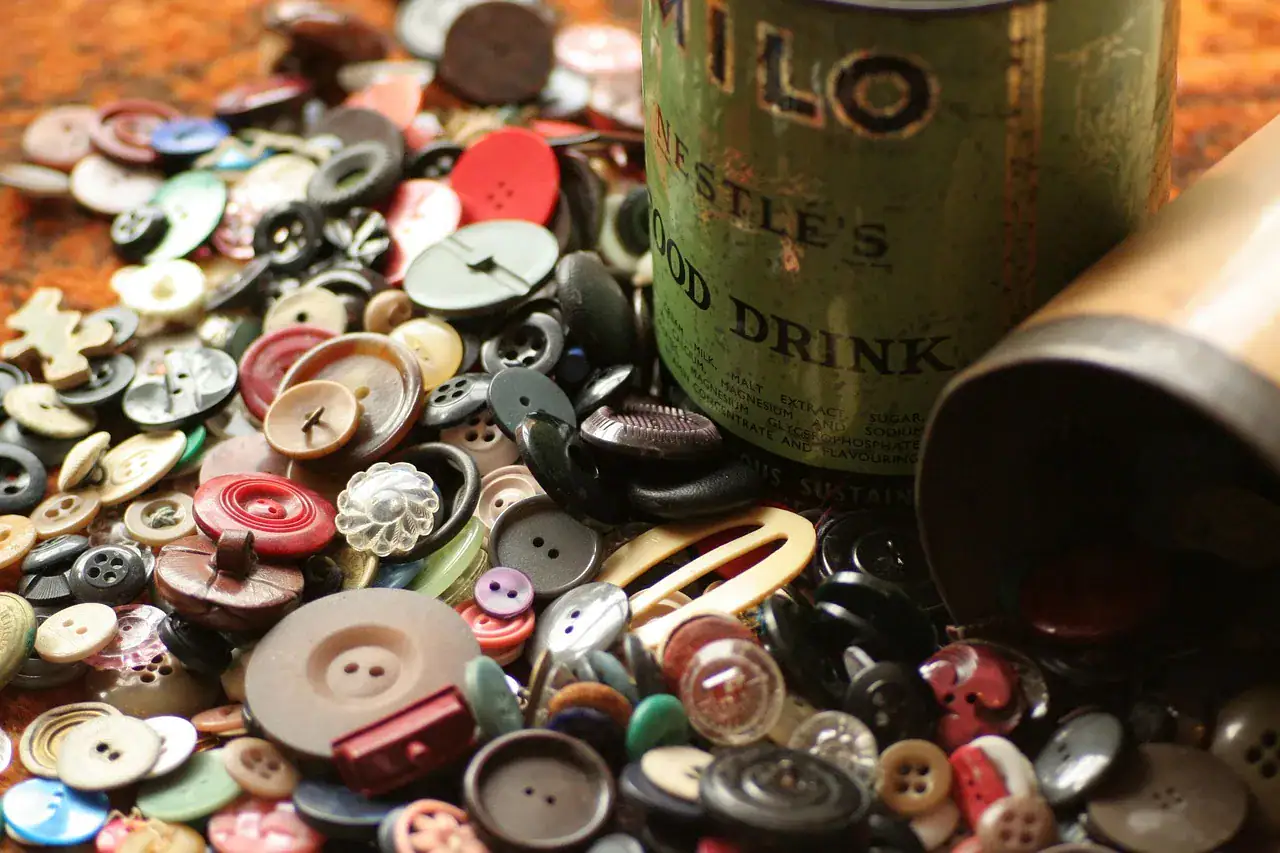
An unsorted button tin brings tens of dollars, not hundreds.
In a January 2025 online sale, two vintage tins full of buttons, described as “Some antique buttons, all buttons are old,” went for $32 after 12 bids. That’s $32 for both tins, before the buyer’s premium. The premium is the extra percentage the auction house adds on top of the winning bid.
Bigger doesn’t change the math much. Four tall glass jars of mixed buttons, the tallest 29¼ inches, sold at a Walton, Kentucky, estate auction in March 2026 for $120 plus a 12 percent premium. That took 24 bids, and it still comes to about $30 a jar.
So the money, where there is any, is in single buttons you can name. The National Button Society has been around since 1938, and its Bluebook is built to help collectors “identify, categorize and value buttons based on their age, material, design and usage.” For someone who has just inherited a tin, the society’s own advice is modest: explore the website and you’ll gain “some introductory information.”
Sell the tin whole if sorting sounds like a chore. If it sounds like a good evening, pour it onto a dish towel and pull out anything carved, glass, metal or shell. Run the heavy plastic ones through the tests in #7 before you call them anything. Everything plain goes back in the tin as a lot, along with the white four-hole shirt buttons you’ve sewn on more times than you could count.
#14 The sewing machine in its cabinet
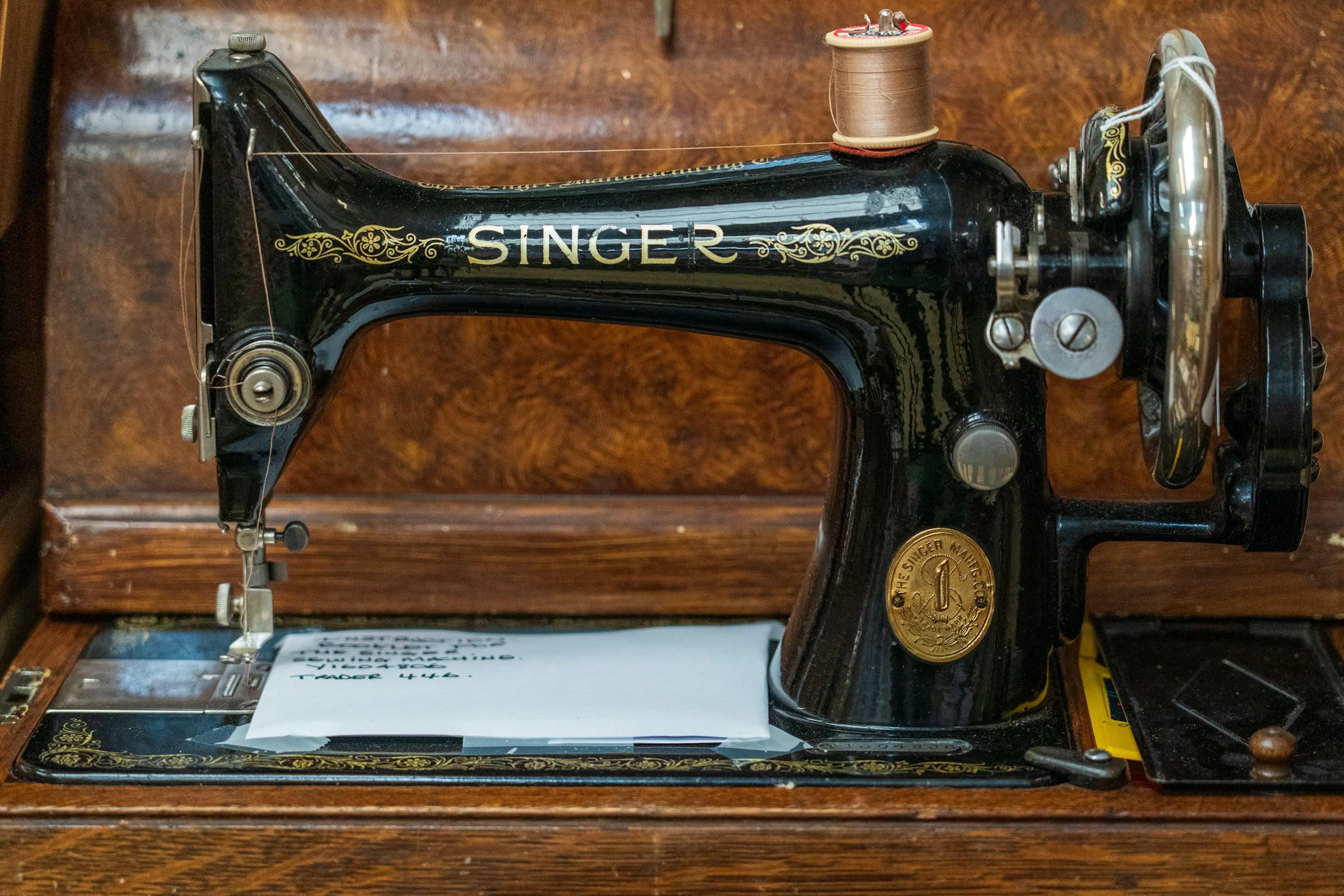
Most antique Singers sell for $50 to $150, according to a LoveToKnow value guide. To find out whether yours is one of the better ones, you need two things: the machine’s serial number, and what buyers really paid for that model.
Start with the number. “Have the machine’s serial number handy. You can usually find it stamped on the right side of the machine,” says the guide’s author, Kate Miller-Wilson.
If it’s a Singer, look it up in the free serial-number database kept by the International Sewing Machine Collectors’ Society, known as ISMACS. You pick the page for the letters at the front of your number, like AA or AM, and it gives you the model and the year it was made. On Reddit’s sewing forums, people with inherited machines have had them dated to the model and year from that number alone. Commenters traced another one all the way to the 1960s Japanese factory that built it.
Now find the real price. An eBay Community mentor explains the step: “Put a checkmark to filter in the Sold box, actual selling prices are shown in green.” Asking prices show what sellers hope for. Green prices show what somebody paid.
The guide lists what moves the price: how much people want that model, whether it’s complete with cabinet, accessories and manual, whether it runs, and where you live. That last one catches people out. Shipping eats into the value, so a heavy cabinet machine usually sells best to someone who can drive over and pick it up. The guide’s top example, a treadle machine with its table, is listed at $1,800. Owners on Reddit add that the cheap old machines usually turn out to be missing accessories or not working.
Before you sell it or plug it in – Clean the decals with a soft cloth and light sewing machine oil. “Don’t ever use water to clean as it will silver or fade the designs,” a commenter on r/sewing warns. – Skip the can of compressed air. Owners on r/sewing say it pushes dust further into the machine. – Keep the manual, bobbins and presser feet with the machine. A complete machine sells for more. – Owners are split on whether to have it serviced before you plug it in. One on r/sewing said theirs “had to be completely rewired because most of the wires were bare,” while others say vintage machines are often easy to clean and service yourself.
#13 A black Singer Featherweight 221
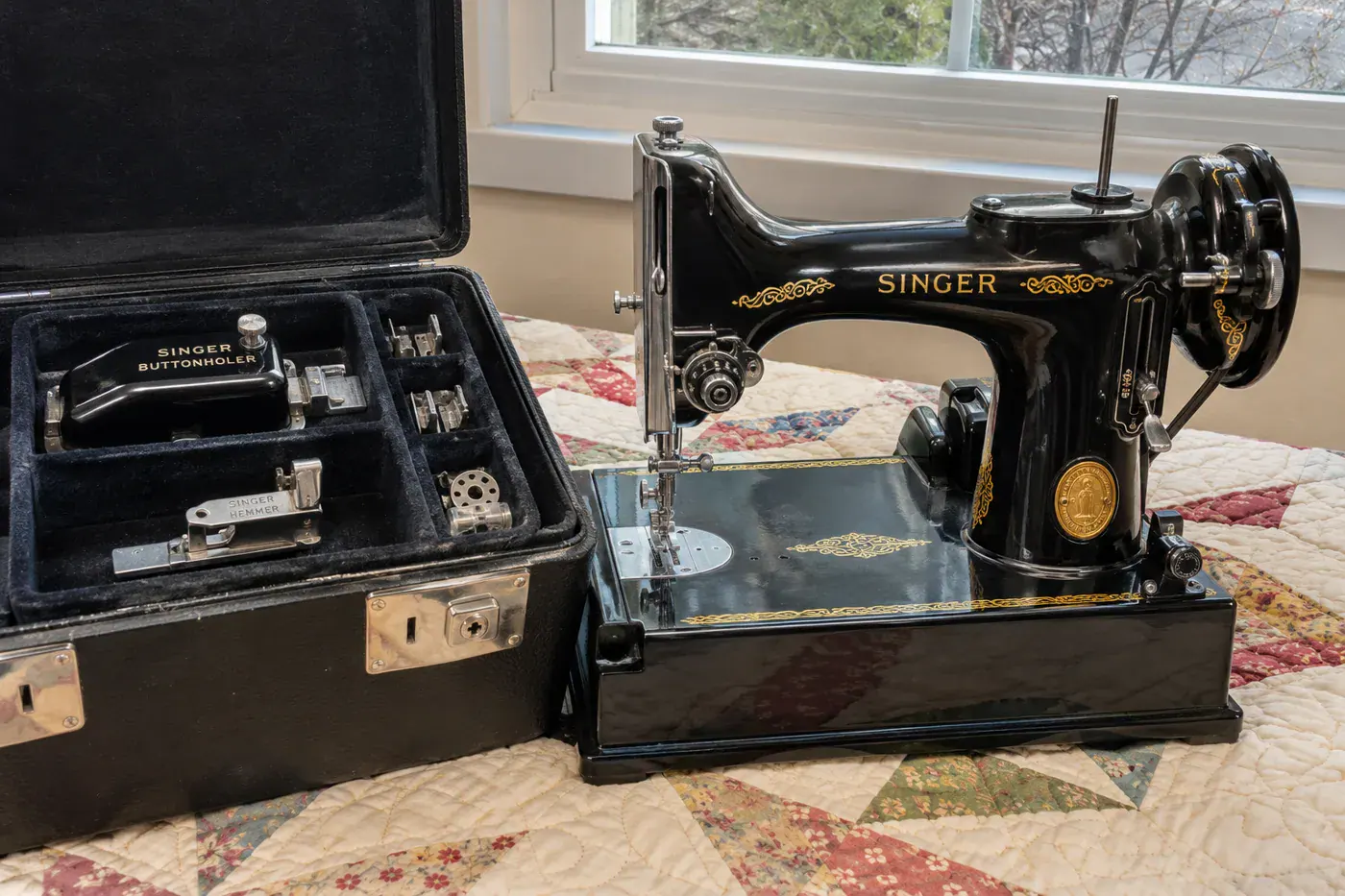
Two black Featherweights can look like twins and sell hundreds of dollars apart. The difference is in the details a quilter checks first.
Singer made the 221 in the United States from 1933 to 1964. At 11 pounds 1 ounce it was light enough to carry to a class, and quilters still want it for its straight stitch and accurate quarter-inch seams, says ISMACS. The top money goes to machines in “good condition with little wear on the gold leaf, complete with case, attachments, and original manual.” So the twin with worn gold scrollwork and no case is the cheaper one. The original case and accessories are a big part of the price.
Then look at the color. ISMACS knows of no verified red or blue Featherweight. As for the mint-green one people talk about, “The rumored mint-green Featherweight is apparently an alternate description of the white machine.” That white one, the 221K, was made in Britain from 1963 to 1968. Any bright red, blue or purple Featherweight has almost certainly been repainted, however good the paint job looks.
Repaints still sell. In 2014, the blog Auction Finds checked eBay’s sold listings. Here’s what it found, next to a few rare versions a 2023 value guide listed among its top results:
| Featherweight | Brought | Year reported |
|---|---|---|
| 221 with accessories | Up to $1,000 | 2014 |
| Beige 221 | $800 | 2014 |
| Repainted red, blue or purple | $500 or more | 2014 |
| 1956 222K with accessories | $2,500 | 2023 |
| 1935 “School Bell” 221-1 | $3,500 | 2023 |
| 1939 crinkle finish | $5,400 | 2023 |
Auction Finds added that “many others” sold for much less. Those 2014 figures are old, so run the Sold filter from #14 to see what yours brings now.
#12 The sterling thimble among the steel ones
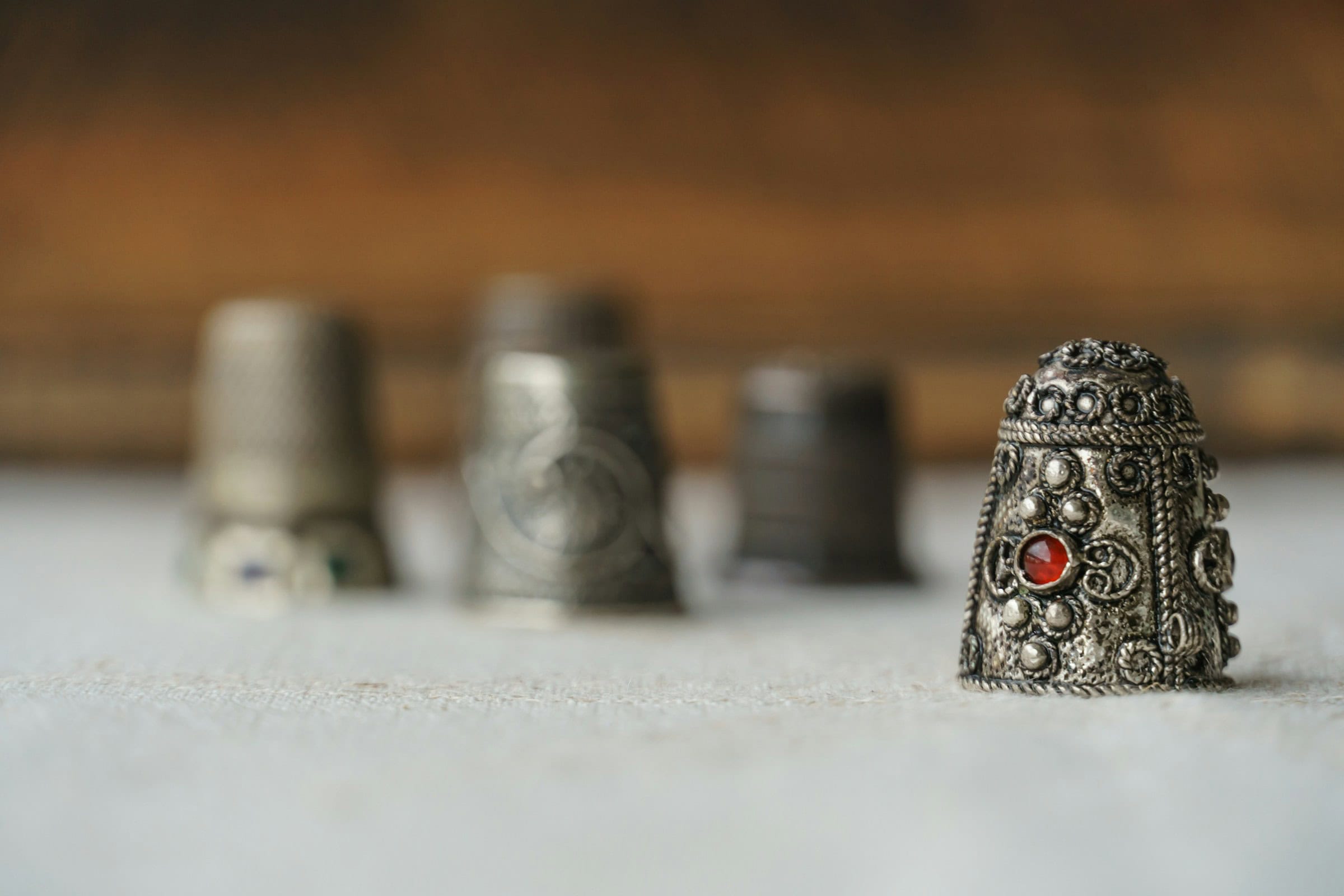
Pour out the thimbles and most will be steel, dull and dented from years of quilting. If one has a different shine, that’s the one to turn over.
Look inside the top. Thimble collector Sue Gowan told Collectors Weekly: “The American thimbles are much shorter than their equivalent in the U.K… their marks are normally up inside the apex.” The apex is the domed tip, and your phone’s flashlight makes it easy to see. If you’ve been reading a British collecting guide, this is where American thimbles part ways with it.
What you’re hoping to find is a maker’s initial. Gowan says Simons stamped an “S” and Ketcham & McDougall stamped “KMD.” Simons Bros. was a Philadelphia firm founded around 1840 that made thimbles in sterling and gold. Gowan says “they’re the only major thimble company still going worldwide.”
An aluminum one with a company name on the band is something else. “There used to be little aluminum advertising thimbles for Ford and General Motors,” Gowan says, and most of those giveaways were made in Germany and Austria. That one’s a story, not silver.
Good silver thimbles are among the vintage sewing collectibles that do find buyers. When Jo Anne Rath Shepherd’s thimble collection sold at Clarke Auction Gallery in Larchmont, New York, in August 2025, 98 percent of its 240 lots sold. One lot of 11 silver and enamel flower thimbles brought $1,375. That was a serious collector’s best work, so don’t count on one plain sterling silver thimble doing the same. The one with the “S” still comes out of the donation bag.
#11 The tray of mystery metal parts
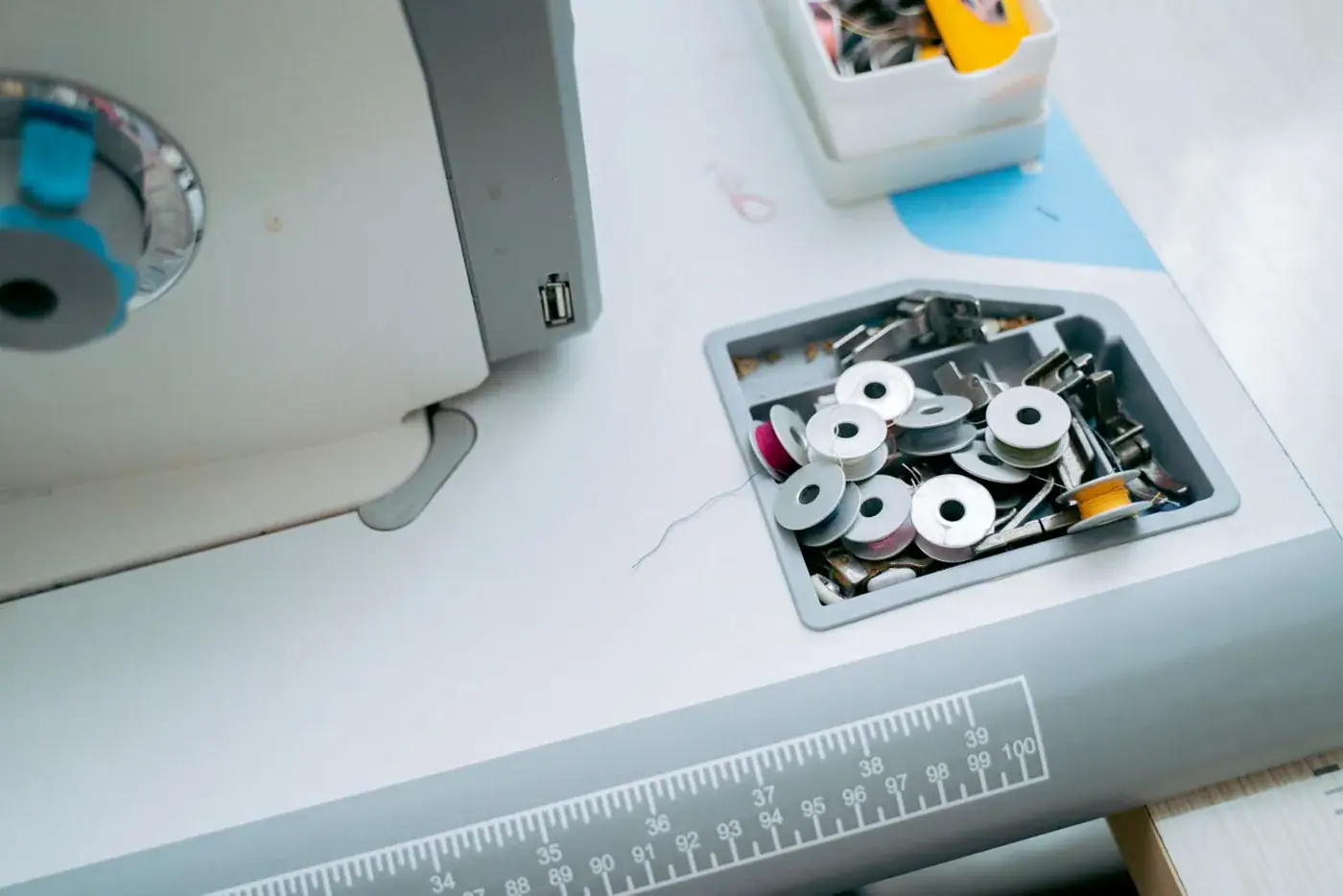
Every inherited box has a tray of metal bits nobody in the family can name. People post photos of them on Reddit’s sewing forums, and commenters there have named the usual suspects:
- Flat tools that look like paint-can openers: sewing machine screwdrivers
- Red discs: stitch cams
- Small brushes: for cleaning lint out of the machine
- An odd little glass jar: an inkwell made to fit a hole in a sewing desk drawer
- Two gadgets that turned out to be a buttonhole attachment and an eyelet press
The cams are the fun one. A Kenmore owner on r/sewing put it simply: “The red circles in the third photo are cams btw, they allow the machine to make fancy stitches that it can’t normally.”
The buttonhole attachment comes in four Singer styles, and ISMACS sorts them out. The oldest uses no templates. The next uses templates and came in a little “treasure chest” case. A newer one with the same templates came in the “Jetson” case, and the newest takes bigger templates that load from the top. Don’t expect a windfall, though. A vintage sewing shop priced a complete buttonholer from about 1948, with its booklet and all five templates, at $24, and it sold out.
Singer was packing up extras like these long before your box was filled. A Singer employee named John M. Griest patented an attachment box in 1889, and Singer went on to make 14 numbered styles. They held hemmers, binders and rufflers along with “spare needles, bobbins, screws, and screwdrivers.” That’s why the screwdrivers keep turning up. Keep the whole tray with the machine it belongs to.
#10 A drawer full of paper patterns
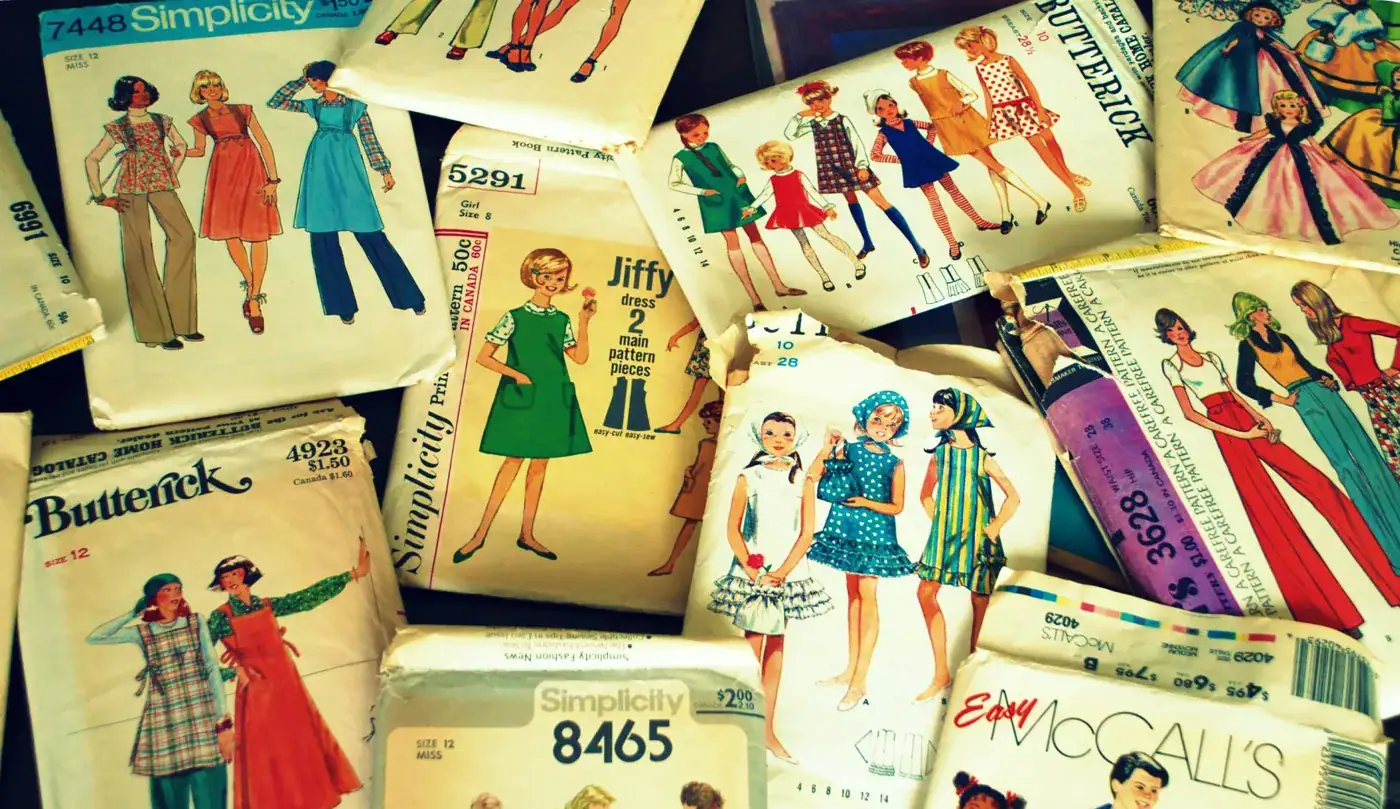
Most patterns bring a few dollars, not a few hundred. A 35-cent pattern from 1953 comes to about $4.40 in 2026 money by the Consumer Price Index, and an uncut one from that era usually resells for more. You can run the same sum with your own pattern’s printed price on the government’s inflation calculator. A reseller’s guide puts an uncut pattern from the Big Four (Butterick, McCall’s, Simplicity and Vogue) from the 1940s through the 1970s at $15 to $45. A 1990s one brings $8 to $14. And that’s if it sells at all.
“These patterns rot at estate sales unsold and at thrift stores by the thousands.” (An antique dealer on r/ThriftGrift)
The exceptions are uncut Vogue designer lines. LoveToKnow’s Vogue guide puts the American Designers line at $20 to $400 and up. It reports a 1950s Claire McCardell dress pattern selling for “just under $400” and a bridal gown pattern for “about $350.” Paris Originals and Couturier Designs are the other lines to pull out of the drawer.
Uncut is what everyone wants, though it moves the price less than you’d think. The reseller guide says being uncut typically adds $5 to $20. Olwen “Olly” White, a British blogger and YouTuber who collects and sews from vintage patterns, puts the catch neatly in one of her videos: “Factory folded is always uncut. Uncut, on the other hand, isn’t always factory folded.” She also warns that a pressed-flat pattern can fool you: “What some people do is they’ll iron the creases out,” she says.
You can date the envelope in seconds. A five-digit ZIP code means it was printed after 1963, and a “new sizing” label points to 1968 to 1970.
Is this pattern really uncut? – It lies flat, about the size of its instruction sheet. – The tissue feels like “a single organized bundle,” not “loose leaves,” as the reseller guide puts it. – No pinking-shear edges, no name across the envelope, no pencil notes. “If it’s got pinking shear markings on it, pay particular attention,” White says. – The count matches the envelope back. Count by tissue sheet, since one sheet can hold several pieces.
#9 Printed feed-sack fabric
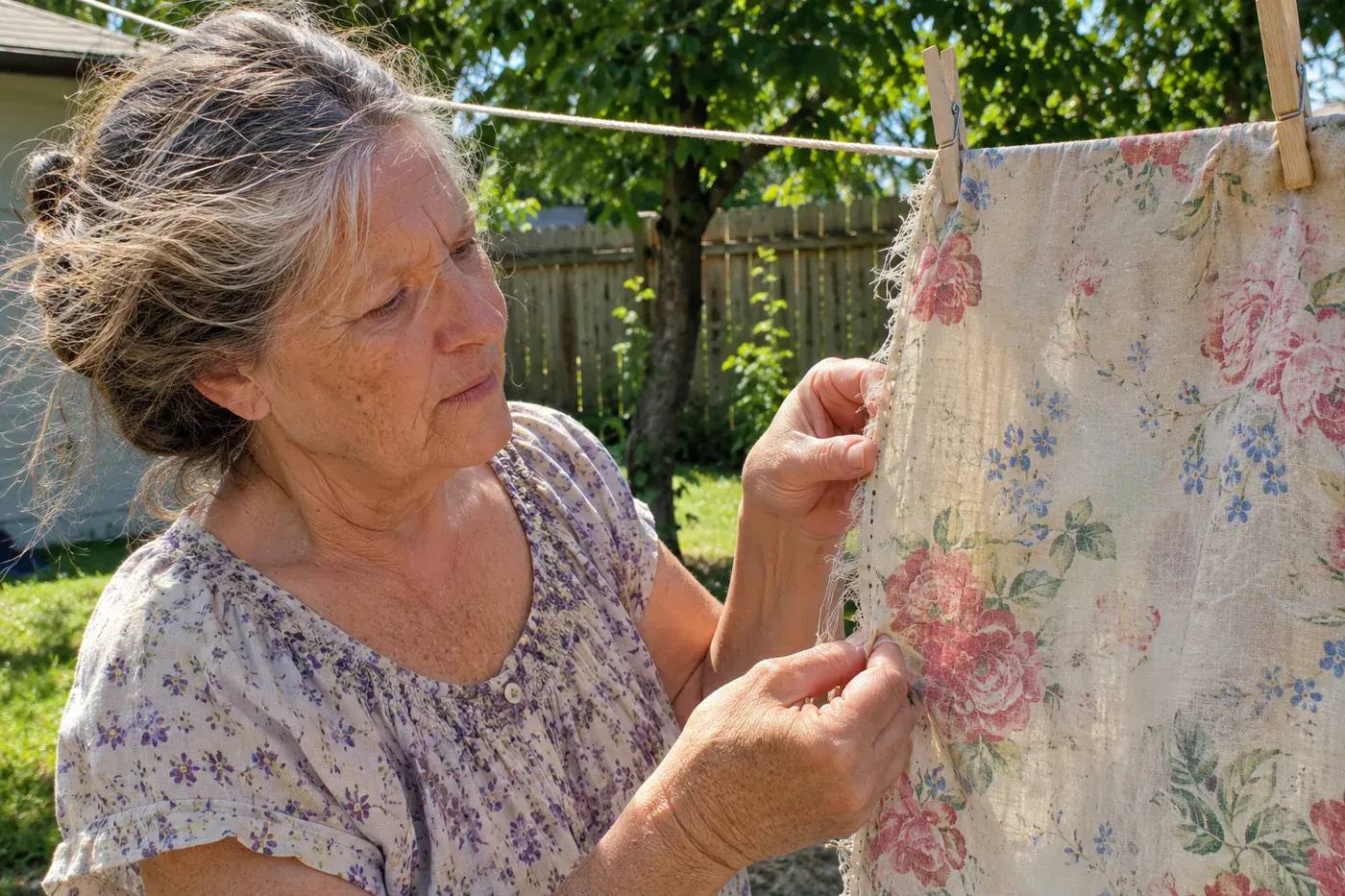
Run your fingers along the edges of that faded floral cotton. A line of tiny stitch holes along one side is one of the two signs the North Dakota State Museum gives for a real feed sack. The other is a printed label, if it hasn’t washed away.
Mills packed flour and feed in printed cloth from the 1920s to the 1950s. In rural places, sack dresses lasted into the 1960s, historian Einav Rabinovitch-Fox wrote in the Saturday Evening Post. By 1937, a booklet called Sewing with Cotton Bags had reached 318,000 people, some of them through 4-H clubs. A dress could take five or more bags, though other counts run lower. If you ever stood in a feed store pointing at the sack with the print you wanted, you know how that went.
That’s also why so little survived. The museum notes the sacks were used until they wore out, “so they were rarely passed down in families.” Here’s what some of it has brought on Etsy, according to sales tracked by the collecting blog Adirondack Girl @ Heart:
- One yard, blue with red flowers: $44 (2024)
- One yard, green and yellow: $32 (2025)
- Two and a half yards, blue with pink roses: $25 (2020)
- Six small scraps: $12 (2020)
A single yard in a good print outsold two and a half yards. The same guide puts whole sacks at $30 to $50, and feed-sack quilts in very good to excellent condition at $150 to $300 or more. Vintage fabric collectors on Reddit say it’s harder to find every year, and they think twice before cutting into a yard of it.
#8 A quilt or an unfinished quilt top
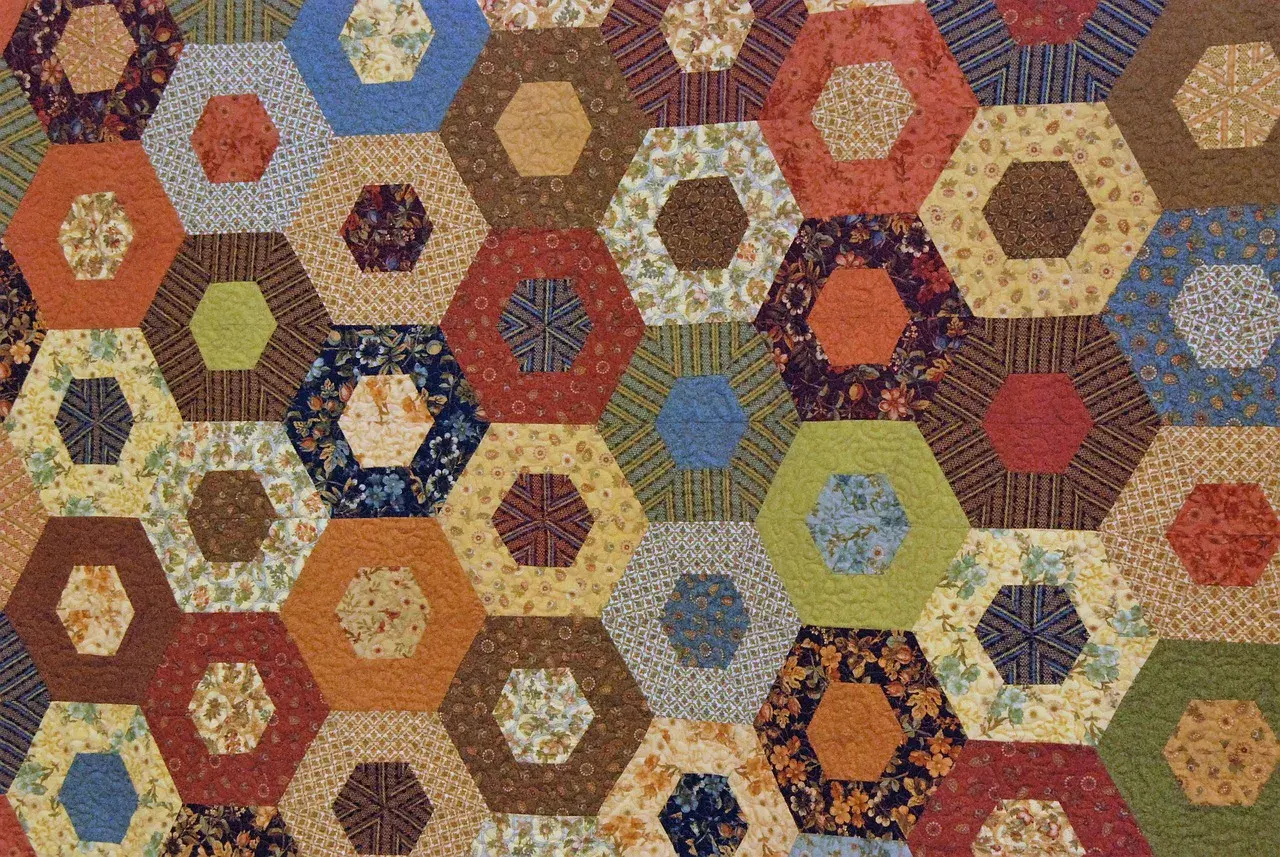
A quilt’s story can be worth as much as its stitches, but only if somebody writes it down.
On Antiques Roadshow in 2021, appraiser Katy Kane valued an 1891 crazy quilt top at $1,200 to $1,500 retail. That was just the top. “If it had the back, you could double that,” she said.
So should you finish that half-done top? Quilter and teacher Anita Shackelford is blunt about the cost: “The top will lose its antique status.” Finishing can still be the right call, as long as it’s recorded. “Appraisers will tell you that a recently completed quilt must be documented with its finish date,” she says. Sew a label on the back with who pieced it and the year it was finished. If a top looks historically important or good enough for a museum, she says to leave it unquilted.
Condition is the other half. Antiques appraiser Dr. Lori gives the scale appraisers use in one of her videos: “It goes pristine, mint, excellent, very good, good, fair, poor, and forget it.” She valued a damaged 1854 coverlet at about a sixth of what it would bring in good shape. She also says a written history is a big part of a quilt’s value, and that a piece loses some of it when it leaves the family, because the history breaks.
While you still remember, write down the answers to the questions an American Quilter’s Society-certified appraiser will ask, listed by the Northern Berkshire Quilters Association: “When the quilt was made? Who made the quilt? Was the quilt a gift? For whom?”
Then keep it out of the washing machine. The International Quilt Museum says to “consult a textile conservator before washing a quilt or heirloom textile.”
#7 Chunky Bakelite buttons and clasps
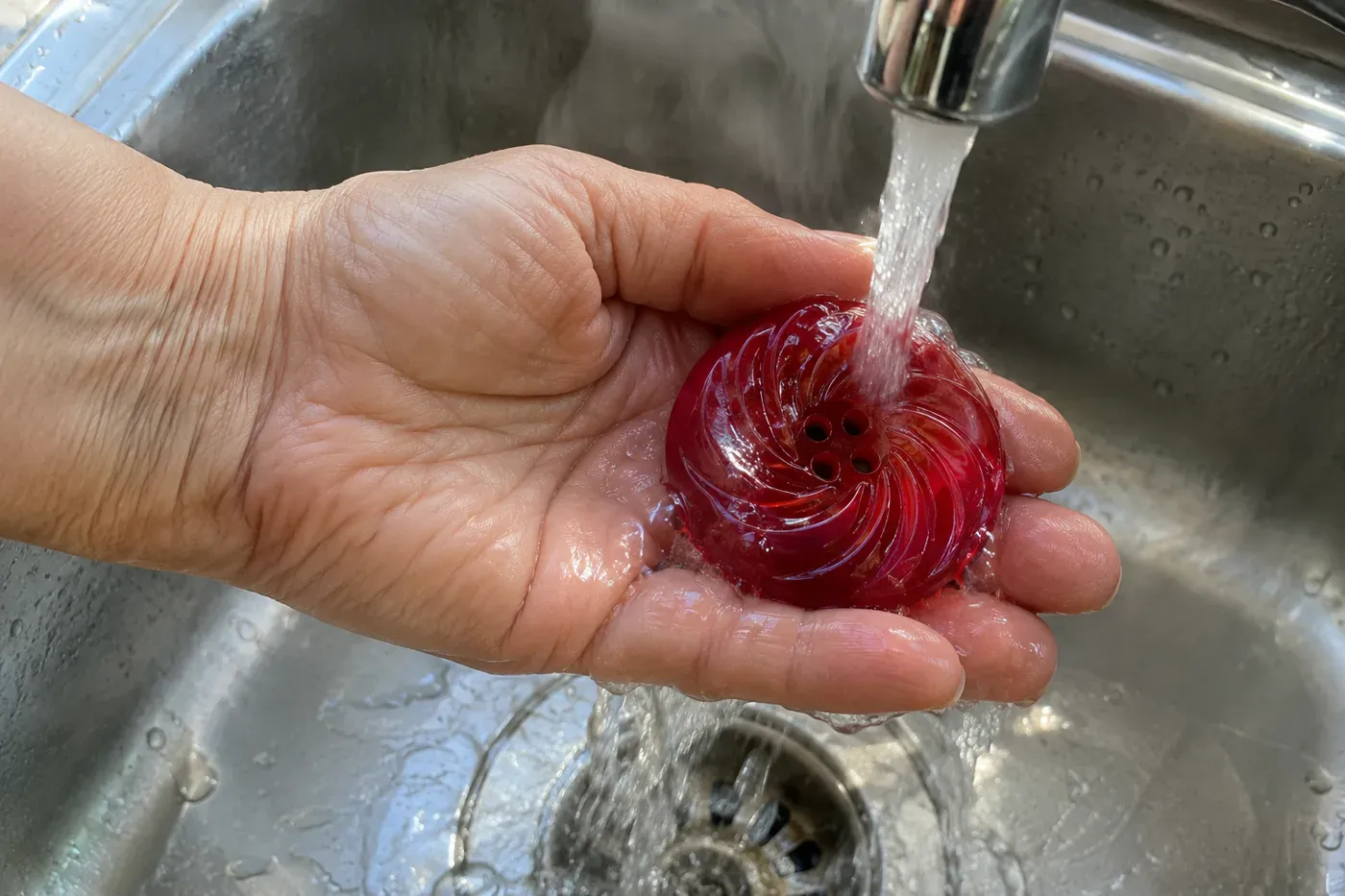
Bakelite was the first fully synthetic plastic. Leo Baekeland developed it in New York in 1907, and it was at its peak in the 1930s and 1940s, just when a lot of sewing boxes were filling up. Those heavy coat buttons that clack like dominoes may be Bakelite, or a later plastic that only looks the part. Two kitchen tests from Oddly Darling Vintage’s guide tell you which:
- Run the button under hot tap water, then sniff. Real Bakelite gives “a sharp chemical smell, often described as formaldehyde or fresh shellac.”
- Put a little Simichrome polish or Formula 409 on a cotton swab and rub a hidden spot. If the swab turns yellow, it’s Bakelite.
Skip the hot-pin test you may have heard about. It scars the piece for good, and it’s a fire risk if the button turns out to be celluloid.
The test matters because of what you call it. Once a button passes, you can search “Bakelite” with the Sold filter from #14 and price it as Bakelite. One that hasn’t been tested just goes back in the tin.
#6 An advertising needle book from a local business
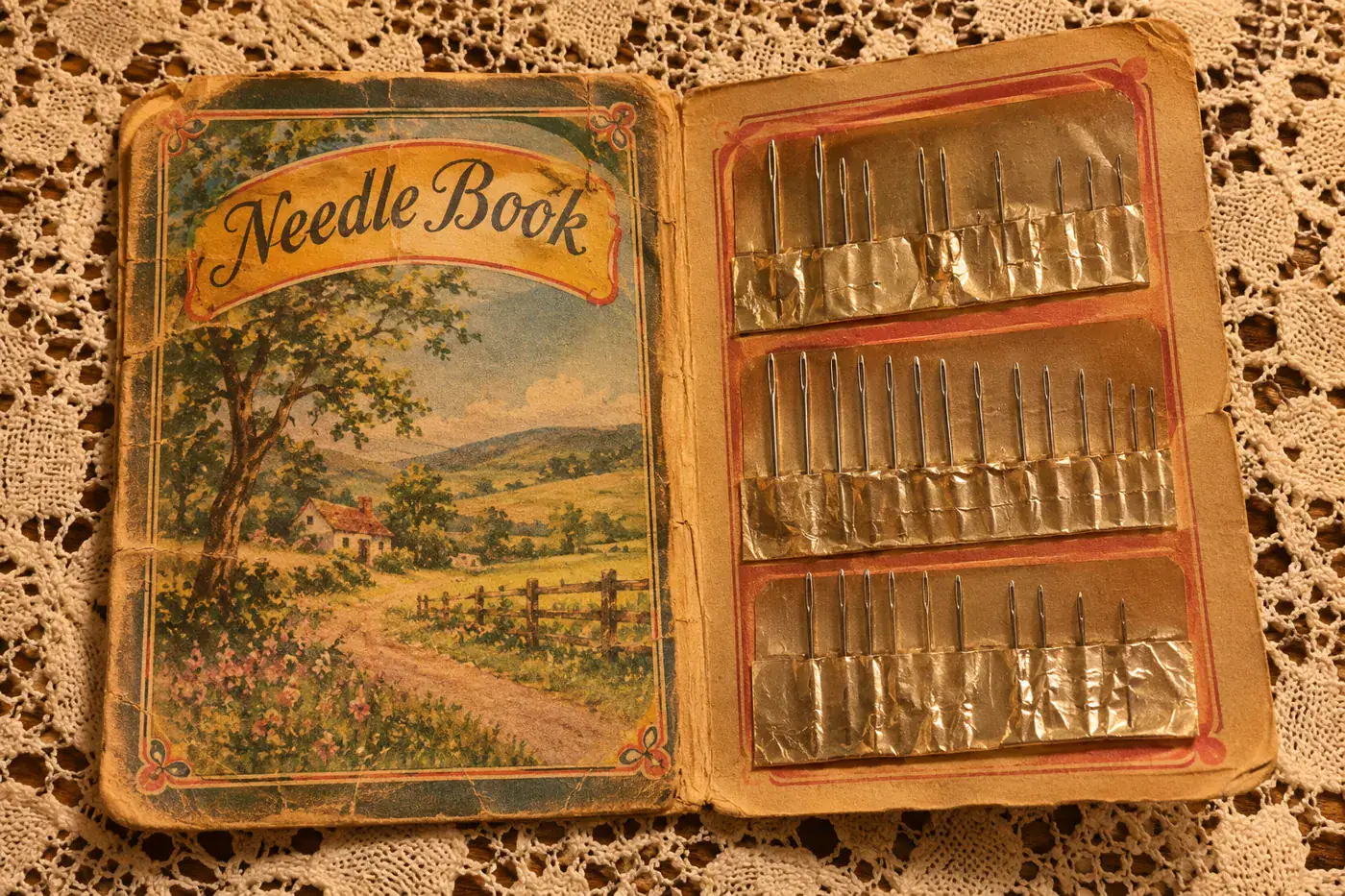
You know the one: a folded card with a painted scene on the cover, rows of needles in foil inside, and the name of a bank or dry cleaner that closed long ago. It was free. Banks, dry cleaners, insurance companies and five-and-dimes gave these away from the early 1900s through the middle of the century, according to Craft Remnants’ history of needle booklets.
Dating one takes seconds. Look for the country mark. Many booklets stamped “West Germany” date from 1949 to 1990.
Collectors of vintage sewing notions look for the original needles and foil still in place, a business that no longer exists, a country-of-origin mark and mid-century artwork. So leave the needles in, even the ones that have gone a little dull. And if the shop on the cover was in your hometown, that one stays with you.
#5 A brass sewing bird clamped to the table
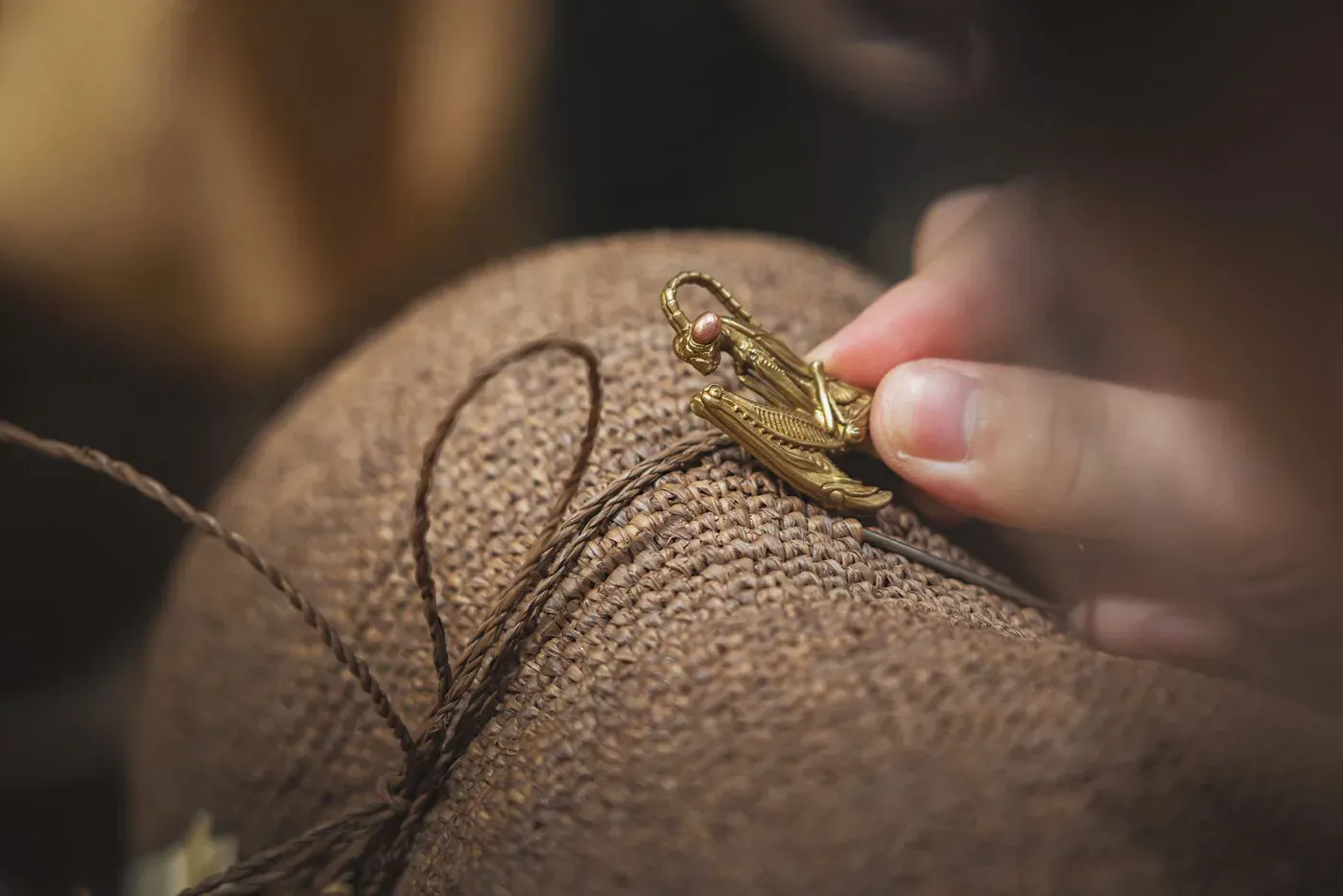
It clamps to the edge of a table, and its beak holds one end of your fabric taut so both hands are free for hand sewing. Why one is in the box at all is the sweeter part. Sewing birds “were regarded as a sign of affection and became established as a luxury wedding present,” writes Heather Munro of the Western Illinois Museum. Yours may have been somebody’s wedding gift before it was a tool.
Its age may be stamped right on it. The first American sewing-bird patent went to Charles Waterman of Meriden, Connecticut, in 1853, and “The patent info is stamped into the edge of the bird’s wing.” Tilt it toward the light and read along the wing.
One catch: Singer made sewing birds as novelties as late as 1980. A Singer bird can be younger than you are.
#4 A wooden spool cabinet from a thread company
If the sewing room had an oak cabinet with shallow drawers and a thread company’s name on it, that cabinet may beat everything in the box. These were store fixtures. Two Clark’s O.N.T. cabinets sold at Jeffrey S. Evans & Associates, an Americana auction house, in 2024, and both beat their estimates:
- Early 1900s oak, two drawers, etched glass panels: $212.50 with premium, against an estimate of $100 to $200
- Oak, six drawers, with a decal on the back for counter display: $584.25 with premium, against an estimate of $200 to $300
Count the drawers and check the back. The bigger cabinet with the display decal brought nearly three times as much. It’s heavy, too, so just like a cabinet machine, a buyer who can pick it up saves everyone the shipping.
#3 A tatting shuttle tucked in with the thread
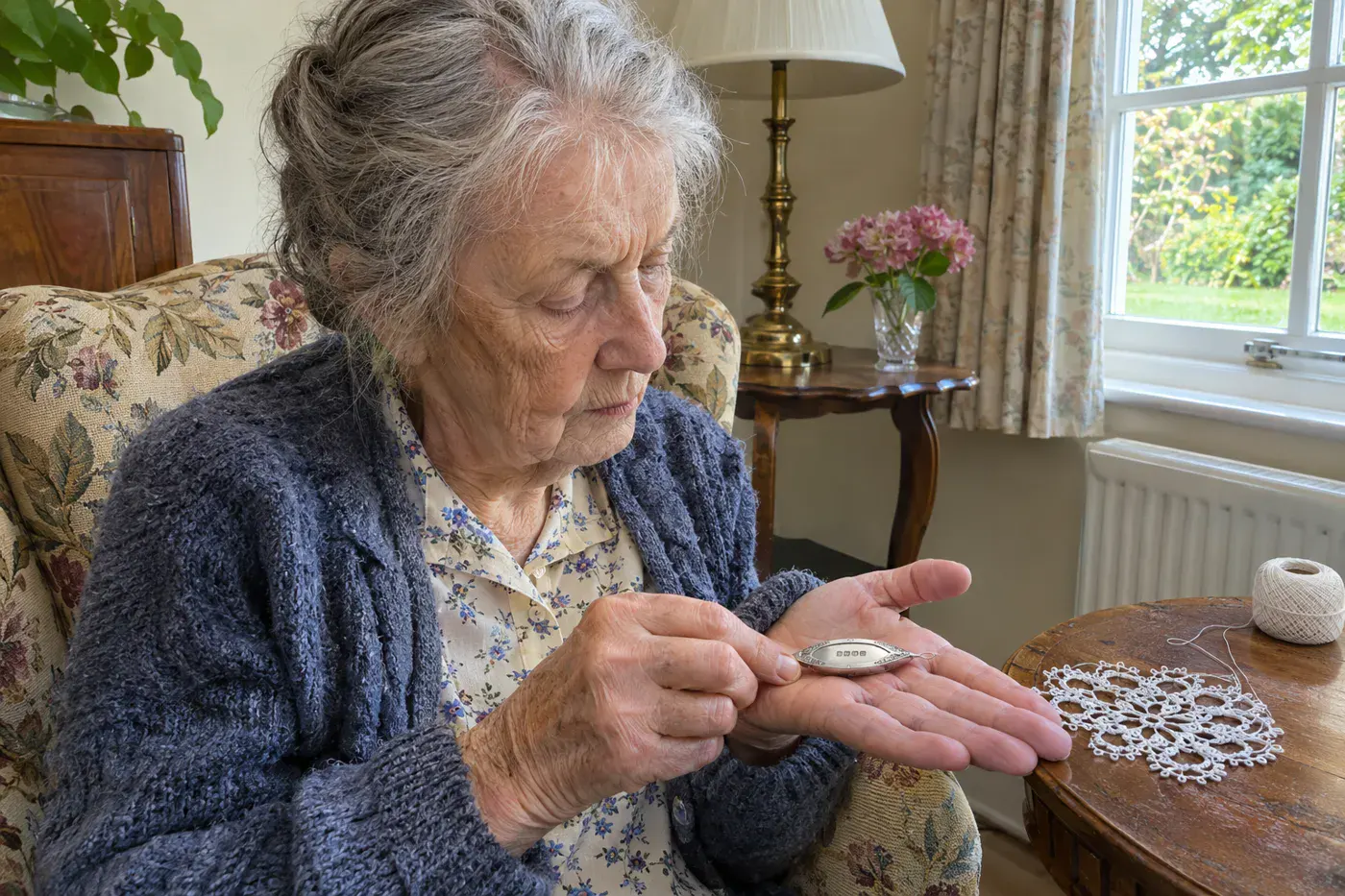
It cost a dime. Stores once sold celluloid tatting shuttles for ten cents and metal ones for twenty, says the collector behind Tatting Collector. A sterling one brought $1,226 at a collector’s auction in 2021. Sterling shuttles turn up from makers like R. Blackinton & Co. and Webster, so turn the shuttle over and look for a sterling mark before you assume it’s base metal.
A plastic one has a story of its own. After 1913, celluloid rivet shuttles began coming in colors other than black. If it still winds smoothly, it’s also still the best tool for the job.
#2 Jewelry zipped into a side pocket
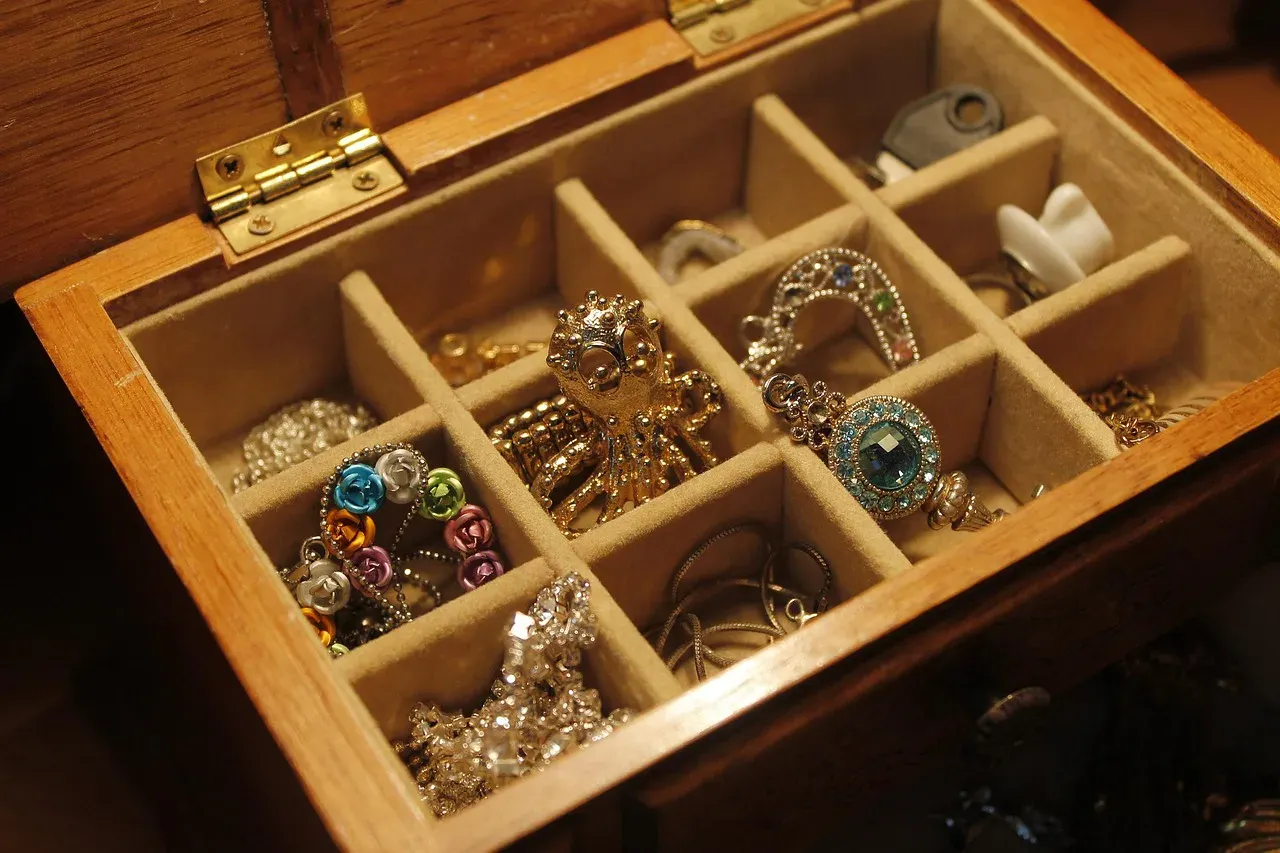
Before any box leaves the house, empty it all the way to the bottom. Thrift shoppers on TikTok say they open every sewing box and tackle box they come across. They report finding jewelry tucked into one and old oil cans in another.
A sewing box made a fine hiding place, because nobody hunting for the good earrings looks under the thimbles. So lift out every tray and look underneath. Unzip the side pockets, run a hand along the lining of the lid, and open every pill bottle and little plastic box rattling around in the corners. Then turn the empty basket upside down over the bed and give it a shake. If anything shines, read its tiny stamp before you guess. Under the federal jewelry guides, “Sterling” or “925” means at least 92.5 percent silver, and a plain “14K” means solid gold. A fraction in front, like “1/20 14K GF,” means a thin layer of gold over other metal. The bags can go after that.
#1 A sweater still on the needles
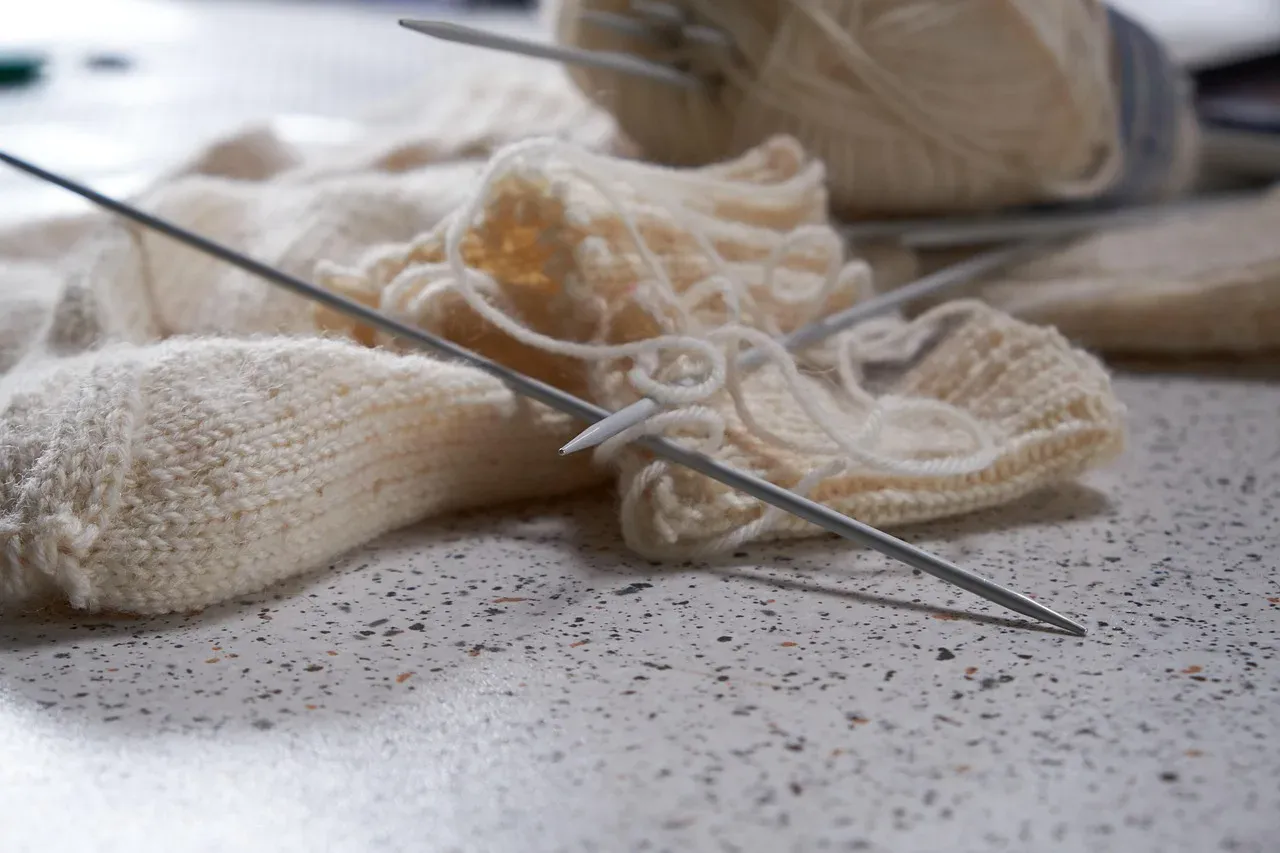
The knitting bag with the needles still poking out is the hardest thing in the box to face, and the easiest one to fix.
A nonprofit called Loose Ends matches unfinished knitting and crochet with volunteers who finish it. Knitters Jen Simonic and Masey Kaplan started it in 2022, and by 2023 it had finishers in all 50 states and more than 60 countries. Simonic describes how a match happens: “Once I get all the information, I start looking in our database and find somebody that’s local and has the talent needed.”
The finishers want the work. “It’s really nice to put the time and energy into something for somebody else, even if it’s a stranger,” said volunteer Alicia Fritter.
Shackelford says it about quilts, but it fits a sweater just as well:
“A finished quilt will be enjoyed, while an unfinished top is usually hidden away.” (Anita Shackelford, on rescuing old quilts)
The finishing itself is free. You’d cover shipping both ways if the project has to be mailed, plus any extra yarn or supplies it needs. To start, fill in the online form on the Loose Ends site. Then put the needles, the leftover yarn and the pattern back in the bag together, and don’t pull out a single stitch.
The bottom line
Sold prices settle the money question quickly. Most of a sewing box brings tens of dollars, and the rare piece worth hundreds usually gives itself away in a small detail: a mark inside a thimble’s tip, a sterling stamp on a shuttle, barely worn gold leaf on a Featherweight.
So give the first hour to the marks, with a flashlight and your phone, before you touch a single button. Anything with no mark, no story and no match in the Sold results can go to Goodwill.
What’s left is the part no auction will price: the thimble dented to fit one particular finger, the pattern with a name written across the envelope. A dealer would mark those down. You might be the one person who’d pay full price.
Bonus: Five quick saves for what you keep
- Keep quilts out of plastic bags and away from bare wood, cedar chests included, as University of Nebraska-Lincoln Extension advises. Dr. Lori has seen what bad storage does: “If you don’t store it right, you’re not gonna have it. You know who’s gonna have it? The bugs.”
- Put refolding on the calendar. “Every six months, refold those pieces, because the creases get in them and it’s hard to get them out,” Dr. Lori says.
- Test old tailor’s chalk on a scrap first. Quiring says only white wax chalk melts away under the iron, and learned it the hard way: “I once used yellow on the white and yeah, that left a permanent mark.”
- Wipe and oil the good shears, and take them in for sharpening now and then. “Just pay to go get them sharpened every once in a while,” Quiring says.
- If you pay for a quilt appraisal, put it in the name of whoever will keep the quilt. The Northern Berkshire Quilters Association says appraisals hold for up to five years and only for the owner named on them.
Questions people also ask
How do I find out what my vintage sewing machine is worth?
Find the serial number, usually stamped on the right side of the machine, and look it up in the free ISMACS database to get the model and year. Then search that model on eBay and tick the “Sold” box, which shows what buyers paid in green. A LoveToKnow guide says most antique Singers sell for $50 to $150, with completeness, working order and location moving the price.
Are old sewing patterns worth anything?
Most are worth little. One reseller guide puts uncut Big Four patterns from the 1940s through the 1970s at $15 to $45. The exceptions are uncut Vogue designer patterns, such as a 1950s Claire McCardell pattern that sold for just under $400.
How can you tell if a thimble is sterling silver?
Look inside the top, the domed tip called the apex, which is where American thimbles are normally marked, according to collector Sue Gowan. US makers stamped a maker’s mark there, such as “S” for Simons or “KMD” for Ketcham & McDougall. Aluminum thimbles with a company name on them are old advertising giveaways, not silver.
Are old buttons in a tin worth money?
As a mixed lot, usually not much. Two full tins sold for $32 before the buyer’s premium in January 2025, and four big jars sold for $120 plus premium in March 2026. Any real value is in individual buttons, and the National Button Society website is a place to start identifying them.
How do you tell if Bakelite buttons are real?
Run the button under hot water and sniff, because real Bakelite gives off a sharp smell like formaldehyde or fresh shellac. You can also rub Simichrome polish or Formula 409 on a hidden spot with a swab, and the swab turns yellow on real Bakelite, says Oddly Darling Vintage. Skip the hot-pin test, which scars the piece and can set celluloid on fire.
Where is the best place to sell vintage sewing notions?
No single place is best, because real sold prices for vintage sewing collectibles have come from regional estate auctions, specialist auction houses and eBay alike. Button tins sold at online estate auctions, Clark’s spool cabinets at an Americana auction house, and fine thimbles at a specialist sale. Wherever you sell, check eBay’s Sold filter first to see what buyers actually paid.