What 17 vintage sewing gadgets did, from the tomato pincushion to the flat screwdriver in the machine drawer, and which ones are worth using, keeping or selling now.
Almost everyone believes the little strawberry on the tomato pincushion sharpens needles. It doesn’t, and #1 tells you what it really does.
The drawer sticks, then gives with a rattle. A pink plastic case slides forward. Behind it are two flat things that look like paint-can openers, a paper needle book from the bank, and a tin of bobbins nobody ever sorted. You’ve seen these old sewing tools a thousand times, and you never learned the names of half of them. Right behind the memory comes the question: does any of it still work?
#17 Seam ripper and the cap that vanished
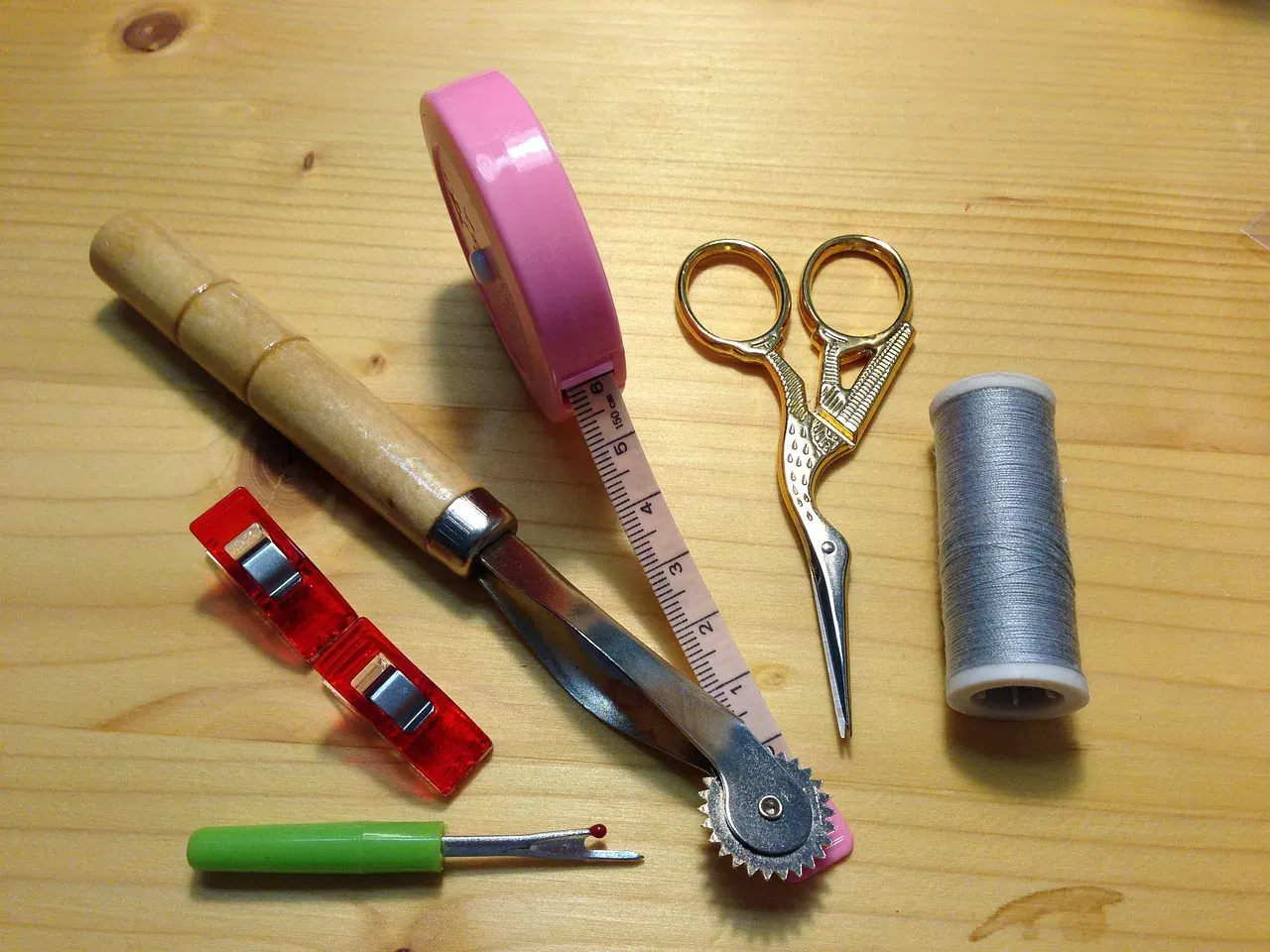
The seam ripper always worked. The little cap never stayed with it. You’d find it a week later under the presser foot, or you’d never find it.
That forked blade is older than it looks. Nobody is sure when the modern seam ripper was invented, but the phrase turns up in a patent from 1898. One prong tapers to a sharp point so it can slip under a tight stitch.
Dritz made seam rippers among its notions, and at least one of them lasted a remarkably long time. A reviewer of the Dritz 608 wrote: “I had this from 1958-2018. Finally, the clear plastic cover had cracked.” That’s sixty years, and the blade wasn’t what gave out. The same model was listed at $2.73 on sale in 2026.
A dull one doesn’t have to go in the trash. Sarai of Seamwork, who says she has been sewing for almost 30 years and teaching for 15, uses small needle files to clean up seam rippers, sharpen scissors and fix dull needle tips. For her, it’s a way to restore your tools yourself instead of buying new ones every time.
A file won’t save a tip that’s bent or snapped off. At under $3, that’s when a new one wins.
#16 Everyday metal or plastic thimble
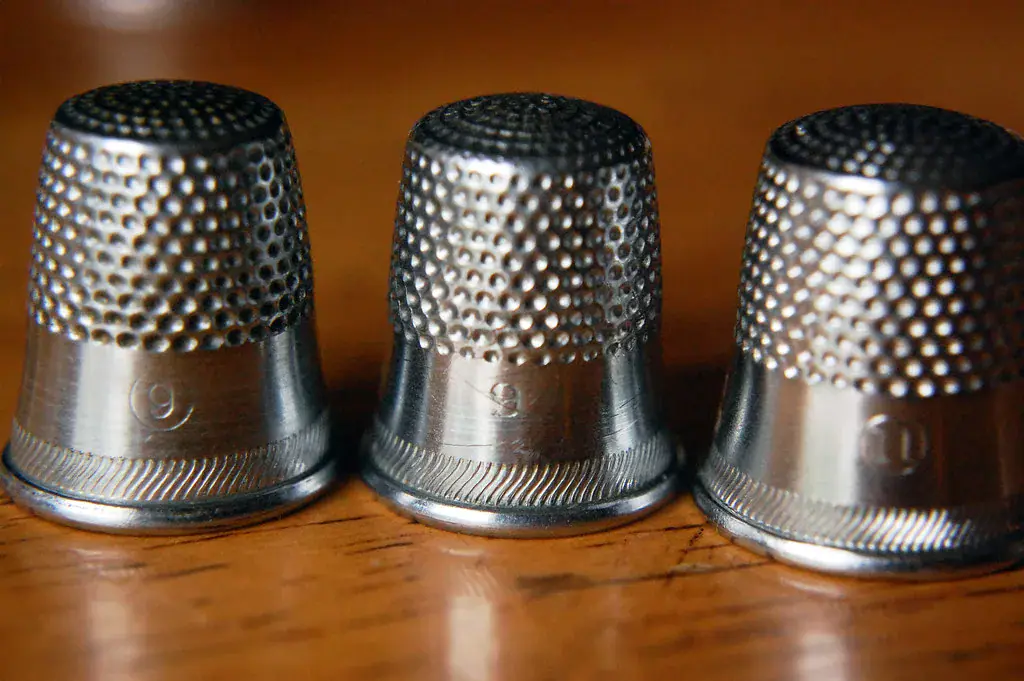
Here’s the honest number on the plain thimble in the basket: close to nothing.
One guide to thimble values says silver-plated thimbles have “very little intrinsic value,” since their melt value is essentially zero. Even a plain sterling one worn smooth trades near its melt value, about $1 to $7. A needle-punched top, a split or a repair brings it lower still.
That’s good news, really. It means you can wear it without guilt.
If Mom’s always pinched your finger or slid right off, it was never your fault. Clover’s thimble advice starts with “One size does not fit all.” Their leather Coin Thimble has a dimpled metal disc set into the pad, for “the comfort and feel of a leather thimble with the durability” of metal.
Keep hers on the windowsill where you can see it, and sew with one that fits.
#15 Button tin or button jar
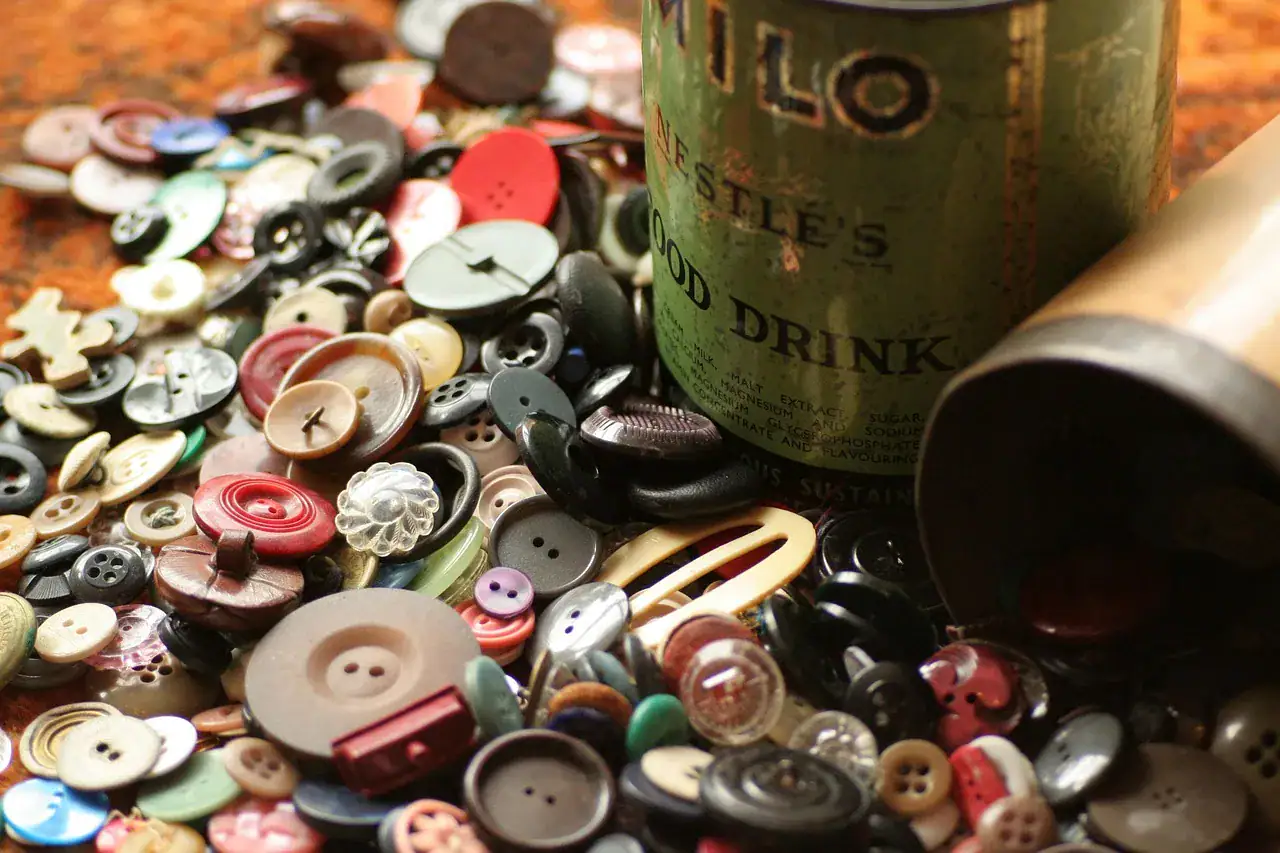
You tip the tin and the buttons pour out with that sound, a dry rush like rain on a car roof. Cardigan buttons, coat buttons, a few from a dress nobody can place anymore, and always one odd glass one you weren’t allowed to keep.
Old doesn’t mean valuable. A button guide from Pharm LLC puts it flatly: “Age alone does not determine value.” A jar of plain shirt buttons is still a jar of plain shirt buttons, however long it sat on the shelf.
Worth pulling out of the pile
- Bakelite
- Buttons in unusual colors, or carved ones
- Figural buttons, shaped like a thing instead of a plain circle
- Leave out heat or chemical tests: the same guide warns they can damage old buttons
If you want a second opinion, the National Button Society has been at this since 1938. It offers a Beginner’s Guide, lessons it calls Button University, and state and local clubs. Membership starts at $45 a year, so start with the Beginner’s Guide before you join.
The odd glass one is the button to bring along to a club meeting.
#14 Wooden darning egg for mending socks
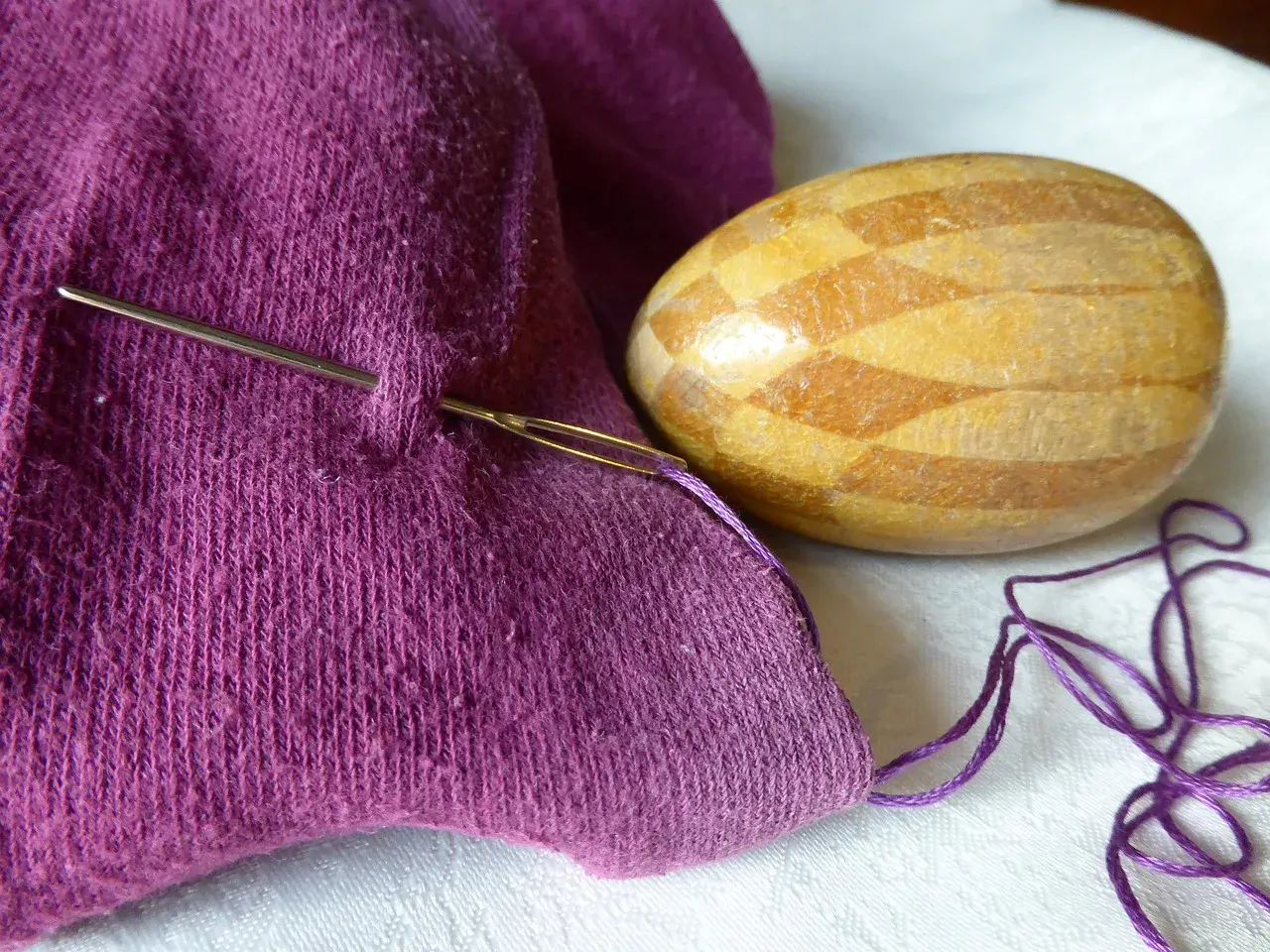
Hand someone under 40 a darning egg and watch them turn it over, looking for the part that does something. You already know: the egg goes inside the sock.
Here’s the method, from a step-by-step darning guide:
- Turn the sock inside out and slide the egg in under the hole so the knit pulls taut.
- Stitch running rows across the hole, starting and stopping about 1 cm (a scant half inch) past it on each side.
- Weave across those rows, over and under, until the hole is filled.
Lost the egg? A tennis ball does the same job. The guide suggests a light bulb too.
Is it worth the time? For a good wool sock you love, yes. For one out of a drugstore six-pack, probably not.
#13 Sewing machine oil can and its long spout
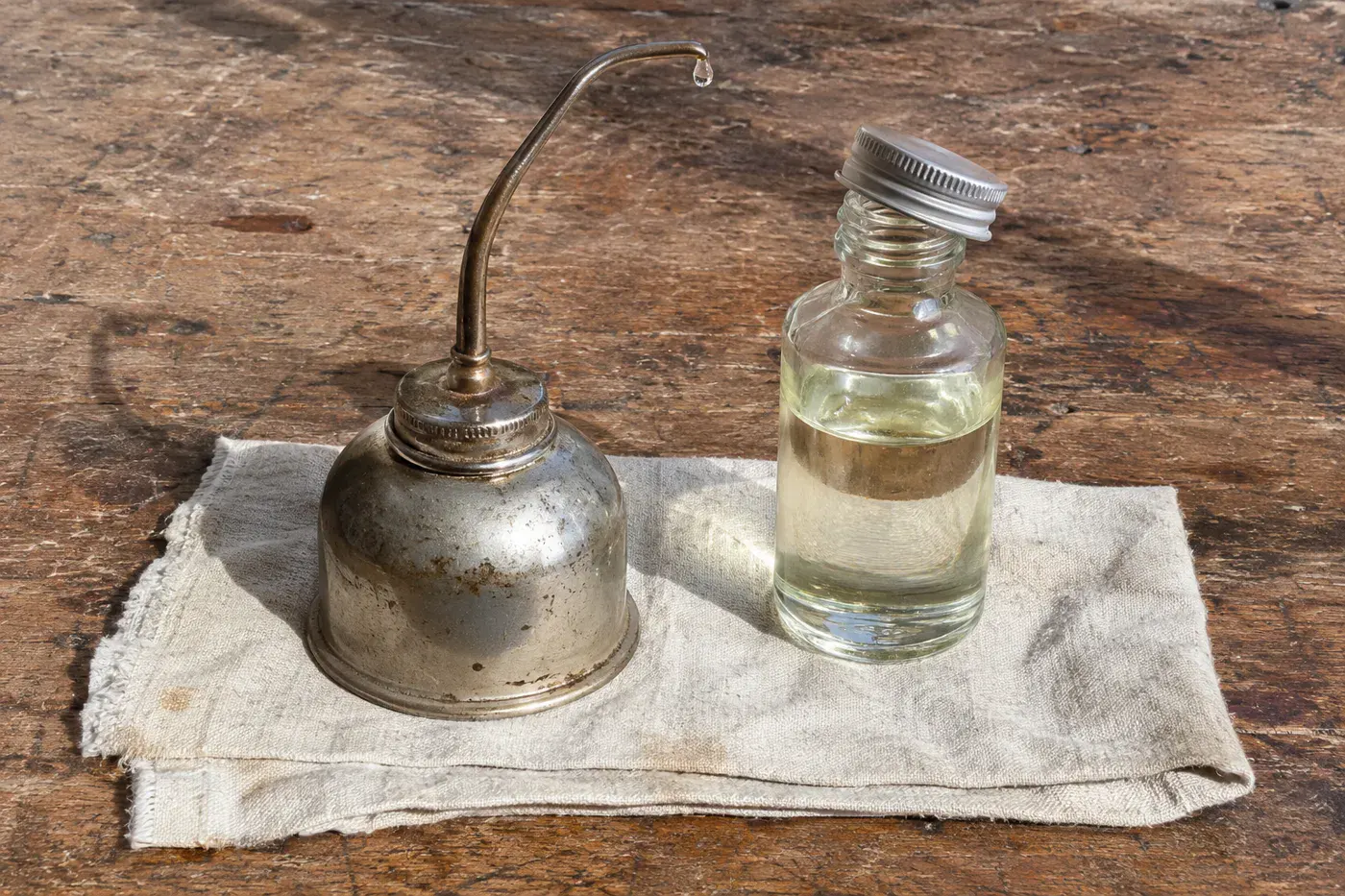
The bottle was small, the spout was long, and the rule was one drop. That rule still stands.
A care guide for vintage Singers says to use proper sewing machine oil only, a single drop per oil hole, after you’ve cleaned out the lint. Then it lists what never goes in:
- 3-in-1 oil
- Household oil
- Car oil
- Penetrating oils, including WD-40
If anyone in the house ever reached for the garage can instead, now you know it was on the never list.
The bigger surprise is that some machines don’t want oil everywhere. Singers with a potted motor, like the 15-91 and 201-2, take motor grease in their grease cups, and the old manual doesn’t mince words: “Never, under any circumstances, use oil in the grease cups.”
Keep the old can on the shelf for the memory and oil from a fresh bottle labeled sewing machine oil. One vintage-machine sewer on Reddit’s r/vintagesewing sums up the deal: thread it right and keep it oiled, and an old machine keeps on sewing.
#12 Chalk hem marker and the squeeze bulb
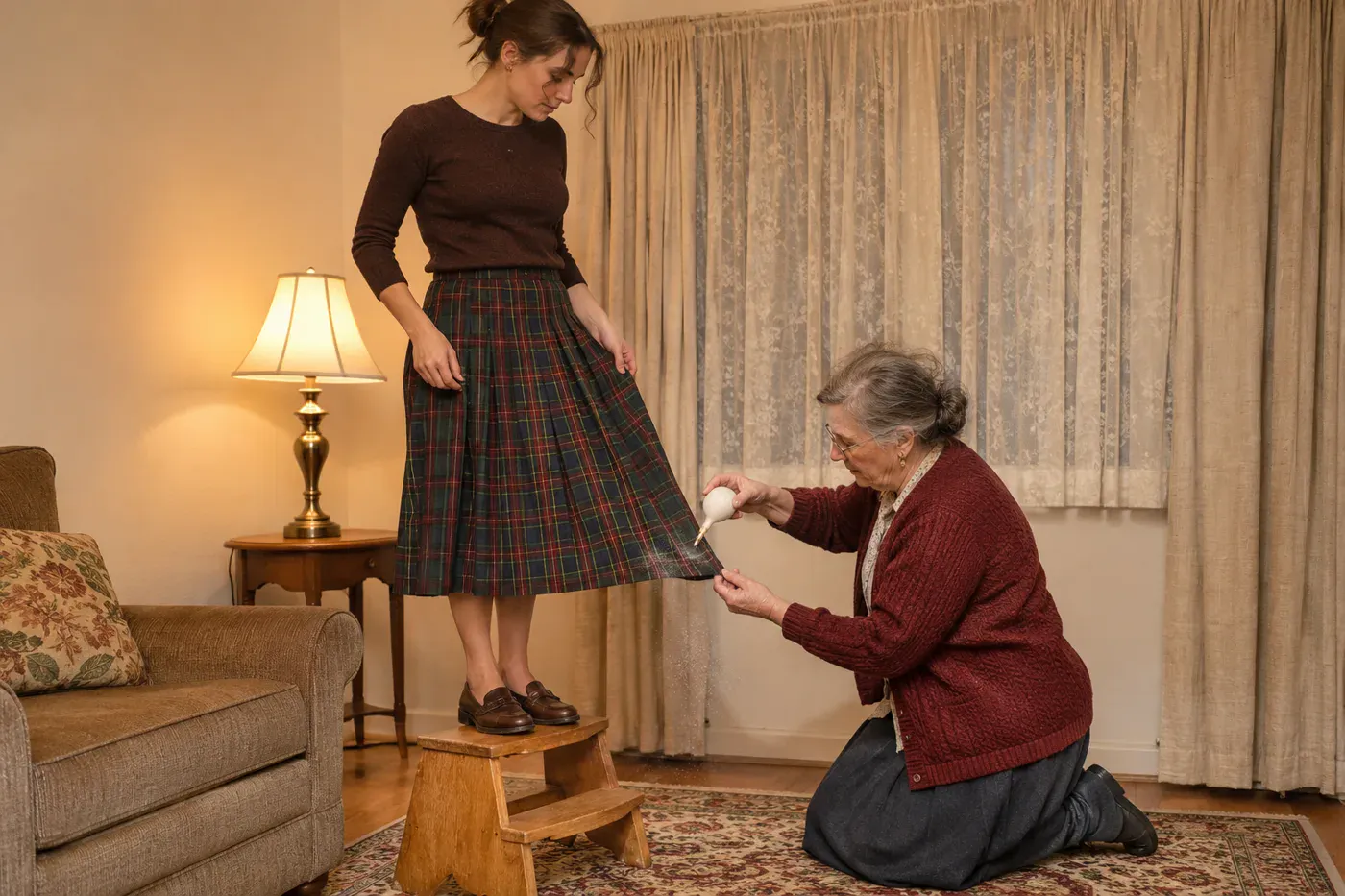
You stood on a kitchen chair, or the coffee table if it was sturdy, and you were told not to move. Not your arms, not your hips, not your head to see what was going on down there.
Somebody knelt beside you with the marker on the floor. Squeeze. A soft puff, and a little chalk line on the skirt.
“Turn.”
You shuffled a quarter turn on the seat. Squeeze, puff. “Turn.” Around you went like a slow music box, chalk dust settling on your shoes.
If the marker survived and it’s a Dritz #699 Deluxe Chalk Hem Marker, Dritz’s own store lists the #681 chalk refill made for it at $2.69, though it showed as sold out in November 2026.
#11 Electric scissors buzzing on the table
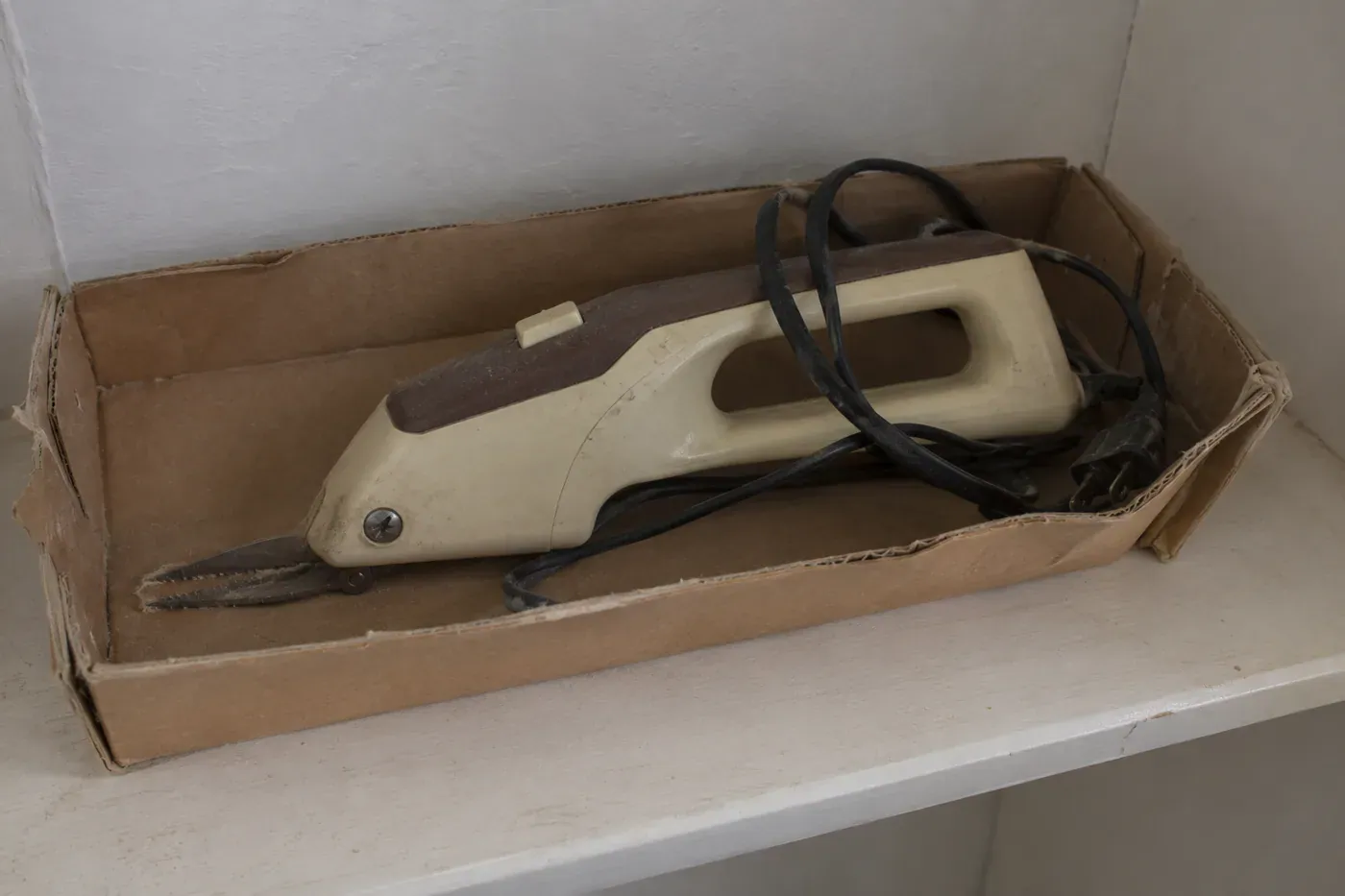
You heard them from the next room: a thin, determined buzz, like a mosquito with a job.
They were the new thing for a while. Dritz, the company behind the seam ripper in #17, developed electric scissors among its gadgets. The cord trailed off the edge of the table and the little blade nibbled forward through the fabric.
If a pair turns up, think twice before plugging it in. The Consumer Product Safety Commission warns that old appliances may not be properly grounded and may have frayed wires, and it says to throw them out rather than resell or donate them. A pair that old belongs on the shelf, not on the cutting table.
#10 Wire needle threader with the coin head
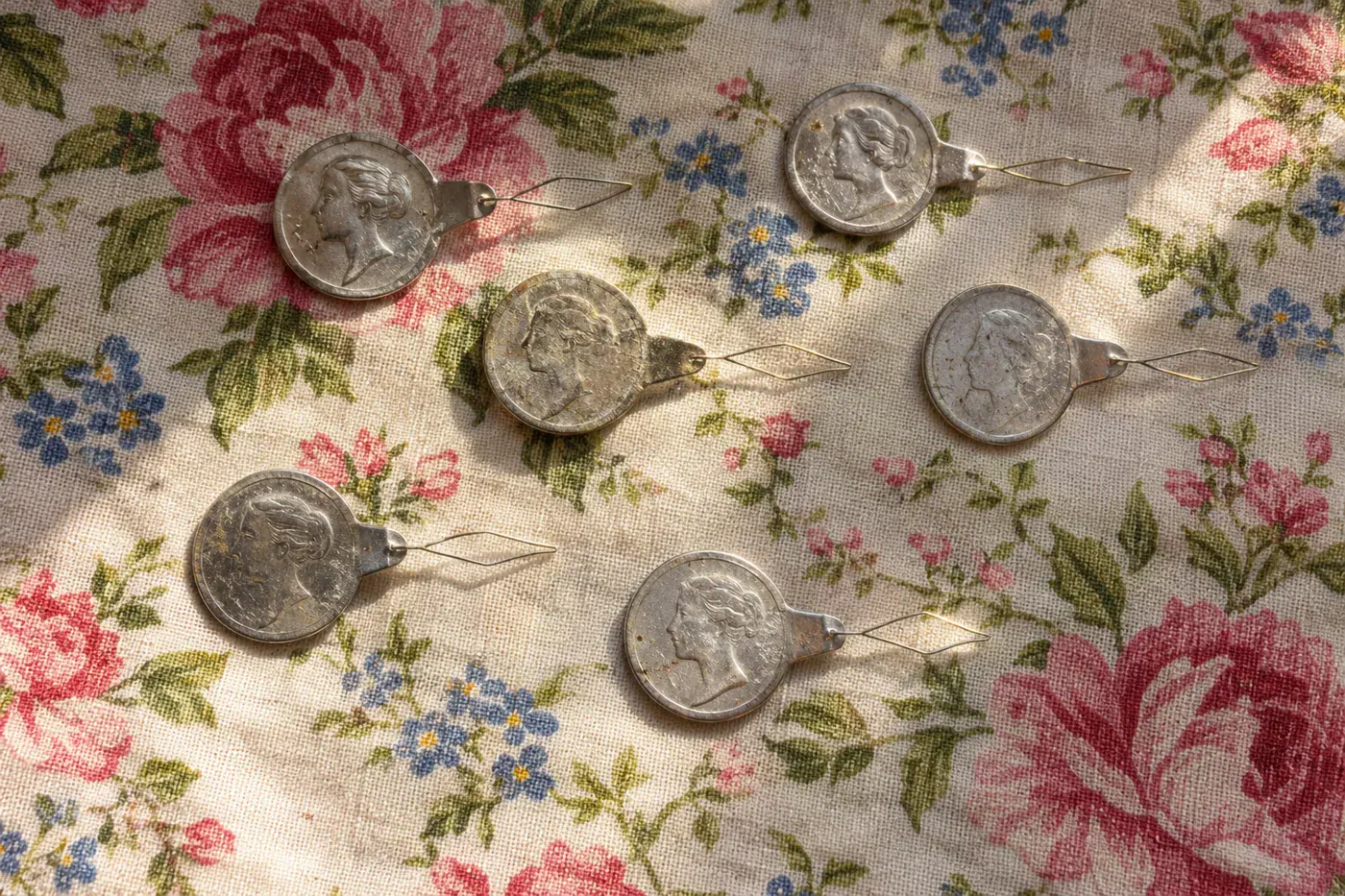
It came free with everything: tucked into needle books, taped to cards, stuck in the pincushion. A thin wire diamond on a little disc of tin or plastic, and on the disc, a woman’s face in profile.
Who is she? Even the reference pages hedge. The face is possibly Arachne or Minerva, two names from the old myths, and nobody says for sure.
The design is older than the face makes it look. The first known use of this kind of threader in Europe was in the 1700s or early 1800s. So the one you lost in the shag carpet was carrying on a design more than two centuries old.
And it bends if you look at it wrong.
#9 Paper needle books from the bank or grocer
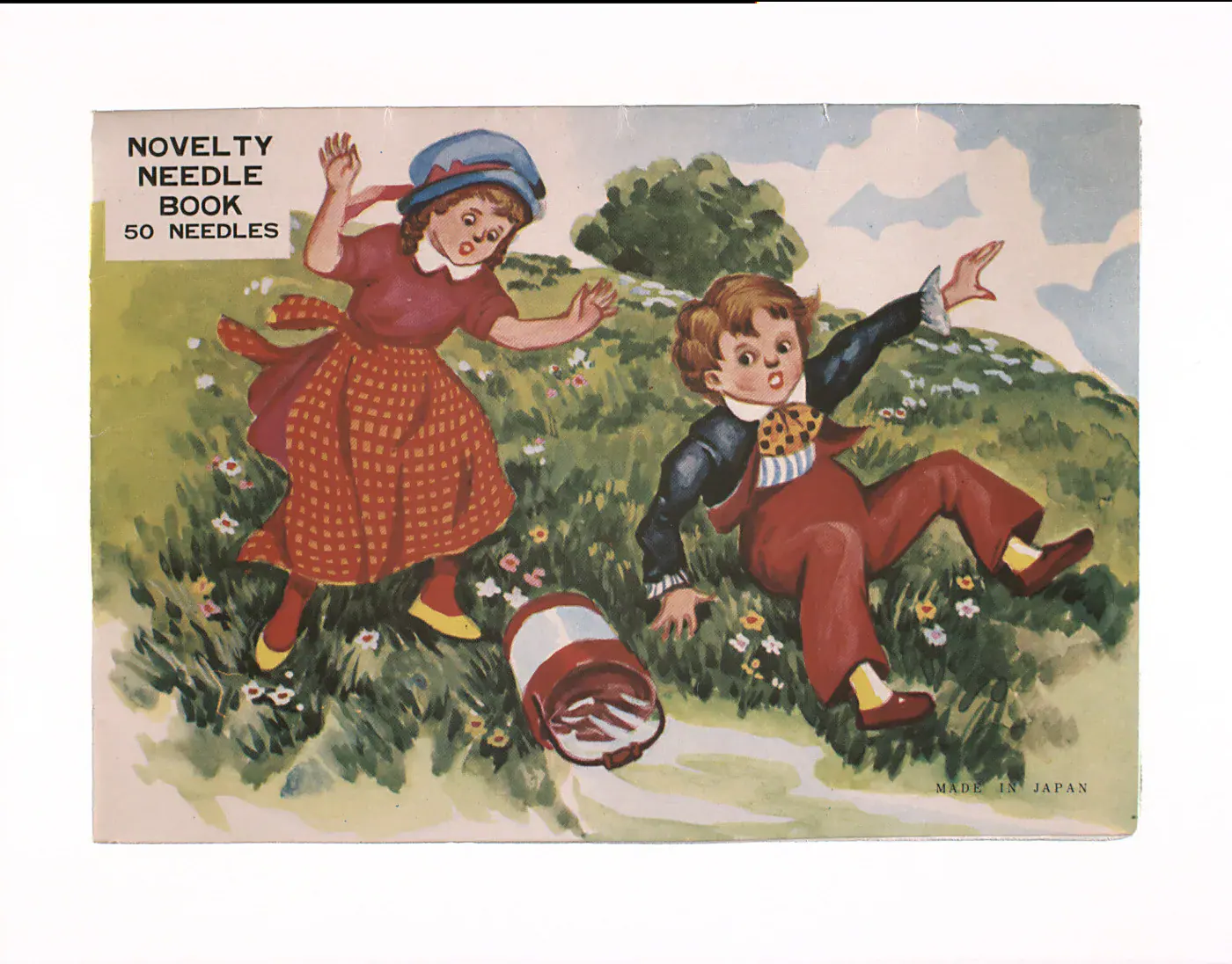
Most of these weren’t bought. They were handed to you across a counter.
Banks, insurance companies, dry cleaners and grocery stores gave them away with their name on the cover. They were printed in West Germany, Japan and the US, and often held a wire threader, so some of the wire threaders in #10 came tucked inside these booklets. The five-and-dime sold them too: a Woolworth one carried a 19-cent price tag.
Most are worth more as a story than a sale. Common five-and-dime needle books sell for under $15. Rare ones bring $25 and up, and a few have passed $100.
Flip yours over. If it says “Western Germany,” it was printed between 1949 and 1990.
#8 Buttonholer attachment in its box
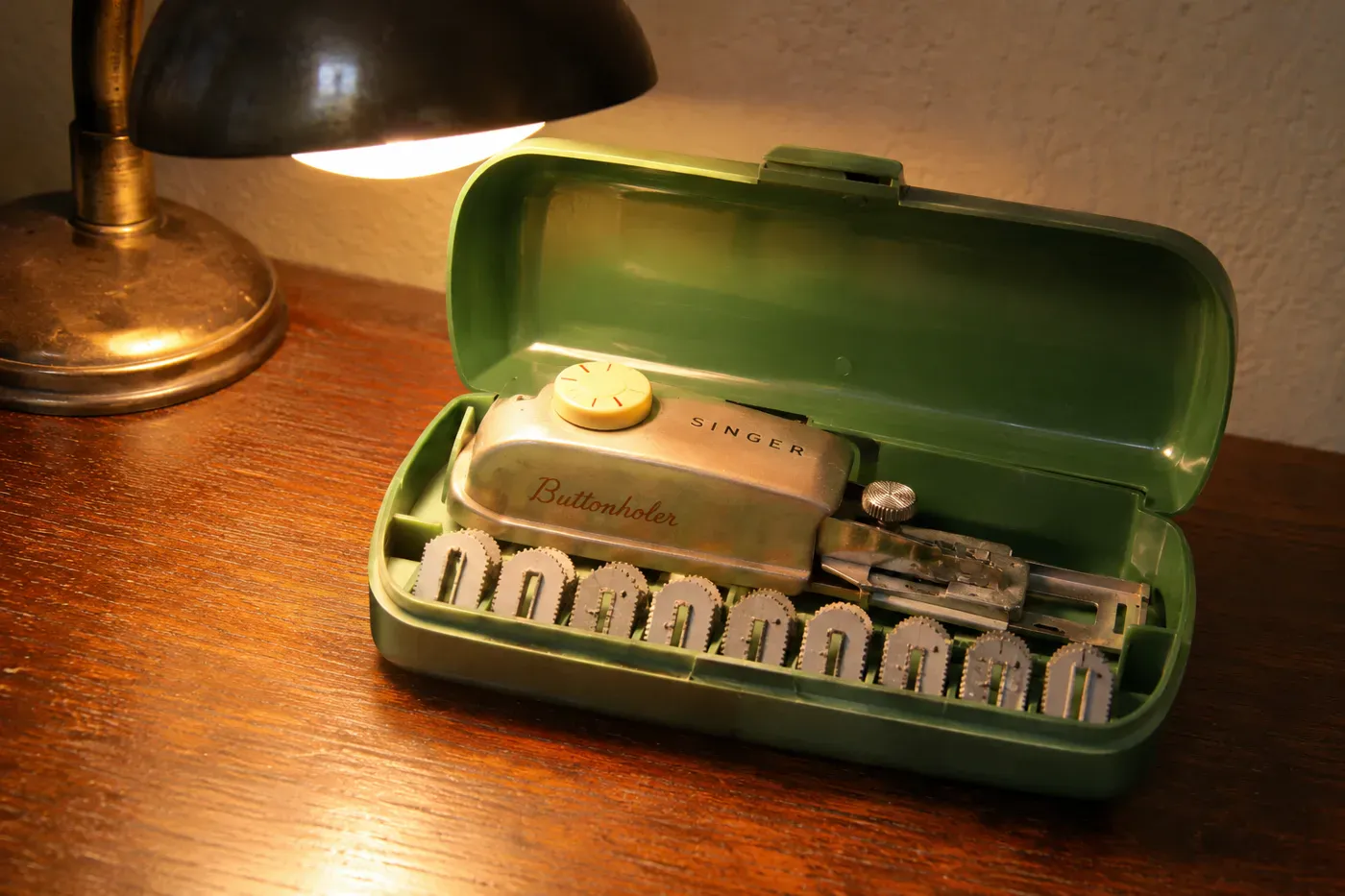
If the case looks like it should have a tiny astronaut inside, you’ve got a 1950s or ’60s Singer. Collectors call the jade-green case on the 489500 the “space ship” or “Jetson” case.
The color of the case tells you a lot. So does the shank type: Singers came in low-shank and slant-shank styles, and the buttonholer has to match the machine.
| Model and era | Made for | Case |
|---|---|---|
| 160506, 1930s and ’40s | Low-shank straight-stitch | Green, oblong |
| 160743, 1930s and ’40s | Slant-shank straight-stitch | Maroon |
| 489500, 1950s and ’60s | Low-shank straight-stitch | Jade green “space ship” |
| 489510, 1950s and ’60s | Slant-shank straight-stitch | Pink |
| Professional, 1960s and ’70s | Zigzag machines | Cardboard box |
Count the templates before anything else. The older models came with 5, and the Professional came with 20.
Don’t expect a windfall. A complete circa-1948 160506, with case, manual, all 5 templates and the plate that covers the fabric-feeding teeth, listed at $24 and sold out. One that fits your machine is worth far more to you on the machine than in a listing.
#7 Rick rack, bias tape and Hug Snug seam binding
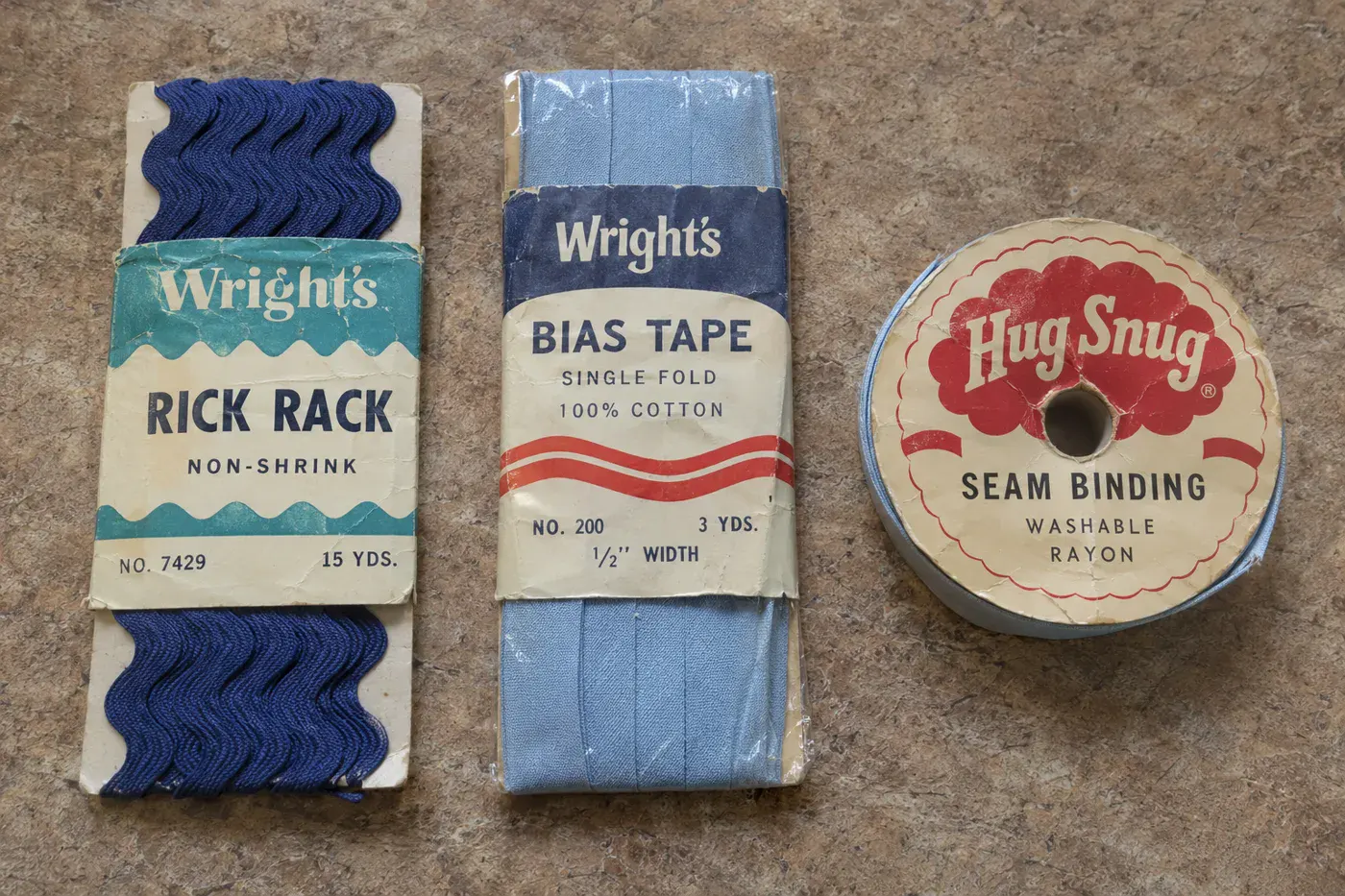
Of all the 1970s sewing notions, these are the ones you can still buy in nearly the same package.
That paper card the tape wrapped around was the whole idea. Wrights, founded in 1897 by William E. Wright, came up with a way to package strips of fabric folded over paperboard and became the largest and earliest maker of packaged bias tape in America. After its parent company went bankrupt, industry veterans bought it in 2025. It’s now based in West Warren, Massachusetts, and it still makes rick rack and bias tape.
Hug Snug seam binding has kept its fans just as long. Sewing instructor Angela Wolf describes it as “100% Rayon, has a satin finish,” good for quick, professional-looking hems. Under her review, a reader named Barbara wrote in 2014: “i’ve been using this product for 56 years.” That puts her first package in 1958.
You may wonder whether to buy one of those bias tape maker gadgets now. Sewers on Reddit argue both ways. Some skip it and fold and press by hand: they don’t make tape often enough, they don’t want a separate tool for every width, and they’d lose it anyway. Others love their makers.
#6 Fashion discs and stitch cams
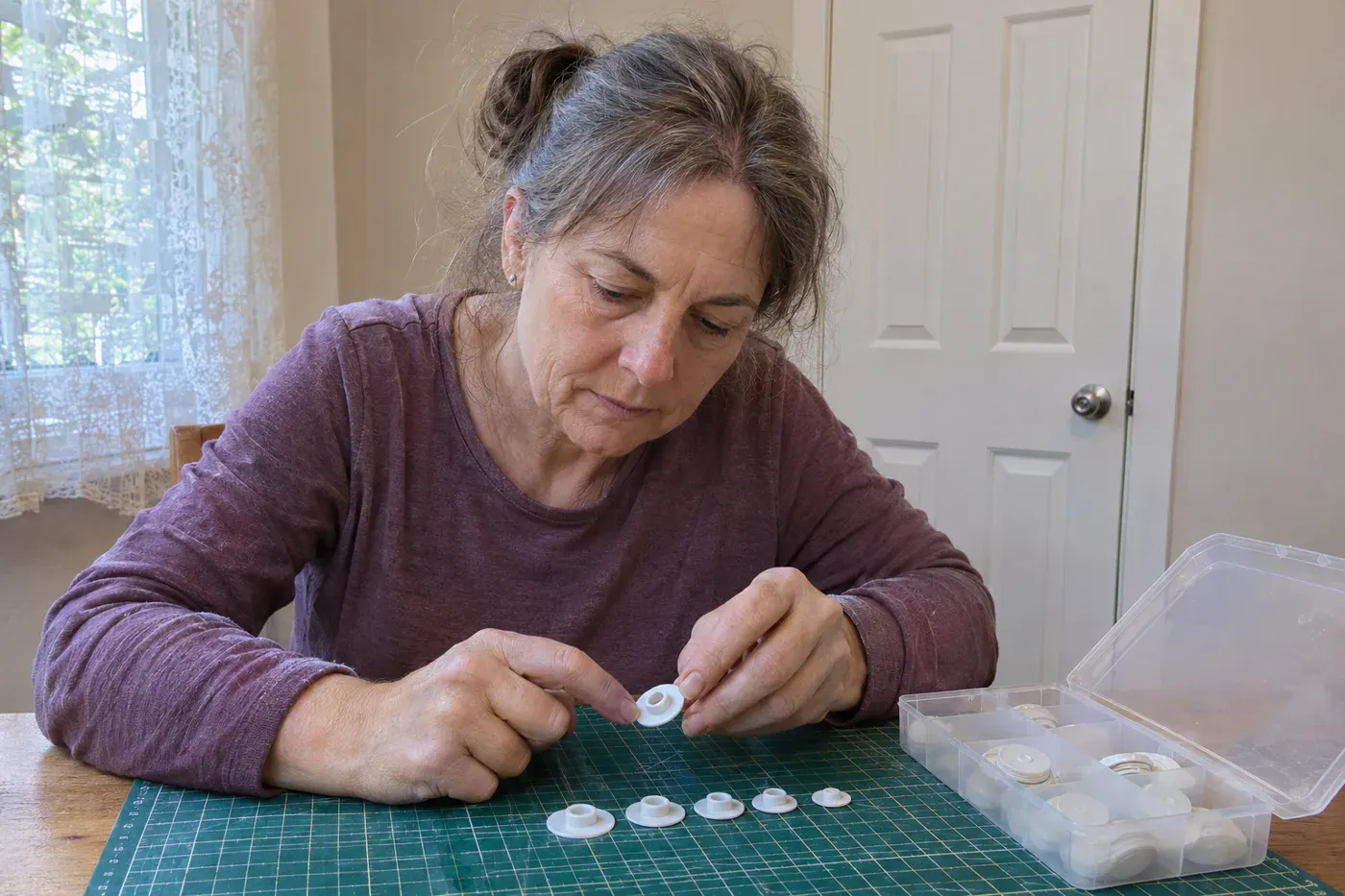
A bag of little plastic discs at an estate sale looks like a bargain. Check the middle first.
Singer’s “top hat” discs came in two kinds that don’t trade places:
- Type 1, with a slim center ring and 2 holes, fits the 401, 403, 411, 431, 500, 503, 600, 603, 626 and 648.
- Type 2, with a wide center, fits the 690, 700 and 758.
The trouble starts when a Type 2 goes into an older machine. It “sits crooked and eventually wobbles loose, resulting in an erratic stitch.” You’d blame the machine, the thread, and yourself before you’d blame the disc.
If the fancy stitches on your 401 or 500 started wandering, look at the disc’s center. A wide one belongs in a 690, 700 or 758, not yours.
#5 Little flat screwdrivers from the machine drawer
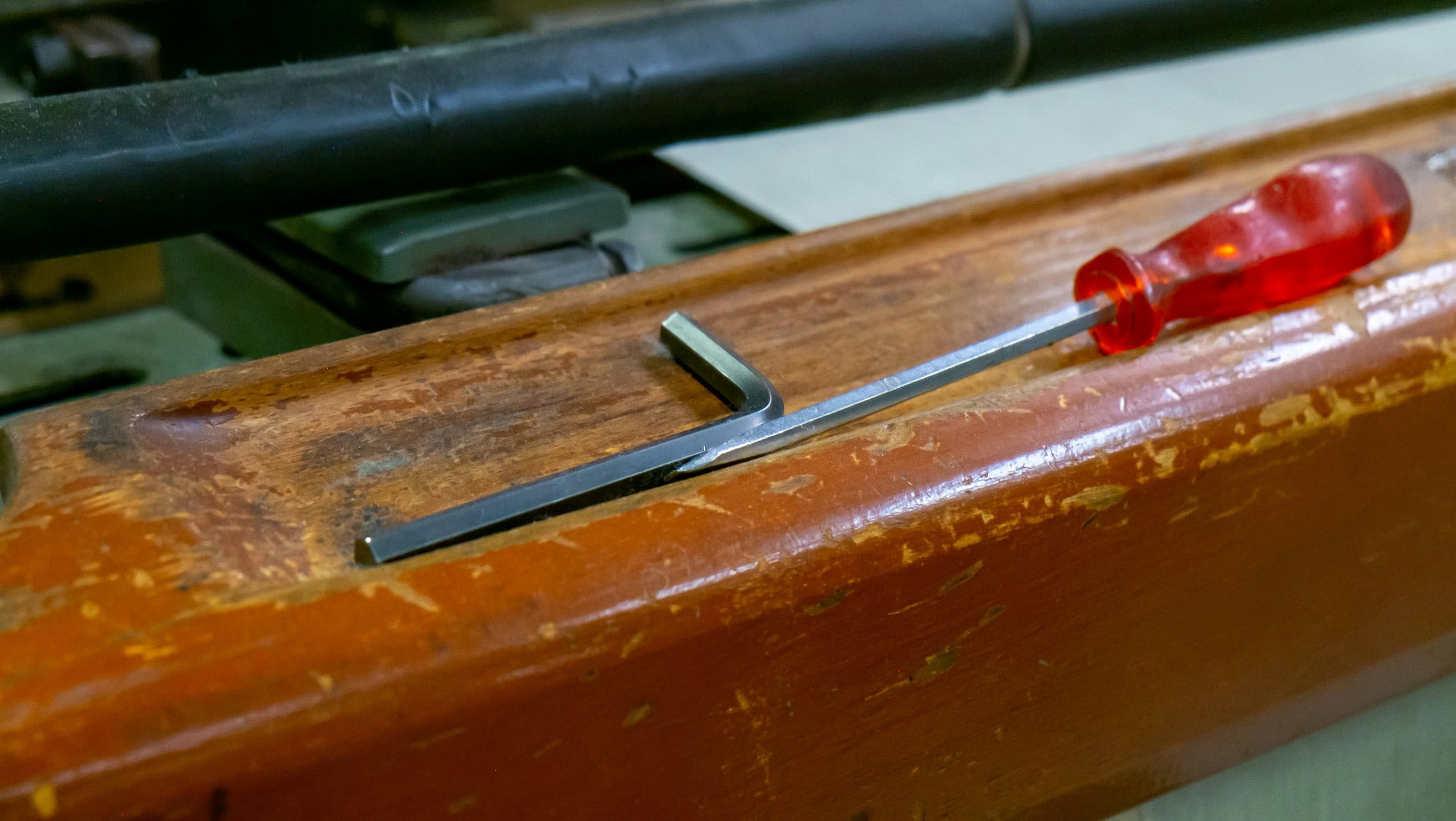
They look like paint-can openers. They’re screwdrivers.
A returning sewer sorting out her great-grandmother’s sewing desk asked about them on Reddit, and the answer came back fast: commenters said they were flat-blade screwdrivers of the kind that came with vintage machines. The same thread sorted out the rest of the drawer: the little brushes were for lint, and the red discs were stitch cams.
If yours came with a machine, keep them with that machine. They were made for its screws.
#4 Bobbins in a tin, and the mustard spoon
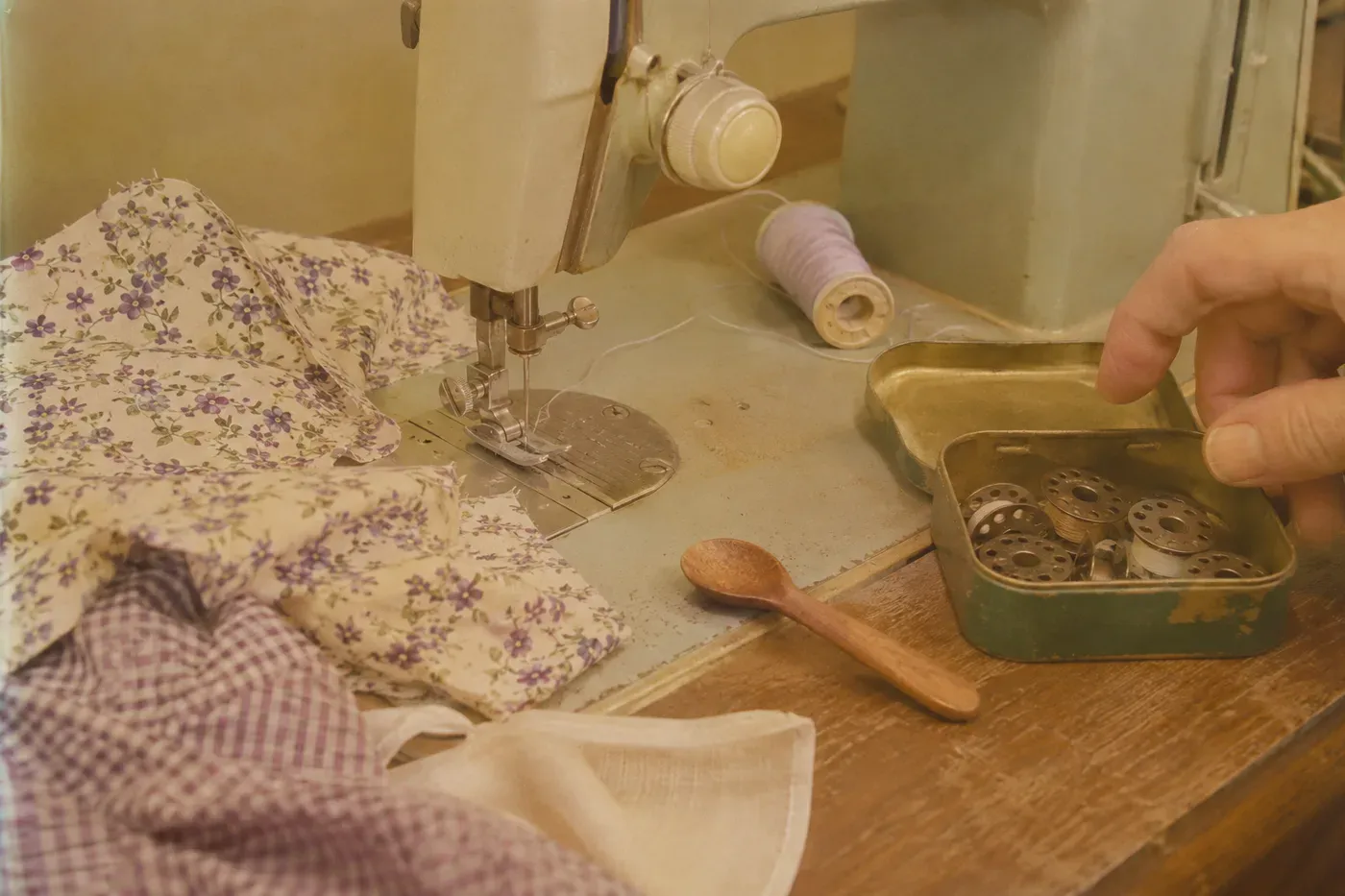
The same desk held a wooden scoop nobody could explain. It turned out to be a mustard spoon, and commenters guessed it was used to fish out bobbins that dropped into the space under the machine.
If you ever chased a bobbin into the dark under the throat plate, you’ll laugh at that.
The bobbin tin is a different kind of trouble. Over the years every bobbin in the house went into one tin, and they aren’t all the same. The wrong one is sneaky: it sews until it randomly nests, leaving a wad of tangled thread under the fabric with no warning.
Which bobbin actually fits
- Class 15 bobbins have flat sides
- Class 66 bobbins have curved sides and are typical of drop-in Singers
- Check the sides against the manual before buying more
- Give each machine its own tin, and label it
#3 Snap-setting pliers and gripper snaps
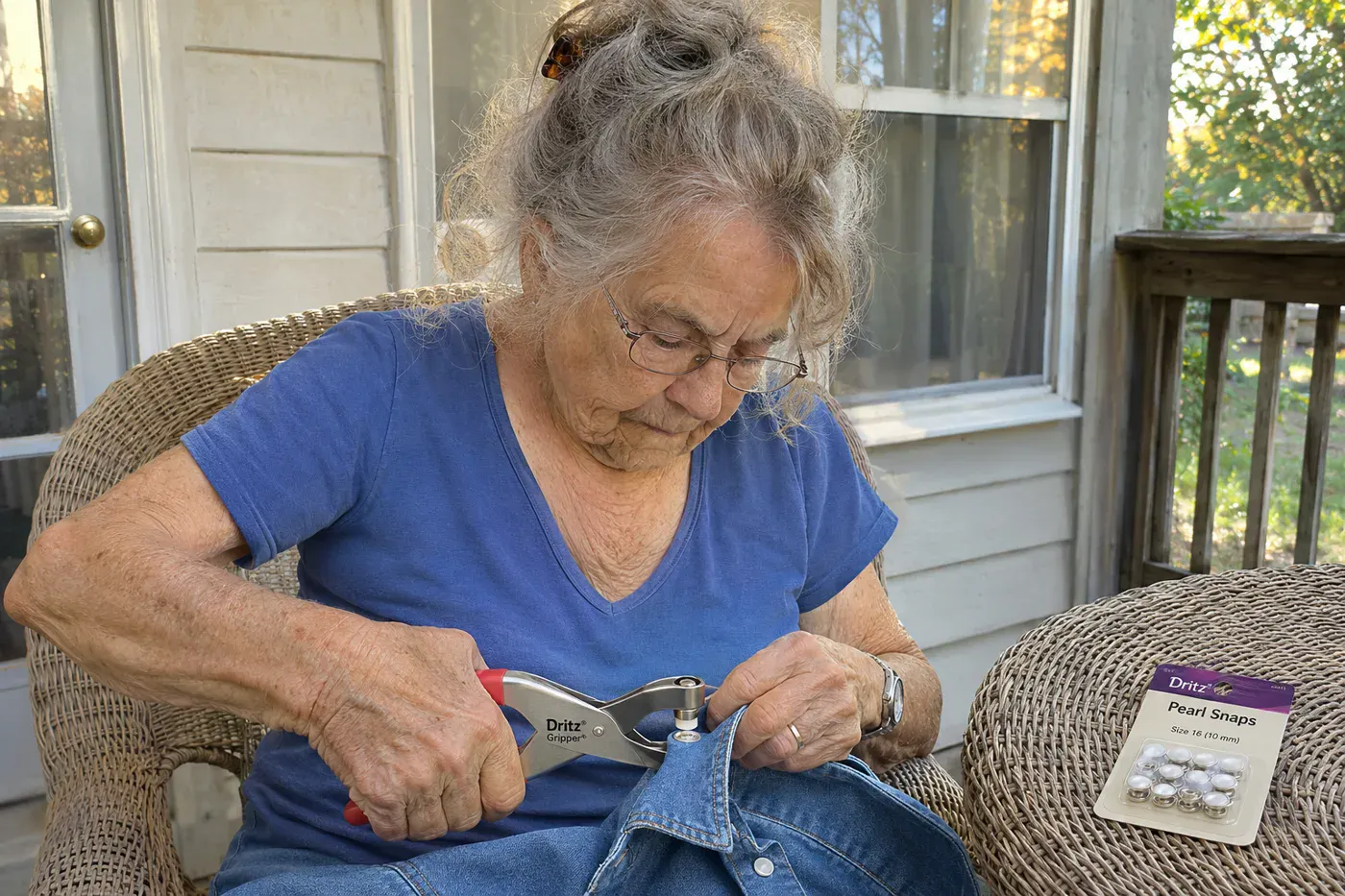
Squeeze, and a little clunk. That was the sound of a snap going into a shirt front or a pair of play clothes, from the same rack that held the cards of snaps, hooks and eyes at the five-and-dime.
The Gripper snap started out on baby clothes. In 1930, Scovill invented the Gripper snap, first for light clothes such as infant wear. Then the story folds in on itself. The Dritz family sold their company to Scovill in 1969, and Prym bought it in 1988. If the pliers in your drawer and the snaps on the card seemed to come from two companies, from 1969 on they were one.
The pliers are still sold. The current Dritz Gripper Plier Kit sets 3/8-inch, 7/16-inch and 7/16-inch pearl snaps, and one distributor listed it at $38.82 in 2026.
You may not need it. Sarai from Seamwork sets snaps with a plain rubber mallet on a hard surface like concrete, and she uses the same mallet for eyelets and grommets. A soft tabletop won’t give you a firm set, so the garage or basement floor does the job better.
For a snap that went in crooked, sewers on Reddit keep dog nail clippers in their kits to pop it back off.
#2 Pinking shears and their zigzag edge
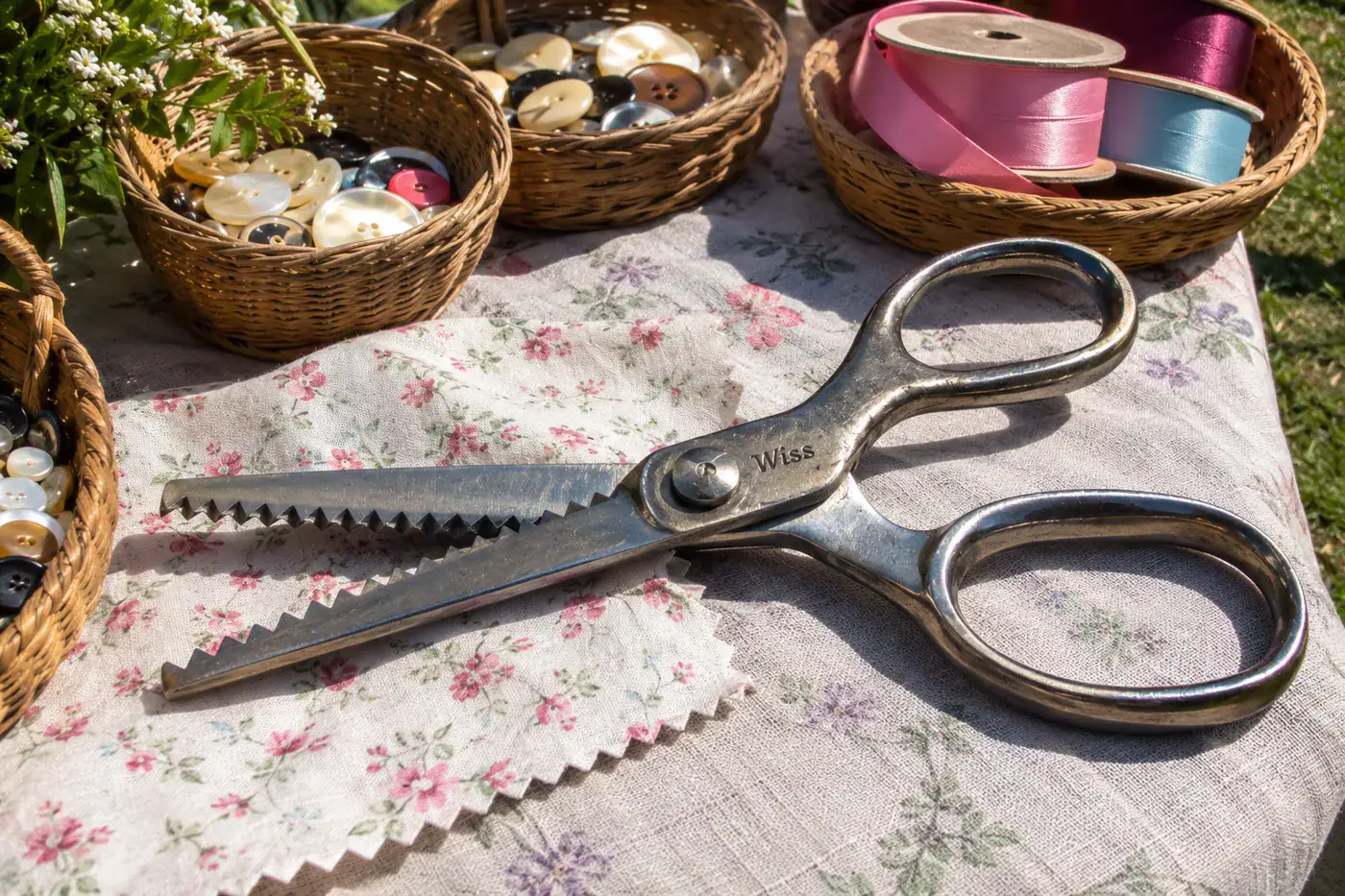
They were heavy, cold, and off-limits for cutting paper. Everyone knew that rule.
Plenty of sewing rooms had a pair. A 1950 Wiss catalog listed pinking shears at $3.95 to $8.95, and by 1955 about 20 million pairs had sold. About 3.5 million more were made between 1955 and 1963. Wiss even answered sharpening questions by postcard from 1947 to 1959.
Now the surprise. Pinking doesn’t stop fraying. The sawtooth edge only “limits the length of the frayed thread”. The threads still come loose; they just can’t travel far. The best-known design goes back to a patent Louise Austin got in 1893.
If your pair chews instead of cuts, skip the kitchen tricks. Sewing blogger Erin Van Handel notes that foil or sandpaper “won’t sharpen your scissors correctly”, and she lists mail-order sharpening at $8 from Simply Sharper and $7 a pair from A.O. Sharpening Service, in 2023 prices. For a solid old pair of Wiss, that’s money well spent.
#1 Tomato pincushion with the strawberry emery
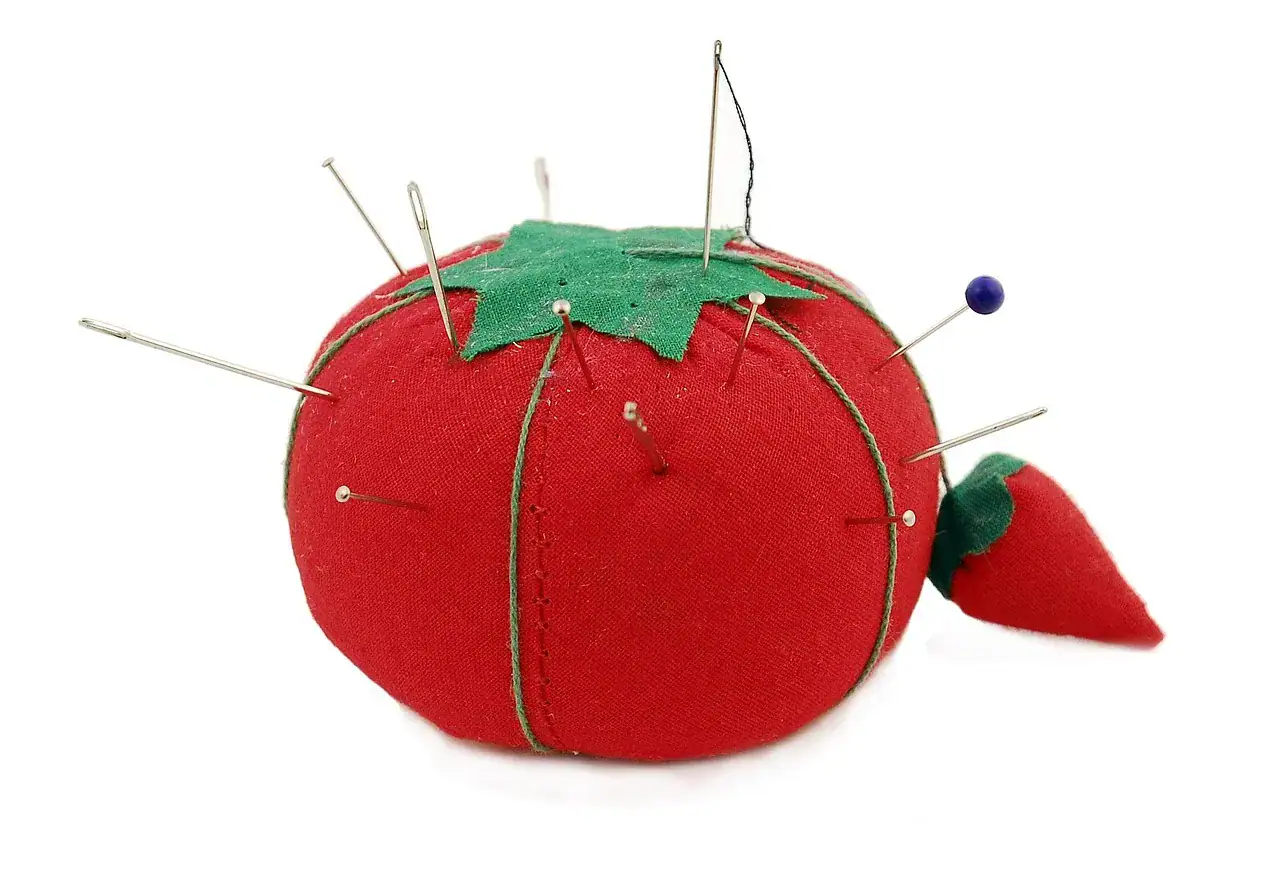
You’ve known that tomato your whole life. The strawberry hanging off it on a string was the part you weren’t supposed to stick pins in, or maybe the part you stuck pins in anyway.
Here’s what it really is. The strawberry is filled with emery, a mineral sand. Quilter Ami Simms describes emery as “a granular mineral substance consisting typically of corundum mixed with magnetite or hematite.” In plain terms, it’s fine, hard grit.
And it was never a sharpener.
“These little strawberries are NOT to sharpen your needles.” Ami Simms, quilter, What’s in that strawberry?
The grit polishes. It takes the tarnish off a needle’s nickel plating and smooths away tiny burrs, so the needle glides through fabric instead of dragging. To use it, slide the needle in and out, turning it now and then.
The strawberry has a long history of its own. Writer Anna Worden traces strawberry emeries through the 1800s and into the 1900s, and The Girl’s Own Book told girls how to make one in 1833.
So yes, you can still use it. Next time a needle sticks in a tight weave, push it into the strawberry a few times, turn it, and try again.
The bottom line
Most of what came out of that drawer is worth little. One complete boxed buttonholer listed at $24, and rare needle books can bring $25 and up. Most of it still works.
That puts the decision back with you. Before you sell anything, use it once for exactly what it was made for: one sock over the egg, one needle through the strawberry, one hem marked by somebody who loves you enough to say “Turn.”
Then ask yourself which of these you learned on, and who showed you how. That’s usually the one to keep.
Bonus: Five small tips for the sewing room you have now
- Pick up a few large metal washers at the hardware store. Sarai at Seamwork calls them her favorite pattern weights, and they stack in a small container.
- Use a magnetic parts bowl as a pin dish. Sarai keeps several scattered around her sewing room to toss pins into. On a computerized Brother, magnets should never go near the main board or LCD screen; other brands may differ, so check your manual.
- Put the canned air away. BERNINA brand ambassador Rebecca Ringquist warns that pressurized air “will only force the lint and threads deeper into your machine”, so reach for a soft brush and long tweezers.
- Found an old price tag? A 1965 dollar buys about what $10.71 does now, and a 1975 dollar about $6.27. The government’s inflation calculator handles any other year.
- Add a sliding seam gauge if you don’t have one. The Dritz Seam Gauge has a marker that stays put for repeated hems, tucks and buttonhole spacing, at $4.95 regular price in 2026.
Questions people also ask
Are vintage sewing notions worth any money?
Usually only a little. Common five-and-dime needle books sell for under $15, plain silver-plated thimbles have “very little intrinsic value”, and a complete boxed Singer buttonholer listed at $24. Rare needle books can bring $25 and up, a few past $100, and buttons depend on material and design, not age.
What is the strawberry on a tomato pincushion for?
It’s filled with emery, a gritty mineral that polishes tarnish and tiny burrs off needles so they glide through fabric. It doesn’t sharpen the point. Quilter Ami Simms says to slide the needle in and out, turning it now and then.
Can I still use my mother’s old buttonholer?
Often yes, if it matches your machine. According to ISMACS, the Singer 160506 and 489500 are low-shank and the 160743 and 489510 are slant-shank, all for straight-stitch machines, while the Professional models were made for zigzag machines. Check that all the templates are there before you start.
Is a magnetic pincushion safe near a computerized sewing machine?
It can be, as long as it stays in the sewing area and away from the machine’s electronics. Brother’s guidance says “A magnet can be used in the sewing area only” and “should never be placed near the main board or near the LCD screen,” meaning the display, and that a strong magnet should never be used. Other brands may differ, so check your own manual.
How do I find out what an old sewing tool is?
Post clear photos to a collector community. Collectors Weekly runs a Show & Tell section on its site where members share and identify pieces. For buttons, the National Button Society offers a Beginner’s Guide and local clubs.
What should I do with a box of old sewing notions?
After you pull out anything worth keeping or selling, a creative-reuse center can give the rest a second life. SCRAP Baltimore, for example, takes zippers, buttons, thread, embroidery floss and other sewing notions by appointment on Fridays and Sundays. It doesn’t take sewing patterns or knitting needles, so check what your nearest center accepts.