Afghans, doilies, quilts and framed cross-stitch can stay, and each one comes with a weekend change that makes the room look chosen.
The farmhouse way of showing off a quilt can hurt it twice. The fix that saves it is at #1.
You lift the lamp to dust, and the doily comes up with it, stuck to the base by a ring of old polish. The afghan on the sofa back has sat there so long it holds the shape of the cushions. You love every piece in this room, and lately you’ve wondered whether it all reads as dated home decor. You have company: about one American adult in six made crafts in 2018. The pieces can stay. What usually needs changing is how many are out, where they sit, what light they’re under and what shape they’re in.
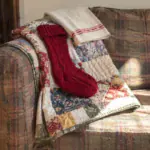
#14 The afghan draped over the sofa back
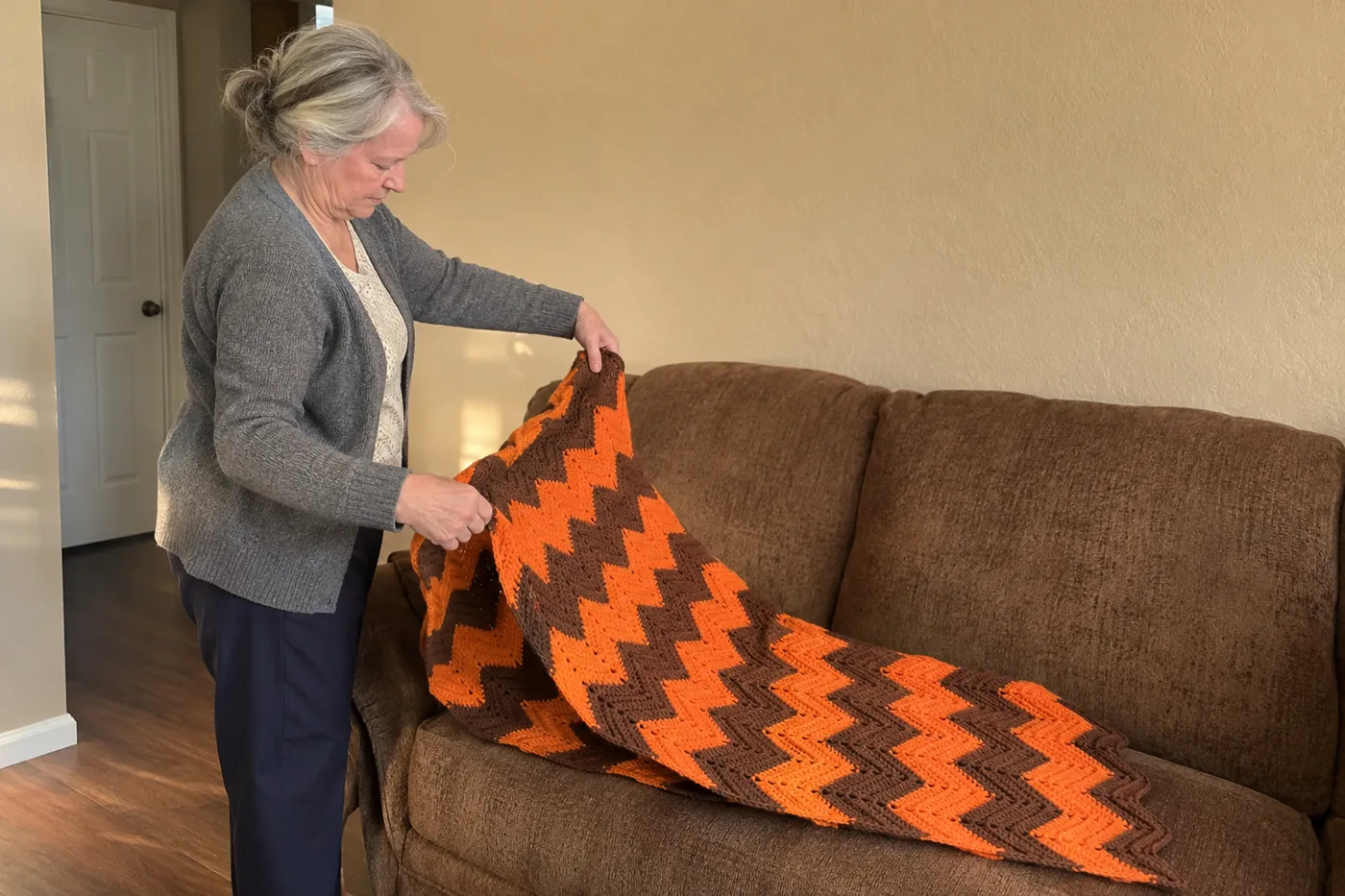
Think of the Conners’ couch on Roseanne, with the crocheted afghan stretched across the back. Nobody left it there by accident. Garvin Eddy, the show’s production designer, called that afghan “the paragon of Americana.”
TV set crews have reached for afghans on purpose since at least Taxi in 1978, and they kept at it through Mad Men, The Big Bang Theory and Jane the Virgin. Set decorator Ann Shea said these throws bring “great texture, color and lots of character.” Crews use them to hint at a gift from a grandparent and a family history the audience never has to be told about.
So an afghan already says something warm to anyone who walks in. The permanent drape is what makes it look dated. After twenty years on the same sofa back, it stops looking like a choice and starts looking like part of the upholstery.
A 2026 House Digest piece on 1970s afghans treats the granny squares, the zigzag chevrons and the big geometric diamonds as a colorful accent worth bringing back. Handmade ones often sell for hundreds of dollars on Etsy or from artisans, while thrift stores may still let them go for under $5. In 2020, London’s Victoria and Albert Museum collected the patchwork cardigan Harry Styles wore, after thousands of fans had posted their own handmade copies during lockdown.
The change:
- Keep one afghan out, the one in the colors you most want the room to have, and let it be the accent.
- Fold the rest away and trade one in when you want a change.
- If the sofa sits in a room where the lights are on most of the day, give the afghan regular time off.
That last point borrows from quilt care. University of Nebraska-Lincoln Extension says not to display a quilt in direct sun “or in rooms that are lighted most of the time.” The guide was written for quilts. We’re applying it to afghans because long, steady light fades and weakens fabric of any kind.
#13 Doilies under every lamp and dish
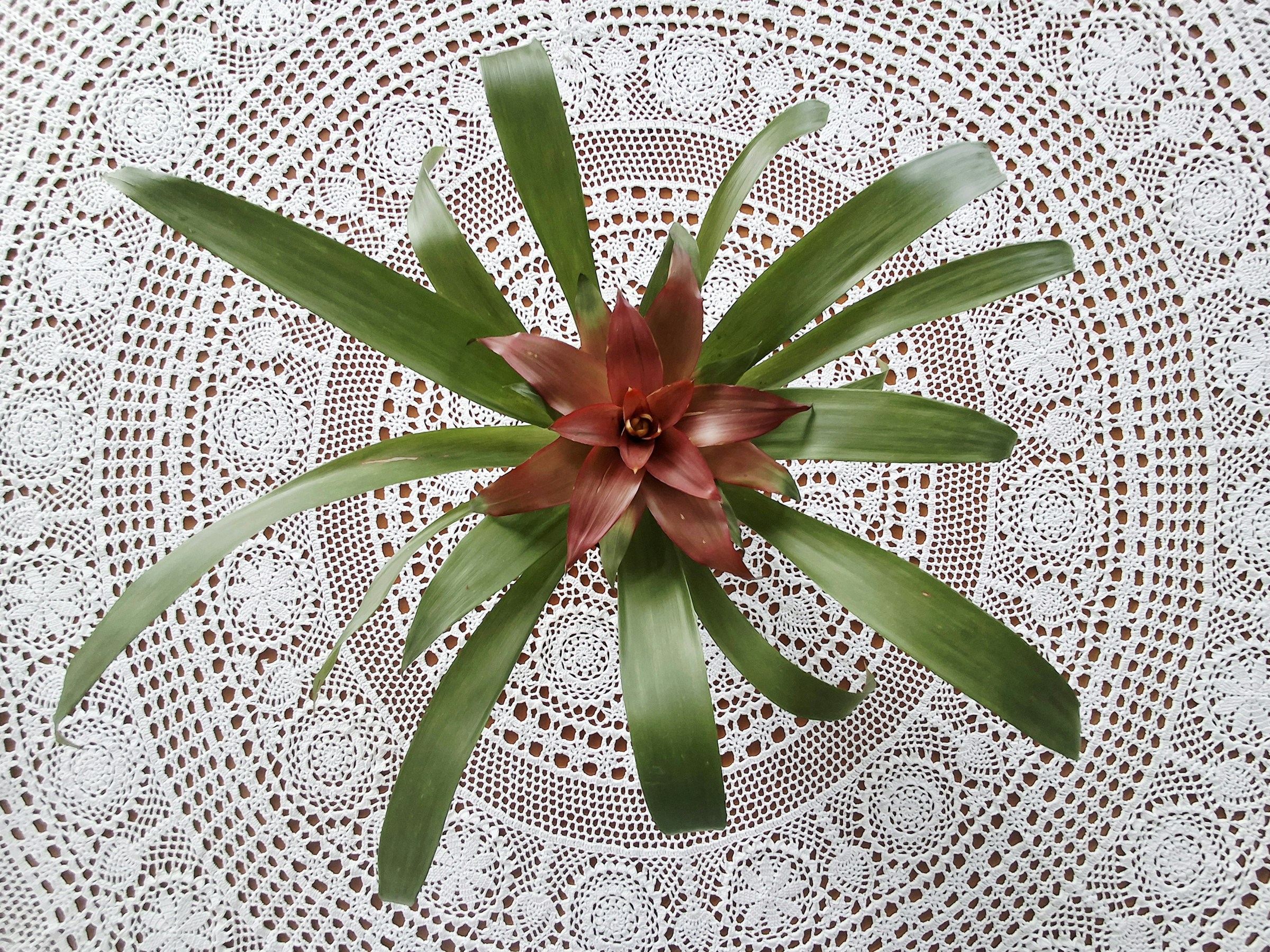
In the early 1900s, the doily was a set part of the table. A 1909 New York Times article declared, “It is bad form to pass a finger bowl without a plate and doily under it.” Good Housekeeping put doilies under the toast and muffins in 1905, and a 1916 Kansas State Agricultural College text slid one under the water pitcher.
Those lines come by way of a history blog by Cindy Regnier, who also notes that young women were taught to make doilies and were expected to keep a supply in their hope chests.
One doily reads as an accent. One under everything turns the room into a time capsule.
Designer Lauren Saab told Homes & Gardens to sprinkle lace details here and there, such as a lace-trim pillow or lace coasters, and to pair lace with heavy materials like wood, stone or matte metals. For doilies, that means one good one, on bare wood, where people will see it: under a single lamp, or flat beneath a stoneware bowl. The others can lie flat in a drawer, ready to take a turn.
If lifting the doily turns up a water ring it was hiding, slide the lamp over two inches.
Did you know?
Crocheted toilet roll dolls spread through bathrooms in the US, England and Australia in the 1960s or 1970s, yet they remain “little studied by academia.” Oregon State researcher Aurora Sherman, asked where they came from, said: “I can’t answer that with any specificity.”
#12 The matching bedspread, shams, skirt and curtains

Holly Gates wrote in Hunker that a bed-in-a-bag “screams 30 years ago,” and then, for good measure, “not in a cool, vintage way.” She meant the store-bought kind. The same thing happens when the bedspread, shams, bed skirt and curtains all came off one bolt, however beautifully they were sewn.
The match is what makes a bedroom look dated. Designer Lauren Sullivan of Well by Design describes a move “away from theme-driven styles in favor of spaces that blend modern and traditional elements.” Matching sets are the opposite of a blend.
Keep the handmade bedspread or quilt on the bed as one layer, and mix in colors, textures and patterns you already own. A plain white sheet turned down over the top, a knit throw at the foot, one pillow borrowed from the living room. The room starts to look layered, like it was put together over years.
Then stop. Gates says “a few perfect throw pillows” may be all a bedroom needs to stay current. A few, not a heap.
If the curtains match the spread exactly, try them in another room for a month. On their own, in a room with nothing else in that fabric, they look like a fabric you picked.
#11 Shelves crowded with handmade knickknacks
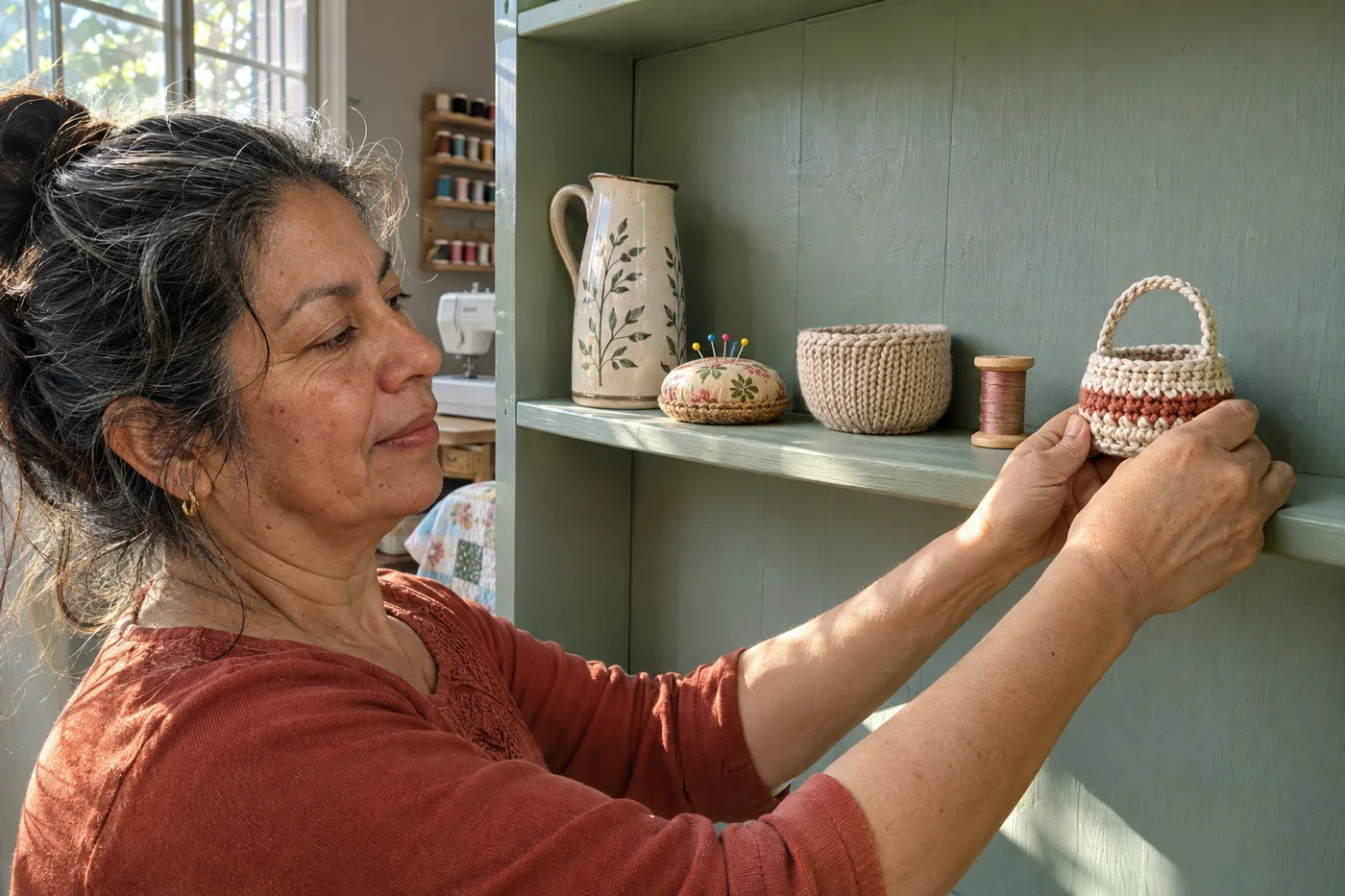
Designers call it the 3-5-7 rule, and it lets you edit down without throwing anything out. You group pieces in threes, fives or sevens, and you vary height, shape and texture. Mollie Ranize of Dmar Interiors told Homes & Gardens it “brings visual balance and interest to any arrangement.”
Here’s how to work one shelf:
- Clear it completely and dust it.
- Pick three, five or seven pieces. The odd number does most of the work.
- Mix heights and textures: something tall, something low, something soft next to something shiny.
- Step back across the room and look again before you add anything.
- Box the rest with a note on the lid saying which shelf they came from.
Nina Lichtenstein of Nina’s Home Design gives the one rule for choosing: “Items in an odd-numbered cluster don’t have to match, but they should speak to each other in some way.” A hand-thrown bowl, a knitted egg and a little embroidered hoop in the same blue will speak. Seven pieces from seven decades usually shout.
 You might also like17 Handmade Christmas Ornaments Our Grandmothers Made
#10 Seasonal quilted wall hangings in every room
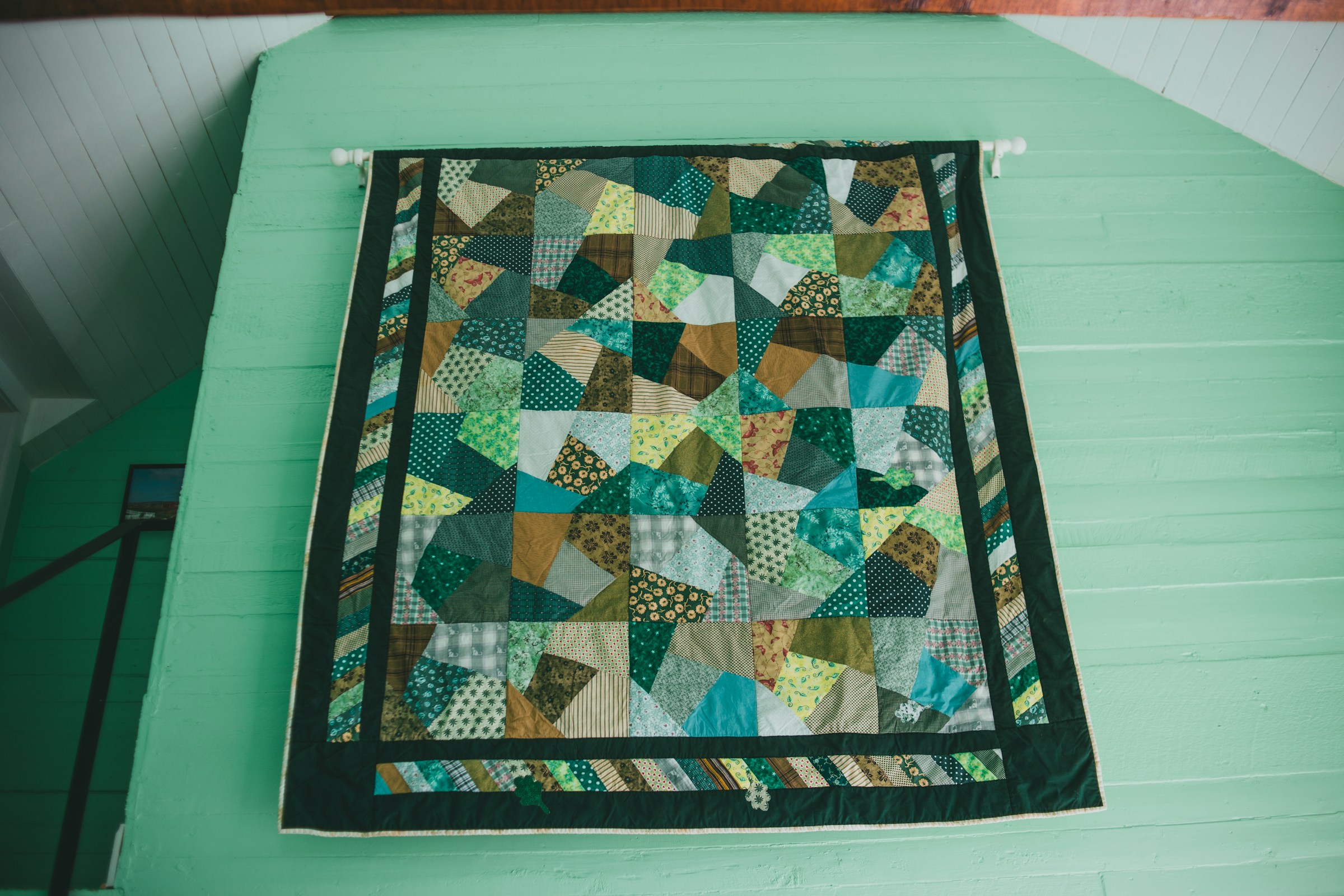
The quilted pumpkin in the hall, the snowman by the door, the turkey in the guest bath. Seasonal hangings are some of the most fun quilting there is. What dates them is the costume change in every room at once, all on the same weekend.
Ashley Macuga of Studio Collected put it well in Homes & Gardens: “A home that has been put together with intention the rest of the year doesn’t need a costume change to feel special.” Meredith Owen agreed: “I don’t think you need to redecorate for every holiday.”
The designer who sounds most like a quilter is Brooke Mennen-Talsma of Brooke MT Interiors. “For us, it’s never a total overhaul,” she said. She keeps a growing collection of special pieces, brings each one out in its own season, and adds one or two a year.
That’s the plan. One hanging, in its own season, in the room where people actually sit. The rest wait their turn, so the collection keeps growing while the house looks intentional instead of like themed decor.
Katie Kiser of Katie Kiser & Co. lets a throw blanket carry most of her winter change. A small quilted throw over the arm of the sofa does the same job and goes back in the cupboard in March.
#9 Hand-painted wooden word signs

“Every home decor store carried this look, and now all homes look the same.” Ruthie Staalesen, designer, in Good Housekeeping
Her point is that the look was everywhere because it was sold everywhere. Designer Kristina Lawrence named “the endless parade” of gray upholstery, white painted shiplap and “Live Laugh Love” signs as the sign farmhouse style is fading, and then added, “We’re not suggesting kicking farmhouse style off the porch entirely.”
That puts a sign painted by hand in a different spot entirely. A factory sign reading “Gather” looks outdated because every home decor store carried the look. A board someone painted with the name of the road you grew up on, the dog’s name, or the thing your household says when the power goes out exists in exactly one place.
So keep the sign with the most meaning out, in one spot where it can be read from across the room. If a wall holds five signs, the other four can take turns.
#8 Homemade valances, swags and tails
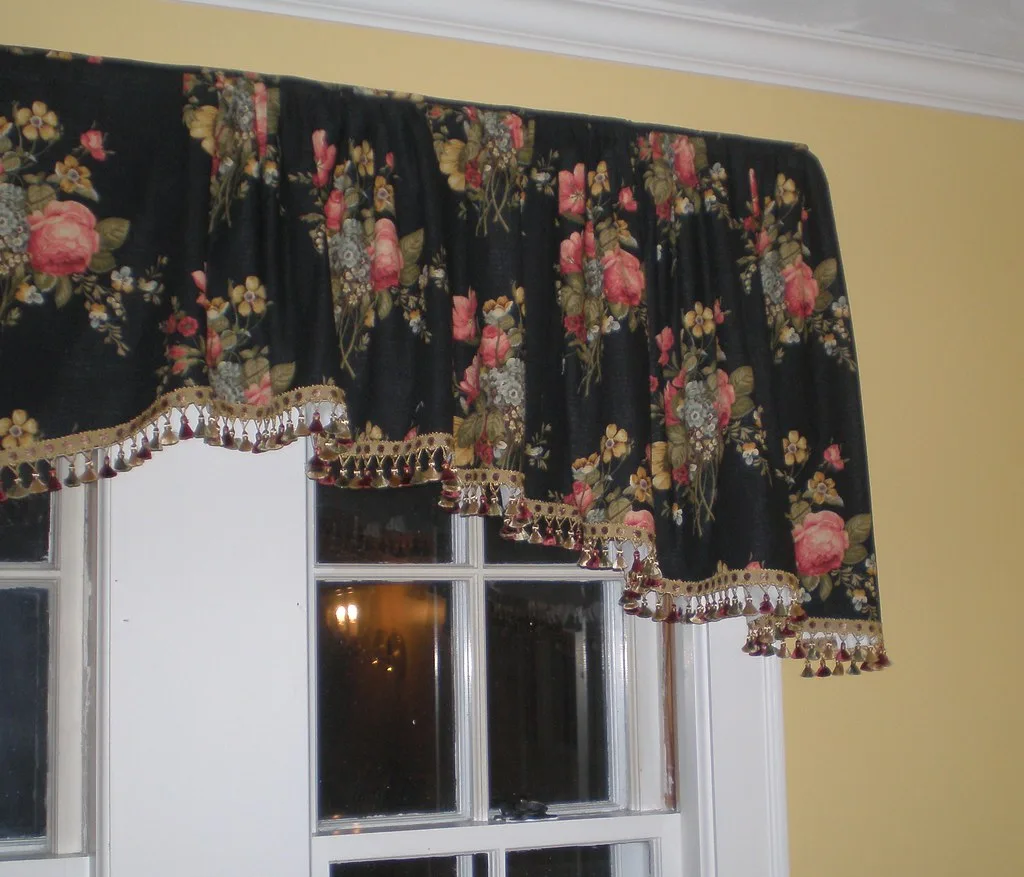
Designers argue about window treatments, and the argument is useful to anyone who sews. Some want valances gone for good. Others say they can stay if they’re remade. Here’s how four of them split, as quoted in Homes & Gardens and House Digest.
| Designer | Verdict | What they’d do |
|---|---|---|
| Benji Lewis | Swags and tails “have had it and won’t ever come back” | A relaxed Roman blind |
| Jennifer Jones, Niche Interiors | Valances “instantly date a room” | A visible decorative rod |
| Eddie Rider | “Swags and jabots definitely date a house” | “Clean and simple panels” on a visible rod |
| Kristina Khersonsky, Studio Keeta | Prominent valances in the same fabric as the drapes “can feel dated” | A hidden valance, or an accent valance in a contrasting fabric |
Khersonsky’s line is the one to sew from. Her full quote: “Valances that are visually prominent and are made of the same textile as the rest of the drapery can feel dated.” Prominent and matching are the two problems, and both can be fixed at the machine.
Make the valance quiet, sized just to hide the hardware you’d rather not see. Or make it an accent, flat and simple, in a fabric that contrasts with the curtains. Either way, hang plain panels below it on a rod that shows, since Jones and Rider both like the rod in view.
A hidden valance only earns its place if there’s something to hide. If your hardware is good-looking, skip the valance and let the rod be the trim.
#7 Needlepoint pillows on a formal sofa
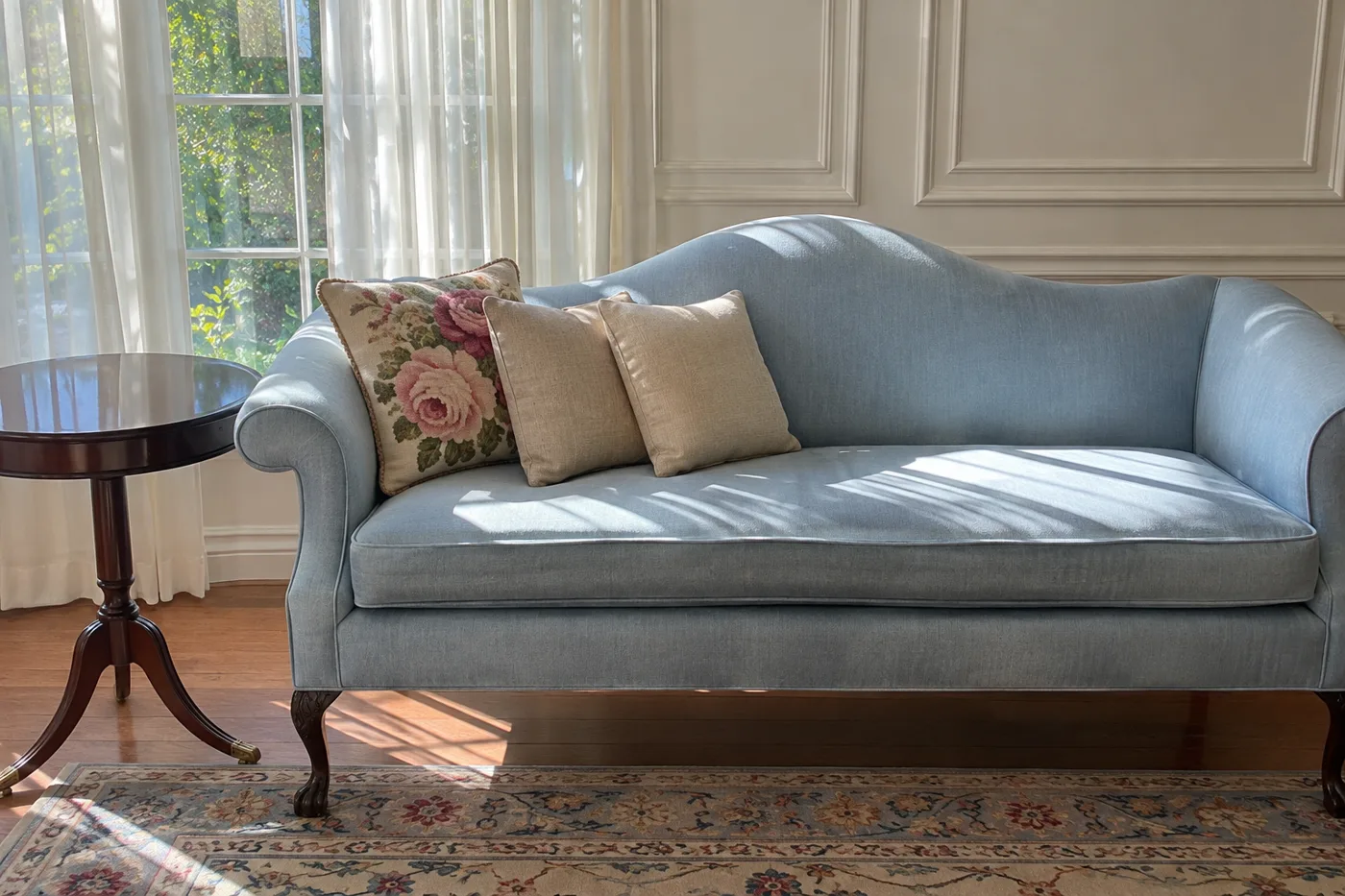
At Knitting Knook in Mequon, Wisconsin, needlepoint classes used to run one day a week. Now they run two. Piper Melkonian of Knitting Knook told Craft Industry Alliance that younger stitchers, ages 19 to 35, have joined the older customers who’ve been coming back. “Social media has played a large part in younger people taking up needlepoint,” she said. Kit maker Emma Homent, 43, still sells many of her kits to women in their 60s.
So that needlepoint pillow on the good sofa may be ahead of the room.
House Beautiful’s Emma Bazilian gave this taste a name in 2019: grandmillennial. She described people in their mid-20s to late 30s drawn to design that the mainstream had called “stuffy” or “outdated,” including Laura Ashley prints, ruffles and embroidered linens. Manhattan designer Ariel Okin described a grandmillennial as “someone who has an appreciation for the past.”
Keep the pillow and give it something plain to sit against. A solid pillow on each side, in a color pulled from the stitching, makes the needlepoint the thing you see first. Mixing old and new this way is how needlepoint stays timeless. If the sofa wears a busy matching damask, the pillow has nothing to stand out from, so the plain pieces matter even more.
And when someone admires it, say thank you. No apology needed.
Did you know?
In the 1980s craft boom, JoAnn, Michael’s and Wal-Mart carried shelves of plastic-canvas kits and pattern books, and some favorite projects were tissue box covers shaped like houses and barns.
#6 The porch goose in a sewn outfit
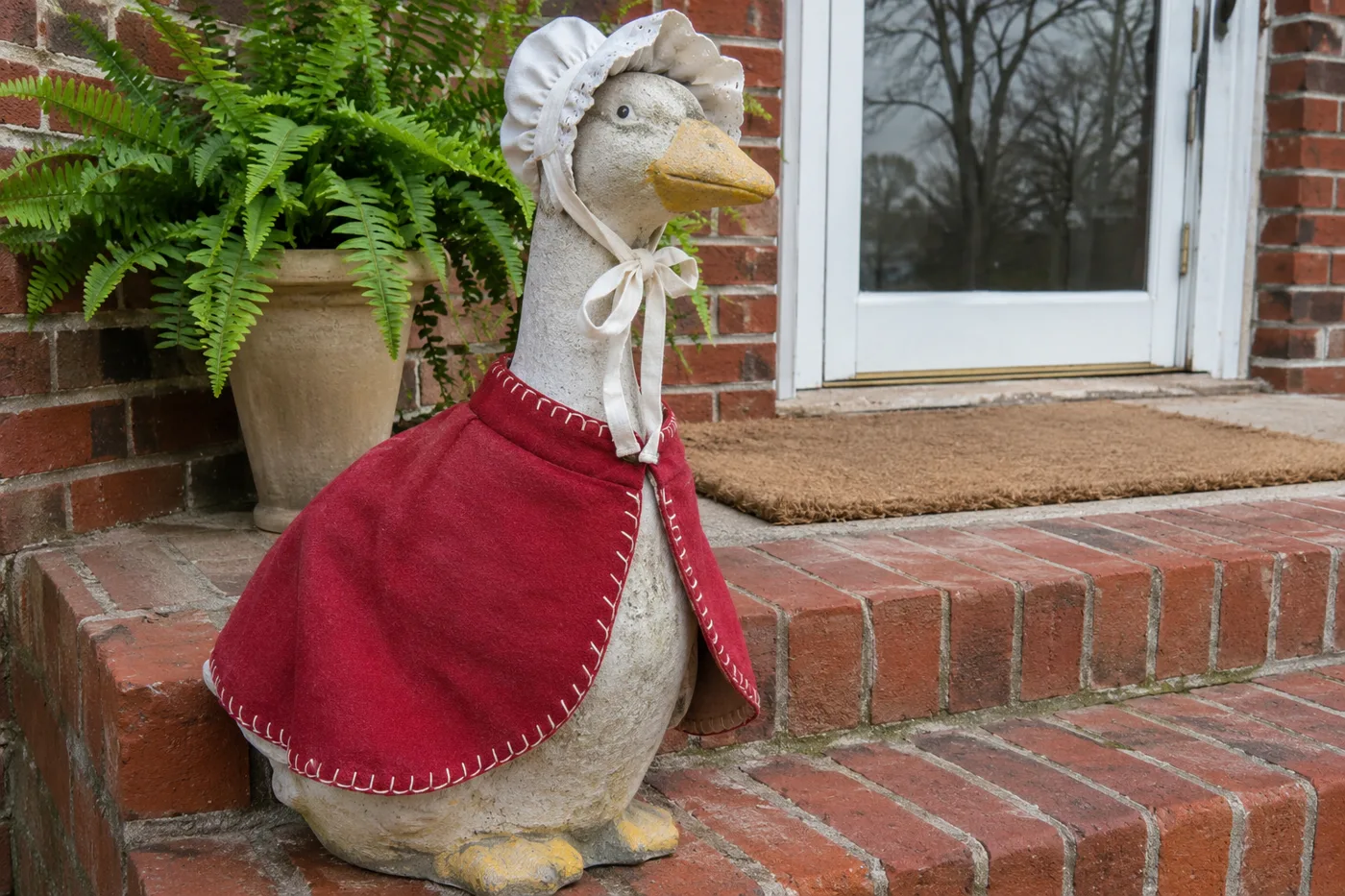
In Philadelphia, Allison Roddy, 35, bought a sewing machine so she could dress her porch goose. One outfit is a Christmas cloak and bonnet, cut from thrift-store fabric. Her explanation, to the Washington Post: “This is a way for us to just laugh at ourselves.”
The 1980s Midwestern porch goose is back, and by 2025 the Porch Goose Club of America group on Facebook had more than 200,000 members.
Here’s what makes the goose different from the wall hangings in #10: costume changes are the goose’s whole job. It’s a joke, and the outfit is the punch line. A goose in a rain slicker on a rainy Tuesday makes the mail carrier smile.
So keep it to one goose, and let the wit show. If a box of old goose outfits is waiting somewhere, they can come out again as a joke the whole street gets. A flock of five on the steps loses the joke.
 You might also like17 Dollar Store Christmas Crafts That Look Expensive
#5 One overhead light on handmade pieces
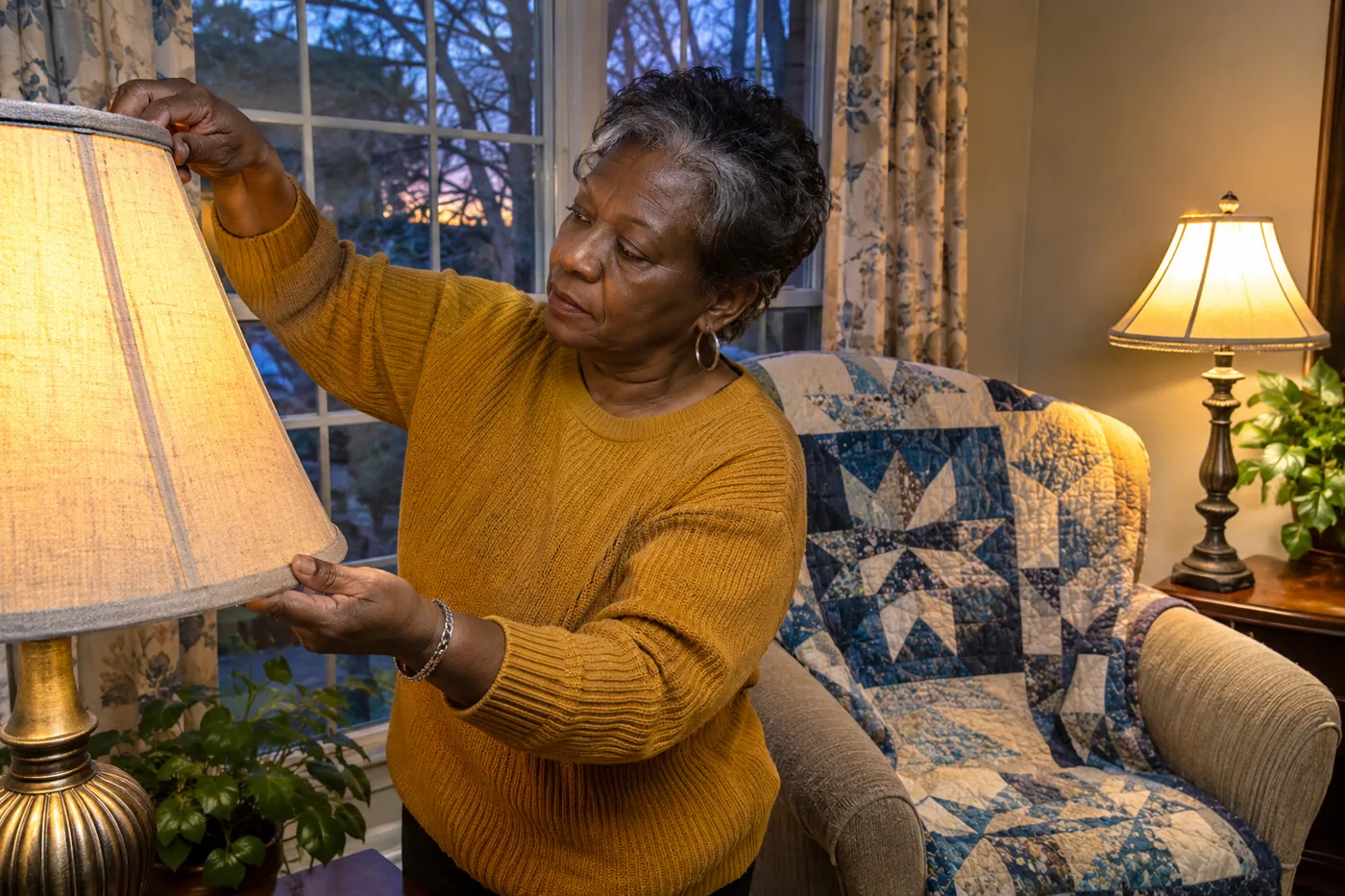
If the quilt on the bed or the afghan on the chair looks drab after dark, check the ceiling before you blame the fabric. One fixture lights the room from one spot, and a hand-pieced quilt or a cabled afghan is all texture.
Designer Jeanne Barber of Camden Grace Interiors told Homes & Gardens, “Three is the magic number of light sources you need per room!” Maria Killam, a color and design consultant, writes, “I often find that most people don’t have enough lamps.”
You probably own enough lamps already. They’re just in other rooms.
- Borrow lamps from the rooms you use least.
- Set one beside the quilt or afghan, so the light falls across it from the side and shows the stitching. Keep an old-style incandescent bulb about five feet off, since the Canadian Conservation Institute says those are too bright at less than 1.5 meters, and fading adds up with every hour a lamp is on.
- Spread the others so every corner has a glow and the overhead can stay off.
- Use warm bulbs throughout.
On that last step, Scarlett Hampton, co-founder of Lightsandlamps, told Homes & Gardens: “Cool white or even day light bulbs are only really good for high task or work space areas where there is no natural light.” Keep the bright, cool ones for a sewing table in a room without a window.
Borrowing lamps from other rooms costs nothing, and you’ll see whether it worked within a minute of flipping the switch at dusk.
#4 Faded or worn handed-down pieces
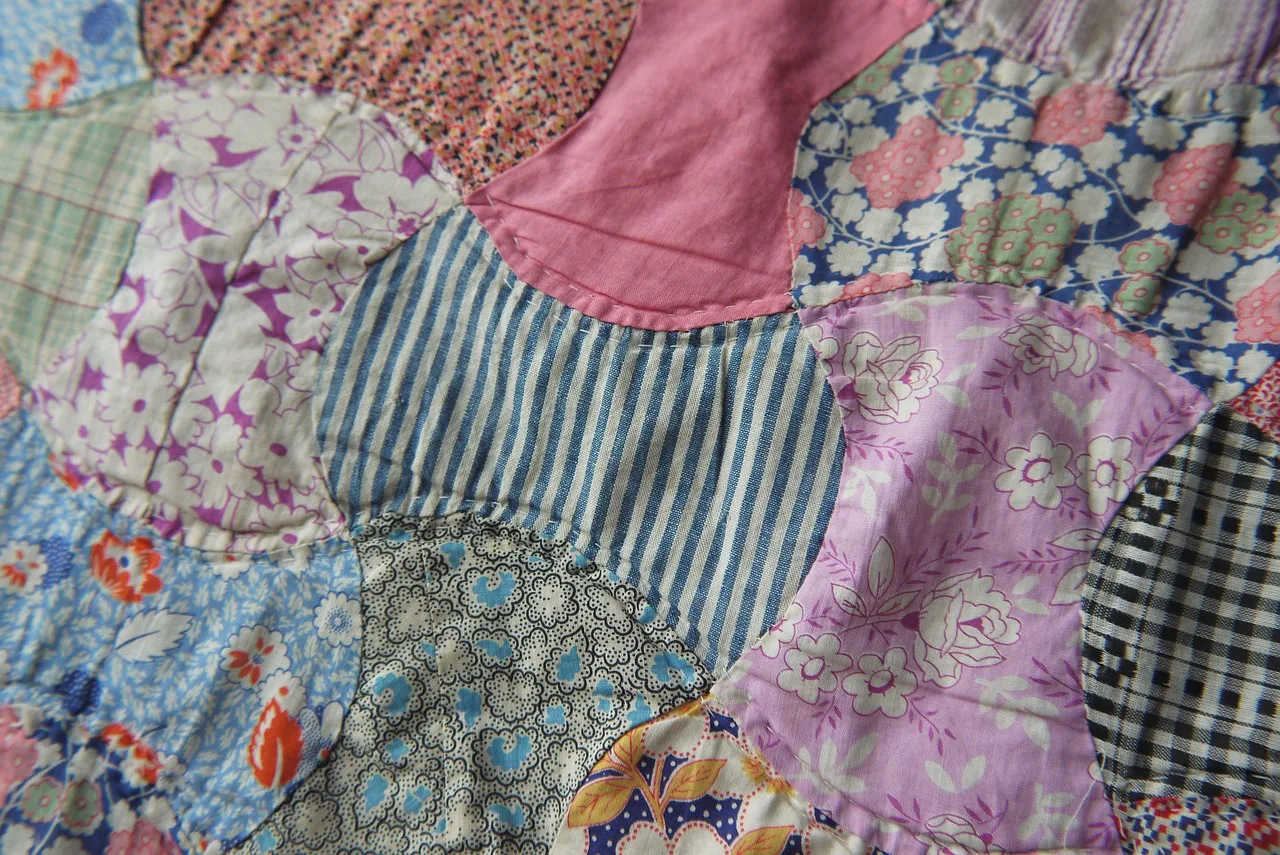
Two questions get tangled here: is it out of style, and is it worn out? They have different answers.
Antiques appraiser Dr. Lori Verderame lists the condition of the piece among the main factors in an appraisal.
A worn piece looks tired in any style of room. A sound one can stay out in almost any room.
The International Quilt Museum puts the stakes plainly: “All light fades and weakens textiles,” and “Damage caused by light is cumulative and irreversible.” So resting a faded piece won’t bring the color back. It keeps the fading from going further.
Sound pieces stay out. Tired ones rest away from light. A drawer or a closet shelf is fine once it’s lined with acid-free tissue or unbleached muslin, since bare wood gives off acids.
Piece, quantity, setting or condition? – Piece: Would it look good alone on a bare table or an empty chair? Then the piece is fine. Keep it out. – Quantity: Is it under every lamp, on every shelf, in every room? Cut back to one and fold the rest away. – Setting: Is it in an old frame, against an old wall color, under one bad light? Change what’s around it. – Condition: Is it faded unevenly, worn thin, or weak at the folds? Let it rest away from light.
#3 The heirloom quilt hung on the wall for good
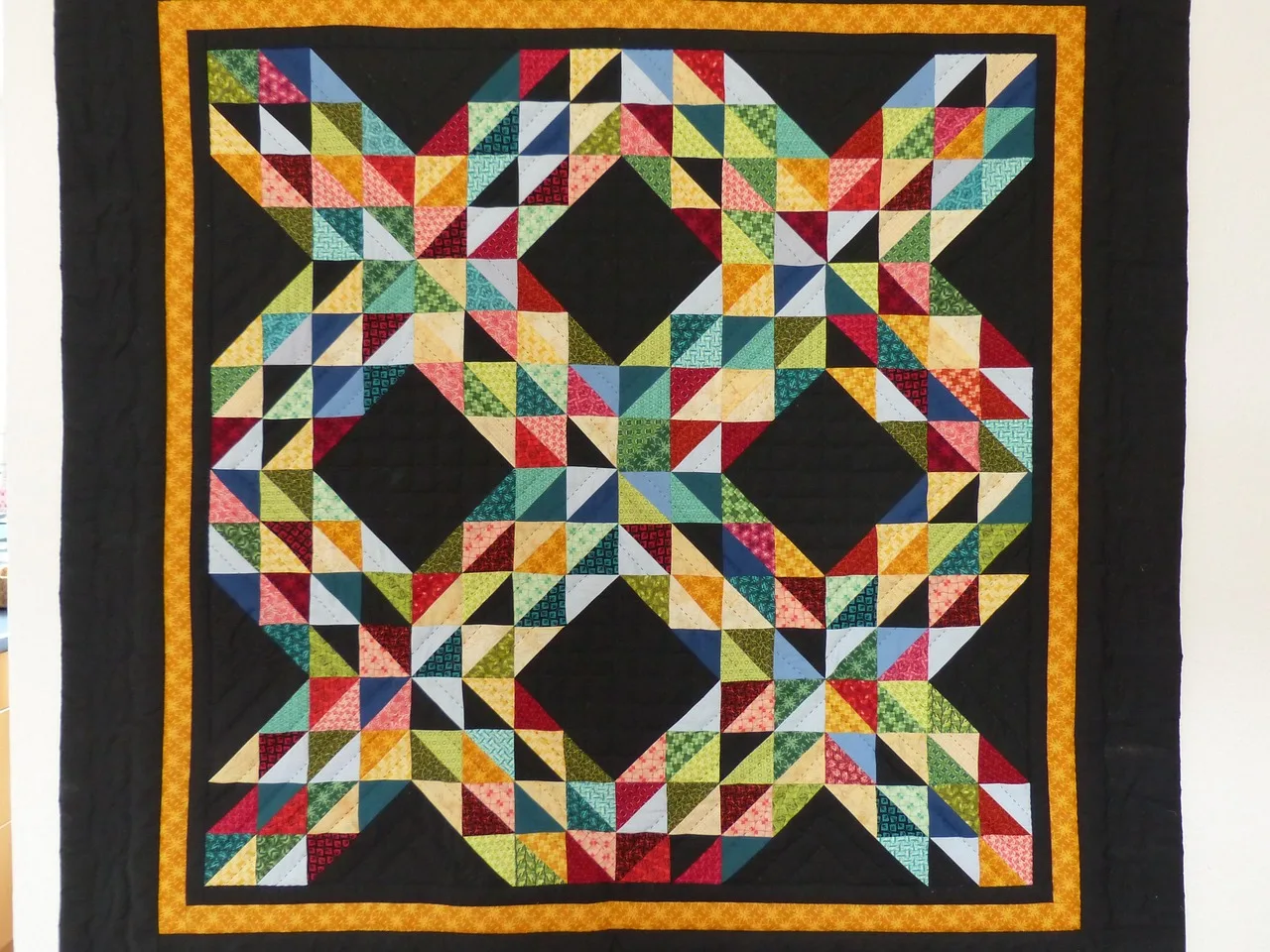
Hanging an heirloom quilt where everyone can see it feels like the respectful thing to do. Left up for good, it does the opposite: University of Nebraska-Lincoln Extension says a hanging quilt should come down at least every six months to rest its yarns and fibers.
How long is safe depends on who you ask, and the answers are close:
- The Louisiana Quilt Documentation Project doesn’t recommend long-term exhibition and says quilts “can be more safely exhibited from one to three months.”
- University of Nebraska-Lincoln Extension says to take a hanging quilt down at least every six months to rest the yarns and fibers.
- The San Jose Museum of Quilts & Textiles says rotating every few months is good practice, ideally by alternating two quilts.
That last one is the answer for the room as well as the quilt. Two quilts that trade places every few months keep the wall fresh, and each one gets to rest. If you have only one quilt worth hanging, it can spend its off months on a bed, where the weight is spread out.
How you hang it matters as much as how long. Never use nails, staples, tacks or pins. “A hanging sleeve is the best way to display a quilt on the wall,” says the San Jose museum. Sew a muslin sleeve about six inches wide across the back, with its top edge about half an inch below the top of the quilt, and slide a rod through it. QuiltHistory.com recommends a rod that isn’t wood.
Either quilt will look better on that wall for having had a few months off.
Did you know?
The International Quilt Museum in Lincoln, Nebraska, displays its own quilts for a maximum of one year out of every 10 years. For the other nine, they’re off the wall.
#2 Framed cross-stitch in a 1980s oak frame
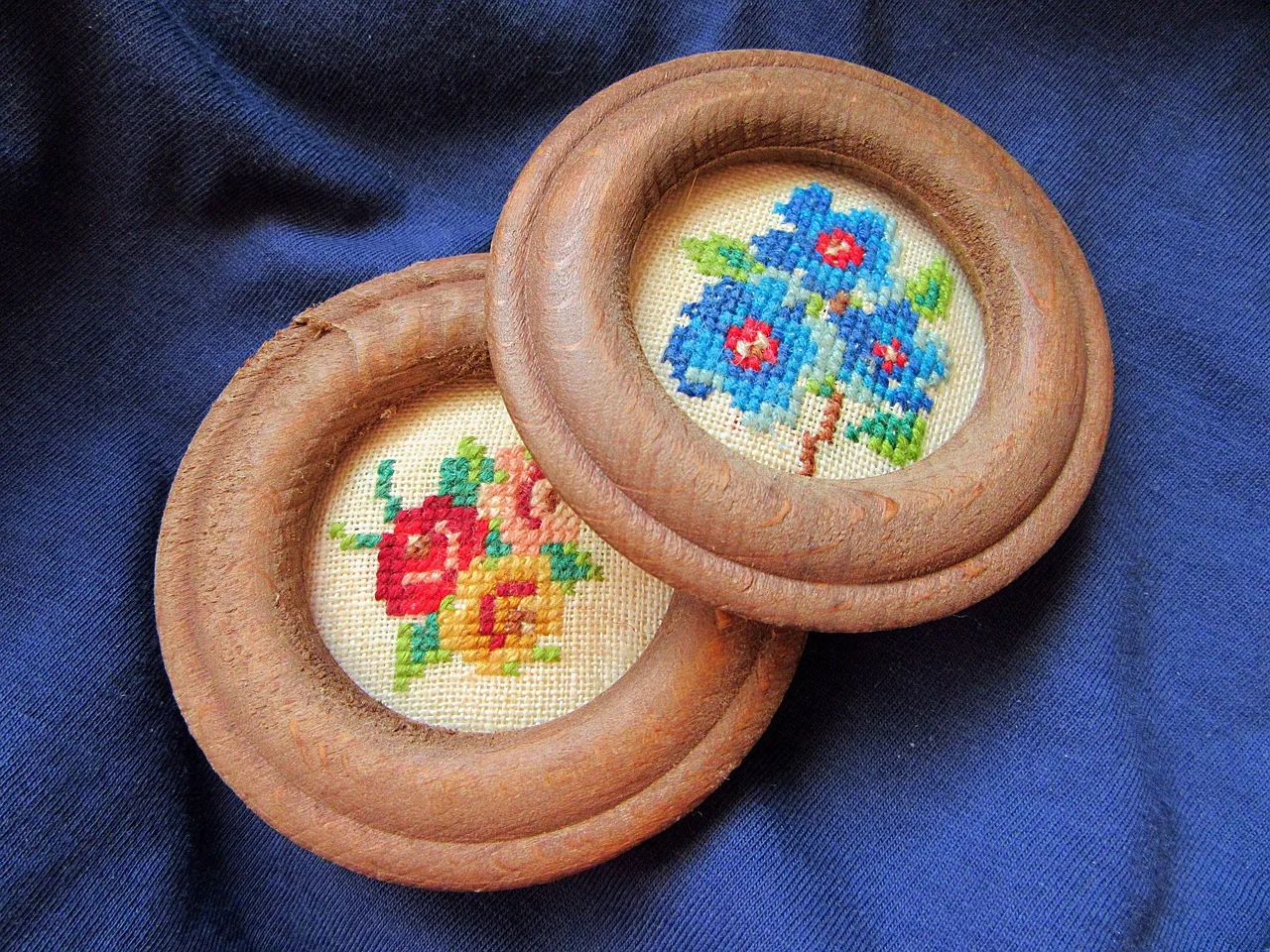
The frame can do the dating. The stitching can be as fine as the day it came off the hoop.
A home blogger at Stone Cottage Home showed a cross-stitch rose “in a very 1980’s style frame”: a dated oak frame with a dusty-rose double mat. She moved it to a vintage gilded frame with a green liner. Her rule: “Sometimes the only thing wrong with a frame is its color.” Her usual fixes are spray paint or Rub ‘n Buff.
Her other projects give a sense of scale, though they’re her costs on her projects, not averages. She painted orange 1980s oak frames satin black, and one project “was about $10!” A thrifted narrow gold frame with a linen mat cost her $1.25.
While the back is open, look at what’s behind the stitching. The Conservation Center, an art conservation firm, says acid in a cardboard backing breaks down and migrates into the work: “We suggest replacing cardboard immediately with archival materials.” Dr. Lori Verderame says acid-free mats “are usually more costly, but they are worth it.”
Glass is your call. Dr. Lori advises against it for needlework, because “the glass creates an environment that traps heat and moisture.” Many conservation framers do use glass, with a spacer that holds it off the stitches.
#1 The quilt folded over a ladder
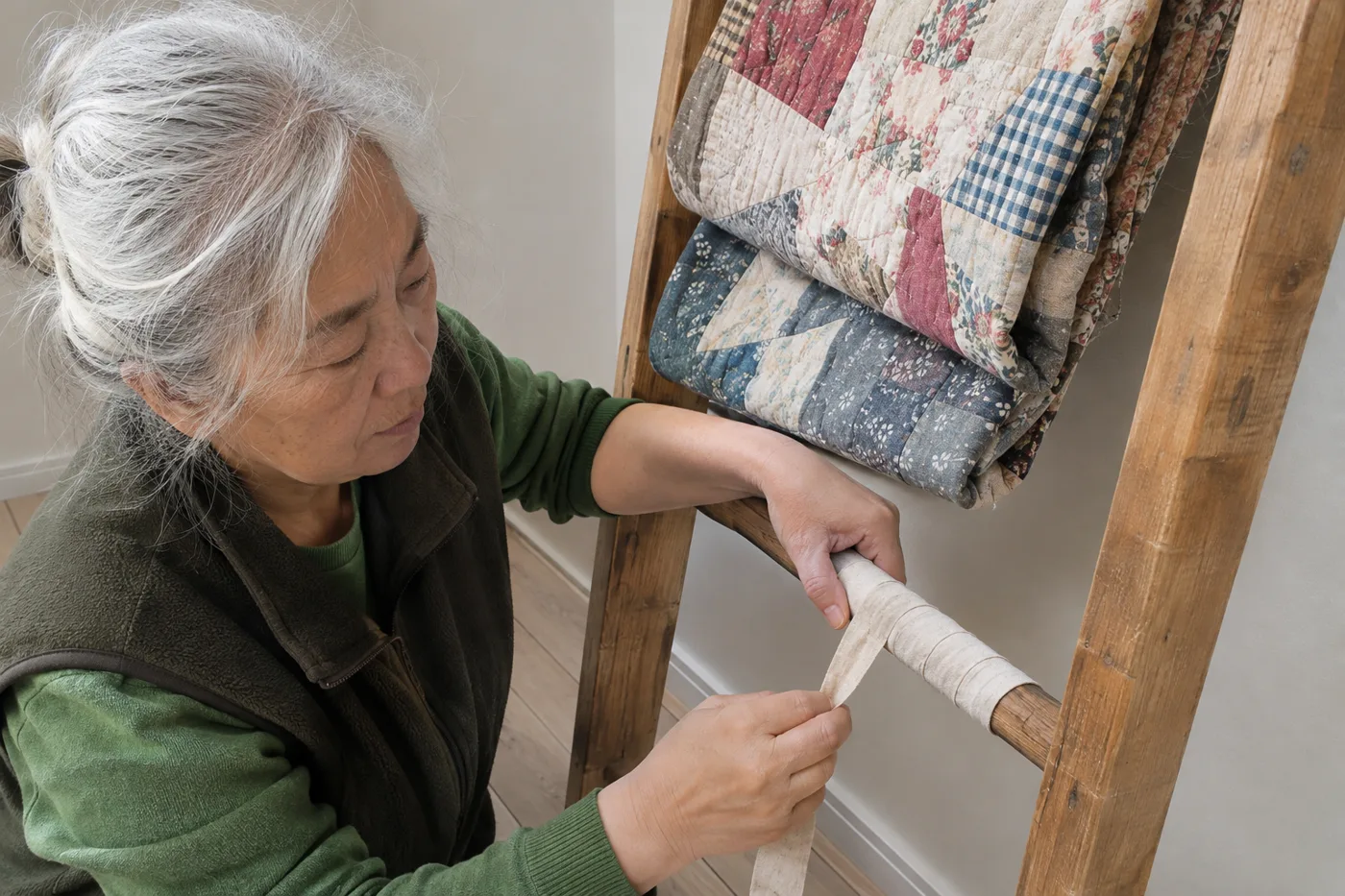
The ladder leans against the bedroom wall, and a quilt hangs folded over the second rung so the best blocks show. It can hurt the quilt twice.
The first problem is the wood. The International Quilt Museum warns that “woods of any type release volatile, acidic oils that yellow and weaken textiles” when they touch fabric directly. A bare ladder rung is direct contact, day and night.
The second is the edge. Kris Driessen, founder of the Quilt History List, writes at QuiltHistory.com: “Don’t fold it over a sharp surface like a chair rung or table edge.” A ladder rung is the same kind of edge, and the quilt’s whole weight hangs on one line across it.
You can keep the ladder. Here’s how:
- Line the rung. The San Jose Museum of Quilts & Textiles says wood can emit volatile acids and recommends lining storage containers with acid-free tissue or unbleached muslin. We’re applying that to the rung: wrap a few layers around any rung the quilt touches, which also softens the edge.
- Fold wide. University of Nebraska-Lincoln Extension says to fold a quilt “as few times as possible.” Two broad folds beat four tight ones.
- One quilt per rung. The Rutherford B. Hayes Presidential Library & Museums warns that stacking too many folded quilts lets the weight set creases. On a ladder, the quilt underneath carries the one on top.
- Refold on new lines. Every fold line takes strain, so move it.
How often to refold depends on the source. QuiltHistory.com says about every month. The Hayes museum and the San Jose museum both say every 3 to 6 months. The International Quilt Museum refolds its own collection every two years. Every 3 to 6 months is where two museums agree, so refolding at the start of each season fits.
Or skip the rung entirely. QuiltHistory.com says a quilt rack or a chair nobody sits in works fine, and a quilt spread on a bed carries its weight across its whole width.
Next time you shake it out to refold it, run your hand along the old fold line. You’ll feel where the rung was.
Keep reading
 17 Things Christmas Bazaar Sellers Know That Craft-Fair Guides Don’tSee all 17 →
More you’ll enjoy
 17 Handmade Gifts Grandkids Will Actually Keep
 17 Christmas Crafts for Adults That Make Lovely Gifts
 15 Things Hiding in Grandma’s Sewing Box That Could Be Worth Real Money
The bottom line
A room full of handmade things starts to look dated when nothing in it has moved in years. A room where pieces come and go looks lived in, even when every piece is forty years old.
Several of these changes cost nothing: a lamp carried in from the spare room, a doily moved to bare wood, a quilt traded for its sister.
Try one this weekend and see who notices first.
Bonus: Five more checks for the handmade pieces in your house
- Never let a framer drymount a stitched piece, a painting on paper or anything you value. Dr. Lori Verderame says on her framing tips page, “Don’t let anyone drymount a work on paper or anything else of value.”
- If you choose glass with UV protection, keep the piece out of the sun anyway. Dr. Lori says on the same page that it “won’t completely prevent fading but it will give some protection.”
- Check where the paintings are stored, whether you painted them or someone else did. Dr. Lori says never let paintings lie flat, never store them face up under a bed or leaning against a sofa, and hang large ones on secure hooks.
- Pull out the 1970s macramé before you write it off. The Topeka & Shawnee County Public Library says macramé is re-emerging online, and “The jute owls of yore have transformed into decorative accents.”
- If lace panels hang in a front window, know that designers split on them. Magda Callery of Style by Magda told House Digest, “Unless your goal is to recreate your grandma’s living room, lace curtains are better left in the past,” while Lauren Saab told Homes & Gardens, “Lace carries memory.” Hang a plain sheer on one window and the lace on another for a week, and keep whichever you look at more.
Questions people also ask
Is crochet decor outdated?
Not according to recent coverage: a 2026 House Digest piece treats the 1970s afghan as a colorful accent worth bringing back. Thousands of fans shared home-knitted copies of a patchwork cardigan online during lockdown, and London’s Victoria and Albert Museum collected the original in 2020. House Beautiful’s 2019 “grandmillennial” label described younger people drawn to embroidered linens and other things once called “outdated.” What can look dated is quantity and placement, such as an afghan on every chair.
How do you display a quilt without damaging it?
Lay it flat on a bed, or hang it from a sewn cloth sleeve on a rod, and keep it out of direct sun. Never use nails, staples, tacks or pins, says University of Nebraska-Lincoln Extension. Take a hanging quilt down regularly: the Louisiana Quilt Documentation Project says one to three months is safer, and the extension service says at least every six months. The San Jose Museum of Quilts & Textiles suggests alternating two quilts.
How do you make old decor look modern without replacing it?
Change what surrounds the piece and leave the piece alone. Repainting or swapping a dated frame can be enough, as one home blogger showed with a cross-stitch rose. Designer Lauren Sullivan, quoted in Good Housekeeping, describes a move toward rooms that blend modern and traditional pieces instead of one theme. On a bed, a quilt looks current as one layer rather than part of a matching set.
How do I keep displayed afghans and doilies from collecting dust?
Vacuum them gently on the lowest suction instead of washing them. The International Quilt Museum covers the nozzle with tulle, and the Hayes museum suggests a low-suction handheld with a brush, over a screen for delicate pieces. Be wary of washing old pieces: the International Quilt Museum won’t recommend washing quilts, and the San Jose museum says to test old pieces for colorfastness first. This advice comes from quilt museums, and applying it to afghans and doilies is our inference.
Should I pack away handmade decor before selling my house?
Decluttering is agents’ top advice to sellers, so pack away the excess. In the National Association of Realtors’ 2025 staging survey, 91% of agents recommended decluttering. Redfin’s guide suggests packing away collectibles, hobby displays and “excess pillows, throws” before listing. Pack handmade pieces carefully, with acid-free tissue or unbleached muslin between them and bare cardboard, so they come through the move in the shape they went in.


