Fourteen plain fixes, from a fabric spray to a three-foot rule, that keep your batting snow, felt ornaments and Mom’s ceramic tree on display.
The habit at #1 is one you’ve probably watched for years without a second thought, and an engineer’s bench test finally put a temperature on it.
The first night everything is lit, you turn off the overhead light and sit down just to look. The crocheted snowflakes you starched stiff. The felt birds. The ceramic tree with its little plastic lights, plugged in where it has always been plugged in.
When it comes to Christmas decoration fire safety, no official body has tested the handmade materials in this room, such as bulb covers or hot-glued wire.
#14 Cotton batting snow tucked around the lights
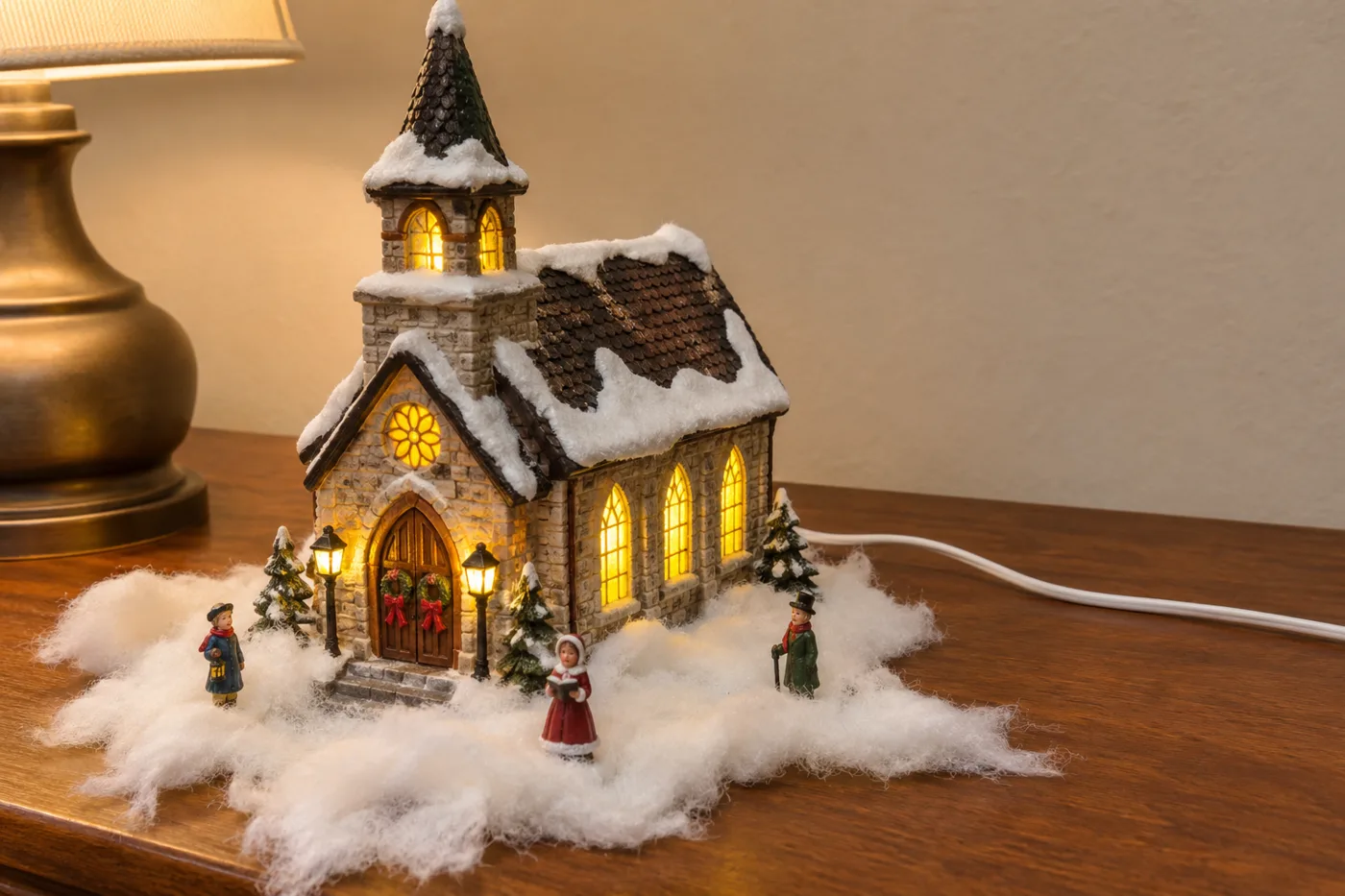
You tear the batting instead of cutting it, so the edges look like drifts. You work it up around every house in the village until only the rooftops show. Somewhere under that snow, a little bulb is lit.
Cotton batting is fuel, and university fire rules name it outright. In a study done for the Consumer Product Safety Commission in 1979, hot surfaces above 390°C (about 730°F) could cause glowing ignition of cellulose materials such as decorative cotton within two minutes. Some samples of absorbent, untreated cotton reached flaming ignition. Failing lamps in the same tests reached hot spots as high as 470°C, well above the heat that set the cotton glowing.
The University of Rochester bans “untreated cotton batting” from its campus housing decorations. Western Michigan University puts “cotton batting or cotton balls” on its list of unacceptable decorations.
If you want to treat the cotton yourself, Dharma Trading sells a fire retardant spray. Here is what you can do this week:
- Keep every bulb out of the batting. Let the snow stop short of each lit house and its cord, so nothing lit sits in or under cotton.
- Where a village piece uses a light string, an LED string runs cooler to the touch.
- Treat the batting with a fabric spray, after testing a scrap.
Dharma’s spray is made by Firetect. BanFire’s spray runs about $19.95 a quart. Treated or not, keep bulbs out of the batting.
Before you spray the batting – Spray until damp, let it air dry, then spray again. BanFire says most fabrics need two applications. – Try a scrap first to check the color. BanFire warns it can discolor natural jute burlap. – Both sprays wash out, so treat again after every wash. – Sprinkle a few drops of water on the fabric. If they bead up, Dharma says the spray can’t soak in. It also does poorly on acrylic and nylon, and the label says it isn’t meant for clothing.
#13 Hand-knit stockings on a lit mantel
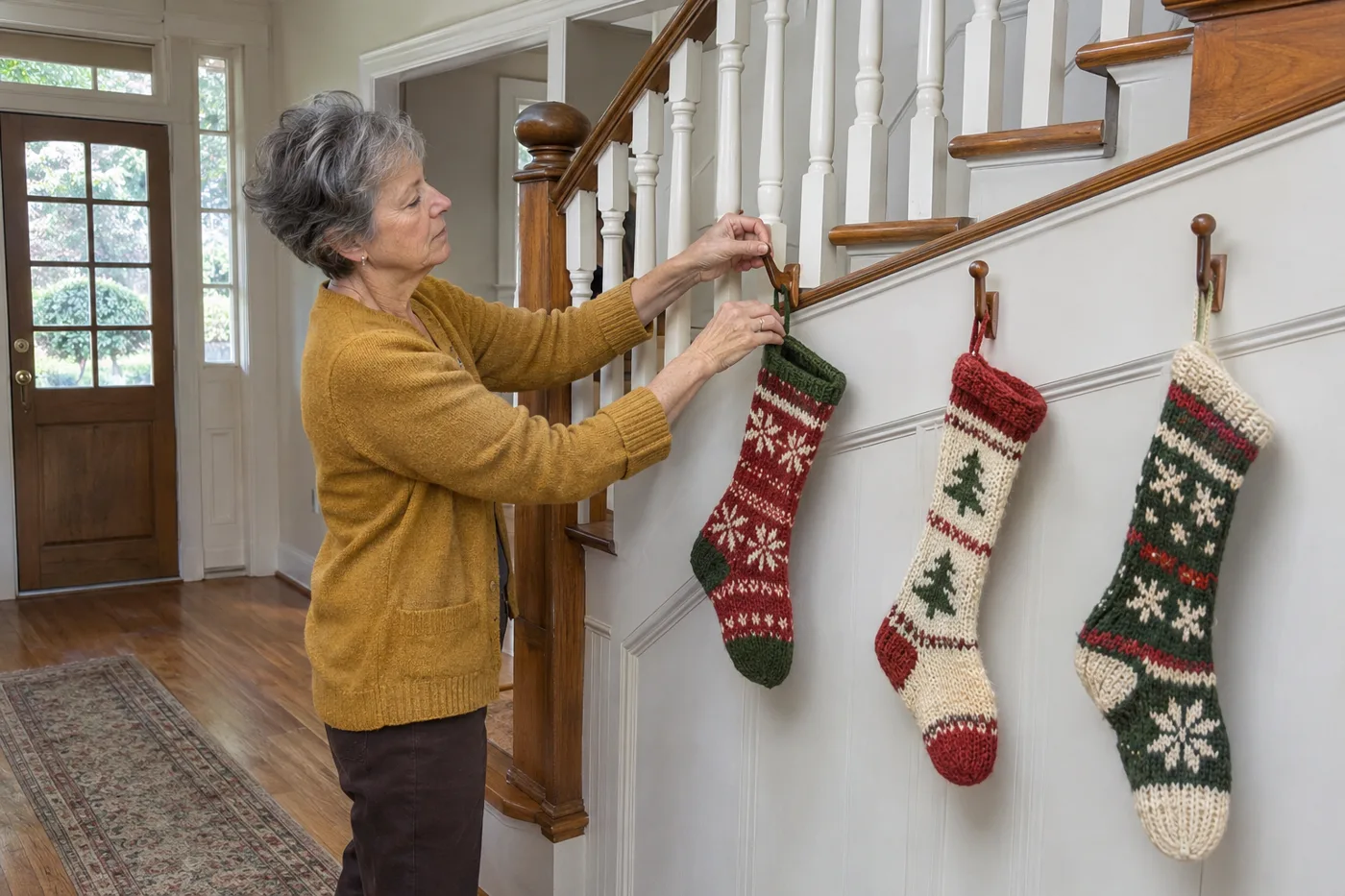
The Red Cross rule would fit on a gift tag: “If hanging stockings on the fireplace mantel, don’t light the fireplace.”
That covers the stockings you knit with the names worked across the cuffs. It covers the quilted ones with velvet trim, and the felt ones somebody covered in sequins decades ago.
If you have a fireplace and use it, these are the distances worth knowing. They come from different rulebooks and measure different things.
| Distance | What it’s for |
|---|---|
| 3 feet | Decorations from heat sources (the tree rule names fireplaces, radiators, space heaters and heat vents) |
| 12 inches | A candle from anything that burns |
| 6 inches | Combustible mantel or trim from a masonry fireplace opening, under building code |
| 16 inches | How far the hearth must reach in front of an opening under 6 square feet, plus 8 inches to each side |
The 3 feet comes from fire officials, and the same distance applies to trees in U.S. Fire Administration guidance. The 6 inches and 16 inches come from the 2018 International Residential Code; the 6-inch rule covers masonry fireplaces. Factory-built and gas units follow their own maker’s clearances, so the manual is the place to look if yours is one of those.
The 6 inches is for the combustible mantel or trim itself. Decorations like stockings fall under the 3-foot rule.
Take the stockings down before you light a fire, and hang them back once it’s out. If that’s too much fuss every evening, give them a new home for the season: a stair rail, a row of hooks in the hall, a quilt ladder. Anywhere at least three feet away from a heat source works.
#12 A candle ring on a quilted runner
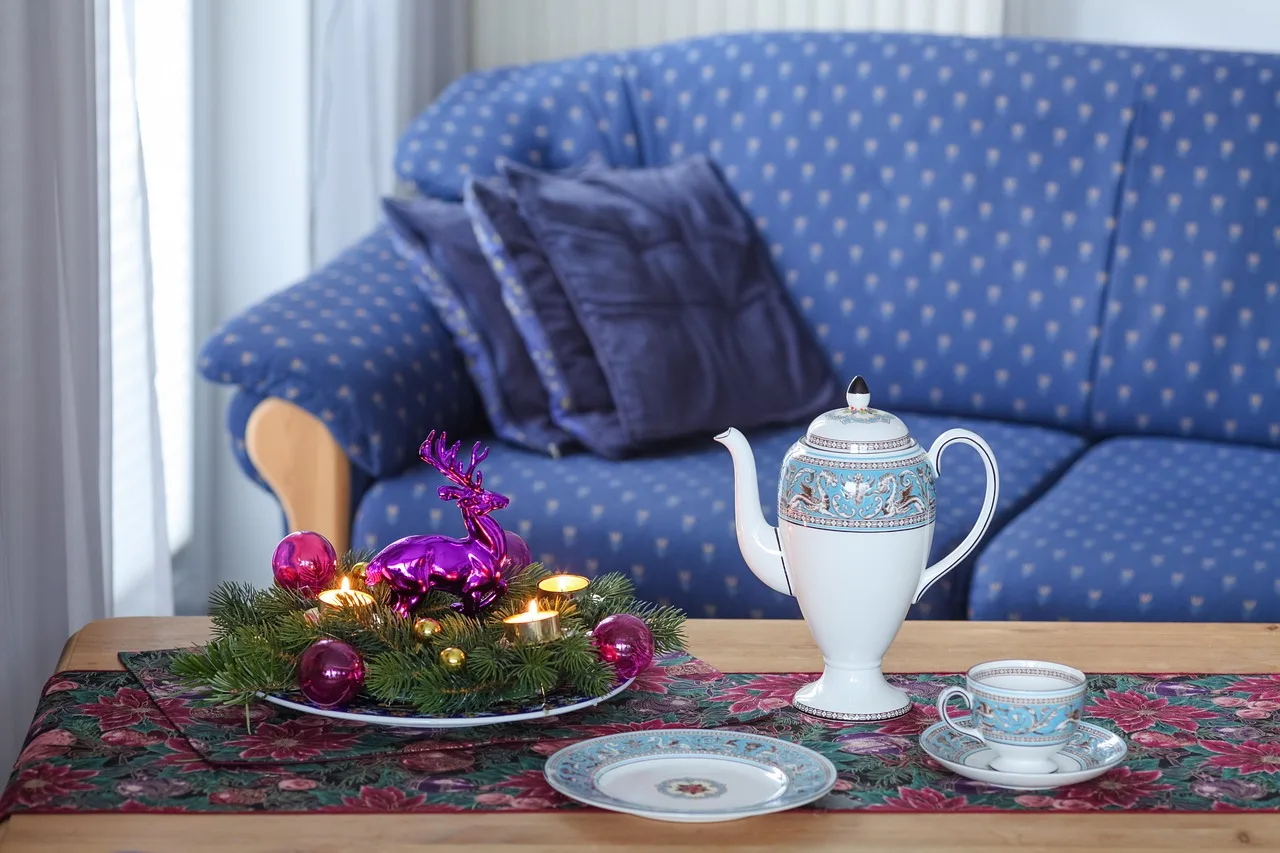
The U.S. Fire Administration says to keep candles at least 12 inches from anything that can burn. A quilted runner, batting and all, can burn. A candle ring sits right on top of it. The runner breaks the 12-inch rule before you strike the match.
Here are your three ways to keep the look, and what each really does:
- Put a trivet or tile under the ring. A release from the Consumer Product Safety Commission, the National Fire Protection Association and the Maryland State Fire Marshal says candles belong on a “stable, heat-resistant surface.” That protects the table. The runner around it is still inside 12 inches of the flame, so fold it back or move the ring off it.
- Swap in battery flameless candles. The Fire Administration says they can “look, smell and feel like real candles.” This is the only choice that leaves the ring exactly where it is, on the runner you made for it.
- Keep real candles and move the runner. It works, as long as the table under the ring is clear for a foot all around.
If your ring is fresh greens, the choice is made for you. University of Illinois Extension says wet floral foam can water a candle ring, but it also warns that greens “can dry out quickly indoors without a water source, so never put them near an open flame.” Fresh greens get flameless candles.
If you light real ones in an artificial ring, the Spokane Fire Department gives two habits worth keeping: trim wicks to a quarter inch, and put out tapers and pillars when they burn down to within two inches of the holder.
Did you know?
In December, candles start nearly half of all home fires that begin with decorations: 49%, up from 33% across the whole year, according to National Fire Protection Association figures.
#11 Plugging the whole village into one strip
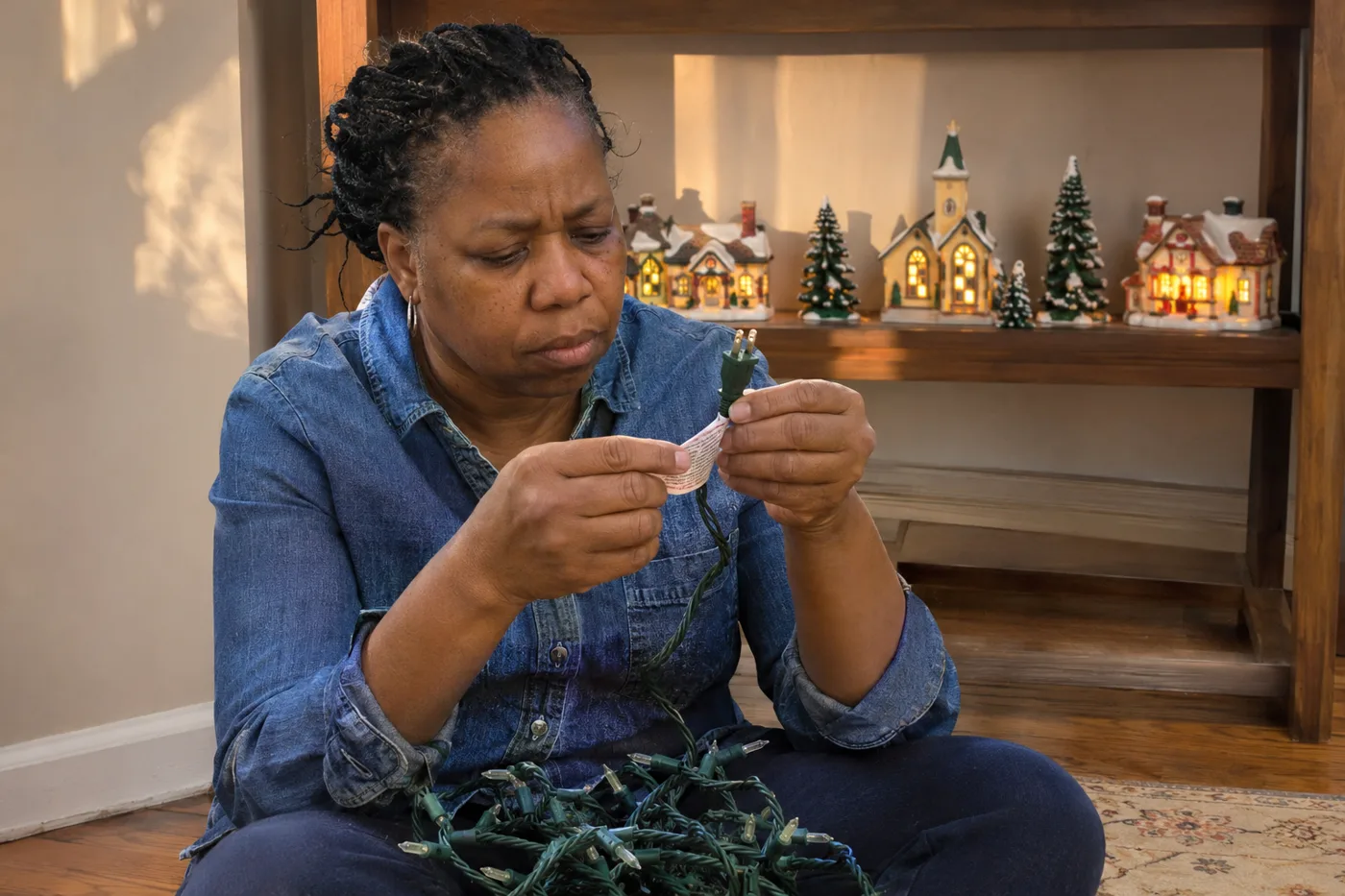
You know the “three strands” rule. Some tags ask for more than that.
For strings that use a nonstandard multi-pin connector, the UL 588 standard requires a label saying to connect end to end only strings “of the same model number from the same manufacturer,” up to a maximum total of 216 watts (1.8 amps). Check each tag for that wording.
Now think about a village built over twenty years, with a craft-store house here and a gift-shop church there. If your village strings use those special plugs, they are unlikely to match. Feeding it all through power strips plugged into other power strips is worse: the University of Rochester’s medical center bans that “piggyback” setup outright.
Read the tag on each cord this week. If it was cut off or has faded past reading, treat that string as a stranger and give it a plug of its own. Then split the load where you can: the village on one outlet, the mantel garland on another, the tree on a third, each strip plugged straight into the wall.
 You might also like17 Handmade Christmas Ornaments Our Grandmothers Made
#10 Cords tucked under the tree skirt
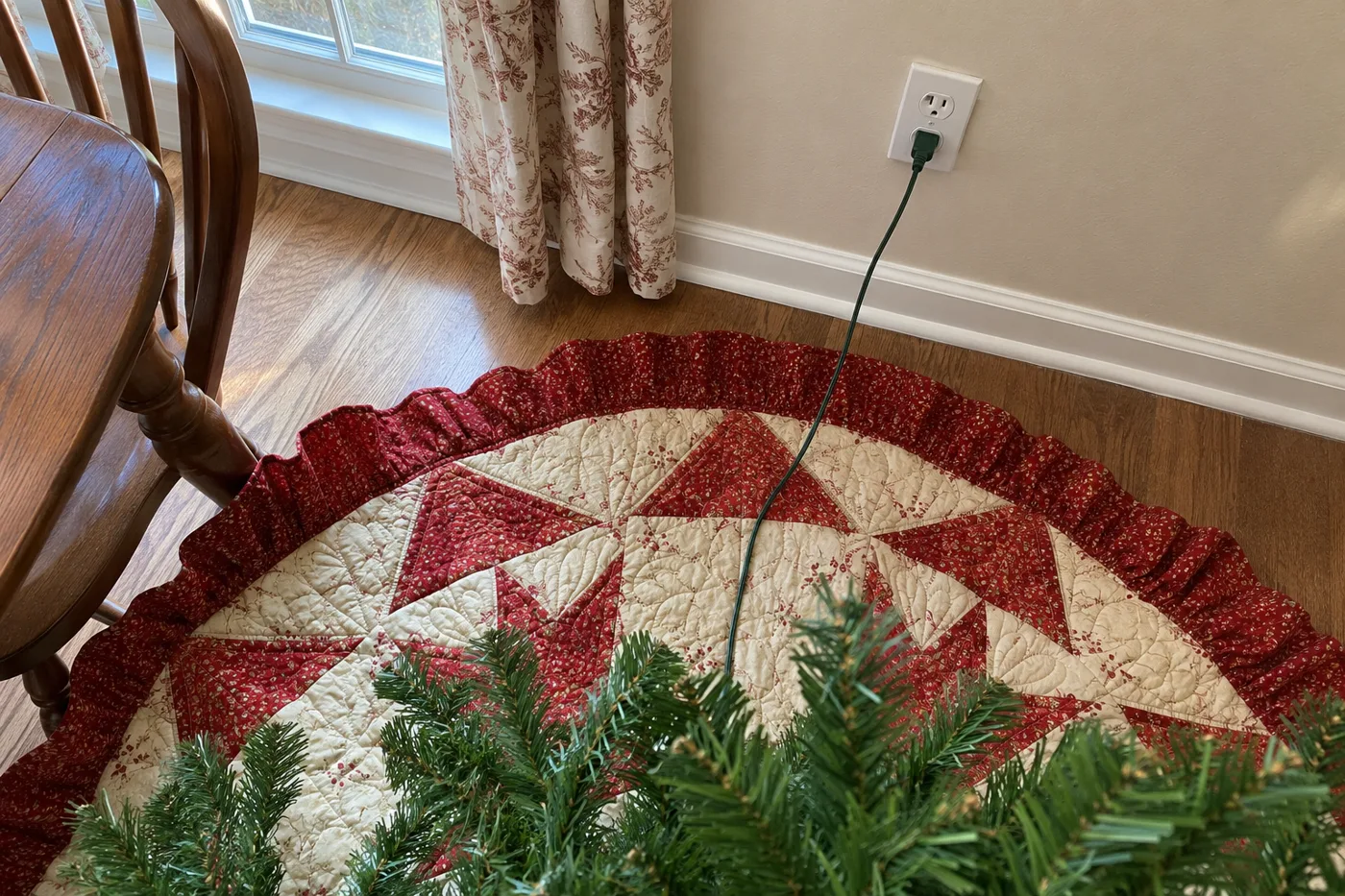
Where does the cord go once the tree is lit? Under the skirt, usually, where the quilted ruffle hides it.
The Omaha Public Power District, a utility, says never to put light strings under rugs, furniture or appliances, because covered cords can overheat or fray. The Detroit Fire Department says to never run cords under carpet. We read a quilted skirt, batting and all, as a small rug for this purpose, and a cord under it as covered.
Run the cord over the skirt on the side that faces the wall, where you can see it and company can’t. After the lights have been on a while, run your hand along it. The utility says wires should not be warm to the touch. A warm cord gets unplugged and checked over before it goes back on.
#9 Garland creeping toward the smoke alarm
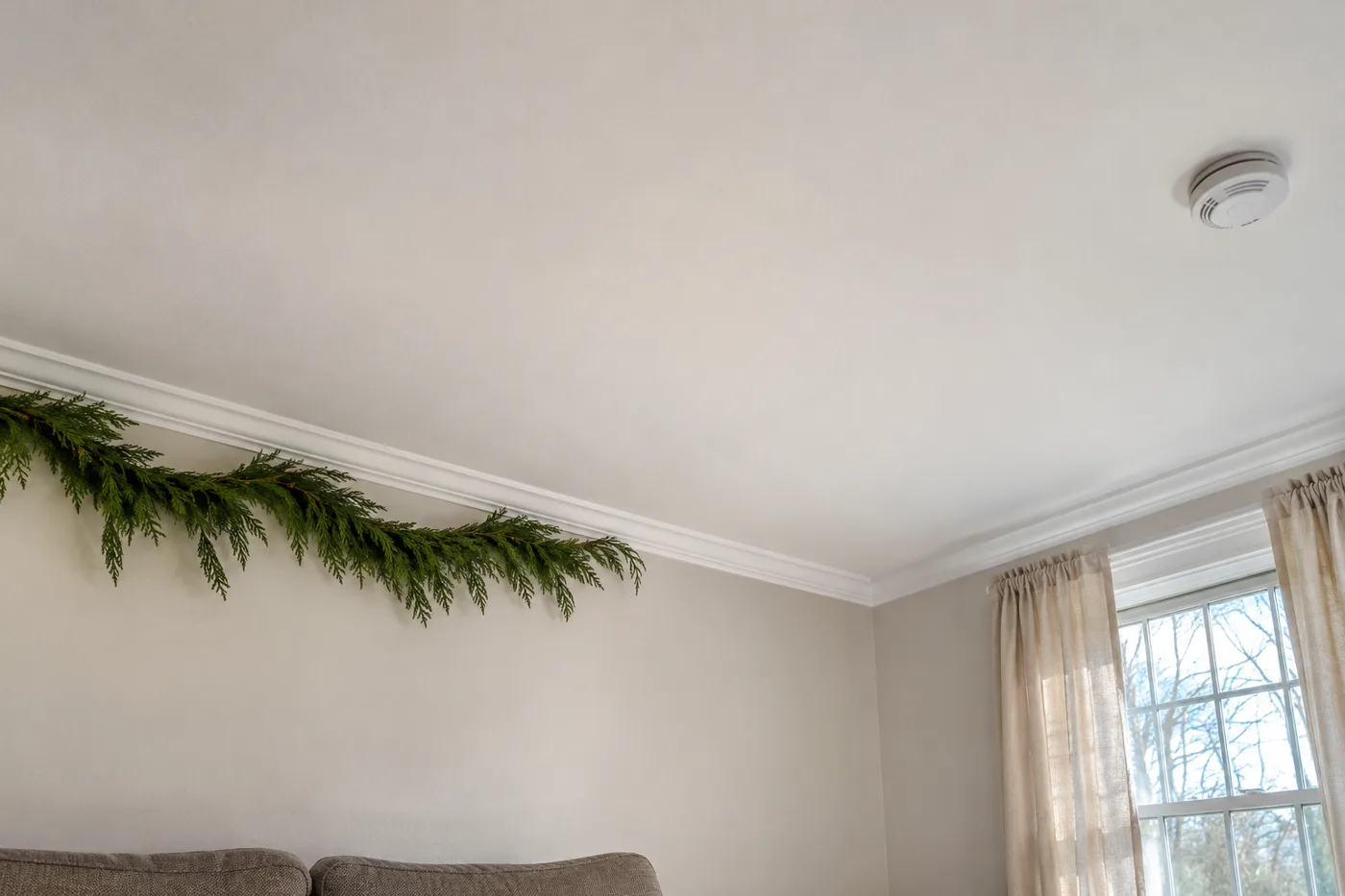
Smoke rises, so smoke alarms go on the ceiling or high on a wall, says the International Association of Fire Chiefs. That’s the same strip of house where garland and tinsel go: along the crown molding, over the doorway, swagged from corner to corner.
A swag that slips an inch a week can end up across the alarm by New Year’s. From the sofa, you’d never see it.
Wesleyan University’s fire rules forbid covering a smoke detector and forbid hanging string lights on one. These are one university’s rules, but the reason holds in any house.
“Working smoke alarms cut the risk of dying in a home fire in half as you only have about two minutes to safely get out.” Adelaide Kirk, regional disaster officer, American Red Cross
Keep a clear ring around every alarm, with no garland, tinsel, lights or paper chain touching it or hanging over it. The Red Cross also says to replace any alarm that’s 10 years old or older. If you can’t remember when yours went up, that’s your answer.
#8 Yard greenery swags on the mantel
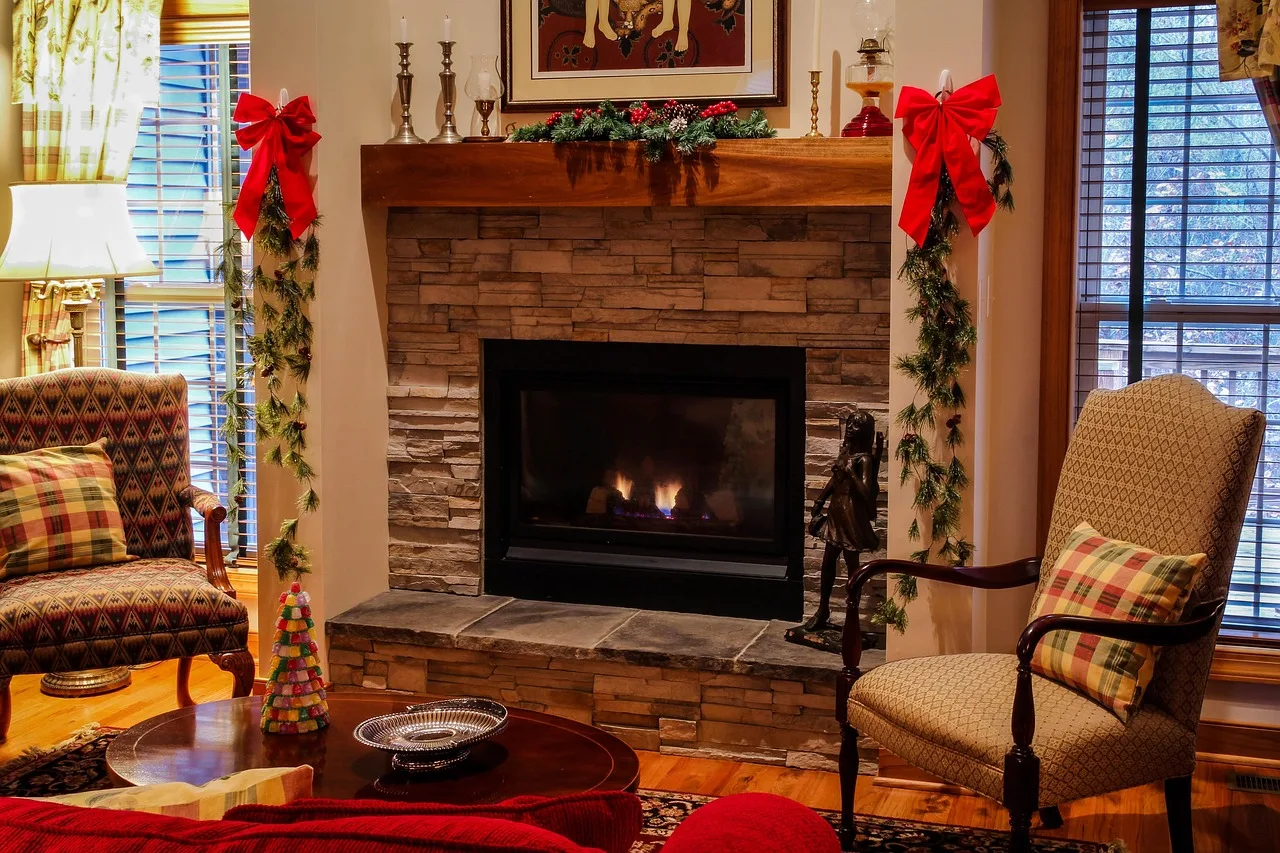
Boughs from your own yard dry a little more every day they’re inside.
University of Illinois Extension says never to place fresh greenery near space heaters, heater vents or sunny windows. The sunny window is the easy one to miss, because nothing about it looks like a heater.
With good care, the extension says, greens stay attractive indoors for “at least a few weeks.” Christmas runs longer than that if you decorate after Thanksgiving. David Trinklein of the University of Missouri says greenery brought in at the start of the season “is likely to get very dry by the time New Year’s Day arrives and could pose a fire hazard.”
- Keep swags clear of heat vents and radiators, and out of direct sun.
- Replace greenery brought in at the start of the season, or take it down, before New Year’s Day.
- The extension notes that commercial sprays are sold to give greens “some fire resistance.” Some is the word to notice, so replacing dry greens still matters more.
#7 Light strings stored where mice chew
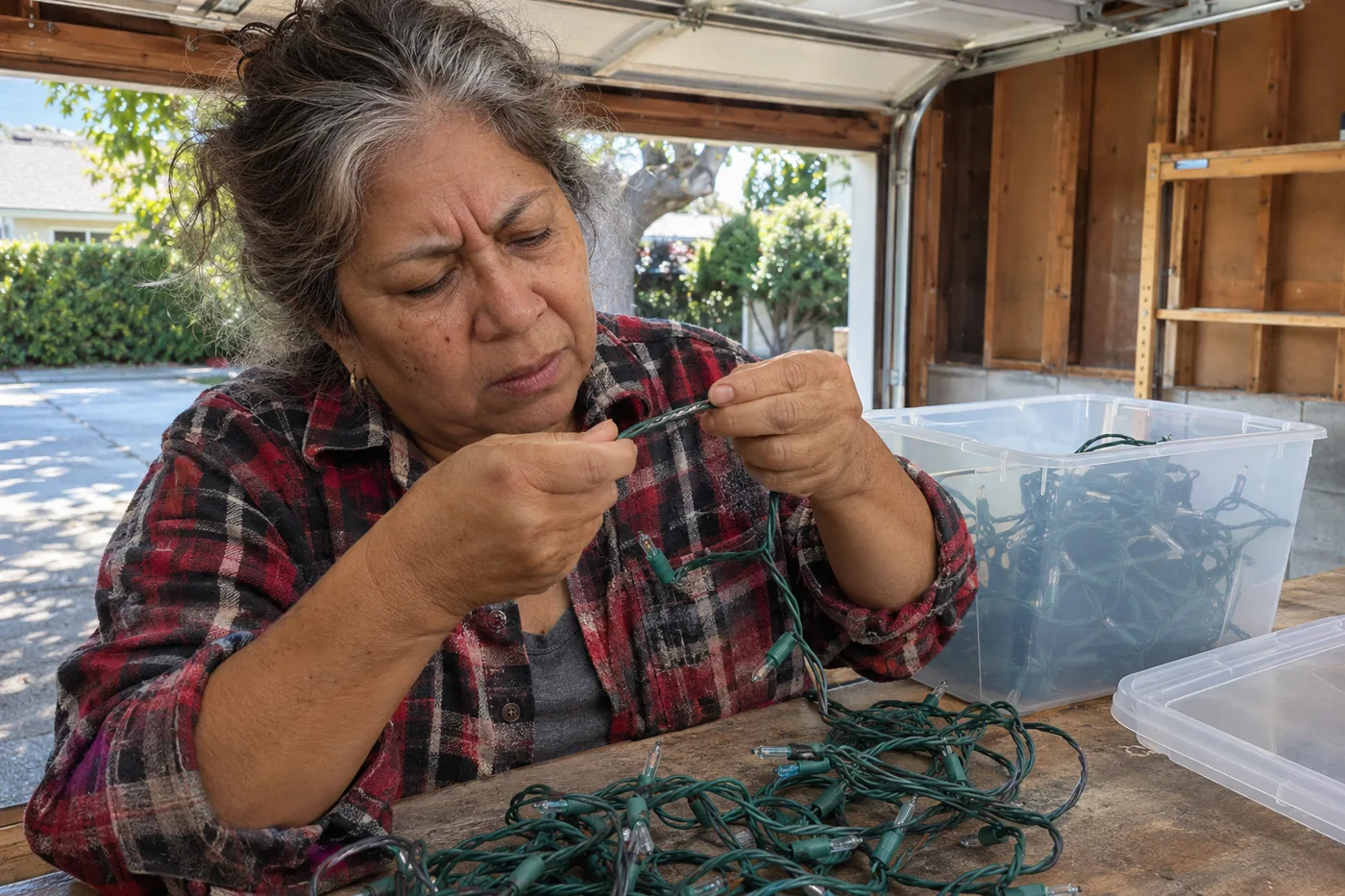
You carry the strings in from the garage and sit with them across your lap, working the knot loose one loop at a time. Halfway down, there’s a nick in the green coating you’d swear wasn’t there last January.
Damage can happen in storage, long before the lights go up. Skedaddle Wildlife Control recommends airtight containers and decorations that are fully dry before they go in. Before the lights go back up, it says to inspect the wires and plug them in to see if they work.
What you’re looking for, from the Omaha utility’s yearly check:
- frayed wires
- bare spots
- broken or cracked sockets
- excess wear
The U.S. Fire Administration’s rule is short: throw away light strands with frayed or pinched wires. Do the looking first, in good light, the whole length of the string. Plug in only a string that passes, and do it while it’s lying out where you can watch it.
Did you know?
The carton your lights came in, and the grocery bag around it, won’t slow a mouse down. Skedaddle Wildlife Control says cardboard and plastic bags “present no barrier to them.”
#6 Aerosol glitter and snow near the fire
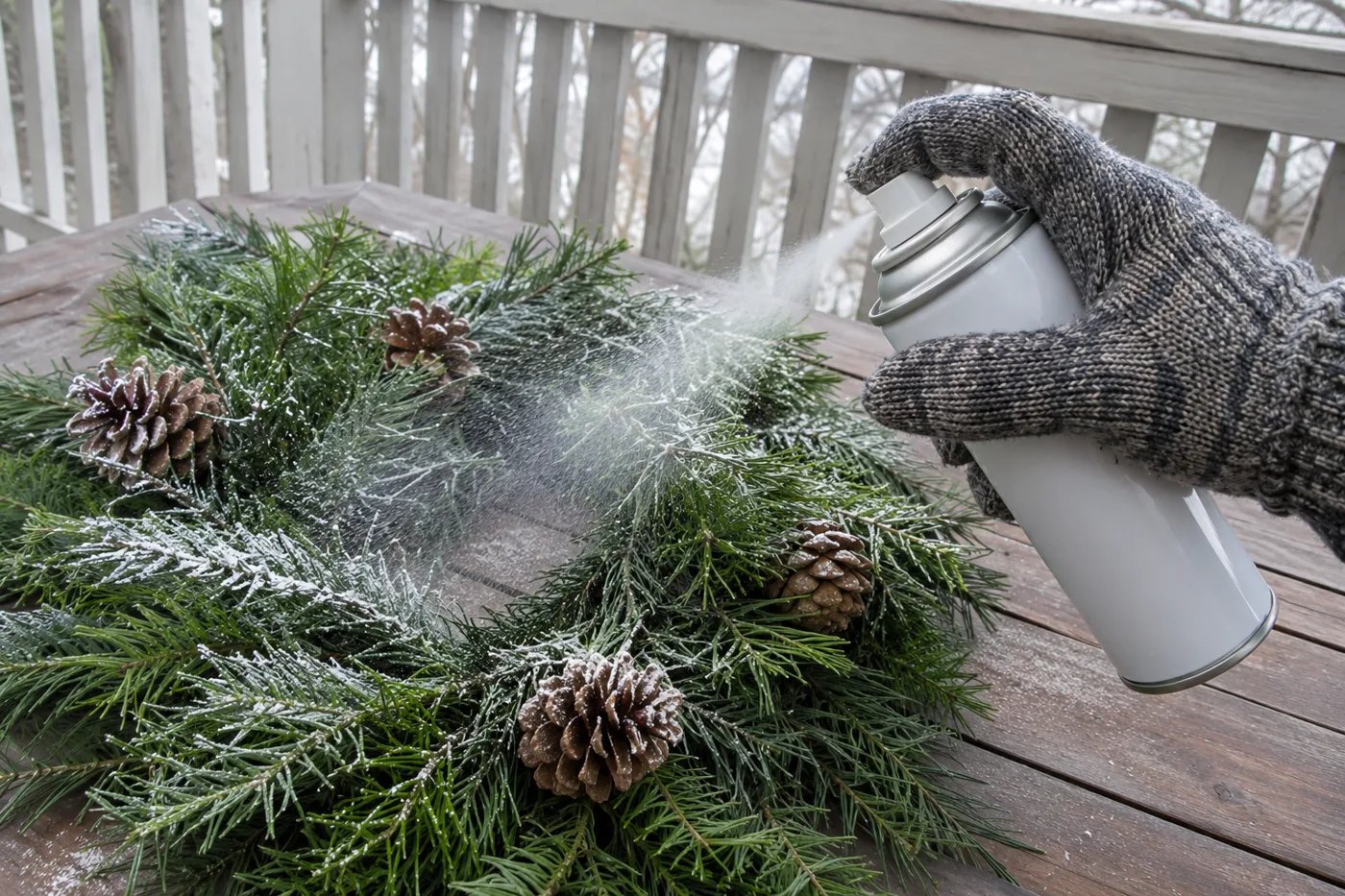
A can of spray snow is quick, so it tends to get done wherever the wreath already is. Sometimes that’s the hearth.
Firefighter Aaron Smith, who writes the Firefighterline site, says to “Never use snow spray near an open flame, such as a fireplace, BBQ, or candle.” The propellant in those cans, he writes, is propane or butane.
Spray away from any fire or candle, and keep the sprayed piece away from flames too.
 You might also like17 Dollar Store Christmas Crafts That Look Expensive
#5 Mom’s ceramic tree with its original cord
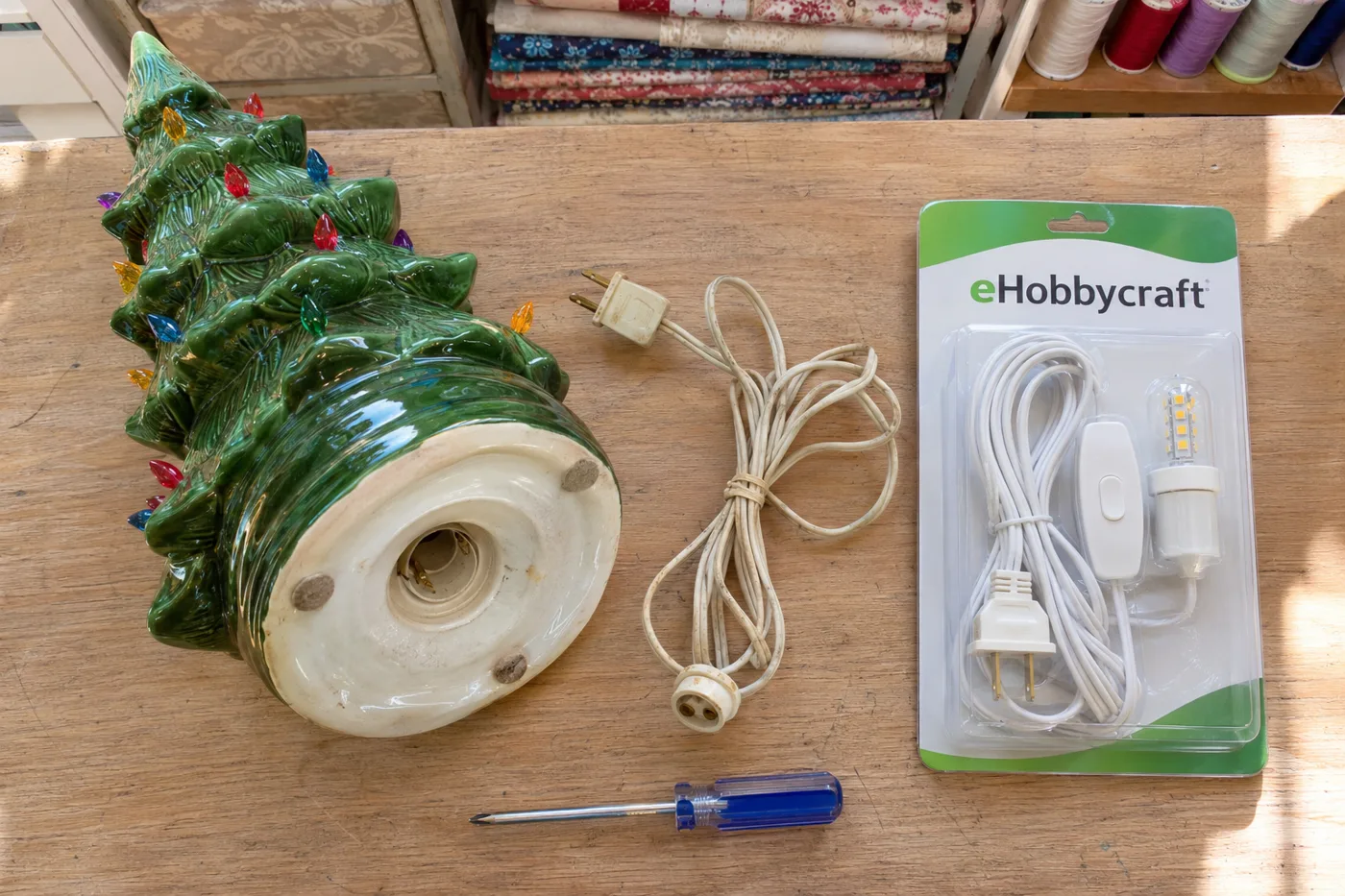
Yours may have come from your mother, an aunt or a ceramics class decades ago. The cord, the switch and the little socket in the base are the parts that can fail.
An eHobbycraft restoration guide says to stop using the tree if:
- the cord is frayed
- the plug is cracked
- the switch works only some of the time
- the socket shows signs of heat damage
When you sort through older decorations, the New Jersey Division of Fire Safety says to discard light sets with “loose connections, broken sockets or cracked or bare wires.” On a ceramic tree, that means the wiring goes and the tree stays.
Replacement kits make that easy. The small eHobbycraft kit has an E12 candelabra socket and a 0.7-watt LED bulb. The large kit has a six-foot listed cord set, a rotary switch, a standard-base socket and a 1.5-watt LED bulb.
The guide also warns: “Do not exceed the socket or fixture’s electrical rating.” Use the bulb the kit gives you, even if you’re tempted by a brighter one.
If wiring isn’t something you do, hand the tree and the kit to someone who rewires lamps.
#4 Fastening decorations onto a lit string
A lighted wreath is two things: a frame and a string of lights. When the pinecones and ornaments go on, the glue gun goes wherever is handy. Often that’s the wire.
A low-temperature glue gun heats glue to about 250°F, and a high one to about 380°F. You’ve felt that on a fingertip.
Two rules cover nearby ground. The UL 588 marking on strings with special multi-pin plugs says: “Do not replace or modify any connectors on this product, discard product if connector is damaged.” And the Consumer Product Safety Commission says to “Use only insulated staples (not nails or tacks) to hold strings in place.”
Our reading of both: glue the pinecone to the branch or the wreath frame, and let the light string run beside it. Keep glue and ornaments off the connectors entirely, and if a connector on one of those strings is already damaged, retire the string. And if you build lit wood signs or pallet trees, insulated staples are the only thing that goes into the wood next to the wire.
#3 Felt, paper and yarn ornaments resting on bulbs
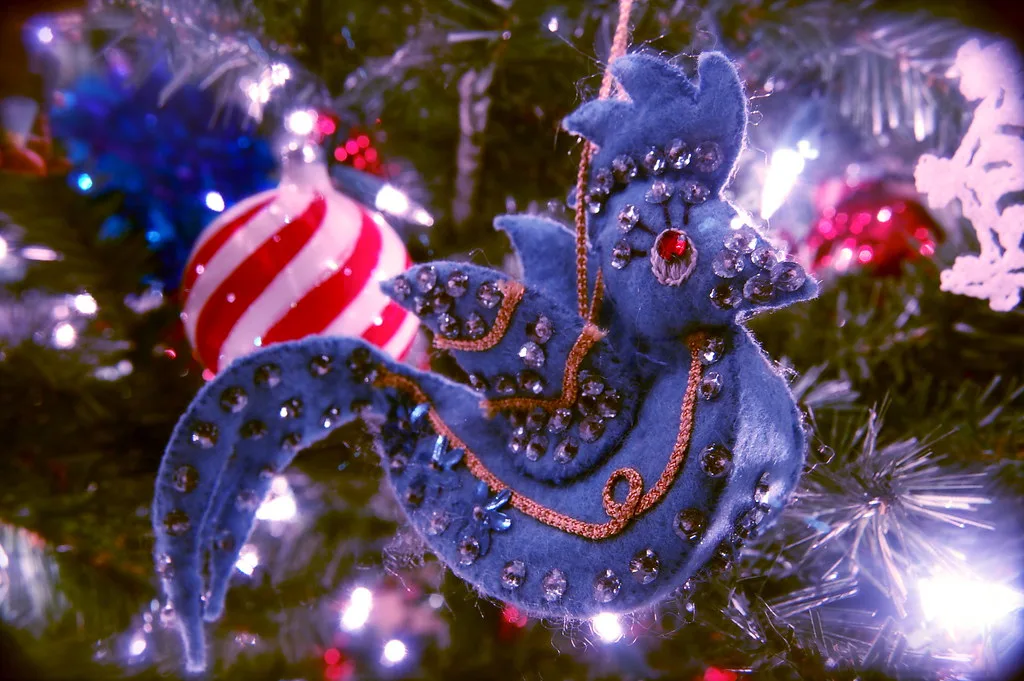
Western Michigan University’s fire rules list “Light bulbs in contact with decorations” as unacceptable. What happens when they do touch depends on what you made the ornament from. Here’s how three fibers behave in a flame, from FabricLink’s burn-test guide, and how the Dharma spray works on each:
| Fiber | In a flame | Takes the fabric spray |
|---|---|---|
| Wool | Burns, shrinks from the flame, leaves a crushable black bead | Works on most fabrics, the maker says |
| Cotton | Burns, leaves fine gray ash | Works on most fabrics, the maker says |
| Acrylic | Melts into a hard bead, gives off black smoke | Poorly, the maker says |
If your craft felt is acrylic, it melts, and the maker says the spray doesn’t work well on it. For new felt ornaments, wool is the better choice on both counts.
For paper or card, the Consumer Product Safety Commission says to look for materials labeled non-combustible or flame-resistant.
For yarn pieces, the nearest rule is Wesleyan University’s: placing cloth or paper over a lampshade or fixture is a cause of fire. Keep cloth off bulbs.
Turn the hook, shorten the hanger, or move the bulb, so nothing rests on a light. Let crocheted snowflakes and knit mittens hang beside the string, never wrapped around a bulb.
Did you know?
Paper’s commonly cited ignition point is about 451°F. NBC Montana puts a working incandescent bulb’s glass surface at around 150 to 250 degrees, but in the 1979 tests done for the Consumer Product Safety Commission, failing lamps reached hot spots as high as 470°C. That is why paper shouldn’t touch or wrap any bulb.
#2 Dried orange garland hung near heat
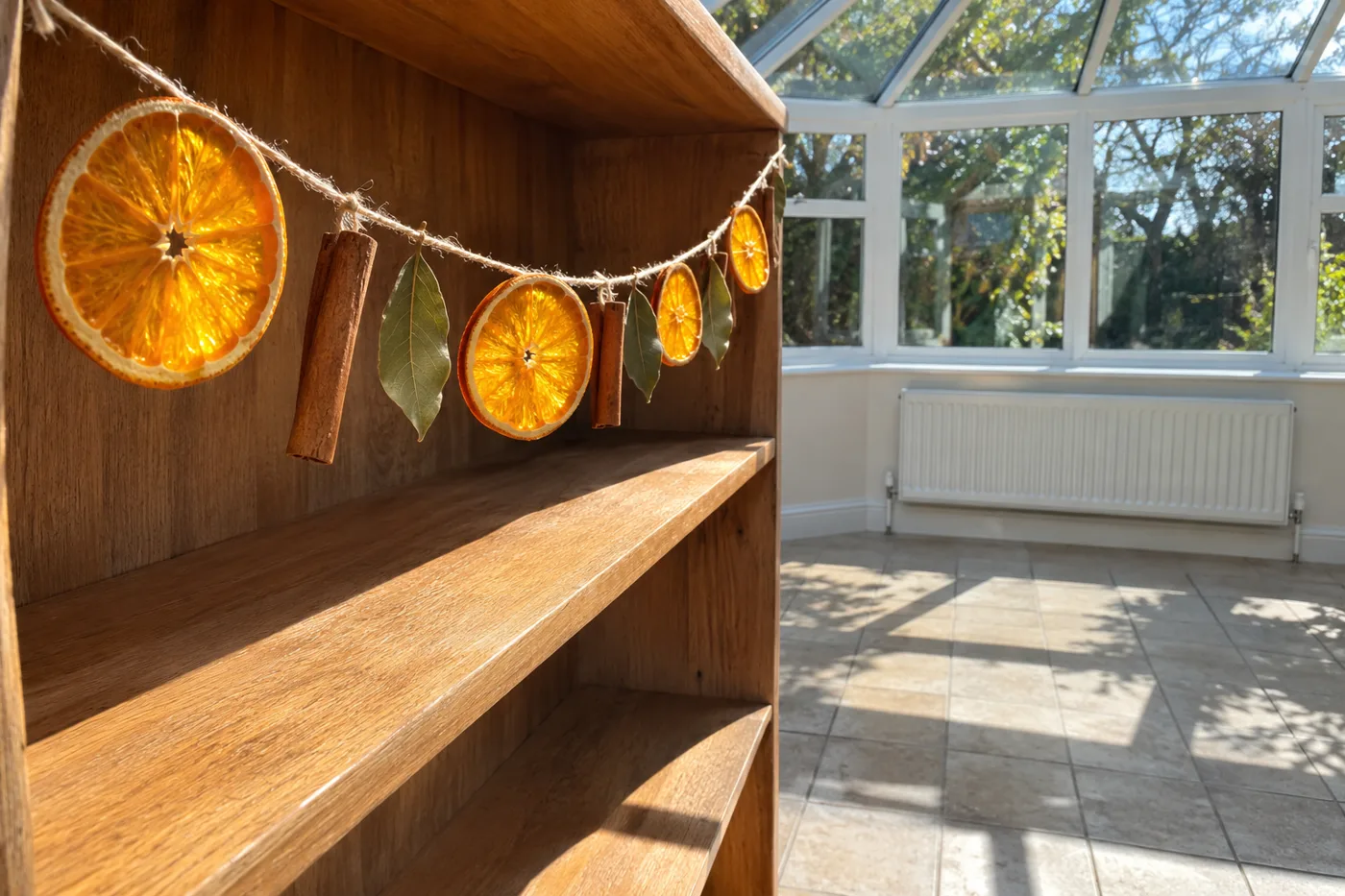
The slices came out of the oven looking like stained glass. You strung them with cinnamon sticks and a bay leaf here and there. Now the garland hangs over the radiator cover in the front window, or above the woodstove, where the warm air carries the smell through the whole room.
Becky Britton, writing for Real Self-Sufficiency, puts it plainly: a dried orange garland is “dried plant material tied onto string, so it is combustible.” She says to keep it clear of candles, fireplaces, woodstoves, space heaters, hot bulbs and cooking flames.
The Sarasota County Fire Department’s yardstick works here: “Keep decorations at least three feet from heat sources.” Distance is the big one: in National Fire Protection Association figures, nearly half of home fires that start with decorations happen because the decoration was too close to a heat source, such as a candle.
In an older house up north, the heat source may be a steam radiator under every window. Elsewhere it’s a floor vent or a space heater. Find the window, doorway or shelf that’s at least three feet from all of them, and that’s where the garland goes.
If you dry your own, Britton gives about 200°F for roughly 3 to 6 hours for quarter-inch slices. She calls it “a gentle oven project, not something to leave running while you’re out or asleep.”
#1 Old incandescent strings with dead bulbs
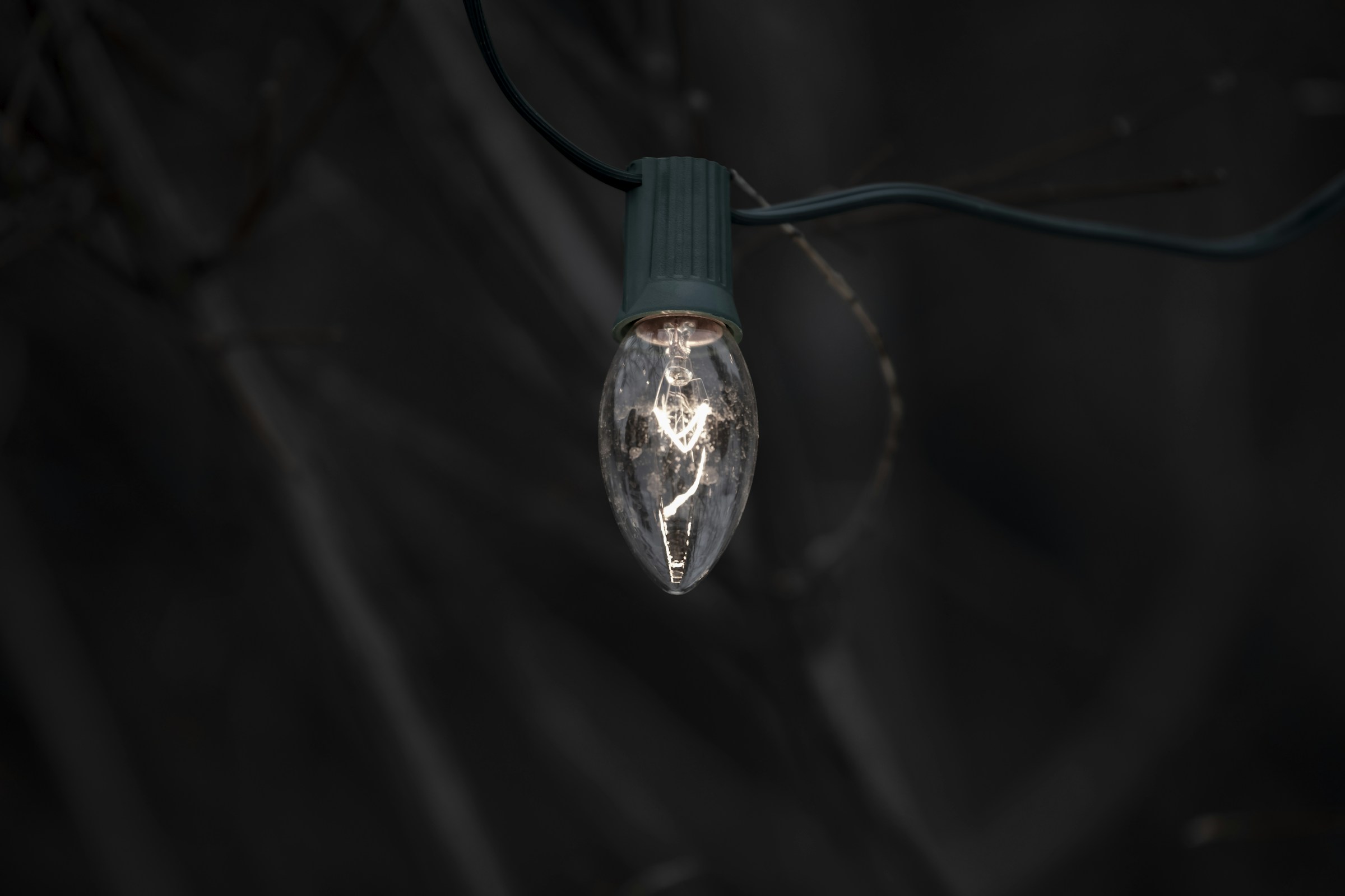
With an old incandescent string, the trouble starts when a bulb dies and stays dead, or gets pulled out and never replaced.
Matthew C. Wood, a forensic engineer at ROAR Engineering, tested a 20-bulb incandescent string on the bench. With 5 bulbs out, the bulb surfaces ran about 50°C instead of about 35°C. With 10 out, they ran about 80°C, hotter than the wire’s insulation is rated for. When he switched it back on, several more bulbs burned out.
What the bench test found – All 20 bulbs working: about 95°F (35°C) at the bulb, in a 75°F room – 5 bulbs removed: about 122°F (50°C) – 10 bulbs removed: about 176°F (80°C), “above the wire insulation rating” – An LED set: its warm parts rose only about 9°F (5°C) above the room
The 1979 study done for the Consumer Product Safety Commission found the same problem. Leaving burned-out lamps unreplaced, or using bulbs with the wrong voltage rating, can cause “very high power dissipation” in the remaining lamps. In plain words, the bulbs that are left take on more power and get hotter.
- Replace a dead bulb the day you notice it, with a spare made for that string.
- Or retire the string. LED lights produce less heat. Several Reddit commenters say they moved to LED strings because they stay cooler.
The Department of Energy says LED strands use 70 percent less energy. Its 2015 figures put lighting a 6-foot tree 12 hours a day for 40 days at 27 cents with LEDs and $10 with incandescent lights. That’s about $9.73 a season back on one tree, at 2015 prices.
Keep reading
 17 Things Christmas Bazaar Sellers Know That Craft-Fair Guides Don’tSee all 17 →
More you’ll enjoy
 17 Christmas Crafts for Adults That Make Lovely Gifts
 17 Handmade Gifts Grandkids Will Actually Keep
 15 Things Hiding in Grandma’s Sewing Box That Could Be Worth Real Money
The bottom line
The first night, you’re watching everything. The greens are fresh, the garland hangs where you put it, and you notice every bulb.
January is different. National Fire Protection Association figures show that 35% of home Christmas tree fires happen in January. Lorraine Carli, the association’s vice president of Outreach and Advocacy, said of the holiday home fires in its December 2024 release that the vast majority are “largely preventable.”
Write a date in early January on the calendar. On that day, walk every room with the lights on and look for one thing only: what’s touching a bulb, sitting near a flame, or creeping toward heat.
Bonus: Five fire habits for the rest of the season
- Put the lights on a timer or smart plug, so they switch off at bedtime even on the nights you forget.
- Keep wrapping paper out of the fireplace. It can ignite suddenly and cause a flash fire.
- If you burn wood, put the ashes in a tightly covered metal container, pour water on them, and keep the container at least 10 feet from the house. They never go straight into a trash can.
- If you had a real tree, don’t burn it in the fireplace or woodstove, since it can add to creosote and risk a chimney fire. Don’t park it in the garage or against the house either. Your town’s tree recycling program is the place for it.
- Before anything goes back into storage, make sure it’s fully dry, from the lights to the felt.
Questions people also ask
Is cotton batting flammable?
Yes, untreated cotton batting is flammable. A study done for the Consumer Product Safety Commission found that hot lamp surfaces above 390°C can cause glowing ignition of “decorative cotton” within two minutes, and some untreated cotton burst into flame. The University of Rochester bans untreated cotton batting in decorations, and Western Michigan University lists it as unacceptable.
How do you make fabric decorations flame retardant?
You can treat most fabrics with a spray-on retardant such as Dharma Trading’s Firetect spray or BanFire. BanFire says most fabrics need two coats, sprayed until damp and air dried, and to test a scrap for color first. Both sprays wash out, so you treat again after every wash, and Dharma says it doesn’t work well on acrylic or nylon. A treated piece still shouldn’t touch a bulb.
How far should decorations be from a fireplace?
Keep decorations at least 3 feet from heat sources. The same 3 feet applies to trees in U.S. Fire Administration guidance, which names fireplaces, radiators, space heaters and heat vents. Candles need at least 12 inches from anything that burns. Separately, the building code keeps combustible mantel trim at least 6 inches from a masonry fireplace opening.
Can you hang stockings on the mantel with a fire going?
No. The American Red Cross says, “If hanging stockings on the fireplace mantel, don’t light the fireplace.” Take the stockings down before you light a fire, or move them for the season to a stair rail or wall hooks well away from the hearth.
Are LED Christmas lights safer than incandescent?
LED lights run much cooler than incandescent strings, which lowers one big fire risk. In a forensic engineer’s bench test, an LED set’s warm parts rose only about 5°C above room temperature, while an incandescent string with missing bulbs ran hotter than its wire was rated for. LEDs still need intact cords, and the Omaha Public Power District says no light string belongs under rugs or furniture.
Is it safe to plug in my mother’s old ceramic Christmas tree?
Stop using it if the cord is frayed, the plug is cracked, the switch works only some of the time or the socket shows heat damage, says an eHobbycraft restoration guide. Replacement kits with a new socket, cord and LED bulb let you keep the tree and replace only the wiring. Don’t go over the socket’s electrical rating.